Are Crypto Payments Legal in Iran? 2026 Regulations Guide
 Apr, 29 2026
Trying to figure out if you can use Bitcoin or Ethereum to buy something in Tehran or send money to a friend in Isfahan? The answer isn't a simple yes or no. In Iran, cryptocurrency exists in a strange, high-tension middle ground. The government loves the energy of mining to make money and bypass sanctions, but they absolutely hate the idea of a decentralized currency stealing the spotlight from the national rial. If you're looking for a clear-cut "legal tender" status, you won't find it here. Instead, you'll find a system of intense surveillance and strategic permissions.
The Current State of Crypto Payments
As of 2026, Cryptocurrency payments is the use of digital assets like Bitcoin or Tether to settle transactions for goods and services within the Iranian domestic market . Here is the reality: direct peer-to-peer (P2P) payments for goods and services are effectively prohibited. You cannot simply walk into a store and pay with a crypto wallet without running into legal gray areas or risking a shutdown of the merchant's payment system.
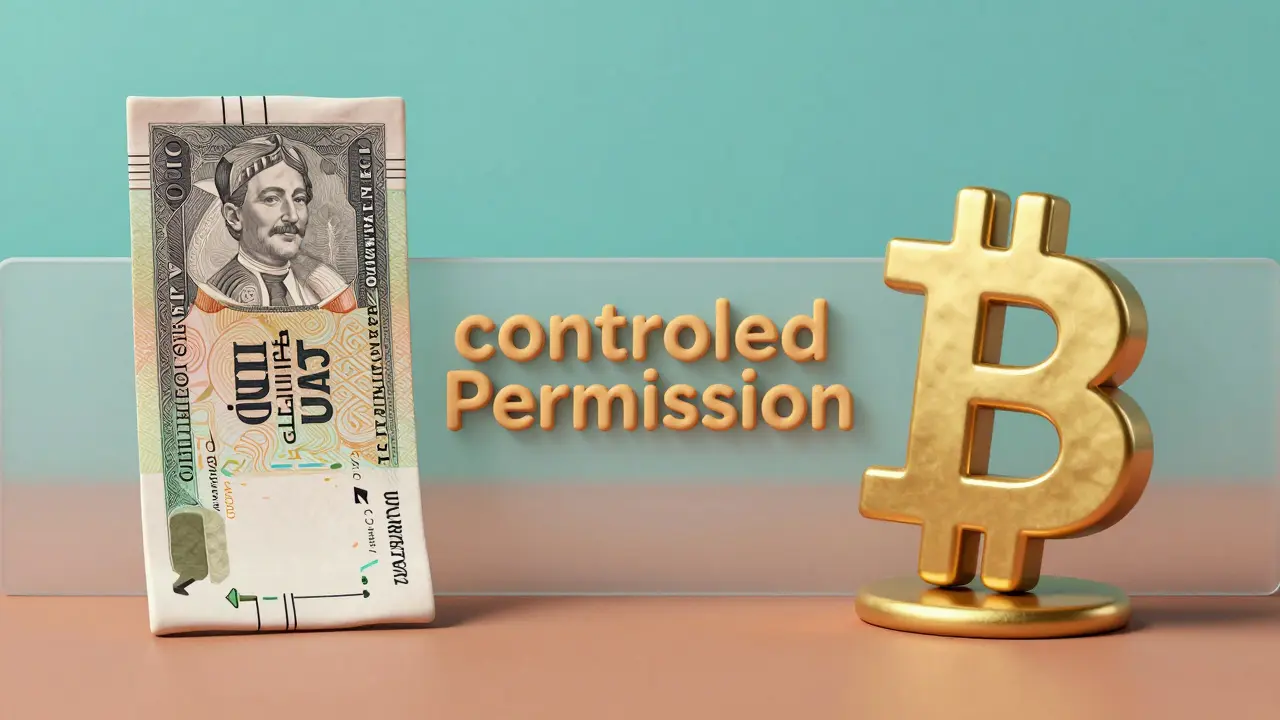
The Central Bank of Iran (CBI) has shifted its strategy from a total ban to a model of "controlled permission." This means that while you can trade crypto on licensed exchanges, the government wants to see every single cent move. If a platform doesn't use the government's specific API system, it's basically operating illegally. They've essentially turned cryptocurrency exchanges into extensions of the state's financial monitoring system.
How the Regulatory Maze Works
To understand why payments are so restricted, you have to look at the timeline of the last couple of years. Back in late 2024, the CBI went scorched-earth and blocked almost all rial-to-crypto gateways. By early 2025, they eased up, but with a massive catch: total surveillance. Any broker or exchange operating in Iran must now provide the CBI with unrestricted access to all user data and records.
The government is fighting a two-front war. On one side, they need digital assets to evade international sanctions. On the other, they are desperate to stop the Iranian Rial from collapsing further. Since people use crypto to hedge against inflation, the government sees unrestricted crypto payments as a threat to the national economy. To combat this, they've even banned cryptocurrency advertising nationwide-both online and on physical billboards-to keep the general public from flocking to digital assets.
| Activity | Legal Status | Key Condition |
|---|---|---|
| Mining | Legal | Must have license from Ministry of Industry, Mine and Trade |
| Exchange Trading | Regulated | Must use government API and share all user data |
| P2P Payments | Prohibited | Domestic payments for goods/services are restricted |
| Advertising | Illegal | Nationwide ban on all crypto promotions |
The Paradox of Legal Mining
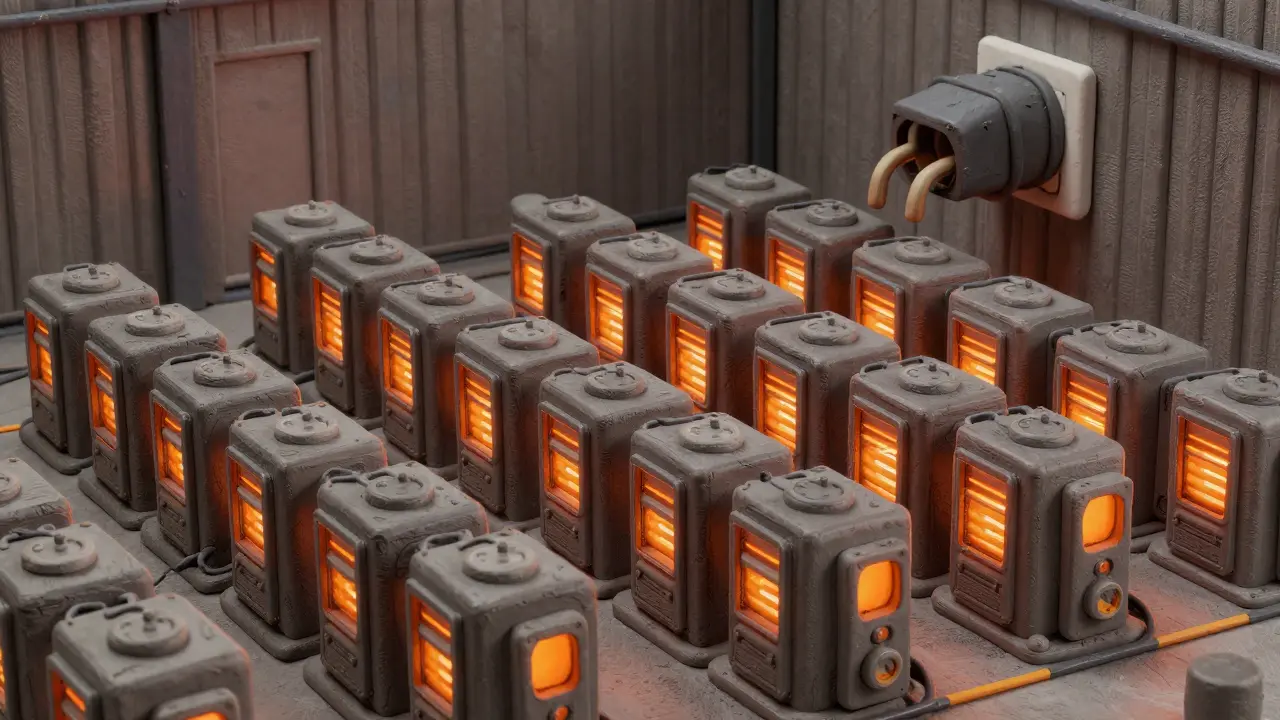
It seems contradictory that the government bans payments but encourages mining. However, Cryptocurrency mining is viewed as a state industry. Since 2019, Iran has legalized mining to generate revenue. The state sees it as a way to turn cheap electricity into hard currency. This has led to Iran controlling about 4.5% of the global mining hash rate.
But this isn't a free-for-all. Miners must obtain licenses and often are forced to sell their coins directly to the CBI. The pressure is immense; many miners have moved "underground" because the official electricity tariffs are too high to make a profit. This has caused massive problems for the national grid, leading to rolling power outages in late 2024 and 2025 when authorities raided illegal mining farms that were sucking the grid dry.
Bypassing the System: VPNs and Foreign Exchanges
Because the domestic environment is so restrictive, many Iranians turn to VPNs (Virtual Private Networks) to access international exchanges. By masking their location, they can avoid the CBI's surveillance and trade on platforms that don't report back to Tehran. This has created a thriving unofficial market where people trade crypto to protect their savings from the rial's freefall.
However, this is becoming riskier. International entities are cracking down. For instance, Tether, the company behind USDT, has frozen millions of dollars in Iranian-linked funds in recent years. They've targeted addresses linked to local exchanges like Nobitex to comply with international sanctions. If you're using a foreign exchange to move money into Iran, you're playing a game of cat-and-mouse with both the Iranian government and international regulators.
The Rise of the Digital Rial
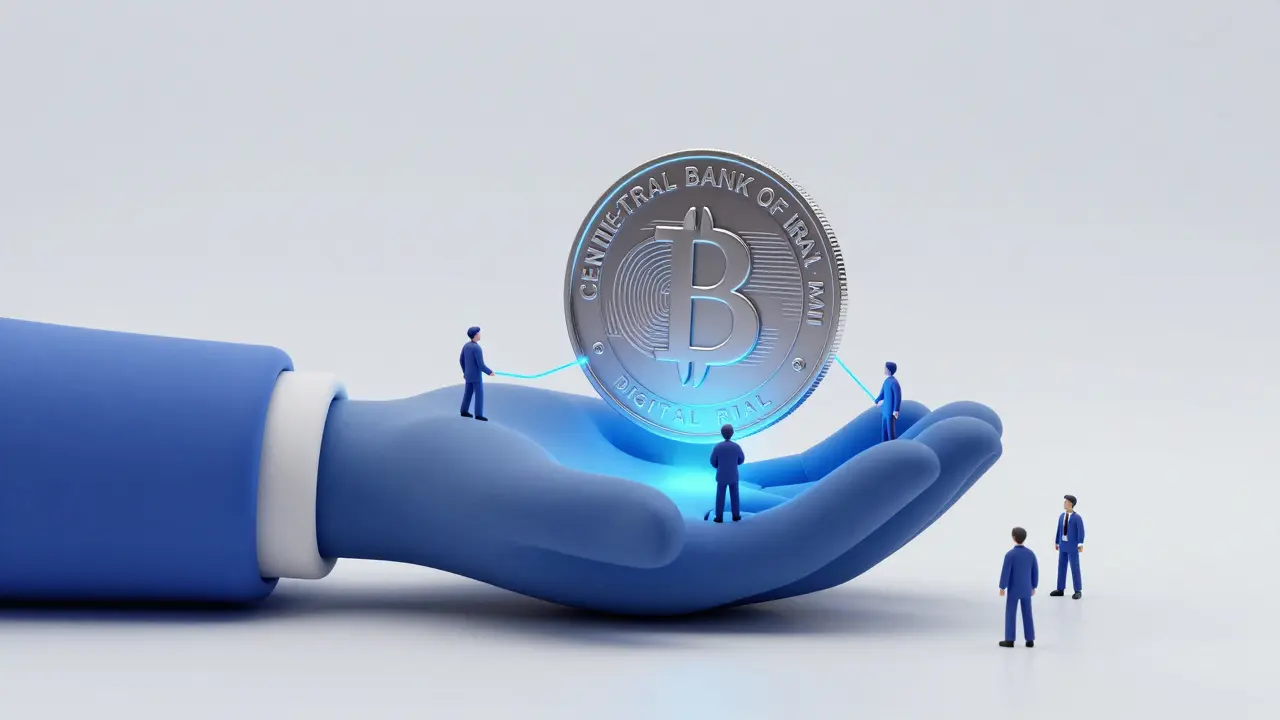
The ultimate goal for the Iranian government isn't to let Bitcoin win; it's to create their own controlled version. Enter the Digital Rial. This is a Central Bank Digital Currency (CBDC) currently being piloted in areas like Kish Island. Unlike Bitcoin, the Digital Rial is not decentralized and cannot be mined.
The Digital Rial is essentially a digital version of the physical banknote. It allows the CBI to track every single transaction in real-time, eliminating the anonymity that makes cryptocurrencies attractive. By pushing the Digital Rial, the government hopes to modernize the economy and reduce dependency on the US dollar without giving up an ounce of control over the money supply.
Practical Risks for Users and Businesses
If you're a business owner considering accepting crypto in Iran, you're walking a tightrope. Using an unauthorized payment gateway can lead to your bank accounts being frozen or your business being shut down for violating CBI directives. Most legitimate businesses stick to rial transactions to avoid the risk of being flagged for "speculative activity."
For individuals, the risk is mainly about data privacy. Using a licensed exchange means your entire financial history is available to the government. On the other hand, using an unlicensed exchange or a P2P network increases the risk of scams or having your funds frozen by an international entity like Tether if they detect an Iranian connection.
Can I use Bitcoin to buy things in Iran?
Directly? No. Domestic cryptocurrency-to-goods payments are effectively prohibited. While you might find a private seller willing to take Bitcoin, doing so is legally risky for both the buyer and the seller as it bypasses the Central Bank's monitoring systems.
Is mining Bitcoin legal in Iran?
Yes, it is legal, but only if you are licensed. You must get approval from the Ministry of Industry, Mine and Trade and adhere to strict electricity tariffs. Unauthorized mining is illegal and frequently targeted in government raids.
What is the Digital Rial?
The Digital Rial is Iran's official Central Bank Digital Currency (CBDC). Unlike Bitcoin, it is centralized, controlled by the CBI, and cannot be mined. It is designed to replace physical cash with a digital version that the government can fully monitor.
Why are crypto exchanges in Iran so restricted?
The government wants to prevent the rial from losing more value and wants to stop capital flight. By forcing exchanges to use government APIs, they can track who is moving money out of the country and prevent speculative trading.
What happens if I use a foreign exchange via VPN?
While this allows you to avoid local CBI surveillance, you face the risk of international sanctions. Companies like Tether frequently freeze addresses linked to Iranian users or Iranian exchanges to comply with global laws.
What to Do Next
If you are operating within Iran or dealing with Iranian counterparts, your approach depends on your risk tolerance:
- For the Risk-Averse: Stick to licensed exchanges and the official rial system. Be aware that your data is shared with the CBI.
- For Miners: Ensure your licenses are up to date with the Ministry of Industry, Mine and Trade to avoid having your hardware seized during electricity audits.
- For International Traders: Be extremely cautious with Tether (USDT) and other stablecoins. Use rigorous KYC and be aware that links to Iranian exchanges like Nobitex are often flagged and frozen.
Aaron Zeiler
April 30, 2026 AT 02:10actually the tether freeze issue is way bigger than most people think because if you touch a flagged wallet even once your whole account can get locked indefinitely
Emily A
May 1, 2026 AT 08:03The central bank's insistence on a CBDC is simply a transparent attempt to maintain absolute hegemony over a failing currency. It is quite naive to believe that a digital rial will solve inflation when the underlying fiscal policy remains fundamentally broken. True decentralization is the only viable hedge, yet the state persists in this delusional pursuit of total surveillance.
Kara Spadone
May 1, 2026 AT 14:45It's just so sad that the hunger for control always outweighs the spirit of freedom 😔 The energy of the universe is about flow, but these regulations are just walls and cages. We are all just playing a game of hide and seek with the state ✨
Felix Eduardo Velasquez
May 1, 2026 AT 21:34The strategic use of mining as a state-sponsored industry is a fascinating case study in economic survival. By leveraging subsidized energy, they aren't just mining coins; they are essentially exporting their energy grid in a digital form to circumvent the traditional banking system. This creates a bizarre paradox where the government supports the infrastructure of the very technology they fear will replace their national currency. It is a high-stakes gamble on the future of monetary sovereignty.
Pramendra Singh
May 3, 2026 AT 01:18I believe that despite these hurdles, people will eventually find a way to coexist with the technology in a positive way. It is wonderful to see how resilient individuals are when trying to protect their family's savings.
debra hoskins
May 3, 2026 AT 17:55Everyone's acting like the VPN route is some secret masterstroke. It's a clumsy charade. The government isn't outsmarted; they're just letting a few leaks happen to keep the pressure valve from exploding. Pure theatre.
Amanda Macy
May 5, 2026 AT 16:12The tension between the state's need for hard currency and its fear of decentralized power reflects a broader human struggle. We crave the security of the collective, yet we yearn for the autonomy of the individual. In this digital landscape, the rial is not just a currency, but a symbol of a fading era of centralized control. When the cost of monitoring exceeds the benefit of control, the system inevitably fractures. It is an inevitable cycle of collapse and rebirth that defines almost every monetary transition in history. The Digital Rial is merely a digital leash, but history shows that leashes eventually snap when the dog grows too large. We are witnessing the slow-motion collision of two incompatible philosophies of value. One is based on trust in an institution, the other on trust in mathematics. The latter is far more durable over time. Only those who ignore the trajectory of technology will be surprised when the current system fails. It is a lesson in the futility of fighting an algorithmic tide. The struggle for control is the only thing the controllers actually achieve before the end.