BaaS Security Guide: Protecting Data from Ransomware in 2026
 Jul, 30 2026
Imagine this scenario: it’s 3 AM on a Tuesday. Your IT team wakes up to alerts screaming that your primary database has been encrypted by ransomware. The attackers aren’t just holding your live data hostage; they’ve already moved laterally and wiped out your recent backups. Panic sets in. How do you recover? If you rely on Backup as a Service (BaaS) is a cloud-based solution that protects business data against ransomware, hardware failures, and human errors while ensuring reliable data recovery capabilities., the answer depends entirely on how you configured your security layers before the attack hit.
In 2026, BaaS has evolved far beyond simple cloud storage. It is now a critical line of defense in a landscape where global ransomware attacks increased by 105% between 2023 and 2024. But simply having a backup isn't enough anymore. Attackers know this. They target backup systems specifically. To stay safe, you need to understand the technical safeguards that separate a vulnerable backup from an impenetrable vault.
The Core Pillars of Modern BaaS Security
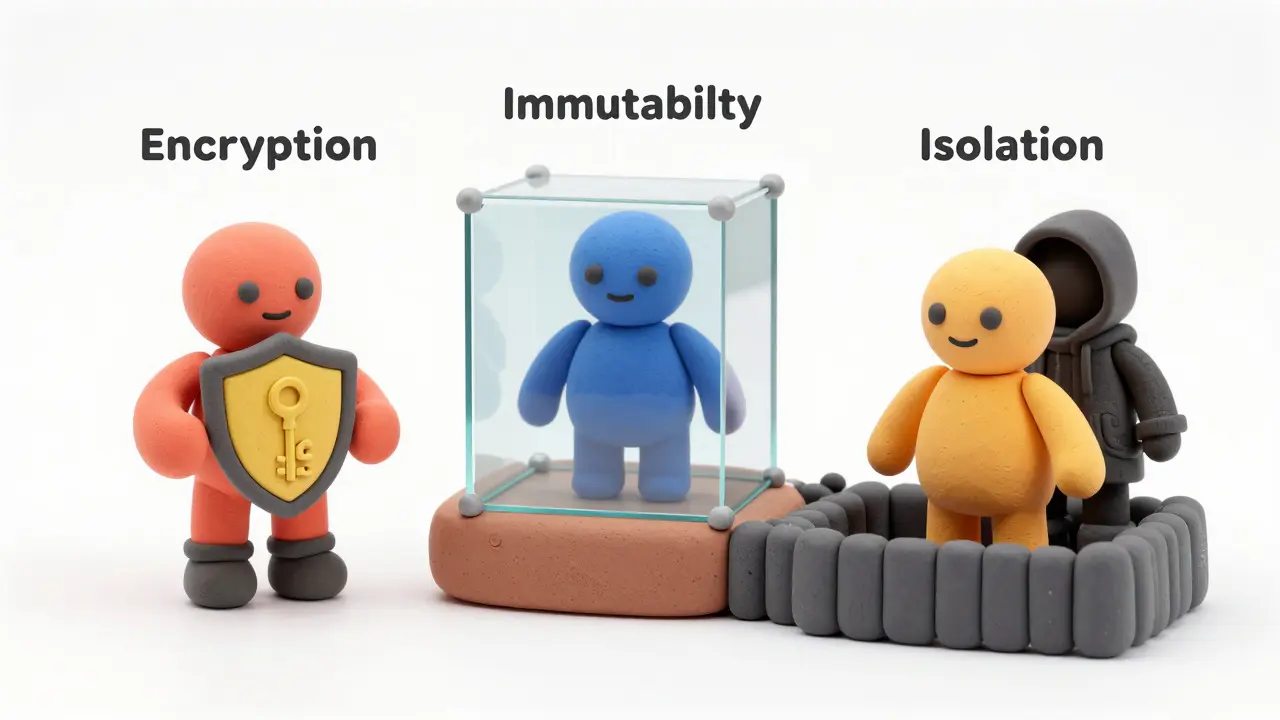
When evaluating or configuring your BaaS solution, three technical pillars must be non-negotiable: encryption, immutability, and isolation. Without these, your backup is just another target for hackers.
Encryption Standards: Data must be encrypted both at rest and in transit. In 2026, the standard is AES-256 is a symmetric encryption algorithm widely used for securing data at rest due to its high security level and performance efficiency. for data sitting in the cloud and TLS 1.3 for data moving across networks. This ensures that even if someone intercepts the data stream or gains physical access to the storage servers, the information remains unreadable without the keys. Crucially, encryption keys should be stored separately from the data itself. Best practices recommend rotating these keys every 90 days to minimize the window of exposure if a key is compromised.
Immutable Storage: This is arguably the most important feature against modern ransomware. Immutable storage creates tamper-proof copies of your data that cannot be altered, deleted, or overwritten for a set period. Think of it as a Write-Once-Read-Many (WORM) drive in the cloud. Once a backup is written, it’s locked. Even an administrator with full privileges can’t delete it until the retention period expires. Providers like Rubrik and Veeam have made this a core differentiator, offering configurable retention locks ranging from 7 to 180 days. If ransomware hits, the attacker might encrypt your live systems, but they cannot touch the immutable backup.
Air-Gapped Backups: While true physical air-gapping (disconnecting from the network) is hard in a pure cloud environment, logical air-gapping is essential. This means isolating backup data from the production network so that lateral movement by malware doesn’t automatically reach the backup repository. According to NIST Special Publication 800-171 revision 3, this isolation is critical for effective ransomware protection.
Choosing the Right Provider: A Comparative Look
Not all BaaS providers are created equal when it comes to security architecture. Some prioritize ease of use, while others focus heavily on enterprise-grade compliance and forensic capabilities. Here is how some major players stack up based on 2025-2026 industry benchmarks.
| Provider | Key Security Differentiator | Architecture Model | Compliance Certifications |
|---|---|---|---|
| Rubrik is an enterprise data management company known for its rigid security features and immutable storage solutions. | Granular policy controls and forensic capabilities; scored 4.8/5 for immutable storage quality | Multi-tenant with strong isolation | High breadth, including SOC 2, ISO 27001 |
| Veeam is a leading provider of backup and recovery software emphasizing immutable object storage and hybrid cloud integration. | Configurable retention locks and 'Immutable Tier 2' for cross-region secondary copies | Hybrid Cloud | 11 major certifications, exceeding industry average |
| Druva is a cloud data management platform known for its single-tenant SaaS architecture and dedicated encryption keys per customer. | Single-tenant architecture with dedicated encryption keys per customer | Single-Tenant SaaS | Strong focus on GDPR, HIPAA, CCPA |
| Cohesity is a data management company focusing on AI-driven anomaly detection and integrated security posture management. | AI-driven anomaly detection effectiveness; scored 4.7/5 | Unified Data Management | Comprehensive compliance framework |
Rubrik stands out for its especially rigid security and compliance features, making it a favorite for highly regulated industries. Veeam excels in flexibility with its immutable object storage options. Druva’s single-tenant model appeals to organizations wary of multi-tenant risks, as each customer gets dedicated encryption keys. Cohesity leads in using AI to detect unusual backup patterns that might indicate a breach.
Zero Trust and Access Control
Having secure storage is useless if anyone can log in and delete it. This is where Zero Trust Architecture becomes vital. In 2026, assuming trust within your network is a liability. Every access request to your BaaS interface must be verified.
Phishing-Resistant MFA: Passwords are no longer enough. CISA’s 2025 Cloud Security Guidelines state that phishing-resistant Multi-Factor Authentication (MFA) is non-negotiable for backup management interfaces. FIDO2/WebAuthn security keys represent the gold standard here. They prevent attackers from stealing credentials via phishing emails because the authentication requires a physical device or a bound digital token.
Least Privilege Access: Apply the principle of least privilege strictly. Not everyone who needs to restore a file needs administrative rights over the entire backup infrastructure. Role-Based Access Control (RBAC) should limit what users can do. For example, a junior admin might be able to initiate restores but not change retention policies or delete backup jobs.
Continuous Authentication: Modern BaaS platforms are moving towards continuous monitoring of user behavior. If an admin logs in from a new country at 3 AM and immediately tries to delete all backups, the system should flag this anomaly instantly. AI-driven anomaly detection, which Gartner predicts will be in 85% of enterprise BaaS implementations by 2026, helps catch these insider threats or compromised accounts before damage is done.
Implementation Pitfalls to Avoid
Even with the best tools, human error is the biggest risk. According to the Cloud Security Alliance’s 2024 survey, common configuration errors include improper retention settings (38%), overly permissive access controls (29%), and failing to enable immutable storage (22%).
- Default Settings Are Dangerous: Many providers ship with default configurations that prioritize convenience over security. For instance, a TechRepublic forum post described a financial firm that violated PCI DSS because their BaaS provider’s default settings allowed public access to backup buckets. Always audit default permissions immediately upon setup.
- Key Management Complexity: While customer-managed encryption keys offer better control, they are complex. Enterprise Strategy Group found that 68% of organizations struggle with implementing them correctly. If you choose this route, ensure you have a dedicated security specialist with cloud certifications (like CCSK or AWS Certified Security Specialty) overseeing the process.
- Ignoring SaaS Applications: Traditional BaaS often focuses on on-premise servers and databases. However, unstructured data in SaaS apps like Microsoft 365 is increasingly targeted. Only 42% of BaaS providers offer comprehensive protection for these environments. Ensure your solution covers your email, documents, and collaboration tools.
Recovery Metrics: RTO and RPO
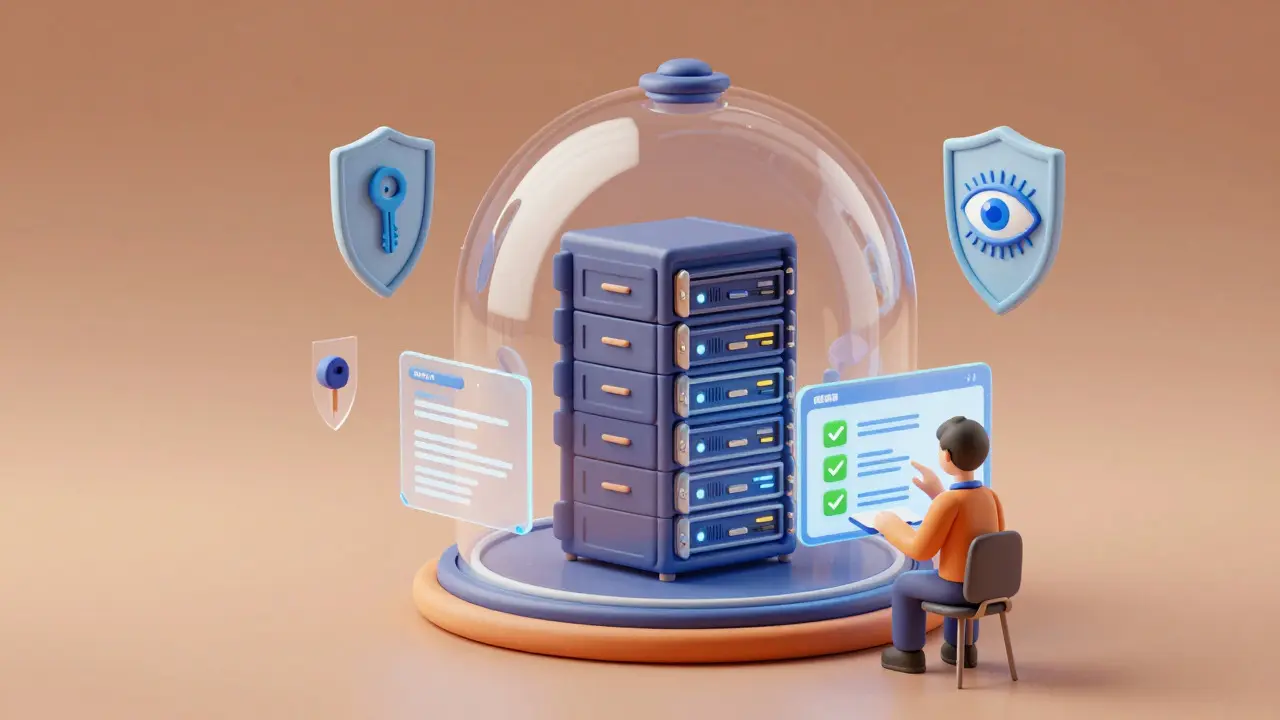
Security isn't just about prevention; it's about recovery speed. Two metrics define your resilience: Recovery Time Objective (RTO) and Recovery Point Objective (RPO).
RTO is how long you can afford to be down. RPO is how much data loss you can tolerate. Enterprise-grade BaaS solutions aim for RTOs under 15 minutes for critical systems and RPOs of less than 5 minutes. However, achieving these numbers requires robust network infrastructure and possibly local caching appliances to speed up initial restores. Don't just look at the marketing claims; test your recovery plans regularly. A backup that takes 48 hours to restore is useless if your business can only survive 4 hours offline.
Future-Proofing Your Strategy
The threat landscape is evolving rapidly. Quantum computing poses a future risk to current encryption standards, leading Forrester to predict that quantum-resistant encryption will become standard in BaaS offerings by 2027. Additionally, the trend of "Backup-as-Code" allows security policies to be managed through GitOps workflows, enabling version control and automated auditing of your security configurations.
As we move through 2026, the expectation is clear: BaaS must integrate seamlessly with your broader security ecosystem. Integration with tools like CrowdStrike Falcon for real-time threat intelligence during backup operations is becoming a baseline requirement rather than a luxury. Stay informed, keep your configurations tight, and never assume your backups are safe just because they are in the cloud.
What is the most important security feature in a BaaS solution?
Immutable storage is the most critical feature. It creates tamper-proof backups that cannot be deleted or altered by ransomware or malicious insiders for a set retention period, ensuring you always have a clean copy to restore from.
How does BaaS protect against ransomware?
BaaS protects against ransomware through a combination of immutable storage, air-gapped isolation, and AI-driven anomaly detection. These layers prevent attackers from encrypting or deleting backup data even if they compromise the primary production systems.
Is AES-256 encryption sufficient for BaaS?
Yes, AES-256 is the current industry standard for data at rest in BaaS solutions. When combined with TLS 1.3 for data in transit and proper key management practices, it provides robust protection against unauthorized access.
What is the difference between multi-tenant and single-tenant BaaS?
In multi-tenant architectures, multiple customers share the same underlying infrastructure, though data is logically isolated. Single-tenant models, like those offered by Druva, provide dedicated resources and encryption keys for each customer, reducing the risk of cross-customer data leaks.
Why is MFA important for BaaS management interfaces?
MFA adds a crucial second layer of verification. Phishing-resistant MFA, such as FIDO2 security keys, prevents attackers from accessing your backup console even if they steal your password, protecting against credential theft and insider threats.
What are common BaaS implementation mistakes?
Common mistakes include leaving default settings unchanged, failing to enable immutable storage, setting overly permissive access controls, and neglecting to back up SaaS application data like Microsoft 365 files.