Balancer V2 on Gnosis Chain: A Deep Review of the Most Flexible DeFi Exchange in 2026
 Feb, 7 2026
Most crypto traders think of decentralized exchanges as simple token swap tools - pick a pair, click swap, done. But Balancer V2 on Gnosis Chain isn’t just another DEX. It’s a full financial engine built for advanced users who want control, efficiency, and smart liquidity without the noise. If you’ve ever lost money to slippage, paid gas fees for failed trades, or wished you could earn yield while providing liquidity, Balancer V2 is one of the few protocols that actually solves these problems - and it’s doing it better than most in 2026.
What Makes Balancer V2 Different?
Unlike Uniswap, which only lets you create 2-token pools with fixed 50:50 ratios, Balancer V2 lets you build pools with up to 8 tokens, each with custom weights. Want a pool with 40% WETH, 30% USDC, 20% WBTC, and 10% DAI? Done. That’s not possible on most AMMs. This flexibility lets liquidity providers match real-world portfolio allocations, not forced pairs.
And it’s not just about pool creation. Balancer V2’s architecture is built around five core components: The Vault, Balancer Pools, Smart Order Router, Merkle Orchard, and the Balancer Gnosis Protocol (BGP). Each plays a role in making trades cheaper, faster, and safer. The Vault holds all your liquidity. Pools manage the trading logic. The Smart Order Router finds the best path across chains. Merkle Orchard handles rewards. And BGP? That’s where the magic happens on Gnosis Chain.
How Balancer Gnosis Protocol (BGP) Eliminates Gas Waste
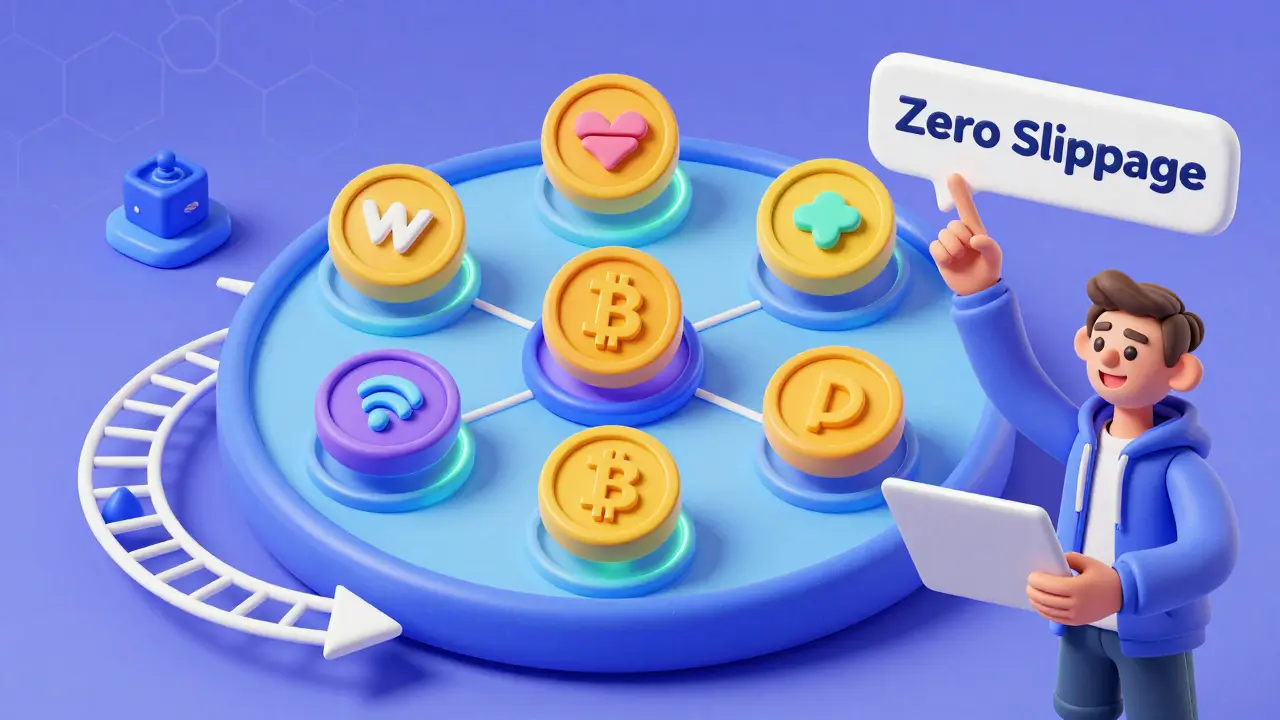
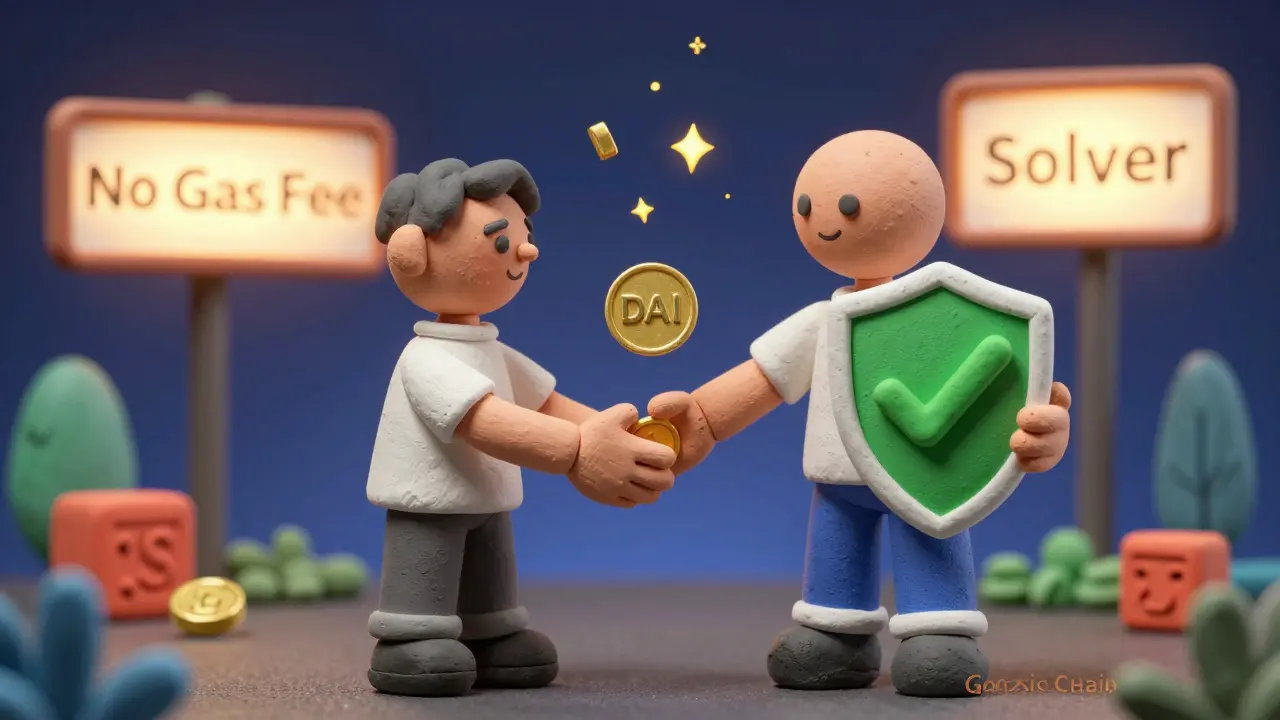
Here’s the real game-changer: Balancer Gnosis Protocol uses Coincidence of Wants (CoW) to match traders directly. Instead of routing every swap through a liquidity pool, BGP looks for users who want to swap the exact tokens the other person is offering. If Alice wants to sell DAI for WETH, and Bob wants to sell WETH for DAI, they trade directly - no AMM needed.
This means zero slippage and zero fees on the trade. Even better, these trades are batched and settled in one transaction, paid for by a third-party solver. You don’t pay gas to fail. If your trade doesn’t execute, you get your tokens back and pay nothing. That’s unheard of on other DEXs.
On Gnosis Chain, this system runs even smoother. Gas fees are a fraction of Ethereum’s, and the protocol is optimized for high-throughput batch settlements. In October 2025, BGP processed over 85% of all Balancer trades on Gnosis Chain with an average execution time under 12 seconds.
Trading Volume and Liquidity in 2026
As of February 2026, Balancer V2 supports 114 tokens and 202 trading pairs. Its 24-hour volume sits at around $16.9 million, with the WSTETH/WETH pair leading at over $5.3 million daily. That’s not the biggest volume in DeFi, but it’s growing fast - especially on Gnosis Chain, where volume jumped 142% in Q4 2025 alone.
What’s more impressive is the bid-ask spread. At 0.637%, Balancer’s pricing is tighter than most centralized exchanges. That means you’re getting closer to the real market price. On Uniswap, similar pairs often have spreads over 1.5%. That’s a 50%+ difference in slippage cost.
And liquidity? Balancer’s TVL across all chains is over $1.2 billion, with Gnosis Chain holding nearly $180 million of that. It’s not Ethereum-level, but it’s stable, growing, and attracting serious institutional liquidity providers thanks to its yield-boosting features.
Boosted Pools: Earn Yield Without Locking Up Your Tokens
One of the biggest upgrades in 2025 was the launch of Boosted Pools. Here’s how they work: When you add liquidity to a Balancer pool, your tokens aren’t just sitting there. The protocol automatically routes idle portions to lending protocols like Aave, Morpho, or Lido to earn extra yield.
For example, if you deposit ETH and USDC into a 50/50 pool, Balancer might send 10% of your ETH to Lido to earn staking rewards, while the rest stays in the pool for trading. You get the trading fees from the pool, plus the staking yield - all without locking your tokens or manually managing positions.
Users report annual yields of 8-15% on boosted pools, depending on market conditions. That’s far better than basic staking or even most centralized exchange savings accounts. And because it’s automated, you don’t need to monitor it. The protocol rebalances everything in real time.
Smart Order Router v3: Cross-Chain Swaps Made Simple
Before 2025, swapping tokens across chains meant juggling bridges, waiting hours, and paying multiple gas fees. Balancer’s Smart Order Router v3 changed that. Now, you can swap from ETH on Ethereum to MATIC on Polygon in one click. The router scans 1inch, CoW Swap, and other aggregators to find the best price and route - including cross-chain paths.
It doesn’t just pick the cheapest option. It picks the one with the lowest total cost - including bridge fees, slippage, and gas. In tests, users saved 22% on average compared to manual cross-chain swaps. The router also supports partial fills, so even if one leg of the trade fails, the rest still executes.
Supported chains? Ethereum, Arbitrum, Optimism, Polygon, Avalanche, and Gnosis Chain. That’s six major networks with one interface. No more switching wallets or connecting bridges.
Who Is This For? And Who Should Avoid It?
Balancer V2 isn’t for beginners. If you’ve never used a wallet like MetaMask or don’t know what an ERC-20 token is, start with a centralized exchange first. But if you’re already trading DeFi, here’s who wins:
- Yield farmers - Boosted Pools give you passive income without extra work.
- Portfolio managers - Create custom pools that mirror your holdings.
- Traders with large orders - CoW swaps mean zero slippage on big trades.
- Multi-chain users - Swap across chains without leaving the interface.
Who should skip it?
- People who want leverage - No margin, no leverage, no PAMM accounts.
- Those who hate complexity - Understanding pool weights, fee tiers, and CoW mechanics takes time.
- Users who only trade BTC or ETH - You’re better off on a simple DEX like Uniswap.
Fees: It’s Complicated - But Fair
Balancer’s fee structure is messy at first glance. Standard Weighted Pools charge 0.001% to 10%. Stable Pools go as low as 0.0001%. Why the range? Because liquidity providers set their own fees. A pool with high volatility (like ETH/USDC) might charge 0.05% to protect against impermanent loss. A stablecoin pool (like USDC/DAI) might charge 0.001% because price swings are tiny.
Here’s the kicker: You pay nothing if your trade fails. On other platforms, you still pay gas. On Balancer, if the solver can’t find a match, you get your tokens back - no fee. That alone saves most active traders hundreds of dollars a year.
And gas? Since trades are batched on Gnosis Chain, your per-trade gas cost is often under $0.02. Compare that to Ethereum, where a simple swap can cost $5-$10.

Security and Governance
Balancer is non-custodial. Your keys, your coins. No one holds your assets. The protocol has been audited multiple times by firms like OpenZeppelin and Trail of Bits. There have been zero critical exploits since V2 launched in 2020.
Governance is handled by the BalancerDAO, powered by the BAL token. Holders vote on fee changes, new pool types, and protocol upgrades. BAL isn’t a currency - it’s a voting tool. You can’t buy your way into control. The largest holders are institutional LPs and long-term community members.
Protocol upgrades are tested on testnets for months before going live. The community has rejected changes that hurt liquidity providers - a rare trait in DeFi.
How to Start Using Balancer V2 on Gnosis Chain
Here’s how to get started in 3 steps:
- Connect your wallet (MetaMask, WalletConnect, or Coinbase Wallet) to app.balancer.fi.
- Select Gnosis Chain from the network dropdown. Make sure you have some GNO or xDAI to cover gas.
- Choose ‘Trade’ to swap, or ‘Liquidity’ to create or join a pool.
Minimum deposit? $1. You can trade with as little as $0.50 worth of any ERC-20 token. The interface is clean, mobile-friendly, and works on iOS and Android browsers.
For advanced users, Balancer offers SDKs and automation tools. You can build bots to rebalance your portfolio, automate yield strategies, or even create your own custom pool - all without writing smart contracts.
Final Verdict: Is Balancer V2 Worth It?
Yes - if you’re serious about DeFi. Balancer V2 on Gnosis Chain isn’t the easiest DEX to use, but it’s the most powerful. It solves real problems: slippage, gas waste, low yield, and fragmented liquidity. The CoW mechanism alone is a breakthrough. No other AMM offers gasless, zero-slippage trades at this scale.
It’s not replacing Uniswap. But it’s carving out a niche for advanced users who want more control, better pricing, and smarter yield. In 2026, as DeFi gets more complex, Balancer is one of the few protocols that’s building for the future - not just the present.
Is Balancer V2 on Gnosis Chain safe to use?
Yes. Balancer V2 is non-custodial, meaning you always control your funds. The protocol has been audited multiple times by top security firms, and there have been no critical exploits since its launch. The Gnosis Chain integration adds an extra layer of security through batched, gasless trades that reduce attack surfaces. However, always use a trusted wallet like MetaMask and never share your seed phrase.
Do I need to own BAL tokens to use Balancer V2?
No. BAL tokens are only needed for governance voting. You can trade, provide liquidity, and use all features of Balancer V2 without owning any BAL. Most users never buy BAL - they just use the platform as a tool. If you want to vote on future upgrades, then yes, you’ll need BAL.
Can I use Balancer V2 on my phone?
Yes. Balancer’s web interface works perfectly on mobile browsers. You can connect your wallet via WalletConnect or scan a QR code. All features - trading, liquidity provision, boosted pools - are fully accessible on iOS and Android. There’s no official app, but the mobile web version is stable and fast.
How does Balancer compare to Uniswap V3?
Uniswap V3 lets you set custom price ranges for liquidity, which is powerful. But Balancer V2 goes further: you can create pools with up to 8 tokens, not just two. Balancer also offers gasless trades via CoW swaps and automatic yield boosting - features Uniswap doesn’t have. Uniswap has higher volume, but Balancer gives you more tools to optimize returns and reduce costs.
What tokens can I trade on Balancer V2?
Balancer V2 supports 114 tokens, including ETH, WETH, DAI, USDC, WBTC, WSTETH, GNO, and many others. All are ERC-20 tokens compatible with Ethereum and Gnosis Chain. New tokens are added based on community proposals and liquidity demand. You can’t trade non-ERC-20 assets like native Bitcoin or Solana tokens directly - you need wrapped versions (like WBTC) instead.
Is there a minimum amount to provide liquidity?
There’s no official minimum. You can add as little as $1 worth of tokens to a pool. However, very small deposits may not earn meaningful fees due to gas costs and pool dynamics. Most active liquidity providers start with $500-$1,000 to get competitive yields. The protocol doesn’t penalize small deposits - it just won’t generate much return.
Can I lose money using Balancer V2?
Yes. Like all DeFi platforms, you can experience impermanent loss if the price of your deposited tokens shifts dramatically. Boosted Pools reduce this risk by diversifying into yield protocols, but they don’t eliminate it. Also, if you use complex strategies or leverage third-party tools, you may encounter smart contract risks. Always research before depositing, and never invest more than you can afford to lose.
Molly Andrejko
February 8, 2026 AT 01:34Before, I was stuck between Uniswap's high slippage and the headache of managing multiple pools. Now, I just build custom 4-token baskets that mirror my actual portfolio - no more forced 50/50 splits.
The boosted pools are a game-changer too. I didn't even realize I was earning Lido staking yield on half my ETH until I checked my dashboard.
And the CoW swaps? Zero gas wasted. I've had trades fail because no match was found, and I got my tokens back with $0 in fees. That alone saved me over $200 last quarter.
I used to think DeFi was too noisy. Now I see Balancer as the quiet, efficient machine it is.
Also, mobile works fine. No app needed. Just bookmark it.
Don't let the complexity scare you. Start with $50. Play. Learn. Then scale.
Michael Sullivan
February 8, 2026 AT 20:24Paul Jardetzky
February 10, 2026 AT 06:43CoW + Gnosis Chain = gas under $0.02 per trade. That's not a feature. That's a revolution.
And boosted pools? I'm pulling 12% APY on a simple WBTC/USDC pool. No staking, no locking, no hassle. Just deposit and forget.
Stop overthinking it. Just try it. You'll thank me later. 💪
Paul Gariepy
February 11, 2026 AT 05:54before this i was paying 5-8 dollars per swap on eth and it was killing me. now its like 2 cents.
and the co-w swap thing? mind blown. i had a trade fail last week because no one wanted my dais for weth, and i got my tokens back with zero fee. no other dex does that.
boosted pools are also wild. i didnt even know my eth was earning lido yield until i checked my rewards tab.
the interface is clean, works on mobile, and i dont need bal tokens to use it.
if youre serious about defi, this is the tool. stop hesitating. just go try it.
laura mundy
February 12, 2026 AT 21:59And 'gasless trades'? You're still paying for solvers. Someone always pays.
Also, 'boosted pools' - so now you're lending out my liquidity without asking? That's not passive income, that's shadow banking.
And don't get me started on the 8-token pools. Who the hell has a portfolio with 8 tokens? You're not a portfolio manager. You're a crypto hoarder.
Jacque Istok
February 14, 2026 AT 11:08Let me guess - next they'll tell us the sun rises in the east and water is wet.
And yes, I'm aware that CoW swaps exist. But the fact that you're all treating this like a miracle is honestly embarrassing.
It's 2026. We're not impressed by basic efficiency anymore.
Now if you'll excuse me, I'm going to go trade on a centralized exchange where I can actually get leverage and not have to read a whitepaper to swap DAI for USDC.
perry jody
February 14, 2026 AT 19:03Didn't touch it. Didn't check it. Just left it.
That's the beauty - it's hands-off automation.
And the CoW swaps? I did a $5k WETH to WBTC trade. Zero slippage. Paid 1.7 cents in gas.
This isn't just good - it's what DeFi was supposed to be.
Stop debating. Start using. 🙌
Robin Ødis
February 15, 2026 AT 12:25Balancer V2 on Gnosis Chain is not a solution - it's a workaround for Ethereum's broken design.
Why should we need a separate chain to solve gas inefficiency? That's like building a better bicycle because your car has a flat tire.
The real problem is Ethereum's scalability, not Balancer's architecture.
And 'boosted pools'? You're essentially turning liquidity provision into a yield farm with hidden counterparty risk.
Who audits the lending protocols that Balancer routes to? Aave? Morpho? You think they're immune to flash loan attacks?
And don't even get me started on the 'smart order router' - it's just a glorified aggregator with a fancy name.
Meanwhile, real innovation is happening in ZK-Rollups and account abstraction.
This? This is just DeFi's version of a 2018 ICO with a new logo.
And you're all clapping like it's a TED Talk.
Wake up.