Bitexen Crypto Exchange Review: Is It Safe for Turkish Traders in 2026?
 Feb, 1 2026
If you're in Turkey and looking to trade crypto, you've probably heard of Bitexen. It’s one of the bigger local platforms, marketed as Turkey’s go-to exchange for quick, reliable trading. But is it actually safe? And should you trust it with your money in 2026? Let’s cut through the marketing and look at what really matters: security, fees, restrictions, and whether it’s worth your time.
What Is Bitexen, Really?
Bitexen launched in 2018 and is based in Turkey. Unlike global giants like Binance or Kraken, it doesn’t try to serve the whole world. It’s built for one thing: Turkish users. If you don’t have a Turkish phone number, you can’t even sign up. That’s not a glitch-it’s by design. The exchange blocks access to everyone else, including U.S. investors, because of strict U.S. SEC regulations. Foreign exchanges that try to target American users without registering with the SEC risk heavy fines or shutdowns. Bitexen chose to avoid that mess entirely by focusing only on Turkey. That makes it a niche player. But in Turkey, that niche matters. With inflation eating away at the Turkish Lira (TRY), many locals turned to crypto as a store of value. Bitexen rode that wave. It’s not the biggest exchange in the country, but it’s one of the most visible. Its mobile apps for iOS and Android are clean and simple, making it easy to buy Bitcoin or Ethereum without needing a finance degree.Fees: Low, But Not the Lowest
Bitexen charges a 0.15% fee for makers (people who add liquidity by placing limit orders) and 0.25% for takers (those who immediately buy or sell at existing prices). That’s standard for a mid-sized exchange. For comparison, Binance charges as low as 0.1% for makers and 0.1% for takers if you pay with BNB. Kraken’s fees start at 0.16% for makers and 0.26% for takers. So Bitexen’s fees are competitive, but not cheaper than the top global players. The real catch? You can only trade with Turkish Lira. No USD, no EUR, no USDT deposits from outside Turkey. If you want to fund your account, you need a local bank transfer in TRY. That’s fine if you live there-but if you’re traveling or living abroad, you’re locked out.Security: Basic, But No Regulatory Safety Net
Bitexen does some things right. It uses two-factor authentication (2FA), keeps most crypto in cold storage, and has never been hacked. That’s more than many smaller exchanges can claim. But here’s the problem: it’s not regulated by any government authority. Not in Turkey. Not anywhere. That’s a big deal. Global exchanges like Kraken are regulated in the U.S. and Europe. OKX has government oversight in several jurisdictions. That means if something goes wrong-say, the exchange freezes withdrawals or gets targeted by fraudsters-you have legal recourse. You can file complaints with financial regulators. With Bitexen? You’re on your own. There’s no investor protection fund. No insurance policy. No government watchdog watching over your assets. Traders Union gave Bitexen a security score of 5.25 out of 10. That’s average at best. They say it meets basic safety standards but doesn’t offer the same level of protection as higher-rated exchanges. In plain terms: your money is safe from hackers, but not from mismanagement or sudden policy changes.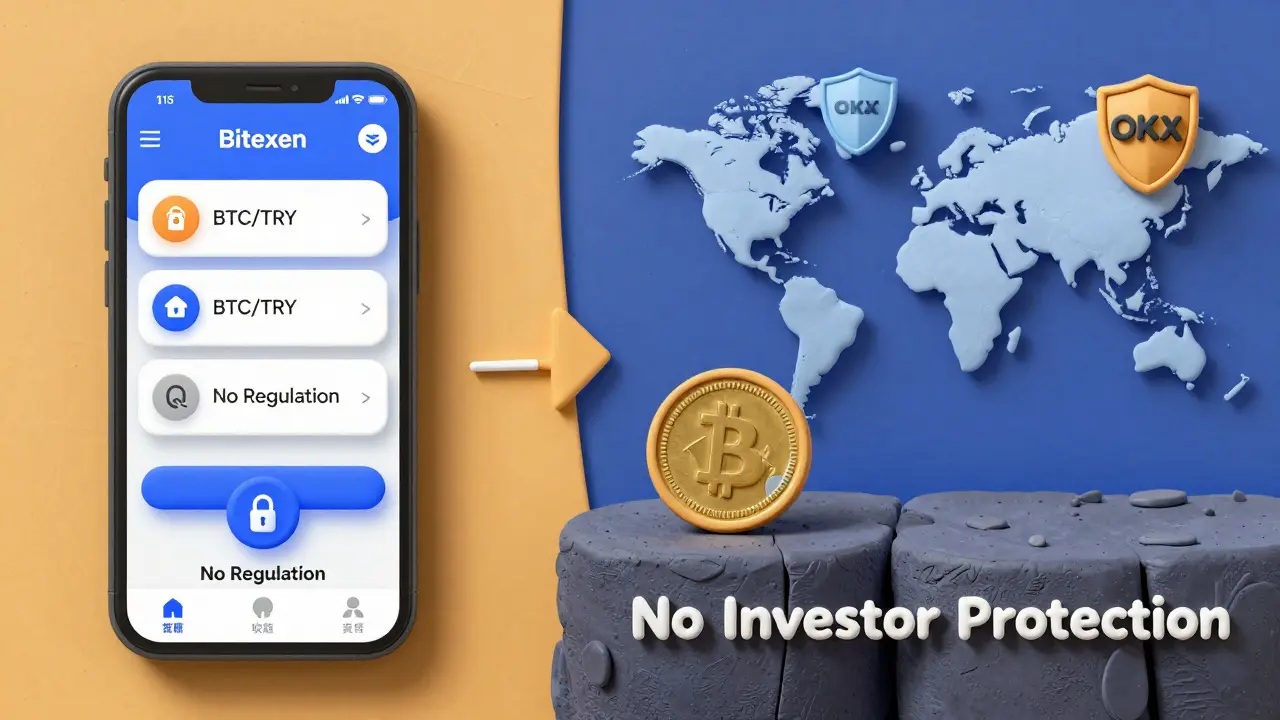
Trading Pairs and Coins: Limited but Focused
Bitexen supports 28 cryptocurrencies. That includes Bitcoin, Ethereum, Litecoin, Ripple, and a few Turkish-focused tokens like TRX and BNB. But it doesn’t offer hundreds of altcoins like some exchanges do. You won’t find obscure meme coins or DeFi tokens here. That’s actually a plus for beginners. Less noise, less risk of accidentally buying something worthless. The trading pairs are simple: mostly BTC/TRY, ETH/TRY, and a few others in TRY. No stablecoin pairs like USDT/TRY. That means you can’t easily move between crypto and a stable asset. If you want to preserve value during a market dip, you’re stuck holding TRY-which, as we know, has lost over 50% of its value against the dollar in the last five years.User Experience: Simple, But Only for Locals
The app works. It loads fast. Orders execute without lag. The interface is in Turkish, with minimal English support. If you don’t speak Turkish, you’re going to struggle. Even basic terms like "deposit," "withdraw," or "order book" might not translate clearly. There’s no multilingual customer support either. If you run into an issue, your only option is to contact support via email or in-app chat-both in Turkish. Traffic data shows Bitexen gets around 117,000 organic visits per month. That’s solid for a local exchange. The bounce rate is low (17%), meaning people who land on the site stick around. Average visit time is over 12 minutes. That suggests users aren’t just checking prices-they’re actively trading. But here’s the silence: there are almost no user reviews on independent platforms. Slashdot lists zero ratings. Cryptowisser says Bitexen has a "strong reputation among Turkish users," but offers no numbers, no screenshots, no quotes. That’s a red flag. If a platform is this popular, why is there so little public feedback?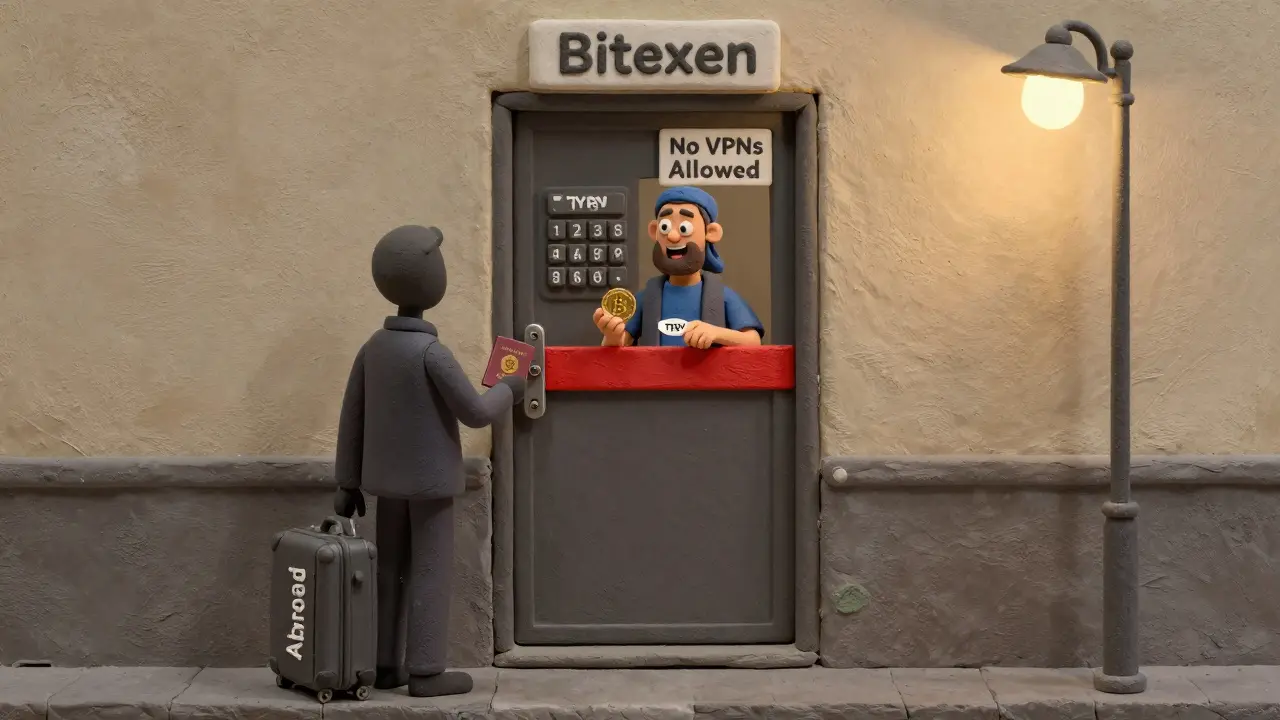
Who Should Use Bitexen?
If you live in Turkey, have a local phone number, and want a simple way to buy Bitcoin or Ethereum with TRY, Bitexen is a functional option. It’s reliable for day-to-day trading. The app is smooth. The fees are fair. And if you’re not comfortable with complex platforms, this one won’t overwhelm you. But if you’re outside Turkey-even if you’re a Turkish citizen living abroad-you can’t use it. No exceptions. No workaround. No VPN trick will get you past the phone number check. That’s not a bug; it’s a hard wall. And if you’re looking for maximum security? Look elsewhere. Bitexen has no insurance, no regulation, no legal recourse. If the exchange shuts down tomorrow, your crypto could vanish with no way to recover it. That’s the trade-off for convenience.How It Compares to Global Exchanges
| Feature | Bitexen | Kraken | OKX |
|---|---|---|---|
| Regulated? | No | Yes (Tier-1, U.S. & EU) | Yes (Government-regulated, no Tier-1) |
| Fiat Currencies | TRY only | USD, EUR, CAD, GBP, and more | USD, EUR, JPY, TRY, and others |
| 2FA & Cold Storage | Yes | Yes | Yes |
| Hack History | None | None | None |
| Investor Protection | No | Yes (Insurance fund) | Yes (Protection fund) |
| Global Access | Only Turkey | Over 180 countries | Over 170 countries |
| Mobile App | Yes (iOS & Android) | Yes | Yes |
Bitexen’s only real advantage is its focus on Turkish users. Everything else-security, features, trust-is behind the global leaders.
Final Verdict: Use It? Only If You’re in Turkey
Bitexen isn’t dangerous. It’s not a scam. But it’s not safe in the way you’d want your money to be safe. It’s a local tool for local people. If you’re in Turkey and want to buy crypto without jumping through hoops, it’s a decent choice. The app works. The fees are fair. The platform is stable. But if you care about long-term security, legal protection, or the ability to move your funds globally? Look at Kraken, OKX, or even Binance (if you can access it). They’re more expensive, more complex, but they give you something Bitexen doesn’t: peace of mind. And if you’re not in Turkey? Don’t waste your time. The phone number lock isn’t a technical limitation-it’s a legal one. No workaround exists. Save yourself the frustration.Can I use Bitexen if I’m not in Turkey?
No. Bitexen only allows users with Turkish phone numbers to register and trade. Even if you have Turkish citizenship but live abroad, you won’t be able to sign up unless you can receive SMS verification from a Turkish number. There’s no workaround.
Is Bitexen regulated by any government?
No. Bitexen is not regulated by any government authority, including Turkey’s Capital Markets Board. While it uses standard security practices like cold storage and 2FA, it operates without legal oversight. That means no investor protection, no insurance, and no legal recourse if something goes wrong.
What cryptocurrencies can I trade on Bitexen?
Bitexen supports 28 cryptocurrencies, including Bitcoin (BTC), Ethereum (ETH), Litecoin (LTC), Ripple (XRP), and TRON (TRX). All trading is done against the Turkish Lira (TRY), so you can’t trade crypto pairs like BTC/USDT. Stablecoins aren’t supported.
Are Bitexen’s fees high?
Bitexen charges 0.15% for maker orders and 0.25% for taker orders. That’s standard for a mid-sized exchange and slightly higher than global leaders like Binance or Kraken. But since you’re limited to TRY, and there are few alternatives in Turkey, the fees are competitive within its market.
Has Bitexen ever been hacked?
No, Bitexen has never suffered a successful hack. It stores the majority of user funds in cold wallets and uses two-factor authentication. However, the lack of regulation means there’s no guarantee of compensation if a breach were to occur in the future.
Should I use Bitexen instead of Binance or Kraken?
Only if you live in Turkey and need a simple, local platform. If you want global access, more coins, stablecoin trading, or legal protection, Kraken or Binance are far better choices. Bitexen is convenient for Turkish residents-but it’s not a long-term solution for serious investors.
Steven Dilla
February 2, 2026 AT 16:14Tom Sheppard
February 4, 2026 AT 14:36Aaron Poole
February 4, 2026 AT 22:39Elizabeth Jones
February 6, 2026 AT 21:30Rachel Stone
February 8, 2026 AT 17:28Edward Drawde
February 10, 2026 AT 00:25