BitGlobal Crypto Exchange Review: Why This Platform Disappeared and What Happened to Users' Funds
 Feb, 19 2026
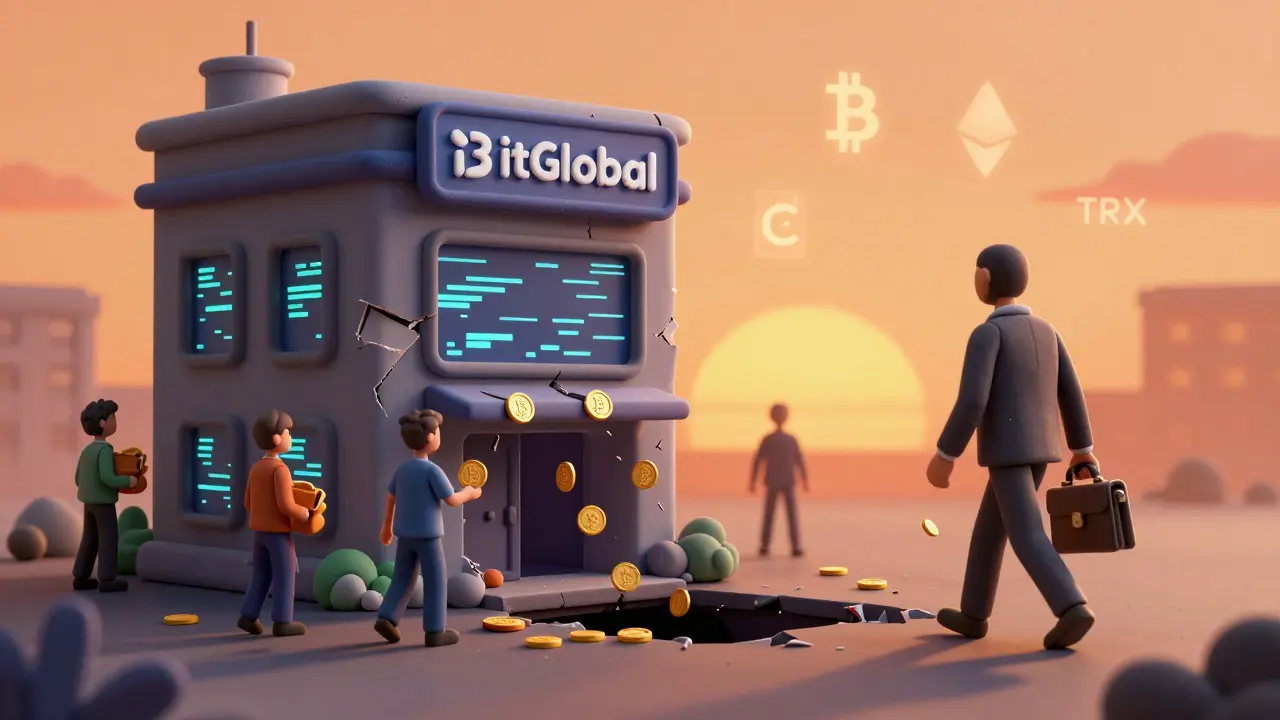
BitGlobal was once marketed as a global cryptocurrency exchange with support for over 300 coins, multilingual customer service, and a sleek trading interface. But today, it doesn’t exist as a functioning platform. It’s gone. And thousands of users lost access to their money when it shut down without warning in August 2023. This isn’t just another failed exchange-it’s a textbook case of how unregulated platforms can vanish overnight, taking users’ funds with them.
What Was BitGlobal?
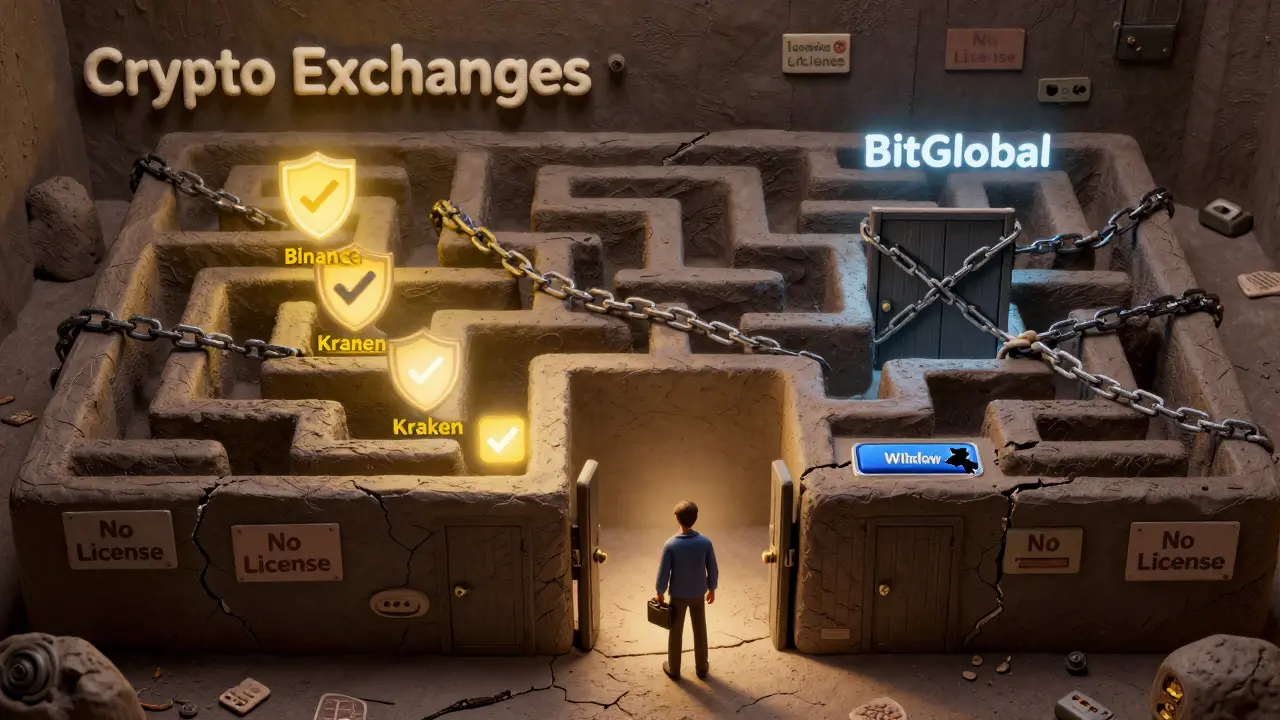
BitGlobal launched in 2019 as the international arm of Bithumb Global, a South Korean crypto exchange. It was registered in the Seychelles, a jurisdiction known for minimal financial oversight. Unlike exchanges like Binance or Kraken, BitGlobal never obtained licenses from major regulators like the SEC, FCA, or MAS. That meant no legal accountability, no insurance for user funds, and no transparency.
The platform offered spot trading, margin trading with up to 10x leverage, OTC deals, and even a credit card option to buy crypto. It had apps for iOS and Android, and supported eight languages to target users outside the U.S. and Europe. Its interface had a unique "Bull and Bear" mode that let traders pick price direction instead of setting buy/sell orders. At first glance, it looked professional.
Trading Fees and Withdrawal Costs
BitGlobal claimed competitive fees: 0.10% for both maker and taker trades. That’s standard. But hidden costs buried users. Bitcoin withdrawals cost 0.001 BTC-more than double what competitors like FameEX charged (0.0004 BTC). Ethereum withdrawals were 0.01 ETH, while others charged 0.005 ETH. These fees weren’t just high-they were unpredictable. One user reported paying 33 TRX to withdraw 108 TRX. That’s a 30% fee just to get their own money out.
Minimum trade limits made small investors useless. You couldn’t trade less than 400 TRX on Tron. That’s over $100 at current prices. For someone trying to dip their toes into crypto, that’s a wall, not a door.
Security Claims vs. Reality
BitGlobal said it used two-factor authentication (2FA) and encryption. That’s basic. But security doesn’t matter if the exchange itself is the threat. Users reported being locked out of accounts with no way to contact support. Withdrawal requests disappeared into a black hole. Reddit threads filled with posts like: "My deposit hasn’t been credited in 5 months. No reply. No update."
Wallet Scrutiny, a crypto security firm, analyzed BitGlobal’s mobile app and found it had fake reviews. Paid influencers posted glowing feedback. Bot accounts flooded social media with praise. The real users? They were screaming into the void.
User Stories: The Real Damage
Google Play Store reviews from 2021 still stand as evidence:
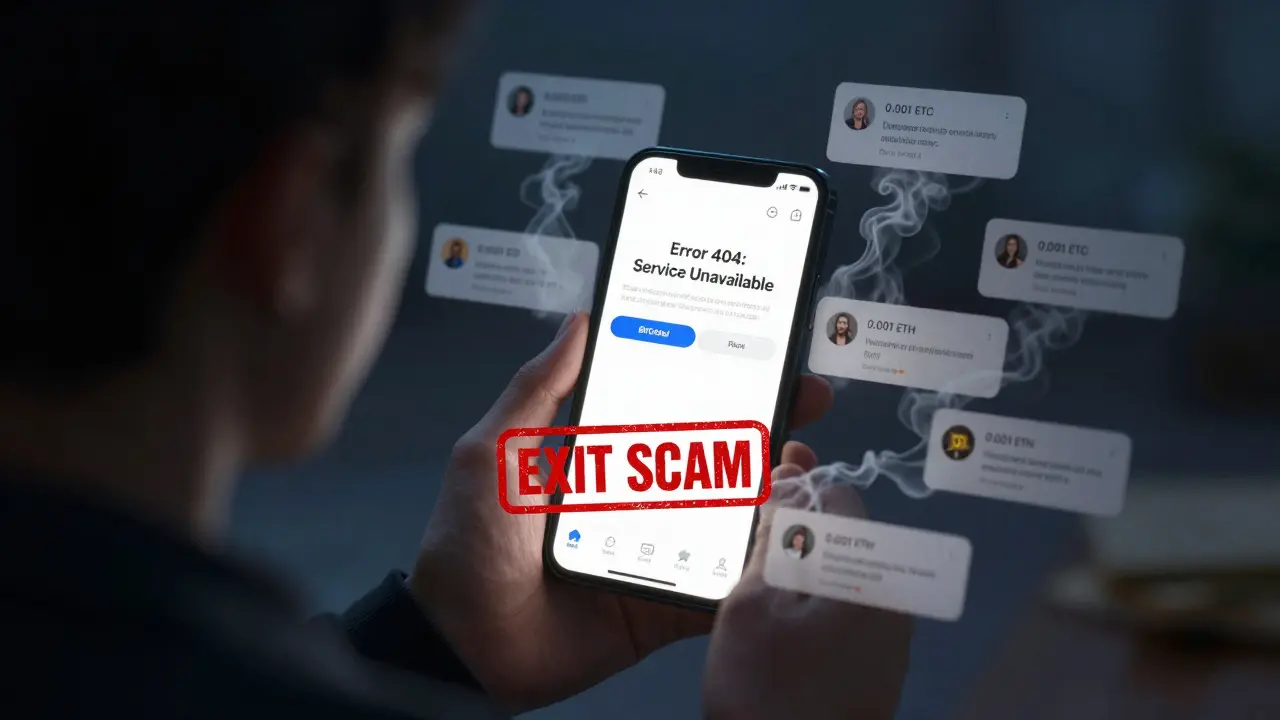
- Adeleke David Adekunle: "Very terrible experience. Too expensive. I lost 33 TRX just to withdraw 108. Worst crypto experience ever."
- Dwayne Campbell: "They are 100% an exit scam. If you have a missing deposit, consider it lost."
These weren’t isolated complaints. By 2022, BitGlobal’s subreddit had over 15,000 posts-95% of them about frozen withdrawals, fake support tickets, and unanswered emails. The platform’s customer service didn’t respond. Not even to urgent requests.
The Shutdown: An Exit Scam
In August 2023, BitGlobal went dark. The website didn’t crash. It didn’t announce a maintenance break. It just stopped working. Login pages turned into error screens. Trading bots stopped responding. Withdrawal buttons vanished.
Industry trackers like CoinMarketCap marked it as "untracked"-a red flag reserved for dead or fraudulent projects. Traders Union, a broker watchdog, labeled it a "potentially fraudulent operation" in 2025. Their report stated: "BitGlobal’s closure was not accidental. It was designed to trap user funds."
By October 2025, the website still exists-but with geo-restrictions. It now blocks users from the U.S., UK, and EU. That’s not a security update. It’s a sign they’re trying to relaunch under a new name, avoiding scrutiny from regulators who’ve already flagged them.
Why BitGlobal Failed When Others Succeeded
Major exchanges like Binance, Coinbase, and Kraken operate under strict licensing. They report to governments. They keep user funds in cold storage. They have insurance. BitGlobal had none of that.
It didn’t need to be perfect. It just needed to be honest. But it chose to hide its lack of regulation, overcharge on fees, and silence users. When regulators started cracking down on unlicensed platforms globally, BitGlobal didn’t adapt. It ran.
What Happened to Your Money?
If you held crypto on BitGlobal when it shut down, your assets are gone. There is no recovery process. No legal avenue. No insurance payout. The exchange’s servers were wiped. Its corporate structure was shell-based. No lawyers, no assets, no accountability.
Unlike centralized exchanges with licenses, BitGlobal had no legal entity to sue. No bank accounts to freeze. No executives to hold responsible. It was built to disappear.
How to Avoid BitGlobal 2.0
Don’t fall for the same traps again. Here’s how to spot the next BitGlobal:
- Check licensing. Does the exchange have a license from the SEC, FCA, or similar? If not, walk away.
- Look at withdrawal fees. If withdrawals cost more than 0.0005 BTC or 0.01 ETH, it’s a red flag.
- Search Reddit and Trustpilot. If users are complaining about frozen funds, don’t wait-leave.
- Use only well-known platforms. Stick to exchanges with 5+ years of history and millions of users.
- Never keep large sums on any exchange. Move your crypto to a personal wallet. That’s the only real safety.
BitGlobal wasn’t a glitch. It was a warning. And it’s still out there-in new names, new websites, and new promises. Learn from it. Or lose everything.
Is BitGlobal still operating in 2026?
No. BitGlobal ceased all operations in August 2023. Its website now displays error pages for trading and withdrawals. Some parts of the site still load, but they’re inactive. The platform is officially dead, and users have no access to their funds.
Can I recover my funds from BitGlobal?
No. BitGlobal was not licensed or regulated, so there is no legal entity to pursue, no insurance to claim, and no recovery process. All user funds were likely stolen during the shutdown. Experts classify this as an "exit scam," where operators intentionally cut off access to keep user assets.
Why did BitGlobal charge such high withdrawal fees?
High withdrawal fees were a tactic to discourage users from moving money out. While trading fees were normal (0.10%), withdrawals were inflated-like 0.001 BTC for Bitcoin when competitors charged 0.0004 BTC. This made it expensive to leave, trapping users on the platform until it shut down completely.
Was BitGlobal a scam?
Yes. Multiple independent sources-including Wallet Scrutiny, Traders Union, and Reddit user reports-confirm BitGlobal operated as a scam. Features like fake reviews, bot-generated social media, unresponsive support, and sudden shutdown without notice are classic signs of a fraudulent exchange.
Should I use BitGlobal if it comes back?
Absolutely not. Even if the site reappears under a new name, its history is permanently tainted. There is no trust to rebuild. No transparency to restore. Any new version would be a continuation of the same fraudulent model. Avoid it completely.
Final Warning
BitGlobal’s story isn’t rare. It’s common. Every year, dozens of unregulated exchanges rise, lure users with low fees and big coin lists, then vanish. The lesson is simple: if it doesn’t have a license, it doesn’t deserve your money. Always prioritize safety over convenience. Your crypto belongs in your wallet-not on a platform that could disappear tomorrow.
Mary Scott
February 19, 2026 AT 18:11they never had any real infrastructure. i’ve seen this pattern before - fake reviews, inflated coin lists, then BOOM. gone. and the worst part? they knew exactly when to vanish. right after the feds started asking questions. this wasn’t luck. it was a heist with a website.
Shannon Holliday
February 20, 2026 AT 01:04rip my 2021 TRX stash 😭💔 i still cry when i see the word ‘BitGlobal’… why did i trust a platform with a ‘Bull & Bear’ mode?? 🤦♀️
Jeremy buttoncollector
February 20, 2026 AT 07:48the ontological failure here is systemic - the platform functioned as a pseudo-legal abstraction, leveraging regulatory arbitrage to extract liquidity without fiduciary accountability. the exit scam wasn’t an anomaly; it was the business model. decentralized finance? more like decentralized fraud.
Michelle Xu
February 20, 2026 AT 10:17if you’re new to crypto, please take this seriously: never leave funds on any exchange longer than you need to. BitGlobal wasn’t the first, and it won’t be the last. but you can protect yourself - use hardware wallets, stick to regulated platforms, and never ignore red flags like withdrawal fees over 0.0005 BTC. your assets are yours - don’t let someone else’s negligence take them.
Ryan Burk
February 22, 2026 AT 01:19lmao you people are so paranoid. it’s just crypto. if you can’t handle volatility, don’t invest. people lose money every day on binance too. stop crying about it. you chose to gamble. now deal.
Amanda Markwick
February 23, 2026 AT 10:52thank you for writing this. i lost everything on BitGlobal too. i felt so alone until i saw this. we’re not stupid for trusting it - they made it look real. but now? we’re the ones who warn others. and that’s powerful. keep sharing stories. we’re building the resistance.
Sriharsha Majety
February 24, 2026 AT 08:50i had 500 TRX on there and now nothing. i thought the app was slow but now i know. i dont blame myself too much. crypto is hard. but next time i check license first. thank you for the warning
Tabitha Davis
February 24, 2026 AT 19:36OMG this is literally the plot of that Netflix doc ‘Crypto Con’! and guess what? the same team behind BitGlobal is now running ‘GlobalTradeX’ on Telegram. i’ve got screenshots. they’re using the same fake influencer accounts. we need to expose them before they steal more. someone call the FBI. this is a crime scene.
Vishakha Singh
February 25, 2026 AT 19:18Thank you for the detailed analysis. As someone who helps beginners understand cryptocurrency, I urge all users to prioritize transparency and regulation above all else. BitGlobal’s collapse is a textbook example of why due diligence matters. Always verify licenses, check community sentiment on Reddit and Trustpilot, and never store significant assets on unregulated platforms. Safety first - always.
Don B.
February 27, 2026 AT 03:40sooo… you’re saying we should just trust big companies like binance? lol. they’re just bigger. they’re still centralized. they can freeze your account. they can delist your coin. they can disappear too. the real solution is self-custody. not more trust in corporations. you’re just swapping one scam for another.