Bitospher Crypto Exchange Review: Is It Legit or a Scam? (2026 Analysis)
 Jul, 4 2026
Imagine finding a new cryptocurrency exchange that claims to be fully regulated by the U.S. Securities and Exchange Commission (SEC). It promises zero withdrawal fees, strong security, and easy trading. Sounds too good to be true? In the world of crypto, it usually is. This is exactly the situation with Bitospher, a platform that has recently appeared in search results but lacks the digital footprint you’d expect from a legitimate financial institution.
If you are considering depositing funds into Bitospher, you need to pause and look closer. The information available about this exchange raises several red flags that suggest extreme caution is necessary. This review breaks down what we know, what we don’t know, and why those missing pieces matter for your money.
The SEC Regulation Claim: A Major Red Flag
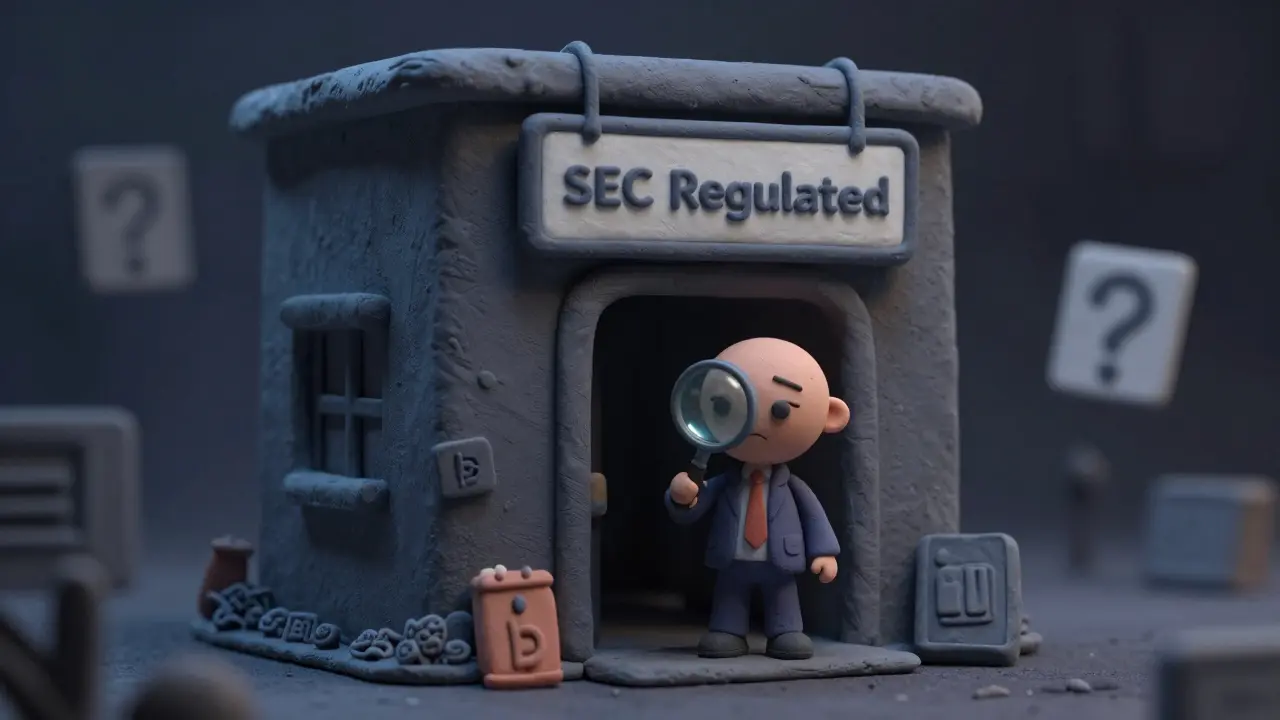
The most prominent claim made by Bitospher, often cited in secondary reviews like those from WikiBit, is that it is an "SEC-regulated" exchange. Let’s unpack this because it is critical for your safety. As of mid-2026, the SEC does not grant a simple "regulated" license to crypto exchanges in the way banks receive charters. Instead, the SEC actively pursues enforcement actions against platforms that offer unregistered securities.
We have seen major players like Coinbase and Binance face massive legal battles and fines for securities law violations. If Bitospher were truly compliant with federal securities laws, it would likely be headline news in major financial publications like Bloomberg or Reuters. The absence of such coverage, combined with the vague nature of the claim, suggests this might be marketing fluff rather than legal fact. Always ask for the specific license number. If they cannot provide a verifiable registration ID on the official SEC EDGAR database, treat the claim as false.
Security Architecture: Promises vs. Proof
Security is the backbone of any trustworthy exchange. Bitospher claims to use industry-standard SSL encryption, firewalls, and intrusion detection systems. These are baseline requirements, not unique selling points. More importantly, the platform allegedly stores the majority of user funds in cold storage (offline wallets).
| Feature | Bitospher Claim | Industry Standard / Reality Check |
|---|---|---|
| Cold Storage | Majority of funds offline | Top exchanges keep 95-98% offline; no proof provided for Bitospher |
| Authentication | Strict verification required | Mandatory 2FA is essential; specific methods (e.g., YubiKey) not listed |
| Audits | Not specified | Quarterly SOC-2 audits reduce vulnerabilities by 67%; no audit reports found |
| Proof of Reserves | None published | Standard for trust; Binance/Coinbase publish monthly Merkle tree proofs |
Research from Curtin University indicates that exchanges storing over 90% of funds offline reduce hack risks by approximately 85%. However, without independent proof-of-reserves audits-like those published monthly by Binance or Coinbase-we have no way to verify if Bitospher actually holds the assets it claims to. In 2023 alone, Chainalysis reported $2.38 billion in crypto thefts from exchanges, many of which were newer platforms with opaque security practices.
Fees and Trading Costs
Let’s talk about what you will pay. Bitospher advertises a flat 0.25% trading fee for both market makers and takers. They also claim zero fees for deposits and withdrawals. On paper, this looks competitive. But let’s compare it to the giants.
Binance charges 0.1% for takers and can go as low as 0.02% for high-volume makers. Coinbase Advanced Trade sits around 0.4% for takers. Bitospher’s 0.25% is in the middle, but here is the catch: larger exchanges offer tiered discounts based on volume. If you trade frequently, Bitospher’s flat rate could end up costing you more. Additionally, the "zero withdrawal fee" claim is suspicious. Network costs exist. Bitcoin transactions cost between $1.50 and $5.00 depending on congestion. If Bitospher absorbs these costs, they must make it up elsewhere, likely through wider spreads (the difference between buy and sell prices), which eat into your profits silently.

Lack of Transparency and User Data
This is where the investigation hits a wall. A legitimate financial platform has a history. You should be able to find:
- Founding Date and Team: Who built Bitospher? Are the founders public figures with LinkedIn profiles?
- User Reviews: Does it have a Trustpilot page? Reddit discussions? For context, Coinbase has over 18,500 reviews on Trustpilot. Bitospher has virtually none.
- Trading Volume: CoinGecko and CoinMarketCap track real-time volume. Bitospher is largely absent from these aggregators, suggesting low liquidity. Low liquidity means you might struggle to sell large amounts of crypto quickly without crashing the price.
The absence of this data is not just an inconvenience; it is a warning sign. In the crypto space, anonymity often correlates with higher risk. If a company hides its team and lacks third-party validation, why should you trust them with your life savings?
Comparison with Established Exchanges
To put Bitospher in perspective, let’s look at how it stacks up against established, regulated entities. This comparison highlights what you might be missing out on by choosing an obscure platform.
| Feature | Bitospher | Coinbase | Binance |
|---|---|---|---|
| Regulatory Status | Claims SEC regulation (unverified) | Publicly traded (NASDAQ), state licenses | Global licenses, facing SEC litigation |
| Trust Signals | None found | High (Audited financials, large user base) | Medium-High (High volume, proof of reserves) |
| Customer Support | Claimed 24/7 | Verified 24/7, extensive help center | 24/7 live chat, ticket system |
| Mobile App | Reportedly available | Highly rated, feature-rich | Highly rated, advanced features |
Established exchanges like Kraken, Bitstamp, and Coinbase invest heavily in compliance and transparency because they want to operate long-term. Bitospher’s lack of digital presence suggests it may not have the resources-or the intention-to do so.

Practical Steps for Verification
If you are still curious about Bitospher, do not deposit money yet. Take these steps to verify its legitimacy yourself:
- Check the Domain Age: Use a WHOIS lookup tool. If the domain was registered less than a year ago, proceed with extreme caution.
- Search for Complaints: Look beyond their website. Search "Bitospher scam," "Bitospher withdrawal issues," or "Bitospher reddit." If there are zero results, that is itself a negative signal for a supposed trading platform.
- Test Customer Support: Contact their support with a technical question. Do they respond promptly? Do they give generic answers? Poor support is often the first sign of trouble when you need to withdraw funds.
- Verify Licenses: Ask them directly for their SEC registration number or state Money Transmitter License numbers. Then, check those numbers on government websites.
Final Verdict: Proceed with Extreme Caution
Based on the available evidence, Bitospher fails to meet the basic standards of transparency and verification expected from a secure crypto exchange. The claim of SEC regulation is unsubstantiated and contradicts the current regulatory landscape. The lack of user reviews, trading volume data, and independent security audits creates a high-risk environment for your capital.
In an industry where $2.38 billion was stolen from exchanges in 2023, playing it safe is not being paranoid-it is being smart. Stick to platforms that publish regular proof-of-reserves, have clear leadership teams, and are widely discussed in the community. Your assets deserve better than a mystery platform with bold claims and empty receipts.
Is Bitospher a legitimate crypto exchange?
There is insufficient evidence to confirm Bitospher is legitimate. It lacks verifiable user reviews, transparent ownership details, and independent security audits. Its claim of SEC regulation is questionable given the SEC's historical enforcement approach rather than licensing model for crypto exchanges.
Does Bitospher really have zero withdrawal fees?
Bitospher claims zero withdrawal fees, but this is unusual because blockchain networks charge transaction fees. Without clear documentation on how they cover these costs, users should suspect hidden fees like wider bid-ask spreads or delayed processing times.
Why is there no information about Bitospher online?
The lack of information-including no Reddit discussions, no Trustpilot reviews, and no presence on major tracking sites like CoinGecko-is a significant red flag. Legitimate exchanges have active communities and public data trails. Absence suggests the platform may be new, inactive, or potentially fraudulent.
What are safer alternatives to Bitospher?
Consider established exchanges like Coinbase, Kraken, or Binance. These platforms have millions of users, publish regular proof-of-reserves, have clear regulatory statuses, and offer robust customer support. While they may have slightly different fee structures, they provide significantly higher security and transparency.
How can I verify if a crypto exchange is SEC regulated?
You can verify SEC registration by searching the company name on the SEC's EDGAR database. Be aware that most crypto exchanges are not "SEC regulated" in the traditional sense; instead, they may hold state-level money transmitter licenses. Always demand specific license numbers and verify them on official government websites.
Tawny Holmes
July 4, 2026 AT 10:55SEC doesn't "regulate" exchanges like a bank charter. They prosecute them if they violate securities laws. If Bitospher isn't on the EDGAR database or hasn't been sued publicly, that claim is marketing fluff.
Jessie Smith
July 6, 2026 AT 07:09it's fascinating how the masses are so easily seduced by the siren song of 'zero fees' while ignoring the fundamental ontology of trust in decentralized systems. the lack of proof-of-reserves is not merely an oversight; it is a philosophical void where your capital goes to die. one must question the very nature of value when the custodian remains shrouded in the mist of anonymity. truly, we are witnessing the collapse of epistemic rigor in financial discourse.
Drew M
July 8, 2026 AT 00:09Oh wow! 🚨 This post is literally saving lives right now! 😱 I was actually thinking about trying this out because the UI looked kinda sleek, but reading this makes me feel so much safer staying away. 🙌 Thanks for doing the heavy lifting! 💖✨
Deep Rahman
July 8, 2026 AT 12:45I have been thinking about this for a long time and I think that when we look at these new platforms we are really looking at a reflection of our own desire for easy money which is a dangerous thing because the world is not designed to give us things for free and so when someone says they will give you zero fees it is usually because they are taking something else from you like your data or your security or maybe even your soul in a metaphorical sense because trust is hard to build and easy to break and we should remember that history is full of examples of people who lost everything because they trusted too quickly without asking enough questions about who was behind the curtain and whether they had any real skin in the game or were just passing through to take what they could get before disappearing into the ether of the internet forever.
Melissa Beckwith
July 10, 2026 AT 10:20The absence of independent audits is the single most critical failure point here. While many users focus on fee structures or UI aesthetics, the underlying infrastructure requires rigorous third-party validation such as SOC-2 Type II reports and monthly Merkle tree proofs. Without these specific documents, any claim of cold storage is merely an assertion without evidentiary support. Furthermore, the lack of presence on CoinGecko or CoinMarketCap indicates either a deliberate avoidance of transparency or a complete lack of trading volume, both of which render the platform illiquid and highly susceptible to rug pulls. One must also consider the regulatory landscape in the United States where the SEC has explicitly stated that most crypto assets are securities, meaning an unregistered exchange operating without clear legal counsel is essentially committing fraud by default.
Josephine Finlayson
July 10, 2026 AT 19:40This is such a helpful breakdown!! 👏 It’s really important to double-check these details before putting any money anywhere. 🙏 I always stick to Coinbase or Kraken because I know they’ve been around for years and have real customer support. 😊 Better safe than sorry! 💕
Tuan Nguyen
July 11, 2026 AT 01:40The correlation between anonymity and fraud is statistically significant yet consistently ignored by retail investors who prioritize convenience over due diligence. The platform's inability to provide verifiable license numbers suggests a structural incompetence or intentional deception, both of which are unacceptable risk factors. Do not engage with entities that operate outside established regulatory frameworks.