BOA Exchange Review: Bank of America Crypto Policy & ETF Guide (2026)
 Jun, 1 2026
There is no such thing as a "BOA Exchange." If you are looking for a platform where you can log in and buy Bitcoin directly with your Bank of America card, you will be disappointed. That service does not exist. However, if you are a client of Merrill, the wealth management division of Bank of America, the landscape has changed dramatically since early 2026. Bank of America has officially reversed its stance on digital assets, allowing advisors to recommend cryptocurrency investments through regulated exchange-traded products (ETPs). This isn't an exchange; it's a strategic shift in how traditional finance handles crypto exposure.
For years, Bank of America was one of the most conservative major banks regarding crypto. CEO Brian Moynihan famously called Bitcoin a "scam" in 2022. But by January 2026, that narrative shifted. The bank now permits its wealth management advisors to proactively suggest allocating between 1% and 4% of a client's portfolio to spot Bitcoin ETFs. This move places Bank of America alongside other giants like Morgan Stanley and Vanguard, signaling that crypto is finally being treated as a legitimate asset class within mainstream wealth management.
How Bank of America Crypto Access Actually Works
You cannot open a standalone crypto account at Bank of America. Instead, access happens through your existing brokerage relationship with Merrill Edge, the online brokerage platform for Bank of America clients. The process is strictly advisory-driven. Your financial advisor must complete mandatory training and follow specific guidelines set by the bank's Chief Investment Office (CIO) before they can recommend these assets to you.
The mechanism is simple but restrictive. Advisors recommend specific SEC-approved Bitcoin ETFs rather than direct coin purchases. This means you never hold private keys or interact with blockchain wallets. You own shares of a fund that holds the actual Bitcoin. This structure keeps everything within the regulated U.S. financial system, which appeals to institutional investors who need compliance and tax clarity but repels crypto purists who want self-custody.
Here is what the allocation looks like in practice:
- Minimum Allocation: Typically starts at 1% of your total portfolio.
- Maximum Allocation: Generally capped at 4%, depending on your risk tolerance.
- Risk Requirement: Clients usually need a risk tolerance score above 7 on a 10-point scale.
- Time Horizon: Advisors are guided to only recommend this to clients with at least a 10-year investment horizon.
This approach ensures that crypto remains a small, diversified part of a broader strategy rather than a speculative gamble. It also means that if you are a retail investor without a Merrill advisor, you still cannot use Bank of America to buy crypto. You would need to use a dedicated exchange like Coinbase or Robinhood.
Which Bitcoin ETFs Can You Buy Through BOA?
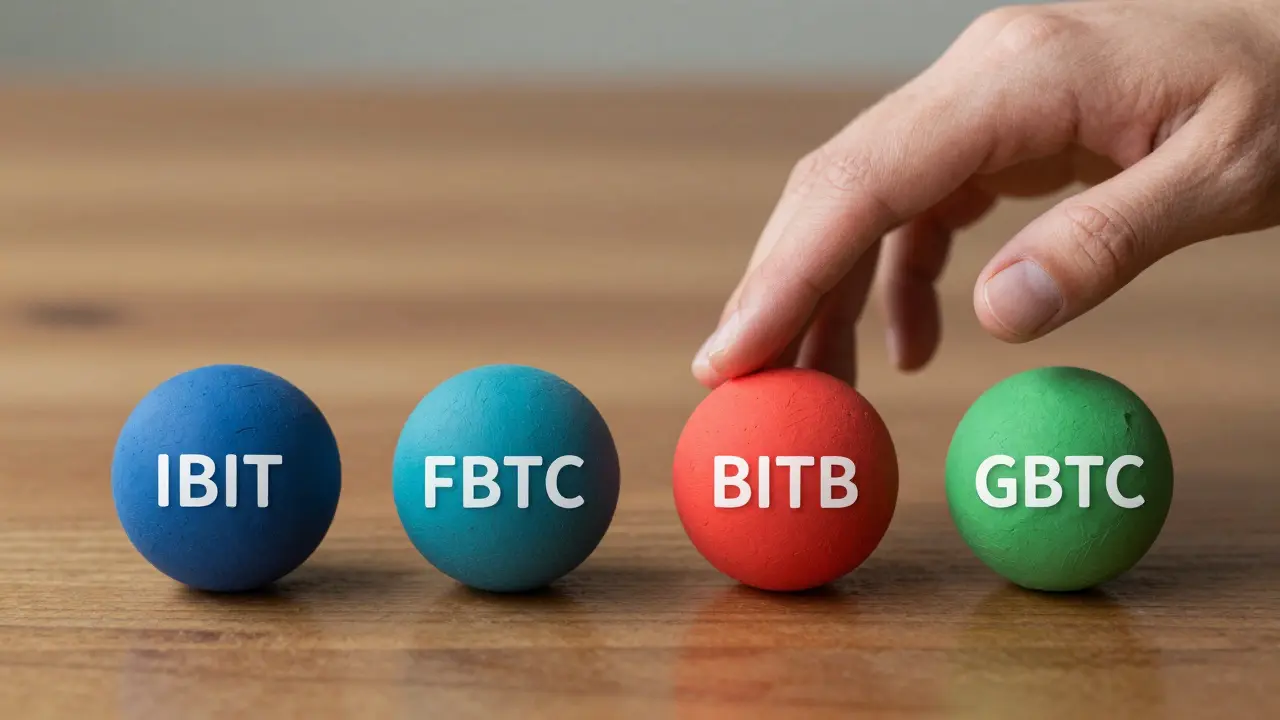
Bank of America’s CIO has approved four specific spot Bitcoin ETFs for recommendation. These funds are traded on standard stock exchanges, just like Apple or Tesla shares. Your advisor will choose from this shortlist based on fees, liquidity, and performance history.
| ETF Name | Issuer | Ticker Symbol | Key Attribute |
|---|---|---|---|
| iShares Bitcoin Trust | BlackRock | IBIT | Highest Assets Under Management (AUM) |
| Wise Origin Bitcoin Fund | Fidelity | FBTC | Strong retail integration via Fidelity apps |
| Bitwise Bitcoin ETF | Bitwise | BITB | Known for transparent fee structures |
| Bitcoin Mini Trust | Grayscale | GBTC | Converted from legacy trust; high volume |
Among these, BlackRock’s IBIT, iShares Bitcoin Trust often leads in inflows due to BlackRock’s massive distribution network. Fidelity’s FBTC, Wise Origin Bitcoin Fund is also popular because many clients already have relationships with Fidelity. The choice often comes down to which issuer your advisor prefers and which offers the lowest expense ratio at the time of purchase.
Pros and Cons of Using BOA for Crypto Exposure
Using Bank of America’s wealth management services to gain crypto exposure has distinct advantages and drawbacks compared to using a dedicated crypto exchange. Understanding these trade-offs is crucial before you commit capital.
The Advantages:
- Simplicity: You manage everything in one place. No new accounts, no seed phrases, no hardware wallets. Your crypto sits right next to your stocks and bonds.
- Security: Since you are buying an ETF, you are protected by SIPC insurance (up to limits) against broker failure. You don’t have to worry about hacking your personal wallet.
- Tax Clarity: Brokers provide clear Form 1099-B statements. You don’t need complex crypto tax software to track cost basis.
- Professional Guidance: Your advisor helps determine if crypto fits your overall financial plan, preventing emotional trading during volatility.
The Disadvantages:
- Fees: ETFs charge annual expense ratios (typically 0.25%). Plus, if you pay for advisory services, you might face additional management fees. This creates a "fee drag" that reduces long-term returns compared to holding direct coins.
- Limited Products: As of early 2026, Bank of America primarily supports Bitcoin ETFs. Ethereum ETFs were under review with stricter limits (0.5-2%), and altcoins are completely off the table.
- No Direct Ownership: You do not own Bitcoin. You own a share of a company that owns Bitcoin. You cannot send those assets to a friend or use them for decentralized finance (DeFi) applications.
- Conservative Limits: The 1-4% cap means you cannot make a significant bet on crypto growth through this channel alone.
Who Is This For? And Who Should Look Elsewhere?
This service is designed for a specific type of investor. If you are a high-net-worth individual who values convenience, security, and professional advice over maximum yield, this is likely a good fit. It works well for people who want "set it and forget it" exposure to Bitcoin without learning the technical intricacies of blockchain technology.
However, if you are a younger investor, a tech-savvy user, or someone who wants to diversify beyond Bitcoin into Ethereum, Solana, or other assets, Bank of America is not the right tool. You should look at dedicated platforms like Coinbase, a leading US-based cryptocurrency exchange or Rocket Dollar, a platform for dollar-cost averaging into crypto. These platforms offer lower fees, wider asset selection, and the ability to self-custody your assets.
Consider your goals. Are you trying to hedge inflation with a small portion of your retirement savings? BOA/Merrill might work. Are you trying to build a substantial crypto portfolio from scratch? You will hit walls quickly with the 4% allocation limit and lack of altcoin support.

Market Context: Why Did Bank of America Change Its Mind?
The shift in policy didn't happen in a vacuum. By late 2025, the pressure from clients and competitors became too great. Bitcoin had stabilized around the $90,000-$92,000 range, and spot Bitcoin ETFs had attracted billions in net inflows since their approval in early 2024. Competitors like Morgan Stanley had already implemented similar 1-5% allocation guidelines. Vanguard also announced it would allow crypto ETF trading on its platform.
Bank of America manages $4.6 trillion in client assets. Ignoring a growing demand for crypto exposure meant risking client attrition. Even CEO Brian Moynihan acknowledged that "client demand necessitates responsible access," despite his past skepticism. The bank’s internal research noted that while crypto remains volatile-citing Bitcoin’s drop to $18,000 in November 2025-the institutionalization of ETFs provided a safer wrapper for traditional investors.
This move is part of a broader trend called "advisory integration." It represents the final frontier for crypto maturation. When the biggest banks in America start treating Bitcoin like a bond or a stock index, it signals that the asset class has survived its infancy. However, experts warn that this doesn't mean full integration. NYDIG’s CEO Chris Giancarlo noted that "4% allocations through ETFs represent maturation but not full integration into core portfolios."
Practical Steps for Merrill Clients
If you are ready to explore this option, here is how to proceed:
- Contact Your Advisor: Do not try to buy these ETFs yourself without guidance. The bank requires advisor involvement for suitability checks.
- Review Your Risk Profile: Ensure your risk tolerance score is high enough (above 7/10) and that you have a long-term horizon (10+ years).
- Determine Allocation Size: Discuss whether 1%, 2%, or 4% makes sense for your portfolio. Remember, this should complement, not dominate, your holdings.
- Select the ETF: Ask your advisor why they prefer IBIT, FBTC, BITB, or GBTC. Fee differences may seem small but compound over time.
- Execute the Trade: The transaction will appear in your Merrill Edge account like any other stock purchase. Keep an eye on the confirmation details.
Be prepared for extra paperwork. Onboarding for crypto-allocated portfolios takes about 45 minutes longer than standard setups due to enhanced disclosure requirements. Make sure you understand the tax implications of ETF creations and redemptions, as your tax advisor may need to adjust your strategy accordingly.
Is there a BOA Exchange app for buying crypto?
No. Bank of America has not launched a cryptocurrency exchange or a dedicated crypto app. All crypto exposure must be accessed through Merrill Edge via Bitcoin ETFs recommended by a wealth management advisor.
Can I buy Ethereum through Bank of America?
As of early 2026, Ethereum ETFs are under review with more restrictive guidelines (0.5-2% allocation). Availability depends on your advisor and the final regulatory approval status of specific Ethereum ETF products.
What is the minimum amount to invest in crypto via BOA?
There is no specific minimum dollar amount for the ETF itself, but the allocation is typically 1-4% of your total portfolio. Therefore, the practical minimum depends on your overall account size and your advisor's suitability assessment.
Do I own actual Bitcoin when I buy IBIT through Merrill?
No. You own shares of the iShares Bitcoin Trust. BlackRock holds the actual Bitcoin in custody. You benefit from price appreciation but cannot transfer or spend the underlying Bitcoin.
Why did Bank of America change its policy on crypto?
Client demand, competitor actions (like Morgan Stanley and Vanguard), and the stabilization of Bitcoin prices drove the change. The bank recognized that ignoring crypto risked losing high-net-worth clients to more flexible institutions.
lorna erni
June 3, 2026 AT 02:41finally the big banks are catching up to reality, even if it is painfully slow and wrapped in layers of corporate bureaucracy. i am so tired of hearing about how crypto is a scam when these same institutions are now quietly funneling billions into spot etfs through their wealth management arms. it is almost funny how they tried to gatekeep us for years while making money off every other asset class. now that they need our capital, suddenly bitcoin is a 'legitimate asset class' worthy of a 4% allocation. typical. but hey, at least my portfolio can finally be diversified without me having to explain private keys to my financial advisor who still thinks blockchain is a type of chain store.
Dana Rapoport
June 4, 2026 AT 11:59it is interesting to see the shift from hostility to cautious acceptance. the 1-4% cap is a clear signal that they view this as speculative insurance rather than a core holding. for those of us who have been advocating for digital assets as a hedge against inflation, seeing major players like bank of america integrate this into standard advisory services validates the long-term thesis. it does not mean we should trust them blindly, but it does mean the infrastructure is maturing. the key here is understanding that you are buying exposure, not ownership, which changes the entire risk profile for traditional investors.
trisya hazriyana
June 6, 2026 AT 02:25lol "strategic shift" more like "desperate cash grab" because their clients were leaving for morgan stanley. the jargon is thick here but let us cut through it: you pay fees to buy shares of a company that holds coins you cannot touch. classic walled garden strategy. they want your yield but not your freedom. the 0.25% expense ratio plus advisory fees is a joke when you could just use coinbase or rocket dollar. but sure, keep telling yourself it is about "security" and "tax clarity" while they skim the top. typical institutional move.
Debbie Lewis
June 7, 2026 AT 04:51i guess it makes sense for older folks who just want set it and forget it. i am not gonna lie, the idea of dealing with seed phrases stresses me out so having it all in one place with merrill edge sounds convenient enough. i do not care about defi or sending btc to my friend, i just want my retirement to grow. if the fees are worth the peace of mind, then maybe it is okay. i am just watching from the sidelines for now.
Eric Grosso
June 7, 2026 AT 19:23so wait, u cant actually own the bitcoin? thats kinda wild. i thought the whole point was decentralization. paying extra fees to let blackrock hold it for me feels like missing the point entirely. but i get why regular people would prefer it. less hassle i suppose. just seems like a copout for the purists among us. also typos aside, good info on the etf tickers.
Edith Mair
June 8, 2026 AT 22:04the narrative here is misleading if you focus only on the convenience aspect. yes, it is easier, but you are surrendering sovereignty for comfort. the article mentions that altcoins are completely off the table, which limits diversification significantly. if you believe in the broader ecosystem beyond bitcoin, boa is a dead end. the 4% cap is arbitrary and designed to limit liability for the bank, not optimize returns for the client. do not let the polished marketing fool you into thinking this is true integration. it is merely regulated speculation with higher overhead costs. think critically about whether you want access or ownership.