BOA Exchange Review: Why Bank of America Doesn't Have a Crypto Platform (And What It Does Instead)
 Jun, 1 2026
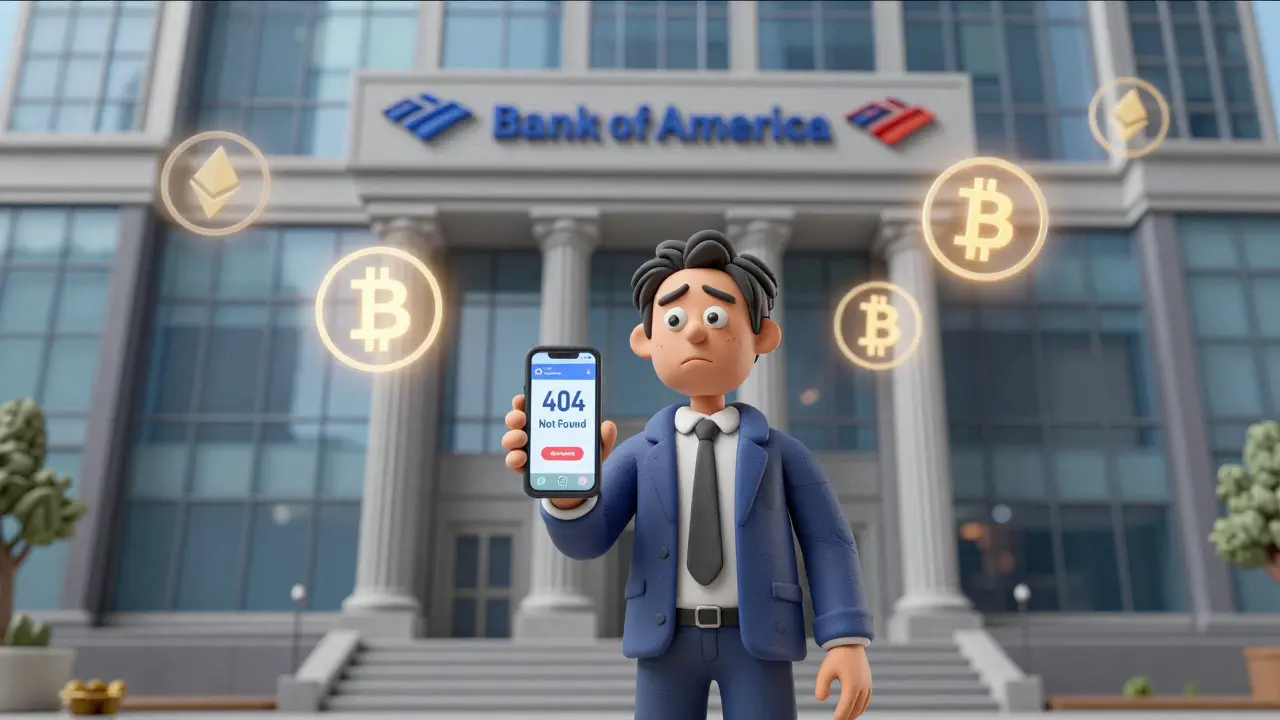
There is no such thing as a BOA Exchange. If you are searching for a dedicated cryptocurrency trading platform run by Bank of America where you can buy Bitcoin directly with your checking account, you will come up empty-handed. This is a common misconception in 2026, fueled by headlines about the bank’s major policy shift regarding digital assets. However, understanding *why* there is no BOA Exchange is crucial for anyone looking to invest through traditional banking channels. Instead of a standalone exchange, Bank of America has integrated regulated crypto exposure into its existing wealth management infrastructure.
The confusion stems from a significant change implemented on January 5, 2026. Bank of America, one of the 'Big Four' U.S. banks managing $4.6 trillion in client assets, reversed its previous ban on advisors proactively suggesting crypto investments. Previously, if you wanted crypto exposure through your Bank of America advisor, you had to bring it up yourself, and even then, they were often restricted from guiding you. Now, advisors across Merrill, Bank of America Private Bank, and Merrill Edge are authorized to recommend specific, regulated cryptocurrency products. But these are not direct coins; they are exchange-traded products (ETPs), specifically spot Bitcoin ETFs.
How Bank of America Actually Handles Crypto Investments
To understand the value proposition here, we need to look at the mechanics. You do not log into a new app called "BOA Crypto." Instead, you use your existing brokerage account linked to your wealth management profile. The bank’s Chief Investment Office (CIO) now covers four specific Bitcoin ETFs that advisors are permitted to recommend:
- BlackRock's iShares Bitcoin Trust (IBIT)
- Fidelity's Wise Origin Bitcoin Fund (FBTC)
- Bitwise Bitcoin ETF (BITB)
- Grayscale's Bitcoin Mini Trust (GBTC)
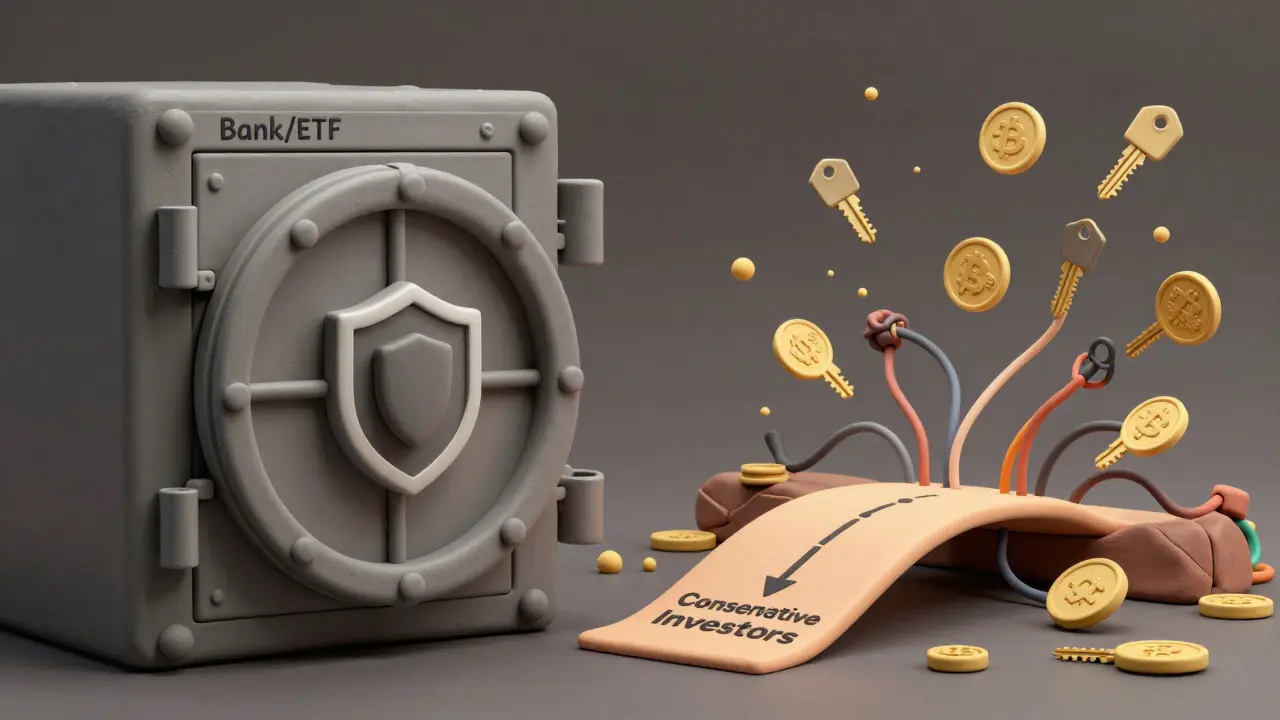
This approach keeps your assets within the highly regulated environment of the U.S. securities market. When you buy IBIT or FBTC through Merrill Edge, you are buying shares of a fund that holds actual Bitcoin in custody. You do not hold the private keys yourself. This eliminates the risk of losing your funds due to a hacked personal wallet or a lost password, which is a primary concern for many traditional investors. However, it also means you are subject to the fees and structures of an ETF rather than direct ownership.
The allocation guidelines are strict. Advisors are trained to recommend between 1% and 4% of a portfolio to digital assets, depending on your risk tolerance and investment horizon. This is not a place for speculative day-trading. The bank explicitly cautions clients about volatility, citing Bitcoin’s drop to $18,000 in November 2025 as a reminder of the asset class's instability. As of early 2026, Bitcoin was trading around $92,654, showing a daily gain of 1.52%, but the underlying message from Bank of America remains conservative: treat this as a long-term diversification tool, not a get-rich-quick scheme.
Who Is This Service For? Eligibility and Requirements
You cannot simply open a standard Bank of America checking account and start buying Bitcoin ETFs through this new advisory channel. This service is designed for clients within the wealth management ecosystem. To qualify for proactive recommendations, your financial advisor must complete a mandatory 3-hour digital assets certification module. They must also adhere to strict suitability requirements.
According to internal guidance documents reviewed by industry analysts, crypto allocations are generally only recommended to clients who meet two criteria:
- A minimum 10-year investment horizon.
- A risk tolerance score above 7 on the bank’s 10-point scale.
If you are a younger investor with a high-risk appetite but a short time frame, your advisor may still execute a trade if you request it, but they will not be proactively building a model portfolio with crypto for you under the new CIO guidelines. The onboarding process for these portfolios takes approximately 45 minutes longer than standard setups due to enhanced disclosure requirements. Ninety-two percent of surveyed advisors reported a "moderate" learning curve when implementing these new protocols, suggesting that while the system is robust, it is not instantaneous.

Comparison: Bank of America vs. Direct Crypto Exchanges
| Feature | Bank of America (via Merrill Edge) | Direct Exchange (e.g., Coinbase, Kraken) |
|---|---|---|
| Asset Type | Spot Bitcoin ETFs (IBIT, FBTC, etc.) | Direct Cryptocurrency (BTC, ETH, etc.) |
| Custody | Third-party custodian (BlackRock/Fidelity) | User-controlled wallet or exchange hot/cold storage |
| Fees | ETF Expense Ratio (~0.25%) + Brokerage commissions (if any) | Trading fees (~0.6% - 1.5%) + Withdrawal fees |
| Tax Reporting | Integrated into annual tax statement (Form 1099) | User responsible for tracking cost basis |
| Regulatory Oversight | SEC-regulated ETF structure | Varies by jurisdiction; less stringent consumer protections |
| Access Level | Wealth management clients with suitable profiles | Anyone with ID verification |
The table above highlights the fundamental trade-off. By using Bank of America, you gain simplicity, security, and tax convenience. Your crypto gains and losses appear on your standard brokerage tax forms. You don’t need to worry about software wallets or seed phrases. However, you pay for this convenience. While ETF expense ratios are low (around 0.25%), the lack of direct control means you cannot move your assets off-platform. In a worst-case scenario involving the bank or the ETF provider, your recourse is legal, not technical.
Conversely, direct exchanges offer full control and access to thousands of altcoins beyond just Bitcoin. But they come with higher operational risks. If the exchange goes bankrupt or is hacked, your funds may be lost. Bank of America’s approach effectively outsources the custody risk to massive institutions like BlackRock and Fidelity, which have deep pockets and regulatory compliance teams.
Market Context and Institutional Validation
Why does this matter? Because Bank of America’s shift signals a broader trend in traditional finance. In 2022, CEO Brian Moynihan famously called Bitcoin "a scam." By January 2026, he acknowledged that "client demand necessitates responsible access." This pivot places Bank of America alongside Morgan Stanley, which implemented similar 1-5% crypto allocation guidelines in 2025. It contrasts sharply with JPMorgan Chase, which as of early 2026 continues to restrict crypto ETF recommendations to its ultra-high-net-worth private bank clients only.
Vanguard also made a parallel decision in January 2026 to allow crypto ETF trading on its platform, impacting 50 million investors. Together, these moves represent what industry experts call the "final frontier for crypto maturation." According to Deloitte’s January 2026 report, advisory integration is more significant than price movements because it embeds crypto into long-term retirement and savings strategies.
However, skepticism remains. Goldman Sachs noted in January 2026 that 1-4% allocations are "insufficient to capture asymmetric upside," implying that serious believers should go direct. Meanwhile, JPMorgan warned that even 1% allocations could be excessive during market stress events due to correlation breakdowns. These conflicting views highlight that while the door is open, the path is still being defined.
Potential Pitfalls and User Feedback
Early user feedback from Reddit communities like r/WealthManagement and r/Bitcoin shows mixed reactions. A comment from user 'FinancialPlanner2020' in mid-January 2026 praised the smoother process for adding FBTC to client portfolios. However, critics point out the fee drag. One user, 'LegacyBankingSkeptic,' argued that the combined costs of ETF management and potential advisory fees make it a "watered-down option" compared to the 0.2% fees available on some direct platforms.
Another critical challenge is explaining ETF premium/discount mechanics to clients. Unlike direct Bitcoin, which trades at a global spot price, ETFs can trade slightly above or below their net asset value (NAV) depending on supply and demand. Bank of America’s tax advisory team has developed specific guidance to help clients navigate the tax implications of in-kind creation and redemption processes, but this complexity is invisible to the end-user until tax season arrives.
Furthermore, the bank’s internal strategy includes contingency plans to adjust allocation ranges if Bitcoin’s 30-day volatility exceeds 85%. Currently sitting at 72%, this threshold acts as a circuit breaker. If volatility spikes, your advisor might be instructed to pause new crypto allocations or rebalance existing ones. This protective measure is a double-edged sword: it protects you from panic-driven decisions but may also prevent you from buying the dip if you prefer a hands-on approach.
Future Outlook: Ethereum and Beyond
As of late January 2026, Bank of America announced expanded research coverage to include Ethereum ETFs later in Q1 2026. However, the guidelines are tighter. Due to perceived higher volatility, Ethereum allocations are capped at 0.5% to 2% of a portfolio. This suggests that while the bank is warming up to digital assets, it views them through a lens of extreme caution. There are no immediate plans to support other cryptocurrencies like Solana or Cardano through this channel.
For most investors, the key takeaway is that Bank of America is not trying to become Coinbase. It is trying to become a safer, simpler gateway for those who already trust the banking relationship. If you value peace of mind, tax simplicity, and professional oversight over maximum yield and total control, the new BOA crypto advisory service is a viable option. If you are a tech-savvy investor comfortable managing private keys and navigating decentralized exchanges, you will likely find the 1-4% cap and ETF structure too restrictive.
Does Bank of America have a crypto exchange?
No, Bank of America does not have a dedicated cryptocurrency exchange. Instead, it allows wealth management advisors to recommend regulated Bitcoin ETFs (such as IBIT and FBTC) through existing brokerage platforms like Merrill Edge. Clients do not hold direct cryptocurrency but own shares in funds that track Bitcoin prices.
Can I buy Bitcoin directly through my Bank of America checking account?
You cannot buy direct Bitcoin through a standard checking account. You must have a brokerage account linked to your wealth management profile (e.g., Merrill Edge). Transactions are executed as stock-like trades for Bitcoin ETFs, not as direct crypto purchases. This requires your financial advisor to approve the allocation based on your risk profile.
What are the fees for investing in crypto via Bank of America?
The primary cost is the ETF expense ratio, which is typically around 0.25% annually for funds like IBIT or FBTC. Additionally, you may incur standard brokerage transaction fees if your Merrill Edge account does not offer commission-free ETF trading. There are no hidden "crypto network fees" since you are not transacting on a blockchain directly.
Is it safe to invest in crypto through Bank of America?
It is considered safer than using unregulated exchanges because the assets are held in SEC-approved ETFs with third-party custodians like BlackRock. However, the underlying asset (Bitcoin) remains volatile. The safety refers to the platform and custody, not the price stability of the investment. You are protected from hacking risks associated with personal wallets but exposed to market fluctuations.
Will Bank of America support Ethereum or other altcoins?
As of early 2026, Bank of America is expanding coverage to include Ethereum ETFs with stricter allocation limits (0.5-2%). There are no current plans to support other altcoins like Solana or Ripple. The bank focuses on highly liquid, regulated products that fit within conservative wealth management frameworks.
Do I need a minimum amount to invest in crypto through BOA?
While Bank of America has removed previous minimum asset requirements for general crypto access, practical limitations exist. Since advisors recommend 1-4% allocations, a meaningful investment usually requires a substantial overall portfolio. For example, a 1% allocation on a $10,000 portfolio is only $100, which may not justify the administrative overhead for some advisors. Most users accessing this service have significantly higher balances.