British Columbia Crypto Mining Restrictions: What You Need to Know in 2026
 Jan, 31 2026
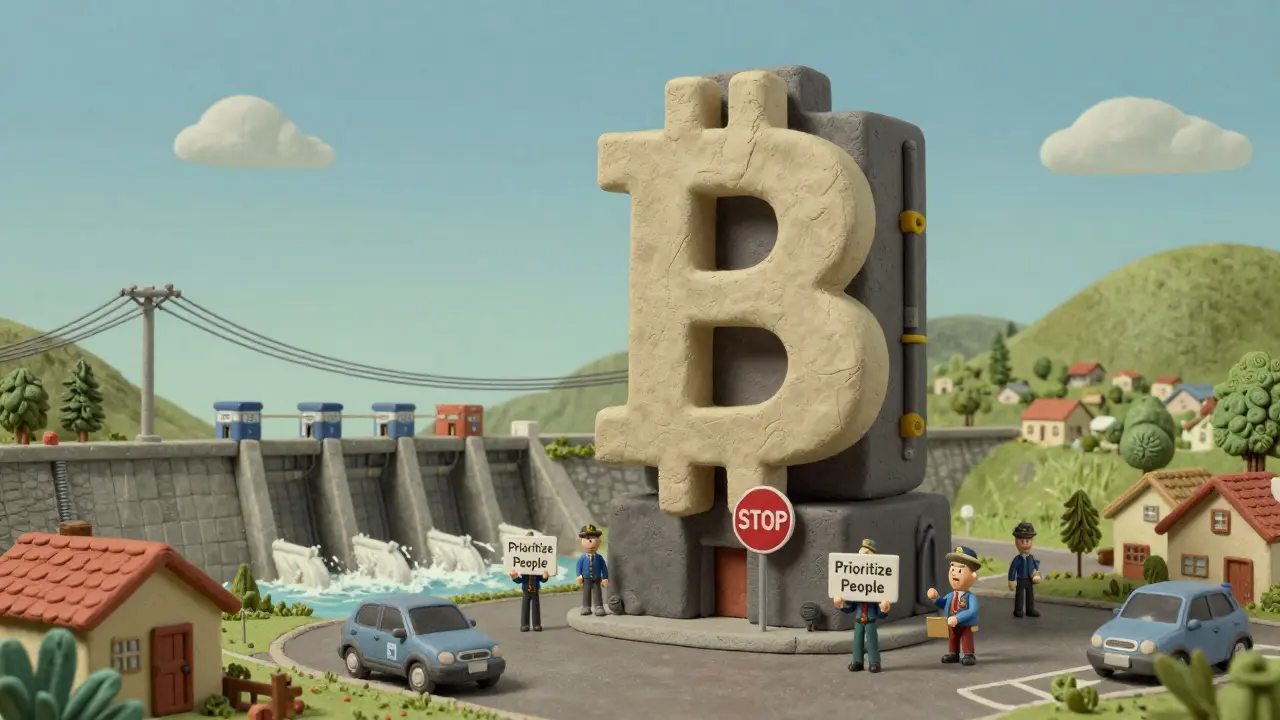
British Columbia Shut Down New Crypto Mining Projects - Here’s Why
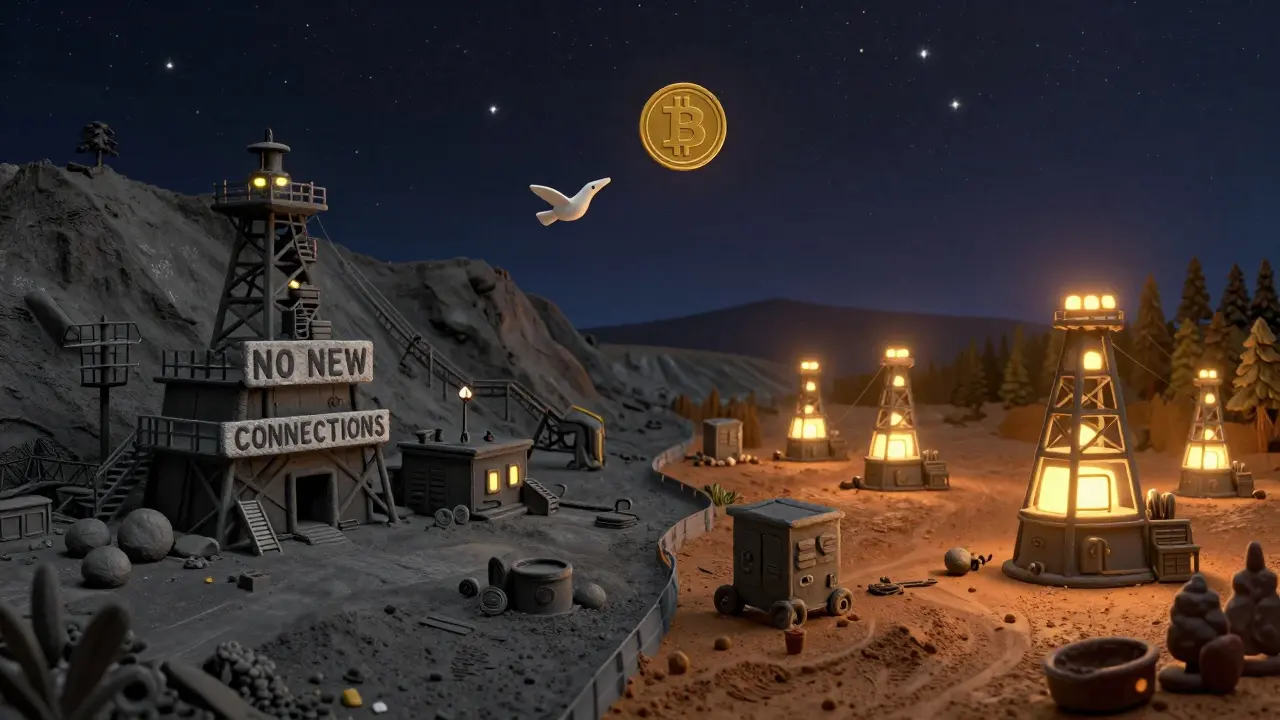
In December 2022, British Columbia didn’t just slow down crypto mining - it hit pause. The provincial government, through BC Hydro, stopped accepting new electricity connection requests from cryptocurrency mining operations. That pause was supposed to last 18 months. It’s now been extended to 36 months, and it won’t end until December 2025. No new mines. No new power deals. No exceptions.
This isn’t a temporary glitch. It’s a deliberate policy shift. And it’s one of the toughest crypto mining restrictions in North America.
Why Did BC Do This?
It all comes down to electricity. British Columbia generates over 90% of its power from clean, renewable hydroelectric dams. That’s a huge advantage - low emissions, low cost, reliable supply. But in recent years, crypto mining companies started showing up with massive power demands.
Twenty-one mining projects had requested a combined 1,403 megawatts of electricity. That’s the same amount of power used by 570,000 homes or 2.1 million electric vehicles every year. And here’s the kicker: these mines don’t create many local jobs. They don’t build factories. They don’t train workers. They just run servers 24/7, burning electricity to solve math problems.
The government’s answer? Prioritize people. Prioritize the future. BC Hydro’s power is being reserved for electric vehicles, heat pumps, and industrial electrification projects that actually cut carbon emissions and create real economic value. That’s the core of the CleanBC plan - a provincial strategy to reduce emissions and modernize infrastructure. Crypto mining doesn’t fit.
How the Ban Works - And Who Can’t Bypass It
The ban isn’t just a suggestion. It’s backed by law. In 2023, the provincial government passed the Energy Statutes Amendment Act (Bill 24). This law lets the government directly control who gets electricity from BC Hydro - bypassing the usual regulatory body, the BC Utilities Commission. That’s unusual. It shows how seriously they took the threat.
Even Vancouver’s city council tried to push back. In 2024, Mayor Ken Sim introduced a motion calling Vancouver a “Bitcoin-friendly city.” The goal? Attract miners with tax breaks and local support. But here’s the reality: cities can’t override provincial energy rules. BC Hydro answers to the provincial government, not city halls. No matter how much local leaders want crypto mining, they can’t force the province to give away power.

The Legal Fight - And Why It Failed
One company tried to challenge the ban in court. Conifex Timber, a forestry firm running mining operations for Greenidge Generation, wanted access to 2.5 million megawatt-hours of electricity annually - nearly half the output of BC’s new Site C dam. They argued the ban was unfair and hurt their business.
The B.C. Supreme Court ruled against them in early 2024. Then the Court of Appeal upheld that decision. The judges didn’t question Bitcoin’s value. They didn’t say mining is bad. They said BC Hydro has a legal duty to serve the public interest. And that means protecting power for homes, hospitals, and clean energy projects before handing it to high-power, low-job operations.
The message was clear: the province has the right to say no.
How BC Compares to the Rest of Canada
Canada as a whole used to be a magnet for crypto miners. Cold weather? Check. Cheap power? Check. Pro-business attitude? Check. But that’s changing fast.
- Manitoba suspended new mining connections in 2022.
- Quebec raised electricity rates for miners and capped how much power they can buy.
- New Brunswick put a moratorium on large-scale mining requests.
- Ontario started excluding crypto miners from electricity cost-reduction programs.
Only one province stands out: Alberta. With its deregulated energy market and pro-mining government, Alberta has become the new hotspot for Canadian crypto miners. If you’re looking to mine Bitcoin in Canada today, you’re not going to BC. You’re going to Alberta.
What’s Next? The Permanent Policy
The current ban expires in December 2025. But that doesn’t mean mining will come back. The government is using this time to build a permanent policy. They held four online sessions in 2023, inviting over 400 groups - from First Nations to mining companies - to give input.
So far, the signs point to a long-term restriction. The Ministry of Energy, Mines and Low Carbon Innovation has been clear: crypto mining doesn’t align with their goals. They want energy for things that reduce emissions, create jobs, and strengthen communities. Mining does none of that.
Even with Bitcoin hitting $107,000 in early 2026 - making mining more profitable than ever - BC isn’t budging. The value of clean power for families and green industry outweighs the short-term profits of mining rigs.
What This Means for Miners and Investors
If you’re running a crypto mining operation in BC, you’re already connected. You’re not affected by the ban. But if you’re planning to start one? You’re out of luck. No new power. No new permits. No loopholes.
For investors, this is a warning. The era of easy, cheap crypto mining in Canada is over. The provinces are waking up to the fact that energy isn’t infinite - and it shouldn’t be sold to the highest bidder if it doesn’t serve the public.
Some argue that banning mining hurts innovation. But BC’s stance is simple: innovation should help people, not just generate digital wealth. If you want to mine Bitcoin in Canada, go to Alberta. But don’t expect BC to open its grid again.
Where to Find Updates
The government hasn’t closed the door on dialogue. They still want feedback. If you’re a business, community group, or miner affected by this policy, you can email them directly: [email protected].
But don’t expect a reversal. This isn’t a policy under review - it’s a policy in place. And it’s here to stay.
Jack Petty
February 1, 2026 AT 19:20They call it 'public interest' but it's really just control. Power should be free for anyone who can pay. That's capitalism. Not this socialist grid rationing.
Brianne Hurley
February 3, 2026 AT 13:12BC’s doing the right thing. Let the miners go to Alberta where they can burn coal and pretend it’s ‘freedom’. Meanwhile, I’ll be heating my home with clean power and not feeling guilty.
christal Rodriguez
February 4, 2026 AT 07:56Tressie Trezza
February 5, 2026 AT 20:12Electric vehicles, heat pumps, green manufacturing-those are the things that will actually lift communities up. Mining rigs just sit there, humming, while real people freeze in drafty homes.
It’s not anti-tech. It’s pro-human.
Dylan Morrison
February 7, 2026 AT 03:26Imagine if every country did this-imagine if we stopped letting greed eat up our last clean resources. Bitcoin might be cool tech, but it shouldn’t cost us our future. Alberta can have the rigs. BC gets the rivers, the forests, the kids who’ll grow up without asthma from dirty grids. Worth it.
William Hanson
February 7, 2026 AT 14:13Meanwhile, real jobs vanish, investors flee, and the only winners are the bureaucrats who get to say 'no'.
And now they’re pretending this is about 'public interest'? Please. It’s just fear of innovation dressed up in eco-lingo.
Lori Quarles
February 7, 2026 AT 16:30Stop letting tech bros with ASICs hijack our grid. BC is showing the world that you can be progressive AND practical. Clean energy isn’t a slogan-it’s a lifeline. And they’re protecting it.
Alberta can have their mining farms. We’ll take our clean air, our stable bills, and our future.
Jeremy Dayde
February 9, 2026 AT 12:18Sunil Srivastva
February 10, 2026 AT 03:46They’re not rejecting crypto-they’re rejecting the misuse of a shared resource. This could be a model for other regions with clean energy. Prioritize what lasts. Not what’s profitable today.
Good on them. And yes, Alberta will get the miners. But BC? They’ll get the future.