BTC Exchange Review: How to Choose the Right Crypto Platform in 2026
 Jul, 28 2026
You have Bitcoin. You want to trade it. But which platform actually handles your money without eating your profits or locking you out? The answer isn't simple anymore. In 2026, the landscape of crypto exchanges has shifted dramatically due to strict U.S. regulations and a massive consolidation of platforms. What used to be a wild west is now a regulated highway with toll booths (fees) and speed limits (compliance).
If you are looking for a BTC exchange, you aren't just picking an app; you are picking a partner for your financial security. With over 500 active exchanges globally, but only about 18 fully compliant ones operating smoothly in the United States as of early 2026, the choice matters more than ever. This guide cuts through the noise to help you decide if Coinbase, Kraken, Robinhood, Gemini, or another platform fits your specific trading style.
The Current State of Crypto Exchanges in 2026
The industry has matured. Gone are the days when any random website could host a Bitcoin market. Today, major exchanges operate under multiple regulatory frameworks, including oversight from the Financial Crimes Enforcement Network (FinCEN) and the Securities and Exchange Commission (SEC). This shift means higher security standards but also fewer options for American traders.
As of mid-2026, the top 10 platforms process approximately $110 billion in daily trading volume. However, this volume is concentrated. Coinbase holds roughly 32% of the U.S. trading volume, followed by Kraken at 18% and Robinhood at 15%. If you are outside the U.S., you might still see global giants like Binance, but for U.S.-based users, the list is shorter and more scrutinized.
Why does this matter to you? Because regulation impacts your experience. It affects how fast you can verify your account, what coins are available, and how quickly you can withdraw cash. A platform that is "too good to be true" often lacks these compliance checks, putting your assets at risk.
Top Contenders: Who Wins for Whom?
No single exchange is perfect for everyone. Your ideal platform depends on whether you are a beginner who wants simplicity, a pro who needs low fees, or someone who prioritizes security above all else. Let's break down the heavy hitters based on real-world performance data from late 2024 and early 2026.
| Exchange | Best For | Trading Fees | Coin Selection | User Rating (Trustpilot) |
|---|---|---|---|---|
| Coinbase | Beginners | 0% - 3.99% | 235+ Cryptos | 4.2 / 5 |
| Kraken | Advanced Traders | 0.00% - 0.40% | 350+ Cryptos | 4.4 / 5 |
| Robinhood | Zero-Fee Simplicity | 0% (Hidden spreads) | 25 Cryptos | 3.9 / 5 |
| Gemini | Security & Compliance | 0.5% - 3.49% | 73 Cryptos | 4.6 / 5 (Institutional) |
| Crypto.com | Rewards & Mobile UX | 0% - 2.99% | 313 Cryptos | 4.3 / 5 |
Detailed Breakdown of Leading Platforms
Coinbase: The Beginner's Gateway
If you are new to crypto, Coinbase is likely where you will start. It was the first publicly traded crypto exchange on NASDAQ (ticker: COIN), which gives it a level of transparency that private companies struggle to match. As of Q3 2025, they reported 108 million verified users globally.
The Pros: The interface is incredibly intuitive. Most users report feeling comfortable within 2-3 hours of use. They offer educational resources, including video tutorials that reward you with small amounts of crypto for learning. Customer support is decent, with an 85% first-contact resolution rate.
The Cons: Convenience costs money. Standard trades average 1.49% in fees, which is significantly higher than competitors. If you are buying large amounts, these fees add up quickly. Additionally, while their basic app is great, advanced charting tools were historically limited, though their new "Advanced Trade Pro" feature launched in late 2024 has improved this for high-volume traders.
Kraken: The Power User's Choice
Founded in 2011 by Jesse Powell, Kraken has built a reputation for reliability and depth. It is the preferred choice for institutional traders, with 78% of professional traders surveyed preferring it over Binance for U.S. operations due to clearer regulatory positioning.
The Pros: Fees are among the lowest in the industry, starting at 0.00% for makers on high volumes. They support over 350 cryptocurrencies and offer advanced order types like stop-limit and trailing stops. Their customer support is exceptional, boasting a 92% first-contact resolution rate and average response times of under 5 minutes via live chat.
The Cons: The learning curve is steep. New users may spend 8-10 hours just mastering the interface. The mobile app received mixed reviews (3.8 stars on the App Store), with some users finding it less polished than Coinbase's. Also, full account verification can take up to 5 business days, which is slow if you want to trade immediately.
Robinhood: The Zero-Fee Illusion?
Robinhood changed the game with commission-free stock trading, and they brought that model to crypto in 2018. Today, it processes about 28% of all retail crypto trades in the U.S.
The Pros: It is dead simple. You download the app, link your bank, and buy Bitcoin. There are no visible transaction fees. For casual investors who buy and hold, this frictionless experience is hard to beat.
The Cons: Experts warn that "free" isn't free. Dr. Michal Król, Chief Economist at Koinly, noted that Robinhood's payment-for-order-flow practices result in execution prices that are 0.5% to 1.5% worse than limit orders on other platforms. You pay in the spread, not the fee. Furthermore, you cannot withdraw your crypto to a personal wallet easily, and the selection is limited to just 25 cryptocurrencies. Many users migrate away after six months when they need more control.
Gemini: Security First
Founded by the Winklevoss twins in 2014, Gemini positions itself as the most secure option. They hold SOC 2 Type 2 certification and maintain $225 million in insurance coverage for digital assets.
The Pros: If paranoia keeps you up at night, Gemini is for you. They keep 95% of user assets in cold storage. Their latency for order execution is the lowest among major U.S. exchanges at 85 milliseconds. This makes them attractive for institutions and serious investors who prioritize asset safety over coin variety.
The Cons: They only support 73 cryptocurrencies. If you are interested in niche altcoins, you will find Gemini lacking. Fees range from 0.5% to 3.49%, which is moderate but not competitive with Kraken's pro tier. Retail users often cite a "steep learning curve" despite the focus on security.
Crypto.com: Rewards and Variety
Crypto.com stands out for its aggressive marketing and rewards ecosystem. Founded in 2016, it supports 313 cryptocurrencies across 140 countries.
The Pros: The user experience is modern and sleek. They offer 24/7 customer support with average response times of 12 minutes. If you stake their native token (CRO), you can get reduced fees and even earn interest on holdings. Withdrawals for internal transfers are immediate.
The Cons: Fee structures can be confusing, varying widely based on your tier status. While spot trading fees can be low, withdrawal fees and spread costs can eat into profits if you aren't careful. Regulatory scrutiny remains a concern, as they have faced challenges in various jurisdictions.

Hidden Costs: Understanding Fees Beyond the Label
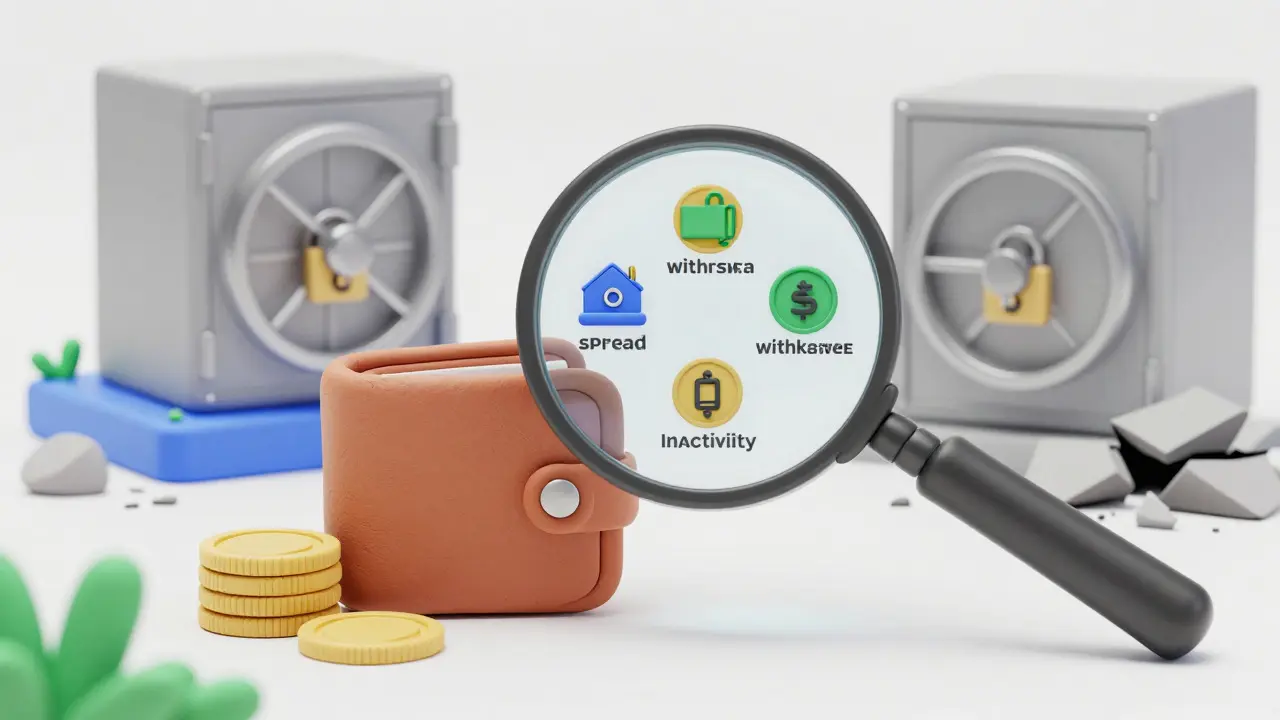
When comparing a BTC exchange, never look at the headline fee alone. Here is what actually costs you money:
- Spread: The difference between the buy and sell price. On Robinhood, this hidden cost can be 0.5-1.5%. On Kraken, it is typically much tighter.
- Withdrawal Fees: Moving Bitcoin off the exchange costs network fees. Coinbase charges dynamic fees based on network congestion. Kraken often offers lower flat rates.
- Inactivity Fees: Some platforms charge you if you don't trade for a year. Check the fine print.
- Payment Method Fees: Buying with a credit card usually incurs a 3-4% surcharge. Using ACH bank transfers is almost always cheaper or free.
For example, if you buy $1,000 of Bitcoin on Coinbase using a debit card, you might pay $39.90 in fees. On Kraken, using a bank transfer, that same trade might cost you $5 in fees plus a tiny network fee. Over time, this difference is massive.
Security and Regulation: Is Your Money Safe?
In 2026, trust is earned through audits and legal compliance. Look for these markers:
- Proof of Reserves: Does the exchange publish regular audits showing they hold 1:1 reserves for user funds? Kraken and Coinbase do this transparently.
- Insurance: Gemini offers $225 million in coverage. Coinbase also insures custodial assets. Know what is covered (usually against hacks, not market crashes).
- Regulatory Licenses: In the U.S., ensure the exchange holds Money Transmitter Licenses (MTLs) in all 50 states. Coinbase and Gemini are fully licensed. Binance US is restricted in 15 states.
Avoid unregulated offshore exchanges unless you are an expert. The collapse of FTX and subsequent integration into BlockFi under SEC supervision serves as a stark reminder: if it isn't regulated, it might not exist tomorrow.
How to Choose: A Decision Checklist
Still unsure? Answer these three questions:
1. Are you a beginner?
If yes, go with Coinbase. The ease of use outweighs the higher fees for small, occasional purchases. Use their educational tools to learn before you scale up.
2. Do you trade frequently or in large volumes?
If yes, choose Kraken. The lower maker/taker fees and advanced order types will save you thousands compared to Coinbase or Robinhood.
3. Is security your #1 priority?
If yes, consider Gemini. Their cold storage protocols and insurance coverage provide peace of mind, even if the coin selection is smaller.
4. Do you want rewards and a slick mobile app?
If yes, try Crypto.com. Just be sure to read their fee schedule carefully to avoid surprises.
Future Outlook: What to Watch in 2026 and Beyond
The crypto exchange space is evolving rapidly. Keep an eye on these trends:
- Spot Bitcoin ETF Integration: Kraken announced plans to integrate spot Bitcoin ETFs (like IBIT and GBTC) directly into its platform. This bridges traditional finance with crypto, making it easier for mainstream investors to participate.
- Decentralized Exchange (DEX) Growth: DEXs captured 22% of total trading volume in 2024. While centralized exchanges still dominate retail trading (89%), expect more hybrid models where you can trade directly from your wallet without giving up custody.
- Consolidation: Expect fewer, larger players. Smaller exchanges that fail to meet SEC requirements will shut down or merge. Stick to the top-tier names to avoid getting stuck on a dying platform.
Choosing the right BTC exchange is not a one-time decision. As your trading habits change, so should your platform. Start simple, move to advanced tools as you gain confidence, and always prioritize security over flashy features.
Is Coinbase safe for beginners in 2026?
Yes, Coinbase is considered very safe for beginners. It is publicly traded on NASDAQ, holds licenses in all 50 U.S. states, and insures custodial digital assets. Its intuitive interface makes it easy to start, though fees are higher than competitors.
Which crypto exchange has the lowest fees?
For active traders, Kraken offers the lowest fees, starting at 0.00% for makers. Robinhood advertises zero fees but hides costs in wider spreads. For casual buyers, River Financial offers low DCA fees for Bitcoin-only users.
Can I use Binance in the United States?
You can use Binance US, but it is restricted in 15 states and supports fewer cryptocurrencies (158) than the global Binance platform (350+). Due to regulatory pressures, many U.S. users prefer Coinbase or Kraken for better accessibility and compliance.
What is the best exchange for Bitcoin only?
River Financial is a strong option for Bitcoin maximalists, offering low DCA fees (0.30%) and minimum deposits of $1. However, it lacks support for other cryptocurrencies. For broader options, Coinbase and Kraken remain top choices for Bitcoin trading.
How long does it take to verify a crypto account?
Verification times vary. Crypto.com can verify instantly with a phone number. Coinbase averages 24-48 hours for standard verification. Kraken can take up to 5 business days for full verification, depending on document complexity.
Lance Jantz
July 29, 2026 AT 20:19The sheer audacity of these platforms to call themselves "partners" in financial security is laughable. They are digital toll booths, nothing more. We have traded the wild west for a bureaucratic highway where every mile marker demands a sacrifice of your capital. It is a tragicomic evolution of human greed, wrapped in the sterile language of compliance and regulation. The so-called "safety" they offer is merely the comfort of knowing exactly who is stealing from you.
Don Fizy
July 30, 2026 AT 19:01Hey there! Don't let the cynicism get you down too much. While Lance has a point about fees, the reality is that regulation actually protects the average person from total loss. If you are just starting out, Coinbase is genuinely the easiest place to learn without getting overwhelmed by complex charts. Just remember to check the spread before you buy!
Namrata Mapgaonkar
July 31, 2026 AT 19:59hiii everyone :) i think kraken is really cool because the fees are low but the app looks like it was made in 2010 lol. i prefer crypto.com because the card is shiny and i get rewards on my coffee purchases which makes me feel rich even if the fees are confusing sometimes. also namrata here from india sending love to all crypto friends everywhere <3
Phil Babb
August 1, 2026 AT 21:02LISTEN UP!!! You need to stop ignoring the hidden spreads on Robinhood!!! It is an absolute scam!!! They tell you it is free but they eat your profit with wide spreads!!! Wake up people!!! Use Kraken or you are throwing money away!!! I am tired of seeing beginners get burned by this zero-fee illusion!!! Get educated!!!
Qolbina Islami
August 2, 2026 AT 17:20This entire article is a joke!!! Why should we trust these American companies??? They regulate everything until the market dies!!! In other parts of the world we trade freely!!! The SEC is strangling innovation!!! Binance is better because it does not bow to these corrupt politicians!!! Stop listening to US propaganda!!!
SUBHAM CHOUDHURY
August 3, 2026 AT 02:39You got this guys! Trading is a journey and every platform has its own vibe. If you are feeling stressed about fees, just start small and grow your confidence. Remember that consistency is key. Do not let the noise distract you from your goals. Keep learning and keep stacking sats! You are capable of great things in this space.
Lorraine Surringer
August 4, 2026 AT 23:00Oh honey, please. You think Gemini is secure? Please. Security is an illusion when you are dealing with centralized entities. But sure, keep your pretty little coins in their cold storage while they gamble with your data. At least the Winklevoss twins look good in ads. But seriously, if you cannot handle the complexity of a hardware wallet, maybe stick to stocks. It is less embarrassing.