ByBit Hack Explained: North Korea's $1.5B TraderTraitor Heist
 May, 1 2026
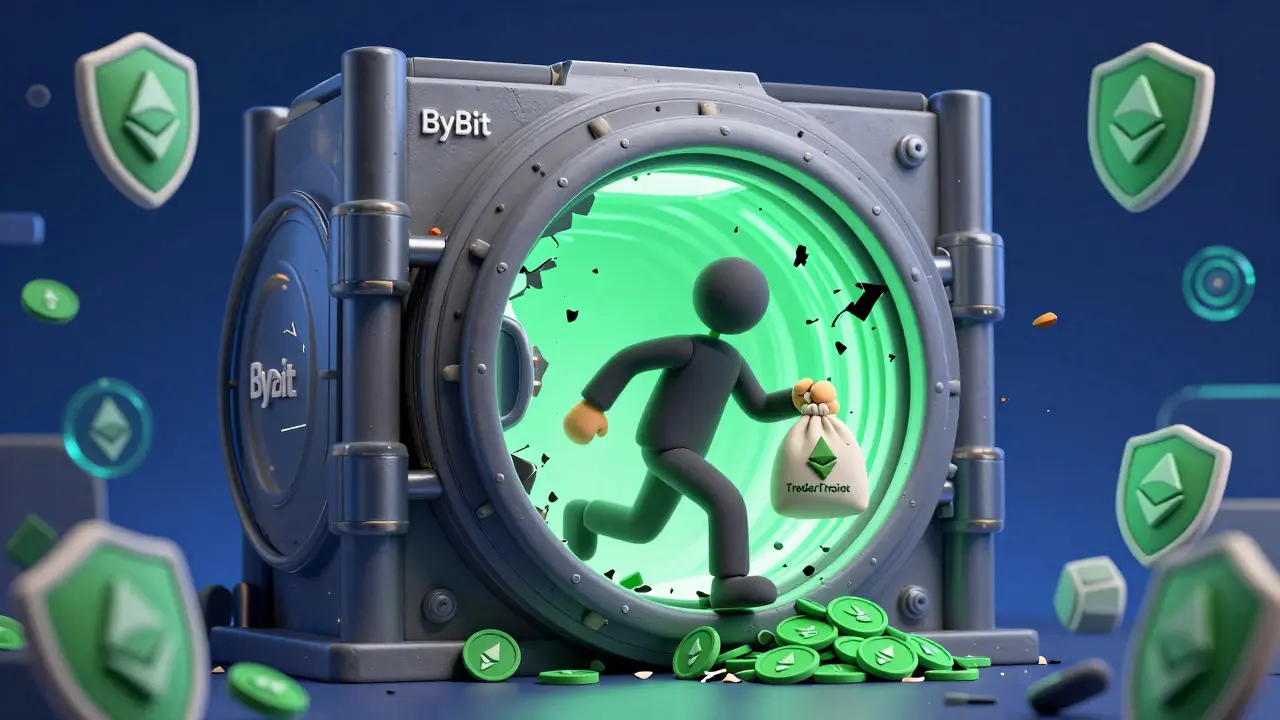
On February 21, 2025, the cryptocurrency world woke up to a staggering headline: ByBit, one of the largest digital asset exchanges globally, had been breached. The attackers didn't just skim a few wallets; they walked away with approximately $1.5 billion worth of Ethereum tokens. This wasn't a random cybercrime event. It was a calculated, state-sponsored operation executed by North Korea, marking the single largest cryptocurrency heist in history.
The Federal Bureau of Investigation (FBI) quickly attributed the attack to a specific subunit known as TraderTraitor. This group operates under the Reconnaissance General Bureau (RGB), North Korea’s primary foreign intelligence service. To put the scale into perspective, this single theft nearly doubled the total amount North Korea stole across 47 separate incidents in all of 2024. For anyone relying on centralized exchanges for storage, this event serves as a harsh reminder that even "cold" storage is not immune to sophisticated state actors.
The Anatomy of the Attack
How do hackers steal $1.5 billion from an exchange that prides itself on security? The answer lies in the compromise of ByBit's offline cold wallets. Cold wallets are hardware devices or air-gapped systems designed to keep private keys away from the internet, theoretically making them impervious to remote hacking. Yet, TraderTraitor managed to bypass these multi-signature security measures.
TRM Labs, a leading blockchain analytics firm, investigated the breach and identified three likely vectors for the compromise:
- A supply chain attack where malicious code was inserted into software updates or dependencies used by ByBit. >An insider threat involving compromised credentials from a key employee.
- A sophisticated private key extraction technique that bypassed standard encryption protocols.
Once inside, the hackers moved fast. They didn't leave the stolen Ethereum sitting in one place. Instead, they immediately began converting portions of the funds through various blockchain networks, including Binance Smart Chain and Solana. The ultimate goal was clear: convert everything into Bitcoin, the most liquid and widely accepted cryptocurrency for laundering purposes.
Who Are the TraderTraitors?
You might have heard of the Lazarus Group. That is the umbrella term for North Korea’s cyber warfare units. But TraderTraitor is a specialized subunit within the RGB’s 3rd Bureau. Unlike earlier groups that relied heavily on phishing emails and basic malware, TraderTraitor has evolved since 2022 to focus exclusively on high-value digital asset theft.
This group is notorious for its technical sophistication. They were previously linked to the JumpCloud supply chain attack, demonstrating their ability to compromise cloud services and software development platforms. Their evolution from simple social engineering to complex infrastructure compromises marks a dangerous shift in how state-sponsored threats operate in the crypto space.
| Unit Name | Primary Focus | Key Tactics | Notable Incidents |
|---|---|---|---|
| Lazarus Group (General) | Broad cyber warfare | Phishing, Malware, DDoS | SWIFT banking attacks |
| TraderTraitor | Cryptocurrency theft | Supply chain, Insider threats, Bridge exploits | ByBit Hack ($1.5B), JumpCloud attack |

The "Flood the Zone" Strategy
One of the most concerning aspects of this heist was the speed and volume of the money movement. Nick Carlsen, a former FBI subject matter expert at TRM Labs, described this as a "flood the zone" technique. The idea is simple but effective: overwhelm compliance teams and blockchain analysts with so many transactions that tracking becomes nearly impossible.
In the past, hackers relied on mixing services like Tornado Cash to obscure their trails. However, increased regulatory pressure has made those tools harder to use without raising red flags. So, TraderTraitor switched tactics. They used cross-chain bridges to move assets across thousands of addresses on multiple blockchains simultaneously. This strategy prioritizes speed and automation over traditional anonymity.
Despite this chaotic distribution, TRM Labs was able to tag the compromised addresses as "Hacked" or "Stolen Funds." They created a tracking entity labeled "ByBit Exploiter Feb 2025" to monitor the flow in real-time. Interestingly, while the initial movement was frantic, most of the converted Bitcoin remained stationary after the first laundering phase. This suggests the hackers are preparing for large-scale liquidation through over-the-counter (OTC) networks rather than selling on public exchanges where their identity might be exposed.
Why North Korea Targets Crypto
Why does a nuclear-armed state care so much about cryptocurrency? The answer is funding. A senior official in the Biden administration noted that approximately 50% of North Korea's foreign-currency earnings come from cybercrime. A United Nations report confirmed that these illicit funds directly support the country's weapons programs.
For North Korea, cryptocurrency exchanges are low-hanging fruit. Compared to traditional financial institutions like banks, exchanges often have less stringent regulatory oversight and lower security barriers. The $1.5 billion stolen from ByBit exceeded North Korea's entire cryptocurrency theft total for 2023, which was $660.5 million. This demonstrates a clear escalation in both capability and ambition.
Implications for Exchange Security
The ByBit hack forces the entire industry to rethink what "secure" means. If an offline cold wallet can be compromised, what is left? Experts suggest that exchanges need to move beyond standard multi-signature setups and implement defenses specifically designed against Advanced Persistent Threats (APTs). This includes more rigorous auditing of supply chains, enhanced monitoring of insider access, and potentially decentralized custody solutions.
The FBI’s response was unusually swift. They released specific Ethereum addresses associated with TraderTraitor and urged RPC node operators, exchanges, and DeFi services to block transactions from these wallets. This level of cooperation between law enforcement and the private sector is crucial. Without it, stolen funds would have vanished into the ether long before anyone could react.
What Should You Do Now?
If you hold assets on centralized exchanges, this event should prompt a review of your own security habits. While you cannot control ByBit's internal security, you can control your exposure. Consider moving large holdings to self-custody hardware wallets that you physically possess. Avoid leaving significant amounts on any single platform, regardless of its reputation. Remember, in the world of crypto, if you don't hold the keys, you don't truly own the coins.
Did ByBit reimburse users for the stolen funds?
As of early 2026, ByBit has stated that user funds are safe because the stolen assets came from the exchange's own operational reserves and insurance funds, not directly from customer wallets. However, the company continues to work with authorities to recover the lost capital. Users are advised to check official announcements from ByBit for the latest status on compensation or fund recovery efforts.
Can the stolen $1.5 billion be recovered?
Recovery is extremely difficult but not impossible. The FBI and blockchain analytics firms like TRM Labs are actively tracking the stolen Bitcoin. Since much of the converted Bitcoin remains stationary in specific wallets, there is a chance that future transactions could expose the identities of the handlers, allowing for seizure. However, if the funds are successfully laundered through OTC desks or mixers, recovery becomes unlikely.
Is my data safe on ByBit after the hack?
The primary impact of the TraderTraitor attack was financial, targeting the exchange's hot and cold wallets. There is no widespread evidence suggesting that personal user data, such as IDs or KYC documents, were exfiltrated. However, following any major security incident, it is prudent to enable two-factor authentication (2FA) and ensure your password is unique and strong.
What is the difference between TraderTraitor and Lazarus Group?
Lazarus Group is the broad umbrella term for all North Korean state-sponsored cyber operations. TraderTraitor is a specific, highly specialized subunit within the Reconnaissance General Bureau (RGB) that focuses exclusively on stealing cryptocurrency. Think of Lazarus as the entire military branch, and TraderTraitor as the elite special forces unit dedicated to financial theft.
How did the hackers bypass the cold wallet security?
While the exact method remains under investigation, TRM Labs identified three possibilities: a supply chain compromise (malicious software updates), an insider threat (compromised employee credentials), or a sophisticated private key extraction. Cold wallets are secure against remote hacking, so the breach likely involved physical access, trusted software vulnerabilities, or human error rather than a direct network intrusion.
Should I stop using centralized exchanges?
You don't necessarily need to stop using them, but you should change how you use them. Centralized exchanges are convenient for trading, but they are also prime targets for state-sponsored hackers. For long-term storage, especially of large amounts, self-custody hardware wallets are significantly safer. Treat exchanges like a casino table-only keep the money you intend to trade there, not your life savings.
What role does TRM Labs play in stopping these hacks?
TRM Labs provides blockchain analytics that help identify and tag stolen funds. In the ByBit case, they created a "ByBit Exploiter Feb 2025" entity to track the movement of stolen assets in real-time. They share this data with exchanges, law enforcement, and compliance teams, enabling them to block transactions from known hacker addresses before the funds can be fully laundered.