China's Complete Crypto Ban: What It Means for Bitcoin Holders in 2026
 Jun, 24 2026
Imagine waking up to a notification that your country has just banned the asset you’ve been holding for years. For millions of people with ties to China is the world’s second-largest economy and home to over 1.4 billion people, this isn’t a hypothetical scenario-it’s reality. Since the comprehensive crackdown began in earnest in 2021, the landscape for Bitcoin is a decentralized digital currency created in 2009 by an anonymous entity known as Satoshi Nakamoto holders has shifted from cautious optimism to strict prohibition. But what does this actually mean for you if you hold BTC or have business connections there?
The short answer? The rules are clear on paper, but enforcement is messy in practice. And while rumors of new bans pop up every year-like the viral fake news in 2025-the core policy remains unchanged. Let’s break down exactly where things stand in 2026, how it affects your wallet, and why the government is so focused on its own digital alternative.
The Timeline: How We Got Here
To understand today’s restrictions, you need to look back at how the policy evolved. It wasn’t overnight. In 2013, Chinese authorities defined Bitcoin as a "virtual commodity" rather than legal tender. They told banks to stay away, but they didn’t stop individuals from trading. Fast forward to September 2017, and the tone changed dramatically. Regulators banned Initial Coin Offerings (ICOs) and shut down domestic exchanges. Major platforms like Huobi and OKCoin had to relocate their headquarters overseas.
But the real turning point came on May 21, 2021. The Financial Stability and Development Committee is a high-level advisory body under the State Council of China responsible for coordinating financial risk prevention issued a directive that explicitly targeted Bitcoin mining and trading. This wasn’t just advice; it was a coordinated order to crack down on these activities as part of broader financial risk prevention goals. By late 2021, mining operations were forced out of provinces like Sichuan and Inner Mongolia, which had previously hosted a significant portion of global hash rate.
As of 2026, the framework is mature. All crypto-related business activities-including exchange services, derivatives trading, and ICOs-are illegal. Financial institutions cannot provide any cryptocurrency-related services. Internet companies must block crypto content. Overseas exchanges are banned from serving Chinese residents. Yet, despite this ironclad policy, the reality on the ground is more nuanced.
What the Ban Actually Prohibits
If you’re a Bitcoin holder, here’s what you need to know about the specific prohibitions:
- No Legal Trading Venues: You cannot legally buy, sell, or trade Bitcoin on any platform operating within China. Domestic exchanges do not exist anymore.
- Banking Restrictions: Banks and payment providers like Alipay and WeChat Pay monitor transactions linked to virtual currencies. If they detect suspicious activity related to crypto, they can freeze accounts.
- No Mining Operations: Bitcoin mining is classified as "high energy consumption and low efficiency" activity. The National Development and Reform Commission effectively outlawed it, leading to the mass exodus of miners to countries like the United States and Kazakhstan.
- Overseas Exchange Ban: While international platforms like Binance or Coinbase still operate globally, they are prohibited from serving users with Chinese IP addresses or bank accounts. Using them requires navigating gray-area workarounds.
- No Legal Recourse: If you get scammed, lose funds, or face a dispute involving Bitcoin, Chinese courts will not help you. Crypto assets have no legal protection status.
This creates a unique paradox. On one hand, the government has built a sophisticated surveillance infrastructure to track crypto flows. On the other hand, industry observers note that trading remains "quite common" among retail investors who use peer-to-peer (P2P) methods or offshore wallets. The disconnect between official policy and market behavior is a defining feature of China’s crypto landscape.
The Fake News Factor: Why Rumors Keep Spreading
In 2025, social media exploded with reports claiming China had implemented a new, even stricter crypto ban. These stories spread rapidly via Telegram, X (formerly Twitter), and financial news aggregators like FirstSquawk and Unusual Whales. Even high-profile figures amplified the misinformation before it was debunked.
Why did this happen? Because the market is hypersensitive to Chinese policy shifts. Any hint of regulatory change moves prices. But the truth is, no new ban was enacted in 2025. The existing framework from 2021-2022 remains in place. These annual rumor cycles highlight two things: first, the ongoing uncertainty surrounding crypto regulation in China, and second, the power of misinformation to create volatility. As a holder, it’s crucial to distinguish between verified policy updates and speculative noise.
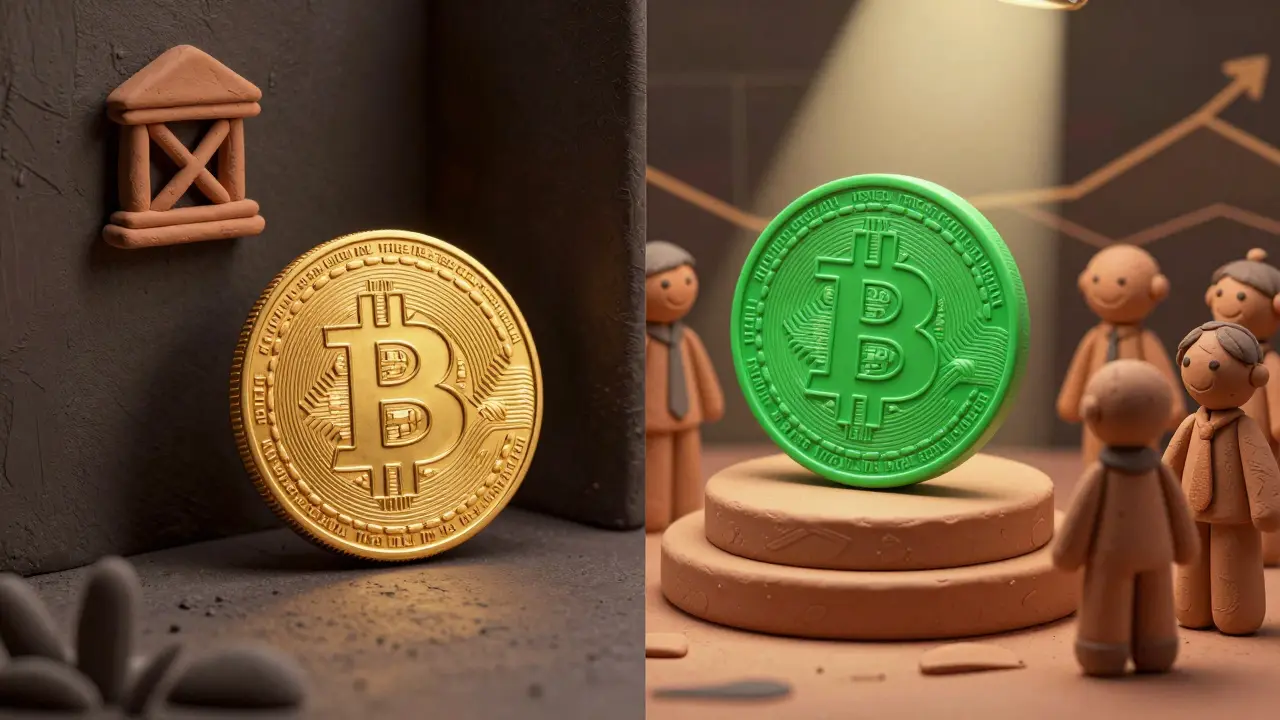
Enter the Digital Yuan: The Government’s Alternative
While banning Bitcoin, China hasn’t abandoned digital money. Instead, it’s betting big on its own version: the Digital Currency Electronic Payment (DCEP) is China’s Central Bank Digital Currency (CBDC), commonly known as the digital yuan, designed to replace physical cash and control monetary policy. Unlike Bitcoin, which is decentralized and anonymous, the digital yuan is fully traceable, centralized, and controlled by the People’s Bank of China.
The strategic goal is clear: capture the benefits of digital payments while maintaining state oversight. The digital yuan allows the government to monitor all transactions, enforce negative interest rates if needed, and reduce reliance on private payment giants like Tencent and Alibaba. Pilot programs have expanded across major cities, and adoption is accelerating. For Bitcoin holders, this signals a long-term commitment to state-controlled digital currency rather than acceptance of decentralized alternatives.
| Feature | Bitcoin | Digital Yuan (DCEP) |
|---|---|---|
| Decentralization | Fully decentralized | Centralized by PBOC |
| Anonymity | Pseudonymous | Fully traceable |
| Legal Status in China | Illegal to trade/mine | Legal tender |
| Supply Control | Fixed at 21 million | Controlled by central bank |
| Primary Use Case | Store of value / investment | Domestic payments / monetary policy |
Risks for Bitcoin Holders with Ties to China
If you live outside China but hold Bitcoin, the direct impact is minimal. However, if you have family, business partners, or income sources within China, the risks multiply. Here’s what you should watch out for:
- Bank Account Freezes: If your Chinese bank account receives funds from a crypto sale-even indirectly-it may trigger AML alerts. The Ministry of Public Security actively monitors for virtual currency links.
- P2P Trading Dangers: Many Chinese citizens use peer-to-peer platforms to bypass exchange bans. While common, this carries counterparty risk. If the other party uses stolen funds or engages in fraud, your involvement could lead to legal scrutiny.
- Travel and Border Controls: Carrying large amounts of crypto hardware wallets or discussing holdings openly while traveling through China can raise red flags. Customs officials are trained to identify crypto-related equipment.
- Business Compliance: Companies doing business in China must ensure none of their revenue streams involve crypto. Violations can result in heavy fines or operational shutdowns.
The key takeaway? Don’t assume that because Bitcoin exists globally, it’s safe to interact with it using Chinese financial systems. The monitoring infrastructure is robust, and penalties for non-compliance are severe.

Will the Ban Ever Be Lifted?
Industry experts remain divided. Some argue that China might eventually adopt a targeted approach-allowing licensed exchanges with strict KYC controls, similar to how Japan or Singapore regulate crypto. Others believe the government’s investment in the digital yuan makes reversal unlikely.
As of 2026, there is no indication of policy softening. The systemic risk concerns-volatility, investor losses, capital flight-remain top priorities for regulators. Until those fears subside, or until the digital yuan achieves widespread dominance, expect the ban to hold firm. Any future changes would likely be incremental, not abrupt.
Practical Steps for Bitcoin Holders
So, what should you do? If you’re a Bitcoin holder with connections to China, consider these steps:
- Segregate Assets: Keep your crypto holdings separate from any Chinese bank accounts or payment methods. Use wallets and exchanges based in jurisdictions with clear legal frameworks.
- Avoid P2P Platforms Linked to China: Even if convenient, trading with counterparties in China exposes you to compliance risks. Stick to regulated platforms outside the region.
- Stay Informed, Not Reactive: Ignore sensational headlines. Verify policy changes through official sources like the People’s Bank of China or reputable financial news outlets.
- Educate Your Network: If you have friends or family in China, help them understand the risks. Misinformation spreads quickly, and poor decisions can have lasting consequences.
Remember, the goal isn’t to fear Bitcoin-it’s to navigate it responsibly. The technology itself isn’t going anywhere. But the regulatory environment in China demands caution, especially when crossing borders.
Is it illegal to own Bitcoin in China?
Technically, owning Bitcoin isn’t explicitly criminalized for individuals, but all associated activities-buying, selling, trading, mining, and exchanging-are illegal. There’s no legal framework protecting ownership, and attempting to convert Bitcoin into fiat currency through Chinese banks can lead to account freezes or investigations.
Can I use Binance or Coinbase if I’m in China?
No. Overseas exchanges are banned from serving Chinese residents. While some users access them via VPNs or foreign bank accounts, this violates local regulations and carries significant legal and financial risks. Enforcement varies, but the policy is clear.
Why did China ban Bitcoin mining?
The government cited environmental concerns, labeling mining as "high energy consumption and low efficiency." Additionally, the massive electricity usage strained regional grids, particularly in provinces like Sichuan. The ban also aligned with broader efforts to prevent capital flight and maintain financial stability.
What is the digital yuan, and how does it differ from Bitcoin?
The digital yuan (DCEP) is China’s central bank-issued digital currency. Unlike Bitcoin, it’s fully centralized, traceable, and controlled by the People’s Bank of China. It serves as legal tender for domestic transactions, whereas Bitcoin is treated as an unregulated asset with no official status in China.
Are the 2025 rumors about a new crypto ban true?
No. The 2025 rumors were widely debunked as misinformation. No new ban was implemented. The existing regulatory framework from 2021-2022 remains in effect. These false reports often stem from market speculation or social media amplification without credible sourcing.
Could China ever lift the crypto ban?
It’s possible but unlikely in the near term. The government’s focus on the digital yuan and concerns about financial stability make reversal improbable. Any future changes would likely involve limited, highly regulated pilots rather than a full reopening of the market.
nancy jarecki
June 24, 2026 AT 13:29The nuance here is that the PBOC’s implementation of DCEP represents a paradigm shift in monetary sovereignty, rendering decentralized ledgers obsolete within the jurisdiction. The inefficiency of Bitcoin mining was merely a pretext for consolidating financial control under a single, traceable entity.
Fiona Ellis
June 26, 2026 AT 03:33It is absolutely terrifying to think about how easy it is for them to freeze your assets 😱 I mean, imagine just waking up and having zero access to your life savings because you bought some digital coins 📉 It feels like they are watching every single transaction we make through Alipay or WeChat Pay 👀 And don’t even get me started on the P2P risks because if one person in the chain does something shady you could be next in line for legal trouble ⚖️ It really makes you wonder if any privacy exists anymore in the modern financial system 🤔
Abby Martin
June 26, 2026 AT 12:47People need to stop acting like victims when they choose to engage with illegal activities. You knew the rules were strict since 2021 yet you still tried to bypass them using gray-area workarounds which is basically asking for trouble. The government isn't out to get you specifically but rather protecting the broader economy from volatility and capital flight so maybe take some responsibility instead of blaming the state for your poor decisions. It's not complicated really.
Jon Milton
June 28, 2026 AT 10:28I have been following this space for years and while the ban is harsh it creates an interesting dynamic where the black market thrives despite the surveillance state trying to crush it. The fact that trading remains common among retail investors shows that demand cannot be legislated away entirely even by such a powerful regime. However the risk to individuals is real and severe especially regarding bank account freezes which can ruin lives overnight so caution is definitely warranted here.
Scott Miller
June 29, 2026 AT 16:08This is exactly why crypto was invented to escape these kinds of authoritarian controls! But yeah if you are sitting in Shanghai trying to mine BTC you are basically lighting money on fire given the energy costs and the crackdown. Just move your operations to Texas or Kazakhstan where people actually understand freedom and let the market decide instead of some central planner telling you what you can own.
Carol @minaszilda
June 30, 2026 AT 04:39It is important to remember that owning Bitcoin itself is not criminalized for individuals according to current interpretations. However all associated activities like buying selling or exchanging are strictly prohibited which creates a very difficult situation for holders. The lack of legal recourse means you are on your own if things go wrong so education and separation of assets are key strategies for anyone with ties to China.
Nicole Woessner
June 30, 2026 AT 04:54I always find it fascinating how different cultures approach financial autonomy versus state control. In the US we have our own regulatory battles but nothing compares to the total prohibition seen in China right now. The digital yuan project is ambitious but it lacks the trust factor that decentralized networks offer globally. People crave privacy and choice which is why these bans often fail to stop adoption completely even if they drive it underground.
Routh Middaugh
June 30, 2026 AT 16:09One thing everyone misses is the environmental angle; the ban on mining wasn't just about finance but also about grid stability and carbon emissions goals. While the enforcement is brutal the logic behind moving hash rate to greener energy sources abroad has some merit even if the execution is heavy-handed. It's a complex mix of ideology economics and ecology playing out in real time.