Crypto Exchange Availability by Region Worldwide: Where You Can and Can't Trade
 Mar, 7 2025
Crypto Exchange Availability Checker
Not every crypto exchange works everywhere. If you're traveling, moving abroad, or just trying to sign up for a new platform, you might hit a wall - not because of your internet connection, but because of the law. In 2025, your ability to trade Bitcoin, Ethereum, or Solana depends more on where you live than on how much you know about blockchain. This isn't about tech limits. It's about legal limits. And those limits are changing fast.
Why Crypto Exchanges Aren't Available Everywhere
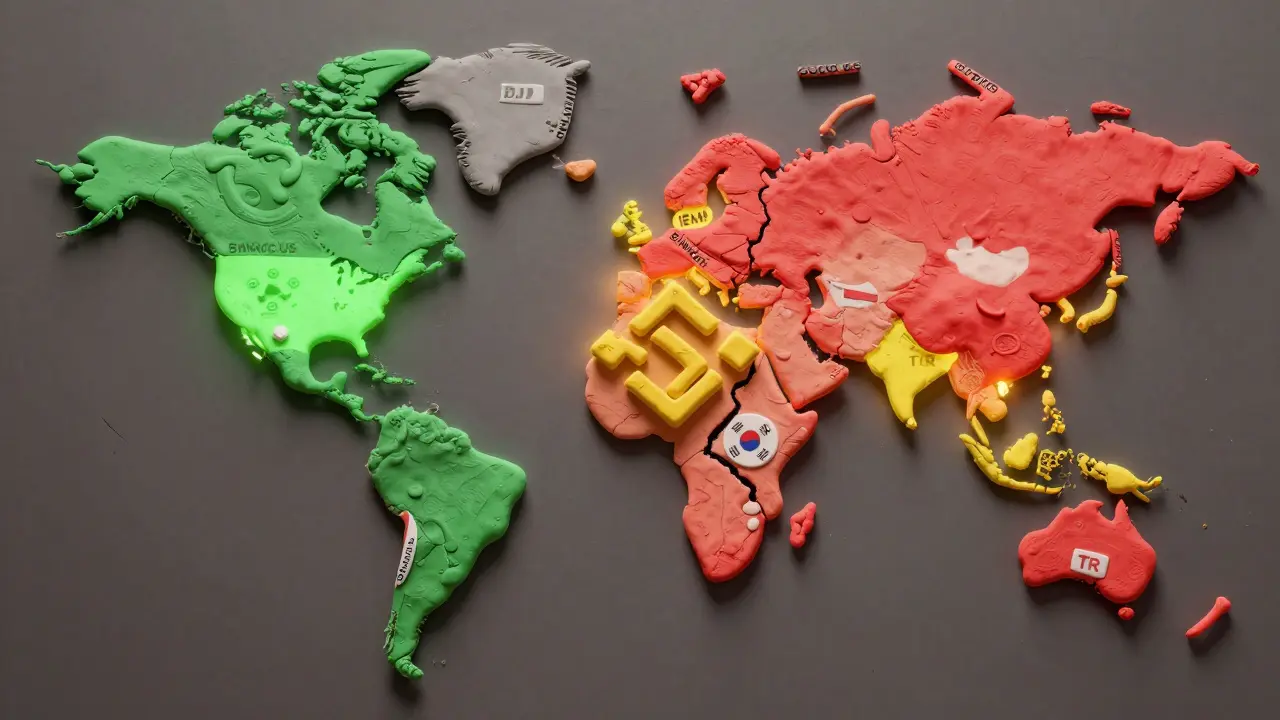
Crypto exchanges don't pick regions randomly. They respond to regulators. In the U.S., the SEC, DOJ, and Treasury Department all have a say. If an exchange doesn't follow their rules on anti-money laundering, customer verification, or tax reporting, it gets fined - or shut down. Binance’s $4 billion settlement in late 2023 wasn't a warning. It was a death sentence for its global platform in the U.S. market. Now, Binance operates Binance.US as a separate entity with fewer coins, stricter rules, and no margin trading. Same company. Different platform. Different rules. In countries like Ukraine, Moldova, and Georgia, crypto is widely used not because it's trendy, but because banking systems are weak or unstable. People use crypto to send money, protect savings, or pay for goods. That demand pulls exchanges in. But in places like China or Nigeria, outright bans or heavy restrictions mean even big platforms like Binance or Coinbase can't offer services directly. Instead, users turn to peer-to-peer (P2P) networks or offshore platforms - which come with their own risks.Where Crypto Exchanges Are Most Available
The top countries for crypto adoption in 2025 aren't the ones you might expect. Ukraine leads the Global Crypto Adoption Index, followed by Moldova and Georgia. These countries have high volumes of retail and institutional crypto use. Exchanges respond by offering localized platforms with local currencies, support in Ukrainian or Romanian, and compliance with regional financial laws. Asia is another hotspot. Hong Kong SAR ranks fifth globally, Singapore fifteenth, and South Korea eighteenth. These markets have clear, though strict, rules. Exchanges like Binance.KR and OKX operate under licenses. They offer spot trading, limited derivatives, and KYC-heavy signups. But they're allowed to exist. That’s why you'll find more trading pairs, lower fees, and better customer service in these places than in regions with unclear or hostile regulations. Latin America and the Middle East also show strong activity. Venezuela, Jordan, and Yemen rank in the top 15. In these countries, crypto often replaces failing local currencies. Exchanges that serve these markets - like Bitget, MEXC, and Gate.io - focus on P2P trading, low minimum deposits, and mobile-first apps. You won't find fancy features here. But you will find access.The Big Players and Their Regional Split
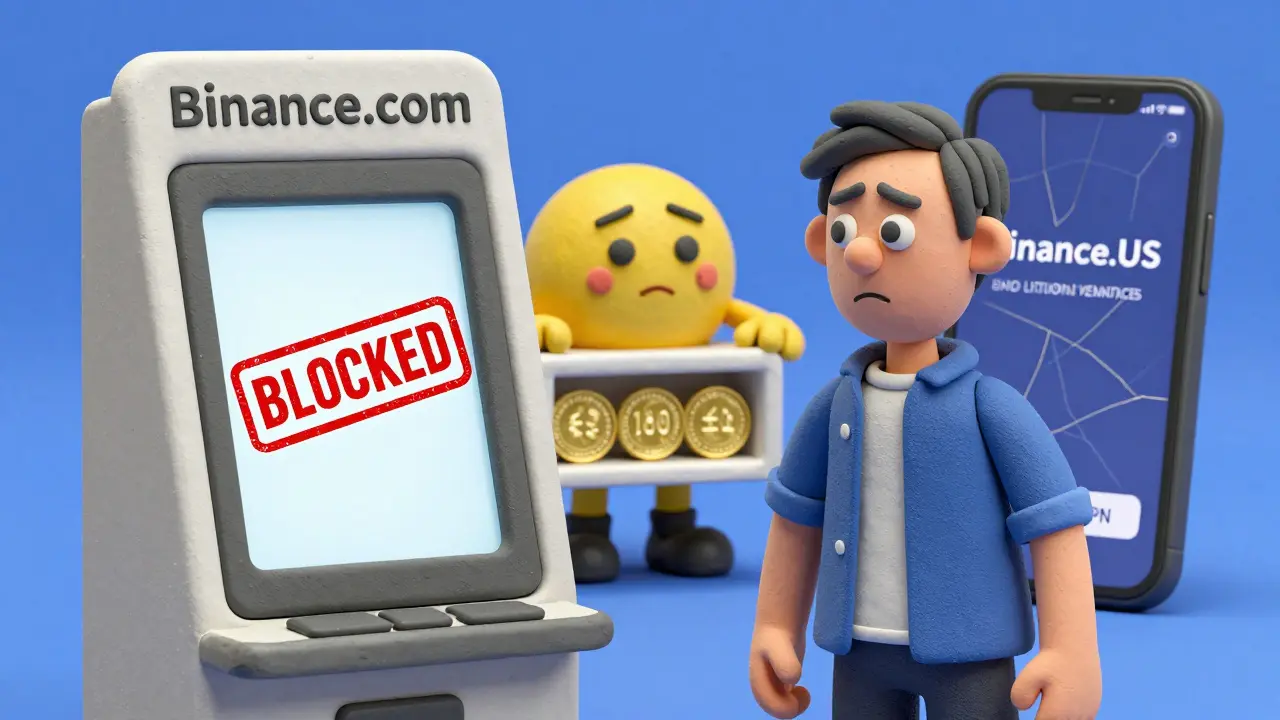
Binance still controls nearly 40% of the global exchange market as of late 2025. But it doesn't run one global site anymore. It runs regional versions:- Binance.com - Global, but blocks users from the U.S., Canada, UK, and several other countries.
- Binance.US - Only for U.S. residents. Only 100+ coins. No futures or leverage.
- Binance TR - Turkey-only. Supports TRY deposits and local KYC.
- Binance.KR - South Korea. Follows strict Korean financial laws.
Spot Trading Rules the World - But Not Everywhere
Spot trading - buying and selling crypto directly - makes up 61.3% of global exchange volume in 2025. Why? Because it's simple. No leverage. No complex options. Just buy Bitcoin. Sell Ethereum. Move on. In countries with strict rules - like the U.S., UK, and Australia - exchanges are often only allowed to offer spot trading. Derivatives, futures, and leveraged tokens are banned. That's why Binance.US doesn't have margin trading. That's why Coinbase limits its offerings. But in places like South Korea, Singapore, and parts of Southeast Asia, you can trade futures, perpetual swaps, and even tokenized stocks. The difference isn't just product range. It's trust. Regulators in those regions have created clear frameworks. Exchanges can prove they're safe. So they get to offer more.What Happens When an Exchange Leaves Your Country?
When Binance pulled out of the U.S., users didn't vanish. They moved. Some switched to Coinbase or Kraken. Others turned to decentralized exchanges (DEXs) like Uniswap or PancakeSwap. A lot just started using P2P platforms like LocalBitcoins or Paxful. But here's the catch: P2P isn't regulated. If someone scams you on Paxful, there's no customer service to call. No chargeback. No insurance. You're on your own. And if you're using a DEX, you're responsible for your own keys. Lose your seed phrase? No recovery. No help. So while you can still trade, you lose safety. You lose convenience. You lose legal protection. That's the real cost of restricted availability.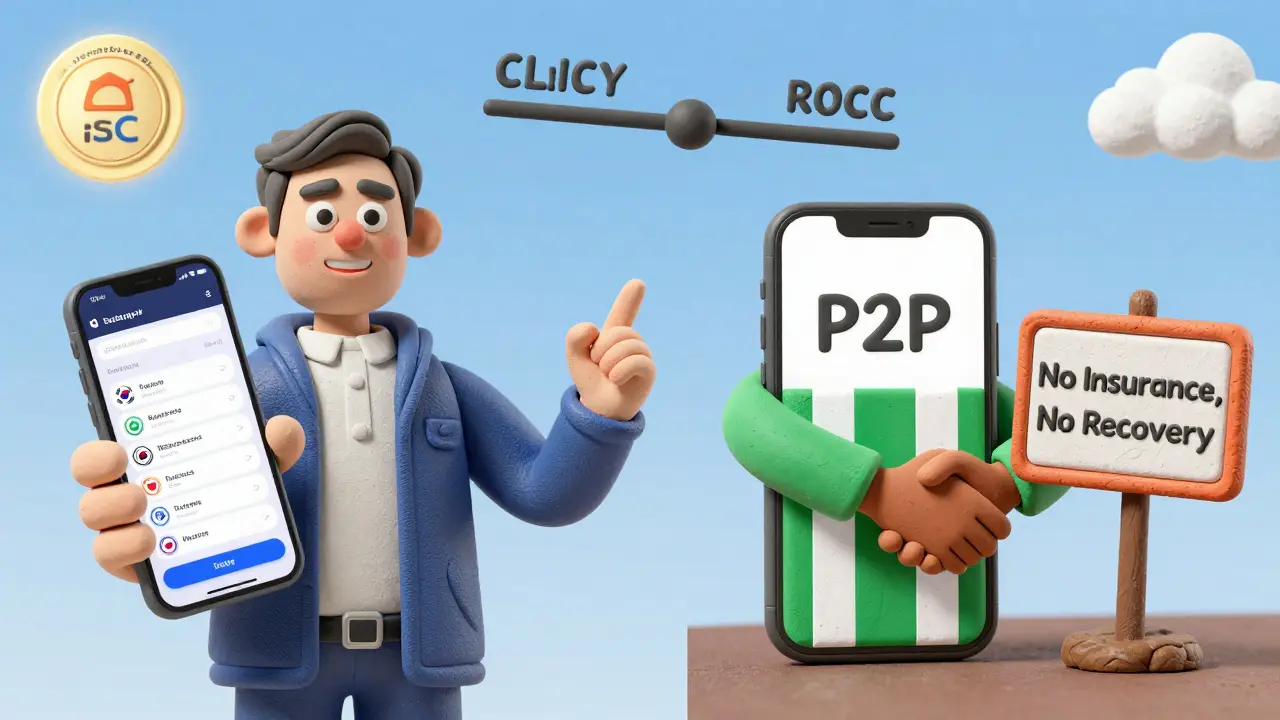
What's Coming Next
The crypto exchange market is projected to hit $122.63 billion by 2032. But growth won't be even. Countries with clear rules - like the EU under MiCA, Singapore, Japan, and Switzerland - will attract more exchanges. They'll get better services, more coins, lower fees. Countries without clear rules - like the U.S. (with its messy patchwork of state and federal laws), India (with its 30% tax on crypto), or Brazil (with its unclear tax reporting rules) - will see slower growth. Exchanges will hesitate. Users will struggle. The trend is clear: Regulation shapes availability. Not technology. Not demand. Not popularity. If your country doesn't have a legal path for crypto exchanges, you won't get them - not really.How to Check If an Exchange Works in Your Country
Don't guess. Don't try to sign up and hope. Do this:- Go to the exchange’s website.
- Look for a footer link called "Restricted Countries" or "Regulatory Status".
- Search for your country name on that page.
- If it's listed as blocked, don't use a VPN. You'll get your account frozen.
- If it's not listed, check their app store listing. Apple and Google often show region restrictions there too.
What You Can Do If Crypto Is Restricted in Your Country
If you're stuck in a region with no good exchange options:- Use P2P platforms - but only with verified, high-reputation traders.
- Try decentralized exchanges (DEXs) like Uniswap or Trader Joe - but only if you understand wallet security.
- Join local crypto communities. They often share trusted local payment methods.
- Advocate for clear regulation. Support local crypto associations or petitions.
Crypto is global in theory. But in practice? It's local. Your access depends on your zip code, your passport, your government's stance. That's the reality in 2025. Know your region. Know your risks. And never assume an exchange is available just because it works somewhere else.
Can I use Binance if I live in the United States?
No. Binance.com is blocked for U.S. residents. You can only use Binance.US, which has fewer coins, no leverage trading, and stricter KYC. Using Binance.com from the U.S. violates their terms and risks account suspension or fund loss.
Why is crypto trading banned in some countries?
Some countries ban crypto to control capital flight, prevent money laundering, or protect their national currency. Others, like China, want to push their own digital currency (the digital yuan) and see crypto as competition. In places with unstable economies, governments fear crypto could undermine banking control.
Which exchanges work in Europe?
Most major exchanges operate in Europe under the EU's MiCA regulations, including Coinbase, Kraken, Bitstamp, and Binance (outside the UK). MiCA sets clear rules for licensing, transparency, and consumer protection, making Europe one of the most crypto-friendly regions globally.
Is it safe to use a VPN to access crypto exchanges?
No. Using a VPN to bypass regional restrictions violates most exchange terms of service. Exchanges can freeze your account, block withdrawals, or report you to authorities. You also lose legal protections. If something goes wrong, you have no recourse.
Why do some exchanges have more coins than others in my country?
Regulators often restrict which tokens can be traded. For example, the SEC considers many altcoins securities, so U.S. exchanges can't list them. In countries with looser rules, like Singapore or the UAE, hundreds of tokens are available. It's not about demand - it's about legal risk.
Marsha Enright
December 4, 2025 AT 20:08Just moved to Ukraine last year and honestly? Crypto saved my sanity. My bank kept freezing my transfers, but with Binance and P2P, I pay rent, buy groceries, even send money home. No drama, no waiting weeks. Regulators can say what they want - when the system fails people, crypto fills the gap. 🙌
Durgesh Mehta
December 6, 2025 AT 03:06India here and yeah we got 30 tax and no legit exchanges anymore. Used to trade on WazirX but now its dead. P2P is the only way left. Bitget and KuCoin work if you use UPI but its risky. Hope govt figures it out soon. Crypto is not a scam its just money with better tech
Sarah Roberge
December 6, 2025 AT 17:49Okay but like… have you ever stopped to think that maybe the reason crypto isn’t available everywhere isn’t because of ‘regulation’ but because governments are scared? Scared that if people realize money doesn’t need to be controlled by a central bank… they’ll lose power. Like… who even *is* the SEC? Some dude in a suit who thinks Bitcoin is a pyramid scheme because he doesn’t understand blockchain. It’s not about safety. It’s about control. And we’re all just pawns in their game of monopoly. 🤔
Also… I tried using a VPN once. Got my account frozen. Then I cried for three days. Not because I lost money (I didn’t) but because I realized I was emotionally attached to my Binance dashboard. Like… it was my digital sanctuary. My little crypto garden. And they pulled the plug. I’m still traumatized.
And don’t even get me started on how Coinbase acts like it’s the only ethical exchange. Bro. You’re just the one that didn’t get caught yet. Binance got fined $4 billion? That’s a tax write-off for them. They’re still the biggest player. That’s not a failure. That’s a flex.
Also… I just found out my neighbor is mining Ethereum in his garage. With a gaming PC. And he’s 72. He says it’s ‘like collecting stamps but digital.’ I respect him. I want to be him when I grow up.
And why do people think DEXs are safe? If you lose your seed phrase you’re literally SOL. No customer service. No refund. No ‘oopsie’ button. It’s like handing your house keys to a stranger and then crying when they move in. You knew the risk. But you still did it. So stop complaining.
Also… I think we need a crypto therapist. Like… a hotline for people who lost their wallet and now have existential dread. I’d call it: ‘CryptoGrief: We get it. You’re sad. Here’s a meme.’
And why does everyone act like MiCA is the holy grail? It’s just another regulation. It’ll get outdated in 2 years. The tech moves faster than any law. Always has. Always will.
Also… I just saw a TikTok of a guy in Nigeria buying Bitcoin with airtime credits. I cried. Not because I’m emotional. But because… wow. Humanity is wild.
Also… I’m not saying we should ban governments from regulating. I’m saying… maybe regulate smarter. Not harder. Like… instead of banning DEXs… help people use them safely. Maybe… I don’t know… fund a public education campaign? Instead of just saying ‘no’? Just a thought.
Also… I’m not a lawyer. I’m just a person who Googled ‘why is crypto banned’ at 3am. And now I’m here. And you’re reading this. So… we’re in this together. 💛
Jess Bothun-Berg
December 6, 2025 AT 22:27Wow. So much typing. And yet… zero actual solutions. You people act like crypto is a right. It’s not. It’s a privilege granted by regulators who haven’t been corrupted yet. Binance.US? Pathetic. Coinbase? Overpriced. DEXs? For degens who can’t read a whitepaper. And P2P? You’re literally gambling with strangers on the internet. Congratulations. You’re the reason crypto has a bad name.
Also… if you’re using a VPN… you’re not a victim. You’re a rule-breaker. And if your funds get frozen? Good. You deserved it. Stop pretending you’re some underground hero. You’re just a guy who wants free money without consequences.
And why are you all so surprised? The SEC isn’t evil. It’s just doing its job. Protecting people from themselves. You want freedom? Go start a lemonade stand. Don’t try to hack the global financial system with a phone app.
Katherine Alva
December 8, 2025 AT 10:22There’s something deeply human about this whole thing. We’re not just trading coins-we’re building alternatives to broken systems. In Ukraine, it’s survival. In India, it’s defiance. In the U.S., it’s… a tax headache. But the pattern’s the same: people want control over their money, no matter where they live.
I used to think crypto was about tech. Now I think it’s about dignity. The right to choose how you store value, send money, or build wealth-even when your government doesn’t like it.
And yeah, DEXs are scary. But so is trusting a bank that can freeze your account because you bought a crypto-related NFT. We’re trading one kind of risk for another. Neither is perfect. But at least with crypto, you’re not begging for permission.
I don’t use a VPN. I don’t gamble on P2P. I stick to regulated platforms… even if they’re limited. Because safety matters. But I also support advocacy groups pushing for clearer laws. Not bans. Clarity.
It’s not about being pro-crypto. It’s about being pro-choice. Pro-autonomy. Pro-human.
And if you’re still mad that Binance got fined? Maybe ask yourself: who’s really being protected here? The people? Or the old system?
Also… I just bought a Bitcoin shirt. And I wear it proudly. Even when my aunt asks, "Is that like… gambling?"
Yep. And it’s the most honest gamble I’ve ever made. ❤️
Mark Stoehr
December 9, 2025 AT 08:10Bro I tried Binance US and it took 3 days to verify and then they froze my 200 dollar deposit because I used my work email. Now I just use moonshot memecoins on pump.fun and call it a day. No KYC no stress no nothing. Who needs regulation when you got a 1000x? 😎