Crypto Exchanges to Avoid in India: Risks, Bans, and Safe Alternatives
 May, 6 2026
Imagine logging into your favorite cryptocurrency exchange only to find your funds frozen, your bank account blocked, or worse-your money gone due to a security breach. For Indian traders, this isn't just a hypothetical nightmare; it’s a growing reality for those using platforms that don’t comply with local regulations. With over 15 million Indians trading crypto, the market is booming, but so are the risks. The Financial Intelligence Unit of India (FIU-IND) has tightened its grip on non-compliant exchanges, leading to massive penalties and operational shutdowns. If you’re an Indian trader, knowing which exchanges to avoid is not just smart-it’s essential for protecting your hard-earned capital.
The landscape of cryptocurrency regulation in India is complex and rapidly evolving. While crypto trading itself is legal, cryptocurrencies are not recognized as legal tender. This means there’s no central authority backing them, leaving users vulnerable if they choose the wrong platform. The Reserve Bank of India (RBI), Ministry of Finance, and Securities Exchange Board of India (SEBI) all play roles in shaping the regulatory environment, often through taxation and banking restrictions rather than direct oversight. As of May 2026, the absence of a comprehensive list of fully compliant exchanges creates uncertainty, making due diligence more critical than ever.
Why Non-Compliant Exchanges Are Dangerous
Using a non-FIU compliant exchange exposes you to multiple layers of risk. First, these platforms struggle to maintain partnerships with Indian banks and payment gateways. Banks view them as high-risk entities without regulatory backing, leading to frequent blocks on INR deposits, failed transfers, and frozen accounts. You might deposit money one day and find yourself unable to withdraw it the next, with no clear timeline for resolution.
Beyond banking issues, consumer protection is virtually non-existent on these platforms. If your account is frozen due to internal issues or suspected fraud, there may be no customer support channel to reach out to, nor any regulatory body to intervene. Indian authorities like the Enforcement Directorate (ED) may even investigate users of non-compliant platforms for potential money laundering, regardless of whether you were directly involved in illegal activities. This legal exposure can turn a simple trading mistake into a serious criminal case.
Tax compliance is another major headache. Non-compliant exchanges typically fail to provide proper transaction summaries or tax reports aligned with Indian laws. Given India’s strict 30% capital gains tax on cryptocurrency profits and 1% Tax Deducted at Source (TDS) on sales exceeding ₹50,000 per financial year, manual calculation becomes a burden. Errors in reporting can lead to audits, penalties, and further legal complications.
Major Exchanges to Avoid Right Now
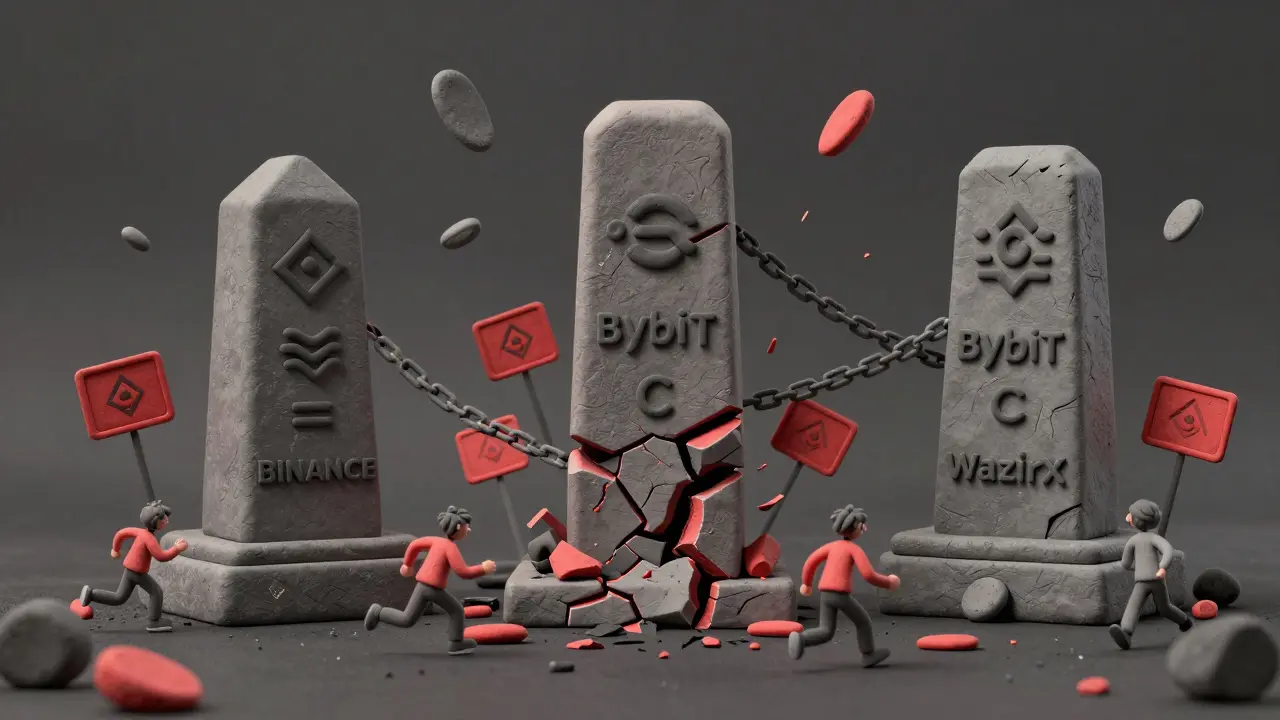
Several prominent international and domestic exchanges have faced severe consequences for non-compliance, making them risky choices for Indian users. Here’s a breakdown of the most notable ones:
| Exchange | Reason for Avoidance | Status/Impact |
|---|---|---|
| Binance | Non-compliance with FIU guidelines | Fined millions of dollars; restricted operations in India |
| Bybit | Failure to adhere to Indian regulatory requirements | Substantial financial penalties imposed |
| WazirX | Catastrophic security breach and fund mismanagement | $230 million lost in July 2024 hack; restructuring criticized by investors |
Binance, once the world’s largest crypto exchange by volume, has been penalized heavily by Indian authorities for failing to meet FIU standards. Despite its global dominance, operating without proper compliance in India led to significant fines and restrictions. Users who continued trading on Binance after these warnings found themselves with limited recourse when issues arose.
Bybit faces similar challenges. Another major international player, Bybit has also incurred substantial financial penalties for non-adherence to Indian regulations. These penalties signal a clear message from Indian authorities: compliance is mandatory, and violations will not be tolerated.
WazirX presents a particularly alarming case for Indian users. Once boasting 6 million users and $5.4 billion in monthly trading volume, WazirX suffered a devastating security breach in July 2024. A multi-signature wallet was compromised, resulting in $230 million in losses. Although the exchange announced restructuring plans, critics argue that it continues to hold user funds instead of returning them promptly. With associations to both the Binance group and the Blockchain India Fund, WazirX’s failure highlights how even well-connected platforms can collapse under poor security practices.
Red Flags to Watch Out For
Not every problematic exchange makes headlines. Many smaller platforms operate quietly while exposing users to hidden dangers. Here are key red flags to watch for:
- Lack of FIU Registration: Always verify if an exchange is registered with the Financial Intelligence Unit of India. Unregistered platforms pose immediate legal and financial risks.
- Poor Banking Partnerships: If an exchange struggles to process INR transactions via major Indian banks, it’s likely facing regulatory scrutiny.
- Inadequate Security Protocols: Look for evidence of robust security measures such as two-factor authentication (2FA), cold storage for assets, and regular third-party audits.
- Vague Customer Support: Platforms with unresponsive or unclear support channels leave you vulnerable during emergencies.
- No Transparent Fee Structure: Hidden fees or inconsistent pricing models can indicate unethical business practices.
The technical infrastructure of many non-compliant exchanges reveals additional concerns. They often lack adequate cybersecurity defenses, transparent operational procedures, and reliable customer service systems. The WazirX incident demonstrates how quickly things can go wrong-even established platforms with millions of users aren’t immune to catastrophic failures.

Safer Alternatives for Indian Traders
If you’re looking for safer options, several domestic exchanges generally maintain better compliance with Indian regulations. While no platform is entirely risk-free, these alternatives offer greater transparency and adherence to local laws:
- CoinDCX: Known for its strong focus on regulatory compliance and educational resources for beginners.
- CoinSwitch: Offers a wide range of cryptocurrencies and emphasizes ease of use alongside security features.
- ZebPay: One of India’s oldest exchanges, ZebPay has built a reputation for reliability and consistent performance.
- Unocoin: Provides competitive trading fees and integrates seamlessly with Indian banking systems.
- Bitbns: Focuses on providing a secure trading experience with advanced tools for experienced traders.
Even among these recommended platforms, staying informed about regulatory changes is crucial. What appears safe today might face future restrictions as guidelines evolve. Regularly check official announcements from the FIU-IND and other relevant authorities to ensure your chosen exchange remains compliant.
Steps to Protect Yourself
To minimize risks associated with cryptocurrency trading in India, follow these practical steps:
- Verify FIU Compliance: Before signing up, confirm that the exchange is registered with the Financial Intelligence Unit of India.
- Check Banking Relationships: Ensure the platform partners with reputable Indian banks for smooth INR transactions.
- Evaluate Security Measures: Look for features like cold wallets, multi-signature authentication, and regular security audits.
- Review Tax Reporting Tools: Choose platforms that provide accurate transaction summaries aligned with Indian tax laws.
- Monitor Regulatory Updates: Stay updated on changes in Indian cryptocurrency regulations through trusted sources.
Remember, the safest approach involves thorough research before selecting any cryptocurrency exchange. Don’t rely solely on marketing claims or user reviews-dig deeper into the platform’s compliance history, security record, and overall reputation within the community.
Is cryptocurrency trading legal in India?
Yes, cryptocurrency trading is legal in India. However, cryptocurrencies are not recognized as legal tender, meaning they lack central authority backing. Traders must comply with existing regulations, including paying applicable taxes.
What happens if I trade on a non-FIU compliant exchange?
Trading on a non-FIU compliant exchange exposes you to various risks, including blocked bank accounts, frozen funds, limited consumer protection, and potential legal investigations by authorities like the Enforcement Directorate (ED).
How much tax do I pay on crypto profits in India?
India imposes a 30% capital gains tax on cryptocurrency profits. Additionally, there’s a 1% Tax Deducted at Source (TDS) on crypto sales exceeding ₹50,000 per financial year.
Which exchanges are considered safe for Indian users?
Domestic exchanges like CoinDCX, CoinSwitch, ZebPay, Unocoin, and Bitbns are generally regarded as safer options due to their better compliance with Indian regulations. Always verify current status before trading.
Can my account be investigated for using a banned exchange?
Yes, using a non-compliant or banned exchange could lead to investigations by Indian authorities, especially if suspicious activity is detected. Even innocent users may face legal trouble depending on circumstances.
Jocelyn Garcia
May 6, 2026 AT 12:38Look, the whole FIU registration thing is basically just a KYC gatekeeping mechanism designed to funnel liquidity into domestic exchanges that have better relationships with local banks. It’s not really about security per se, it’s about regulatory capture and ensuring the state can track your capital flows for tax purposes. The WazirX hack was definitely a catastrophic failure of multi-sig wallet management, but let's be real, even compliant platforms are just custodial risks waiting to happen. If you’re holding significant amounts on any exchange, whether it’s CoinDCX or Binance, you’re essentially taking on counterparty risk. The smart move isn’t just picking a 'compliant' exchange, it’s moving assets to cold storage immediately after purchase. The banking blocks are annoying, sure, but they’re a symptom of the broader de-risking trend by Indian financial institutions who don’t want to deal with AML headaches. So yeah, avoid the non-compliant ones if you want smooth INR on-ramps, but don’t think for a second that being registered makes your funds safe from hacks or insolvency.
Amit Varpe
May 7, 2026 AT 21:37Binance and Bybit should have been kicked out long ago :P Foreign entities playing with our money without following Indian rules is unacceptable. We need strict sovereignty over our financial data. Good riddance to them.
Bronwen Butler
May 7, 2026 AT 23:06actually the idea that domestic exchanges are safer is a myth propagated by regulators to protect their own turf. CoinDCX and others have had their own issues with downtime and frozen withdrawals during high volatility periods. The global platforms had deeper liquidity and better tech stacks before the crackdown. Now we are forced onto inferior platforms with higher fees and worse UX just because they pay lip service to compliance. It is ironic how the 'protection' leads to less choice and potentially more systemic risk if one of these smaller domestic players fails. No one talks about the lack of recourse if ZebPay goes under. You are just trusting a smaller entity with less capital reserve than Binance ever had.
Pauline Larocco71
May 8, 2026 AT 10:43I feel so bad for everyone dealing with this stress honestly. It sounds like such a nightmare trying to figure out which platform is actually safe when the rules keep changing every few months. I wish there was just one clear list that didn't require so much digging. My heart goes out to those who lost money on WazirX, that must have been terrifying to watch your savings disappear like that. Please stay strong and keep doing your research, you are not alone in feeling confused by all this jargon and regulation talk.
beti macedo
May 9, 2026 AT 22:17It is indeed very important to follow the guidelines set by the authorities to ensure a secure trading environment. One should always prioritize platforms that adhere to the legal framework as it provides a certain level of assurance regarding the safety of investments. While the situation may seem complex, adhering to the recommended steps will likely lead to a more positive experience for all traders involved in the ecosystem.