Crypto Mixers and Tornado Cash Sanctions Explained: What Happened and Why It Matters
 Dec, 4 2025
When you send money through a bank, the government can track it. That’s normal. But what happens when you send crypto-and you don’t want anyone to know where it’s going? That’s where crypto mixers come in. And Tornado Cash was the most famous one. Until it got hit with a federal sanction that shook the whole crypto world.
What Is a Crypto Mixer?
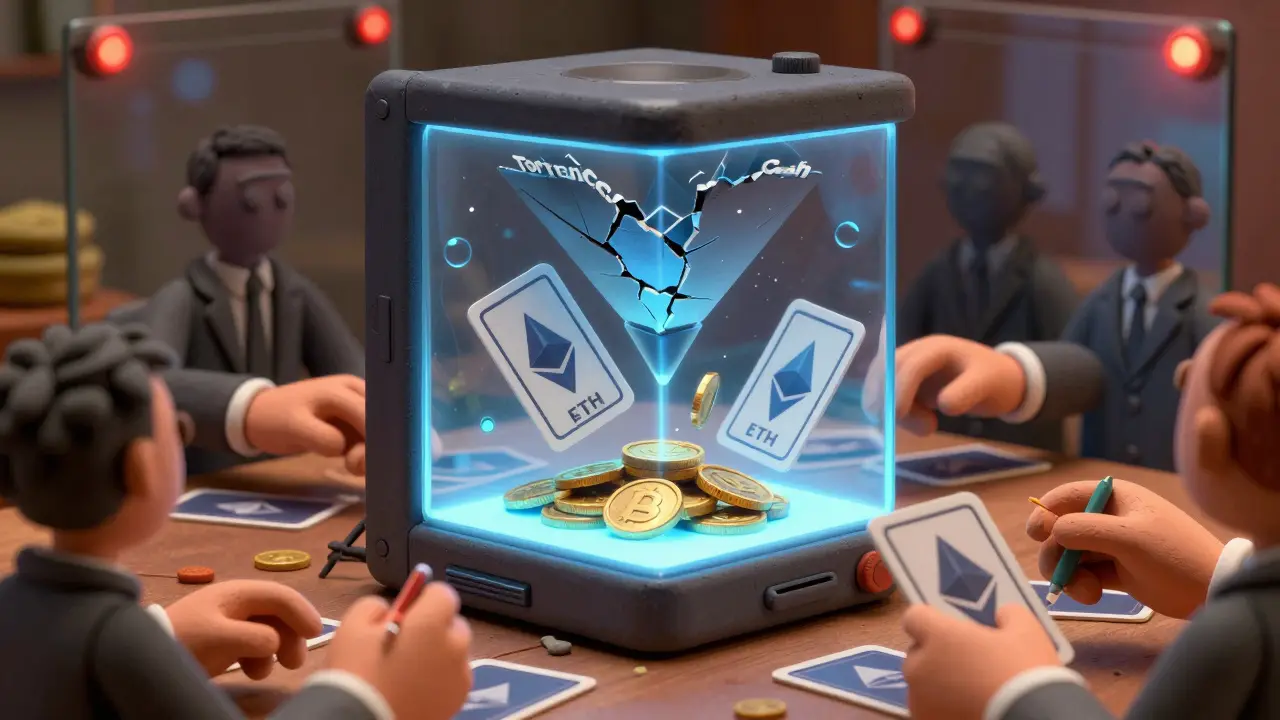
A crypto mixer, sometimes called a tumbler, is a tool that breaks the link between where cryptocurrency comes from and where it goes. Think of it like shuffling a deck of cards. You put your cards in, the mixer scrambles them, and you get new cards back. No one can tell which card was yours.In crypto terms, you send ETH or BTC to a mixer’s smart contract. It pools your coins with others’. Then, after a delay, you get back the same amount-but from a different address. The trail ends there. That’s the whole point: privacy.
It’s not illegal to use a mixer. In fact, many people use them to protect their financial privacy. Just like you don’t want strangers reading your mail, some people don’t want strangers tracking their crypto transactions. But when criminals use these tools to hide stolen money, regulators take notice.
What Was Tornado Cash?
Tornado Cash launched in 2019 as an open-source, decentralized mixer on Ethereum. It didn’t have a company, no CEO, no customer service. Just code running on the blockchain. Anyone could use it by connecting their wallet and following a few steps. It was automated, trustless, and anonymous.By 2022, over $7.6 billion had passed through Tornado Cash. That’s a lot of transactions. And yes, some of it was dirty money. The U.S. Treasury said that around 30% of the funds were tied to cybercrime. That included $455 million stolen by North Korea’s Lazarus Group from Axie Infinity, $96 million from the Harmony Bridge hack, and millions more from other heists.
But here’s the twist: Tornado Cash didn’t choose who used it. It didn’t know who you were. It didn’t hold your money. It just ran the same code for everyone. That’s what made it different from traditional money services.
The OFAC Sanction: What Happened in August 2022
On August 8, 2022, the U.S. Treasury’s Office of Foreign Assets Control (OFAC) dropped a bombshell. They added Tornado Cash to the Specially Designated Nationals (SDN) list. That meant it was now illegal for any U.S. person-or anyone using U.S. financial systems-to interact with Tornado Cash’s smart contracts.This wasn’t just a warning. It was a freeze. Exchanges like Coinbase and Kraken blocked access to Tornado Cash addresses. Wallets like MetaMask started showing warnings. Developers couldn’t even write code that interacted with the contracts without risking fines or jail time.
The Treasury’s argument? Tornado Cash was a tool used repeatedly to launder money. And because it didn’t have controls to stop criminals, it was a threat to national security.
But critics called it overreach. You can’t sanction code. You can’t arrest a smart contract. The software didn’t make decisions. It didn’t have intent. It just executed instructions. If you ban every tool that criminals use, you’d have to ban the internet.

The Legal Backlash: Van Loon v. Treasury
A group of crypto users and developers fought back. One of them, a software engineer named Van Loon, sued the Treasury. He argued that OFAC had no authority to sanction immutable blockchain code. It wasn’t property. It wasn’t owned by anyone. It just existed.In November 2024, the U.S. Fifth Circuit Court of Appeals agreed. They ruled that OFAC had exceeded its power under the International Emergency Economic Powers Act (IEEPA). The court said you can’t sanction something that can’t be controlled, transferred, or owned. Smart contracts aren’t assets-they’re public software.
The ruling was historic. For the first time, a U.S. court said regulators can’t treat blockchain code like a bank account or a company. It was a win for decentralization.
The Delisting: March 2025
On March 21, 2025, the Treasury officially removed Tornado Cash from the SDN list. The smart contracts were no longer blocked. Americans could use them again.But here’s the catch: the Treasury didn’t remove sanctions from the people behind it. Roman Semenov, one of the creators, is still sanctioned. And Roman Storm, the other co-founder, is facing federal criminal charges: conspiracy to launder money, conspiracy to run an unlicensed money service, and conspiracy to violate IEEPA.
The Treasury’s move was strategic. They pulled the plug on the protocol-but kept the pressure on the humans. It’s a new kind of regulation: sanction the tool, but punish the creator.
What This Means for Crypto Privacy
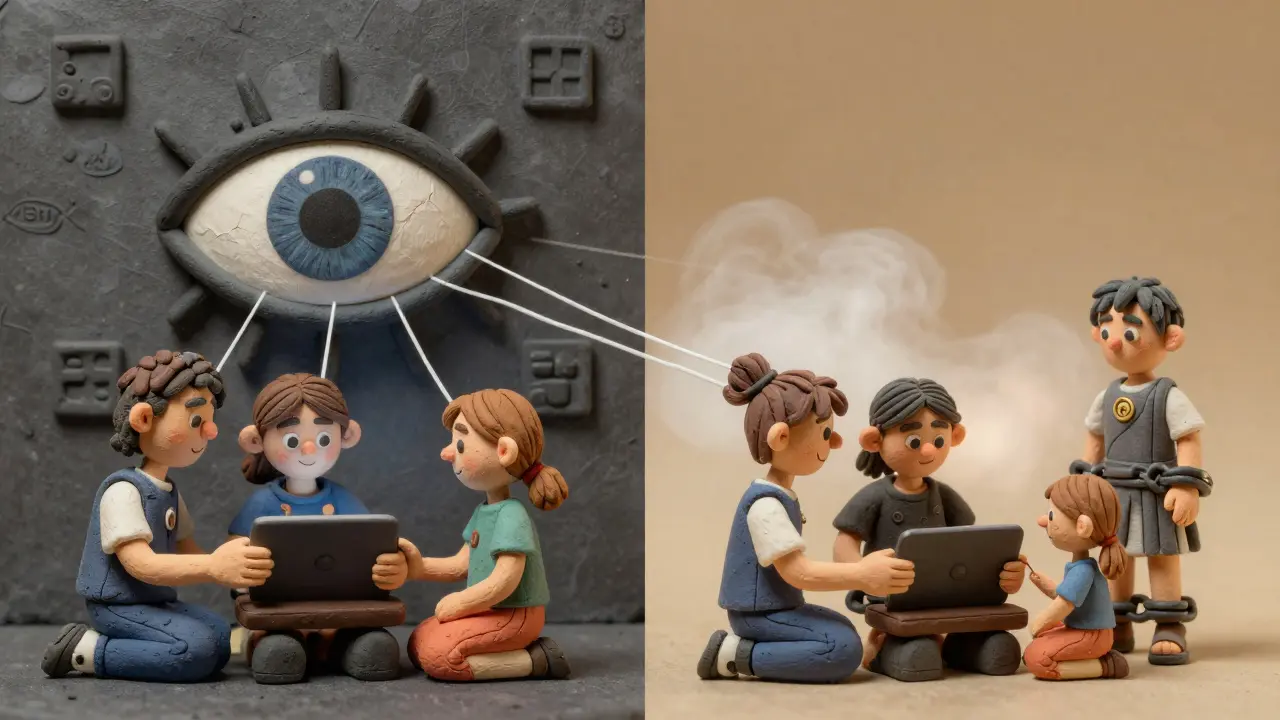
The Tornado Cash case changed everything. Before, regulators focused on exchanges and wallets-places where identities are known. Now they’re targeting the infrastructure itself.Privacy tools are under fire. Tools like zk-SNARKs, zero-knowledge proofs, and other anonymizing tech are now seen as high-risk. Even if they’re used for legitimate reasons, regulators worry they’ll be abused.
But here’s the reality: if you want privacy in crypto, you need mixers. Or something like them. Without them, every transaction is public forever. Your balance, your trades, your connections-all visible to anyone with a blockchain explorer.
The government’s answer? More surveillance. More KYC. More tracking. But that goes against the whole point of crypto: financial sovereignty.
What’s Next for Crypto Mixers?
Tornado Cash is back online, but no one’s sure if it’s safe to use. Developers are afraid. Wallets are cautious. Exchanges still warn users. Even though the sanctions are lifted, the DOJ is still prosecuting the founders. That creates a chilling effect.Some developers are now building new mixers with legal safeguards. Others are moving to non-U.S. jurisdictions. Some are exploring on-chain privacy layers built into protocols like zkSync or Polygon zkEVM.
But the bigger question remains: Can privacy and regulation coexist? Or is this a battle between two irreconcilable ideas?
One thing is clear: the era of unregulated crypto privacy is over. But the era of total surveillance isn’t here yet either. We’re in the middle.
What Should You Do?
If you’re a regular crypto user who just wants to protect your financial data:- Understand that mixers are legally risky-even if they’re not blocked anymore.
- Don’t assume that because Tornado Cash is back, it’s safe to use. The legal gray area is still wide.
- Use wallets and exchanges that comply with regulations. They’ll block risky tools anyway.
- If you’re a developer, be careful. Building or maintaining privacy tools could put you on the government’s radar.
- Stay informed. The next court case could change everything again.
There’s no easy answer. Privacy matters. So does law enforcement. But when the law tries to control code, it often ends up breaking more than it fixes.
Tornado Cash didn’t steal money. But it made it harder to track who did. And that’s exactly why it was both powerful-and dangerous.
Are crypto mixers illegal?
No, crypto mixers themselves are not illegal. But using them to launder money is. The legality depends on intent and jurisdiction. In the U.S., interacting with sanctioned mixers like Tornado Cash was illegal until March 2025. Now, the smart contracts are no longer blocked, but using them could still carry legal risk if linked to criminal activity.
Why did the U.S. sanction Tornado Cash?
The U.S. Treasury sanctioned Tornado Cash because it was used to launder over $7 billion in cryptocurrency, including funds stolen by North Korean hackers. OFAC claimed the mixer had no effective controls to prevent criminal use and repeatedly facilitated large-scale thefts from exchanges and DeFi protocols.
Is Tornado Cash safe to use now?
Technically, yes-the smart contracts are no longer sanctioned. But the developers are still under criminal investigation. Wallets and exchanges may still block access. Using Tornado Cash could trigger compliance flags or attract regulatory scrutiny. It’s legal, but not risk-free.
What’s the difference between a mixer and a VPN?
A VPN hides your IP address online. A crypto mixer hides your transaction history on the blockchain. Both provide privacy, but a mixer operates on a public ledger. That’s why regulators see it differently: you can’t hide your IP from your ISP, but you can hide your wallet activity from blockchain analysts.
Can the government shut down decentralized apps like Tornado Cash?
No, not really. Tornado Cash’s smart contracts are still running on Ethereum. The government can’t delete code on a public blockchain. They can only block access through U.S. companies, freeze assets, or prosecute individuals. That’s why the Fifth Circuit ruled the original sanction was invalid-it tried to control something the government can’t control.
Will other mixers be sanctioned next?
It’s likely. Regulators are watching. Any mixer that handles large volumes of funds and lacks KYC controls is a target. New tools like Aztec, Tornado Cash alternatives, and privacy-focused Layer 2 networks are already under scrutiny. The next case might not be about a mixer-it could be about a privacy-enhancing smart contract in DeFi.
What happens if I used Tornado Cash before the sanctions were lifted?
If you used Tornado Cash before March 2025, you may have violated U.S. sanctions at the time. The Treasury has not announced any amnesty. While enforcement against ordinary users is rare, exchanges may report past activity. If you’re concerned, consult a legal professional familiar with crypto compliance.
Why is the DOJ still prosecuting Roman Storm?
Because the court ruled that code can’t be sanctioned-but people can. The DOJ is going after the developers for allegedly creating a tool designed to facilitate money laundering. This sets a precedent: if you build a tool that’s widely used for crime, you can be held criminally responsible-even if you didn’t directly steal the money.
Madison Agado
December 4, 2025 AT 14:56It’s wild to think that we’re treating code like a person. If a hammer can be used to build a house or break a skull, do we ban hammers? Tornado Cash was just a tool-neutral, immutable, open. The real issue isn’t the mixer; it’s that we’ve built a financial system where privacy is seen as suspicion. We’re criminalizing anonymity while pretending we’re protecting security. But if you can’t hide your transactions, you don’t own your money-you lease it from the state.
Tisha Berg
December 5, 2025 AT 15:11I get why people use mixers. I don’t like the idea of strangers seeing how much I have or where I spend it. It’s not about crime-it’s about dignity. But I also get why regulators freak out when billions get shuffled around with no paper trail. We need better ways to protect privacy without letting bad actors slip through. Maybe the answer isn’t banning tools, but building smarter ones that can prove they’re being used ethically.
Billye Nipper
December 6, 2025 AT 15:39Okay, I just want to say-this is HUGE. Like, life-changing-level huge. The court actually said code isn’t property?? That’s the kind of win that gives me hope for the future of the internet. People are scared, sure, but we’re not backing down. This isn’t just about crypto-it’s about freedom. If the government can sanction a piece of software, what’s next? Can they ban Python? Can they arrest a GitHub repo? I’m not okay with that. Let’s keep fighting.
Thomas Downey
December 6, 2025 AT 15:57One must ask oneself: if the rule of law is to have any meaning, then the sanctity of property and the integrity of financial systems must be preserved. To permit the proliferation of untraceable, unaccountable financial instruments under the banner of "privacy" is not only reckless-it is an affront to civil society. The fact that a court deemed this code "un-sanctionable" reveals a dangerous legal myopia. The law does not exist to serve convenience; it exists to uphold order. Tornado Cash was a digital drug den, and its removal was not overreach-it was overdue.
Noriko Robinson
December 6, 2025 AT 20:40Wait so if the mixer is back online but the devs are still being prosecuted… does that mean using it is legal but building it is a crime? That’s like saying it’s okay to drive a car but illegal to design the engine. I don’t understand how that’s fair. And why are wallets still blocking it? If the sanction is lifted, why is there still fear? I feel like we’re stuck in this weird limbo where the rules changed but nobody told the systems. This is so confusing.
Josh Rivera
December 8, 2025 AT 12:04Oh wow, so now we're going to jail people for writing code that criminals happen to use? Next up: prosecuting Microsoft because hackers use Windows. Congrats, regulators-you've officially turned the internet into a police state where every line of code needs a background check. Meanwhile, the real criminals? They're still out there, laughing, using centralized banks that don't even ask for ID. But hey, at least we got Tornado Cash. What a victory.