Crypto Tax Rates by Country: Global Comparison Guide
 Oct, 5 2026
Imagine earning $100,000 in Bitcoin profits. In one country, you might owe the government nothing. In another, nearly half of that profit vanishes into taxes before you can even cash out. This isn't a hypothetical scenario; it's the reality of cryptocurrency taxation in 2026. The difference between keeping your wealth and watching it shrink depends entirely on where you live-or where you choose to claim residency.
If you are trading digital assets, you need to know how different jurisdictions treat your gains. Some countries view crypto as property, others as currency, and a few don't tax it at all. Understanding these differences is crucial for anyone looking to optimize their portfolio. We will break down the rates, the rules, and the hidden traps in major economies so you can make informed decisions about your next move.
The High-Tax Hubs: Where Crypto Costs You Most
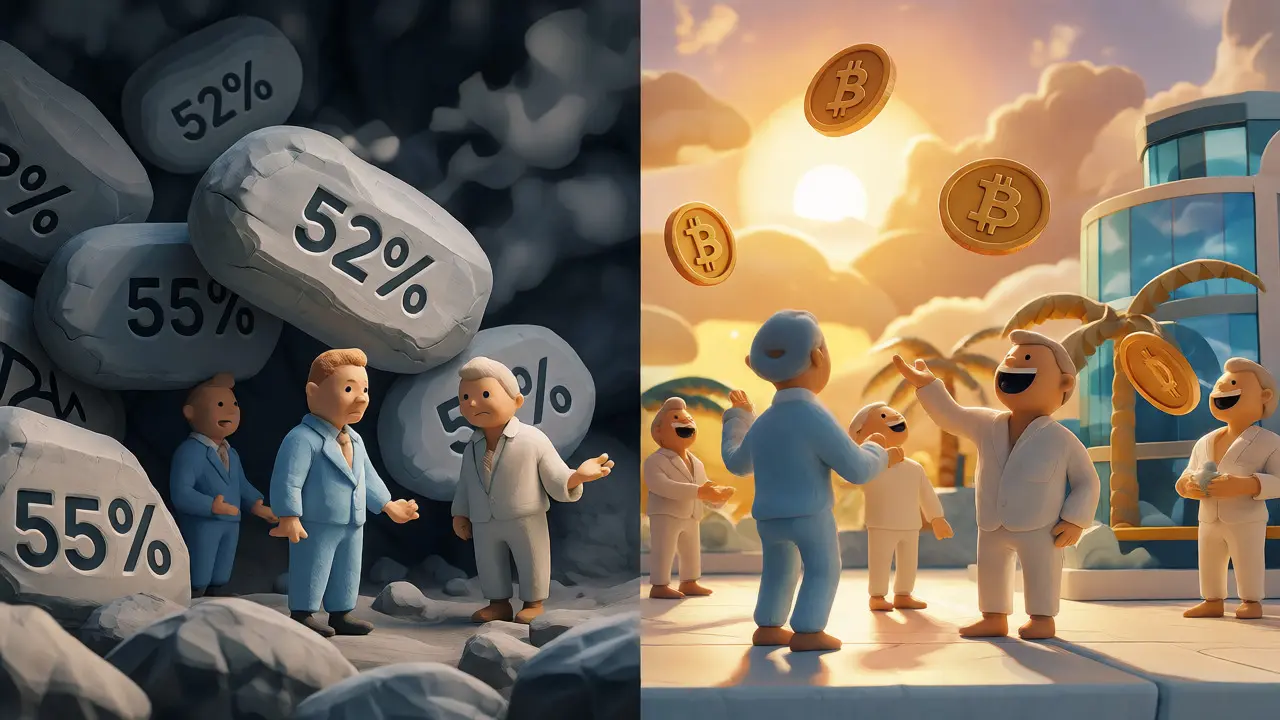
Not all tax regimes are created equal. If you are based in certain parts of Asia or Northern Europe, you might be facing some of the steepest rates globally. Japan remains one of the most expensive places for crypto investors. The country applies a progressive tax structure that can hit a staggering 55% on capital gains. That means if you are in the highest income bracket, more than half of your profit goes to the state. It’s a harsh environment for traders who rely on frequent turnover to generate returns.
Denmark follows closely behind with rates ranging from 37% to 52%. Like Japan, Denmark treats significant crypto gains similarly to ordinary income, which pushes high earners into the upper tax brackets quickly. France takes a different approach but still demands its share. The French government imposes a flat 30% tax rate on crypto-to-fiat conversions. This includes both capital gains and social contributions. While it sounds simpler than a progressive system, the 30% bite is consistent regardless of how long you held the asset. For active traders, this flat rate can sometimes be better than progressive systems, but for long-term holders, it lacks the incentives found elsewhere.
These high-tax environments force investors to be strategic. You cannot simply buy and hold without considering the tax implications. Many investors in these regions use loss harvesting or specific holding periods to mitigate the impact. But let’s be honest: paying over 50% of your gains is a tough pill to swallow when you compare it to other options available globally.
The Zero-Tax Sanctuaries: Keep What You Earn
On the opposite end of the spectrum lie the zero-tax jurisdictions. These are the places where crypto enthusiasts flock to minimize their liabilities. As of 2026, twelve countries offer completely tax-free environments for cryptocurrency transactions. This list includes El Salvador, the United Arab Emirates (UAE), Singapore, Portugal (under specific conditions), and Switzerland.
El Salvador made headlines by adopting Bitcoin as legal tender. Because it is official currency, transactions often escape traditional capital gains taxes. However, just because it is legal tender doesn’t mean every transaction is automatically exempt from all forms of reporting, especially if you are running a business. Still, for individual investors, the lack of a capital gains tax is a massive advantage.
The UAE has positioned itself as a global crypto hub. With no personal income tax and no capital gains tax on crypto for individuals, it attracts thousands of expats and digital nomads. There are no residency requirements tied specifically to crypto ownership, though you must establish legal residency to benefit from the broader tax framework. Similarly, Switzerland offers a favorable environment for private investors. While commercial activities involving crypto are taxed, private investment gains are generally tax-free. This distinction between "business" and "private" activity is critical. If you trade too frequently, Swiss authorities might reclassify you as a professional trader, subjecting you to income tax.
Portugal used to be the go-to destination for European crypto investors. While recent changes have introduced a 28% tax on short-term gains, holdings kept for more than one year remain exempt. This conditional exemption rewards patience. If you plan to HODL for years, Portugal remains competitive. But if you are day-trading, the 28% flat rate makes it less attractive than it once was.

The Middle Ground: Progressive and Mixed Systems
Most major economies fall somewhere between zero tax and punitive rates. They use mixed systems that reward long-term holding while taxing active trading. The United States is a prime example. The IRS treats cryptocurrency as property, not currency. This classification triggers capital gains taxes. If you sell an asset after holding it for less than a year, you pay short-term capital gains rates, which match your ordinary income tax bracket. This ranges from 10% to 37%. If you hold for more than a year, you qualify for long-term capital gains rates, which are significantly lower-0%, 15%, or 20% depending on your total income.
Germany offers a unique dual structure. If you hold crypto for more than one year, the gains are entirely tax-free. It doesn’t matter how much you earn; if you waited 366 days, you owe nothing. However, if you sell within a year, those gains are taxed as ordinary income, with rates up to 45%. This creates a powerful incentive for long-term investing. It also complicates things for traders who rotate positions frequently. You need meticulous records to prove your holding period.
The United Kingdom uses a tiered capital gains tax system. Basic-rate taxpayers pay 10% on crypto gains, while higher-rate taxpayers pay 20%. Everyone gets a tax-free allowance, currently set at £3,000 for 2026. This allowance helps small investors, but high-volume traders quickly exceed it. Unlike Germany, the UK does not exempt long-term holdings entirely. You always pay something unless your gains fall under the annual allowance.
| Country | Tax Type | Short-Term Rate | Long-Term Rate | Key Condition |
|---|---|---|---|---|
| United States | Capital Gains | 10-37% | 0-20% | Holding period > 1 year |
| Japan | Income/Gains | 15-55% | 15-55% | Progressive brackets |
| Germany | Income/Gains | Up to 45% | 0% | Holding period > 1 year |
| France | Flat Tax | 30% | 30% | Crypto-to-Fiat only |
| UK | Capital Gains | 10-20% | 10-20% | Annual allowance £3k |
| UAE | None | 0% | 0% | Individual investors |
| El Salvador | None | 0% | 0% | Legal Tender status |
Hidden Traps: Staking, Mining, and Airdrops
Taxes aren't just about selling coins. How you acquire them matters too. In many countries, receiving crypto through mining, staking, or airdrops counts as ordinary income at the moment of receipt. Let’s say you stake Ethereum and receive 1 ETH as a reward. In the US, that ETH is taxed as income based on its fair market value when you received it. Later, when you sell that ETH, you might pay capital gains tax on any increase in value since you received it. This double-taxation risk catches many beginners off guard.
France treats staking and mining rewards as income subject to progressive tax rates, which can reach 45%. Meanwhile, crypto-to-crypto trades are often tax-exempt in France, provided they don’t involve fiat currency. This nuance is vital. If you swap Bitcoin for Ethereum, you might avoid immediate tax liability in France, but in the US, that swap is a taxable event. You realize a gain or loss on the Bitcoin you gave up, even if you didn’t touch a dollar.
Germany distinguishes between passive investment and active business activity. If you mine crypto or run a node, you might be considered a business operator. This subjects your earnings to income tax and potentially VAT. Personal holdings held for over a year remain tax-free, but active participation changes the game. Always check local definitions of "business activity." One person’s hobby is another’s taxable enterprise.

Compliance and Reporting: Don’t Get Caught Off Guard
Low tax rates don’t mean low effort. Compliance requirements vary wildly. In the UK, you must report all crypto transactions via Self-Assessment Tax Returns. Failure to declare gains can result in fines up to 200% of the unpaid tax. That’s a steep penalty for a simple oversight. Germany requires annual transaction reporting to the Federal Central Tax Office. Audits are common, and unreported activities trigger heavy fines.
France mandates annual reporting of crypto accounts held on foreign exchanges. If you forget to declare an account, you face fines up to €750 per undeclared account. These penalties add up quickly if you use multiple platforms. Even in zero-tax jurisdictions like the UAE, you may need to provide proof of residency and maintain records to substantiate your status during bank audits or visa renewals.
Blockchain analysis tools are becoming standard for tax authorities. They track wallet movements and link addresses to identities. Hiding gains is getting harder. Exchanges now report data directly to tax agencies in many countries, including the US and EU members. Assume the government knows what you did. Keep detailed logs of every trade, date, and price. Software tools can help automate this, but manual verification is essential for accuracy.
Strategic Moves for Investors
So, what should you do? First, assess your current jurisdiction. Are you paying too much compared to peers in similar income brackets? Second, consider your holding strategy. If you live in Germany or the US, waiting out the one-year mark can save you thousands. Third, evaluate relocation options. Moving to a zero-tax zone like the UAE or Portugal (for long-term holds) requires planning. You need to establish genuine residency, which often involves spending 183+ days in the country.
Beware of "tax tourism" pitfalls. Simply buying a passport or renting an apartment isn’t enough. Tax authorities look for ties to the country: family, business interests, physical presence. If you try to cheat the system, you might face back-taxes and penalties in your home country. Consult a tax professional who specializes in digital assets. The rules change fast, and generic advice often misses crypto-specific nuances.
Finally, diversify your exposure across jurisdictions if possible. Some investors hold assets in wallets linked to different residency statuses. Others split time between countries to leverage favorable windows. It’s complex, but the savings can justify the effort. Remember, tax optimization is part of your overall financial strategy, not an afterthought.
Is crypto taxed as income or capital gains?
It depends on the country and your activity level. In the US, selling crypto is a capital gains event, while earning it via mining or salary is ordinary income. In Germany, long-term holdings are tax-free, but short-term sales are taxed as income. Always check local laws regarding the distinction between investment and business activity.
Do I pay tax on crypto-to-crypto trades?
In the US and UK, yes. Swapping Bitcoin for Ethereum is a taxable disposal of Bitcoin. In France and some other EU countries, crypto-to-crypto trades may be tax-exempt until you convert to fiat currency. This variation requires careful record-keeping.
Which country has the lowest crypto tax?
Several countries have 0% capital gains tax for individuals, including the UAE, Singapore, El Salvador, and Switzerland (for private investors). Germany also offers 0% tax if you hold assets for more than one year.
What happens if I don't report my crypto gains?
Penalties vary but can be severe. In the UK, fines can reach 200% of unpaid tax. In France, undeclared accounts incur fines up to €750 each. Tax authorities increasingly use blockchain analytics to detect non-compliance, making evasion risky.
Are staking rewards taxable?
Yes, in most jurisdictions. Staking rewards are typically treated as ordinary income at the time of receipt. Subsequent price appreciation may be subject to capital gains tax upon sale. Check your local tax authority's guidance on DeFi activities.