CryptoTycoon (CTT) Airdrop: Status, Eligibility & How to Avoid Scams in 2026
 Jul, 11 2026
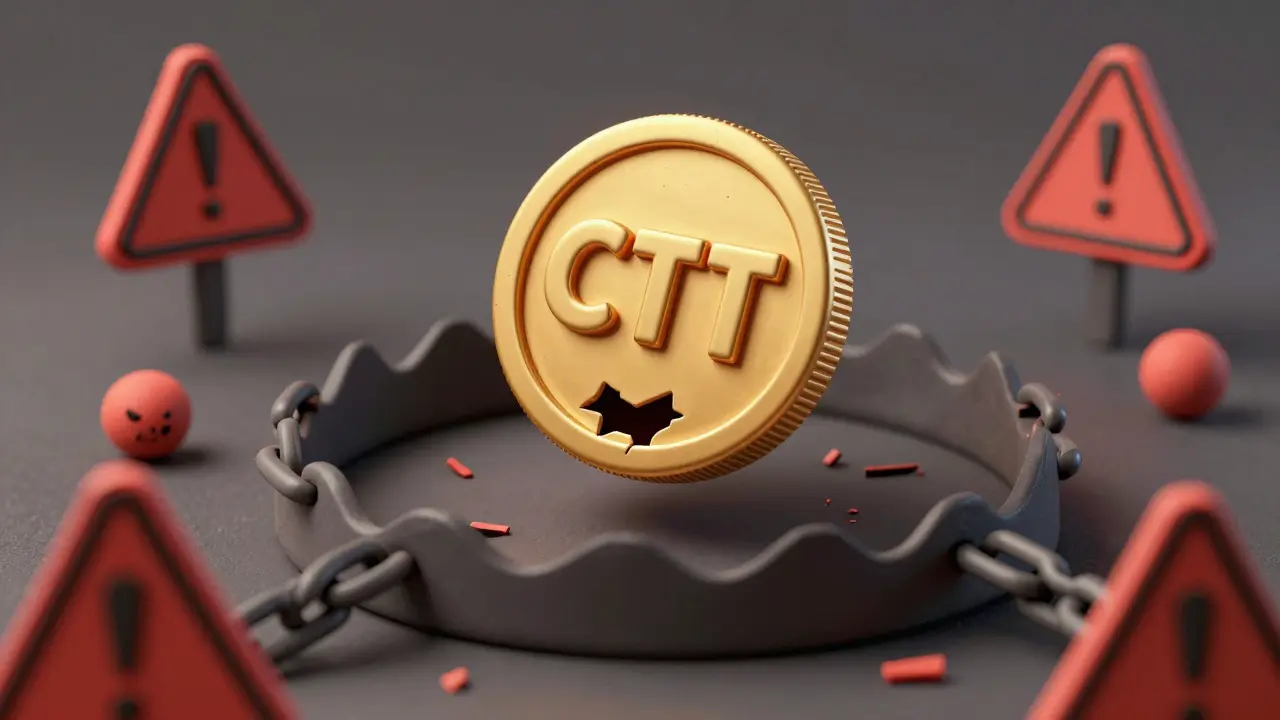
Have you seen the rumors about the CryptoTycoon airdrop? If you are searching for details on how to claim free CTT tokens from the CryptoTycoon platform distribution event, you need to pause and verify your sources immediately. As of July 2026, there is no verified, major cryptocurrency project officially named "CryptoTycoon" issuing a token called "CTT" through a legitimate public airdrop.
This silence in the data is not an oversight; it is a critical red flag. In the world of digital assets, if a project isn't listed on reputable trackers like CoinGecko or CoinMarketCap, and its smart contract hasn't been audited by firms like CertiK or OpenZeppelin, it likely does not exist-or worse, it is a trap designed to steal your funds. The confusion often stems from similar-sounding names, such as the older "Tycoon" project (TYC token) or generic "tycoon"-themed games, but these are distinct entities with different mechanics and histories.
The Reality Behind the CryptoTycoon Name
To understand why you might be seeing this name, we have to look at the landscape of copycat projects and naming collisions. There was a project simply called Tycoon with the ticker TYC. This platform operated as a secured interface between professional traders and end users, allowing followers to copy trades via API connections. It conducted an airdrop years ago, distributing TYC tokens based on user tiers. However, that campaign is long closed, and the project is unrelated to any current "CTT" initiative.
The term "CryptoTycoon" is frequently used by unverified Telegram channels, Twitter bots, and spam emails promising high returns for minimal effort. These entities often create fake landing pages that mimic legitimate DeFi dashboards. They ask users to connect their wallets to "claim" rewards. Once you sign the transaction, the malicious code drains your wallet instead of sending you tokens. This is known as a "wallet drainer" attack, one of the most common scams in the current market cycle.
Legitimate projects do not operate in shadows. They publish whitepapers, reveal their team members, and list their token contracts on block explorers like Etherscan or Solscan. If you cannot find the official website’s URL in multiple independent, trusted news sources, assume the project is fraudulent. The absence of "CryptoTycoon" in major airdrop tracking databases is definitive proof that no such mainstream event is occurring.
How Legitimate Airdrops Work in 2026
Understanding how real airdrops function helps you spot fakes. In 2026, the airdrop ecosystem has matured significantly. Projects use distributions to bootstrap liquidity, distribute governance rights, and reward early community members. Unlike the wild west of 2021, modern airdrops require genuine interaction with a protocol.
For example, confirmed upcoming or recent airdrops involve platforms like MetaMask, which requires an active account and minimum ETH balance, or protocols like Hyperliquid and Meteora. These projects track on-chain activity. You don't just click a button; you provide liquidity, swap tokens, or borrow assets over time. The goal is to filter out bots and reward actual users who add value to the network.
Key characteristics of a legitimate airdrop include:
- On-Chain Verification: Your eligibility is determined by your wallet address history, not by filling out a form with your email.
- No Upfront Fees: You never pay gas fees to "unlock" an airdrop. While you pay standard network fees for transactions, you never send tokens to a specific address to receive a reward.
- Public Roadmap: The project clearly states when the snapshot will be taken and how points are calculated.
- Audited Contracts: The token contract is verified and audited by third-party security firms.
If a "CTT" airdrop asks you to send SOL, ETH, or USDT to a wallet address to "verify" your identity, it is a scam. Period. Real protocols pull data from the blockchain; they do not push requests for payments via direct messages.
Identifying Airdrop Scams: Red Flags to Watch
Scammers are sophisticated. They use AI-generated websites, cloned social media profiles, and even fake influencer endorsements. To protect yourself, you must learn to identify the subtle signs of fraud. Here are the most common tactics used in fake airdrop campaigns like the alleged CryptoTycoon scheme.
| Feature | Legitimate Project | Scam / Fake Project |
|---|---|---|
| Communication Channel | Official Discord, Twitter (Blue Check), Website Blog | DMs, Anonymous Telegram Groups, Email Spam |
| Wallet Interaction | Read-only access or standard transaction signing | Requests unlimited approval or asks to send tokens first |
| Token Contract | Verified on Etherscan/Solscan, audited | Unverified, new contract, or mimics a popular token's name |
| Urgency | Clear deadlines based on snapshots | "Claim within 1 hour or lose everything!" |
| Team Transparency | LinkedIn profiles, Doxxed founders | Anonymous, stock photos, or stolen identities |
One specific danger is the "fake token" drop. Sometimes, scammers will actually send you worthless tokens named "CTT" or "CryptoTycoon" into your wallet. These tokens have no value and cannot be traded on legitimate exchanges. When you try to sell them, you are directed to a phishing site that asks you to approve a transaction to "bridge" or "swap" the tokens. That approval grants the attacker access to your real assets, such as your ETH or USDC.
Always check the token contract address against official announcements. If you received unexpected tokens, do not interact with them. Use tools like Revoke.cash to check if your wallet has granted suspicious approvals to unknown contracts.
Safe Alternatives: Verified Airdrops to Consider
Instead of chasing non-existent or risky projects like CryptoTycoon, focus your energy on verified opportunities. The 2026 landscape offers several high-potential avenues for legitimate airdrop farming. These projects have established track records, active development, and clear paths to token distribution.
LayerZero and Wormhole are interoperability protocols that have hinted at future rewards for users who bridge assets across chains. By using these bridges for your regular trading needs, you may qualify for retroactive drops. Similarly, zkSync and Abstract are Layer 2 scaling solutions that often reward early adopters who deploy contracts or use dApps built on their networks.
In the decentralized exchange (DEX) space, Ambient and MarginFi have shown interest in community incentives. Providing liquidity or borrowing assets on these platforms can position you well for future governance token launches. Always ensure you are interacting with the official contracts found on the project’s verified website.
Gaming also remains a viable sector. Projects like Off the Grid (GUNZ) combine play-to-earn mechanics with potential airdrop structures. However, even here, due diligence is required. Verify that the game is published by reputable studios like Gunzilla Games and backed by known venture capital firms like Delphi Ventures.

Step-by-Step Guide to Verifying Any Airdrop
Before you ever connect your wallet to a new project, follow this verification checklist. This process takes five minutes but can save you thousands of dollars.
- Search the Name + "Scam": Type "[Project Name] scam" into Google and Reddit. Look for recent complaints. If users report losing funds, stay away.
- Check the Domain Age: Use a WHOIS lookup tool. If the domain was registered last week, it is highly suspicious. Legitimate projects usually hold domains for months or years.
- Verify Social Media Handles: Go directly to Twitter/X and search the project name. Look for the blue checkmark and follower count. Scammers often create accounts with similar handles (e.g., @CryptoTycoon_Official_1 vs @CryptoTycoon).
- Inspect the Smart Contract: Find the token address on the project’s official website. Paste it into Etherscan, BscScan, or Solscan. Check if the contract is verified. Look at the holder distribution. If one wallet holds 50%+ of the supply, it is a rug pull risk.
- Use a Burner Wallet: Never connect your main wallet holding significant assets to untested dApps. Use a secondary wallet with only the amount you are willing to lose for gas fees.
This disciplined approach separates successful airdrop hunters from victims. The cost of caution is zero; the cost of negligence can be total loss.
Why Due Diligence Matters More Than Ever
The regulatory environment in 2026 is tighter than before. Governments are cracking down on unregistered securities and fraudulent schemes. While this brings legitimacy to the industry, it also means that shady projects are operating more aggressively to cash out before being shut down. They know their window is closing, so they use urgency and greed to lure victims.
Remember that you are responsible for your own security. No customer support team can recover funds sent to a scammer. No police force can trace anonymous blockchain transactions easily. The burden of verification lies entirely with you. By sticking to well-known protocols and ignoring unsolicited offers, you protect your portfolio.
The allure of "free money" is powerful, but in crypto, nothing is truly free. Legitimate airdrops compensate you for your time, risk, and contribution to the network. If something feels too good to be true, it almost certainly is. The "CryptoTycoon" CTT airdrop is a prime example of a narrative built on empty promises. Ignore the hype, trust the data, and keep your keys safe.
Is the CryptoTycoon (CTT) airdrop real?
No, there is no verified information about a legitimate "CryptoTycoon" project issuing "CTT" tokens as of July 2026. The name is likely associated with scams or confused with the older "Tycoon" (TYC) project, which is unrelated and closed.
How can I tell if a crypto airdrop is a scam?
Red flags include requests for upfront payments, private keys, or seed phrases. Also, be wary of projects with unverified smart contracts, newly registered domains, or communication primarily through DMs and anonymous Telegram groups.
What should I do if I received unexpected CTT tokens?
Do not interact with them. These are likely worthless tokens designed to trick you into visiting a phishing site. Check your wallet approvals using Revoke.cash and ensure you haven't granted permission to unknown contracts.
Are there any legitimate airdrops happening in 2026?
Yes, projects like MetaMask, Hyperliquid, Meteora, zkSync, and LayerZero have active or rumored airdrop programs. Always verify eligibility criteria through official project channels and avoid unofficial claim sites.
Can I get rich quick with crypto airdrops?
While some airdrops have yielded significant profits, they require time, research, and often initial capital for gas fees. Treat them as a side income strategy, not a get-rich-quick scheme. Most small airdrops are worth less than $50 per user.
What is the difference between Tycoon (TYC) and CryptoTycoon (CTT)?
Tycoon (TYC) was a real project focused on trade copying that ended its airdrop years ago. CryptoTycoon (CTT) appears to be a fictional or fraudulent entity using a similar name to mislead users. They are not connected.
John Harman
July 11, 2026 AT 17:35Look, I've been in crypto since the Bitcoin days and let me tell you something about these so-called 'tycoon' schemes. They are always the same tired script. You see a name that sounds fancy, maybe it has 'Crypto' or 'Tycoon' or 'Moon' in it, and suddenly everyone is losing their minds trying to get in early. But here is the thing that nobody wants to admit. The smart money isn't chasing these random telegram group airdrops. They are building protocols. They are auditing contracts. They are looking at on-chain data. If this CTT thing was real, do you really think CoinGecko would be silent? Do you think CertiK wouldn't have a report on it by now? No. It's a ghost project. A phantom. And people like you who are asking 'how to claim' are exactly what the scammers want. You are the liquidity they are draining. Wake up.
Kat Barr
July 13, 2026 AT 01:45Oh my gosh!! 😱 Thank you so much for posting this!!! I literally just got an email from someone claiming to be from CryptoTycoon and my heart was pounding out of my chest 💓😰 I almost clicked the link because it looked SO professional but then I remembered reading about wallet drainers 🛑🙅♀️ It is so scary how good they are at making fake sites look real! 😨✨ I am so glad I checked Reddit first instead of connecting my wallet! 🙏💖 We need to keep each other safe out there!! 🤝💕
Logan Edmison
July 14, 2026 AT 03:45the nature of value is purely consensual yet we forget that when greed takes hold... its not about the token its about the illusion of scarcity created by the scammer. they exploit the human desire for free gain which is a fundamental flaw in our psychology. i mean why would anyone give away millions for free unless they wanted something more valuable like your private keys? its simple philosophy really. the map is not the territory and the website is not the blockchain. trust no one.
Michelle Walker
July 14, 2026 AT 03:56You are all idiots if you think this is new information. Wallet drainers are basic level 1 scams. If you don't know better you deserve to get drained. Stop whining and learn to code.
Antony Lopez
July 15, 2026 AT 23:56This is exactly why America needs stricter regulations on these foreign-backed crypto platforms. These scammers are operating from overseas, laughing at us while they steal our hard-earned dollars. We should ban these unregistered tokens immediately. It's a national security issue. Protect American assets first.
Shay Thomson
July 16, 2026 AT 17:57Can we please just take a deep breath and realize that fear is a natural reaction to uncertainty?! 😲🌬️ It’s okay to feel confused because the landscape is changing so fast! Instead of attacking each other, let’s support one another in staying safe! 🤗✨ Remember, every mistake is a learning opportunity! Let’s spread kindness and caution together! 🕊️💫
DJ Maleko
July 16, 2026 AT 18:25I saw a guy on Twitter yesterday saying he made $5k from this CTT drop 🤔💸 He showed screenshots of his wallet with tons of CTT tokens but I didn’t check the contract address lol 😅 Now I’m wondering if I missed out on something huge or if he’s just lying to get followers? Anyone else seeing this hype train coming? 🚂💨
Linda Hilliard
July 18, 2026 AT 02:14Typical retail degeneracy :/ You cannot possibly comprehend the sophistication of modern smart contract exploits without understanding the underlying EVM mechanics. The concept of a 'wallet drainer' is elementary for those of us who actually read whitepapers and audit reports. Your ignorance is palpable and frankly embarrassing. Learn Solidity before you comment again. 🙄
Erika Pozzetto
July 19, 2026 AT 02:36In consideration of the aforementioned points regarding the verification processes outlined in the article it becomes increasingly evident that the absence of comprehensive due diligence constitutes a significant vulnerability within the current decentralized finance ecosystem. One must therefore engage in a meticulous examination of the domain registration history as well as the social media presence of any purported project to ascertain its legitimacy prior to engaging in any form of transactional activity. This approach ensures that individuals are not subjected to undue financial risk through interactions with fraudulent entities that lack the necessary regulatory compliance and transparency measures required for sustainable operation within the global marketplace.
Russ Fincham
July 19, 2026 AT 16:35The analysis provided here is spot on. I have reviewed the on-chain data for similar ticker symbols and found zero correlation to any verified protocol. The pattern matches standard phishing campaigns observed in Q1 2026. Proceed with extreme caution.