Crypxie Exchange Review: Why This Crypto Exchange Doesn't Exist
 Dec, 14 2025
Crypto Exchange Verification Checker
Verify a Crypto Exchange
There’s no such thing as Crypxie Exchange. Not as a legitimate platform, not as a regulated service, and not as a real option for trading crypto in 2025. If you’ve seen ads, YouTube videos, or Reddit threads pushing ‘Crypxie Exchange’ as the next big thing, you’re being targeted by a scam.
Why You Can’t Find Crypxie Exchange Anywhere
Try searching for Crypxie Exchange on CoinGecko, CoinMarketCap, or even Google Trends. You won’t find it. Not in the top 500 exchanges. Not in any regulatory database. Not in any official press release from a blockchain company. The biggest crypto review sites - Brave New Coin, Money.com, 99Bitcoins, Bitcoin.com - all list over 100 exchanges in 2025. Crypxie isn’t one of them.The closest names? CEX.IO, KCEX, Crypto.com. People often mistype those. But Crypxie? That’s not a typo. It’s a trap.
How Scammers Use Fake Exchange Names
Scammers don’t build platforms. They build illusions. They create fake websites with sleek designs, fake testimonials, and fake customer support chats. They use AI-generated videos that sound like real traders saying, “I made 300% in a week on Crypxie!” Then they lure you in with promises of zero fees, instant withdrawals, and exclusive tokens.Once you deposit even $50, you’re locked in. Withdrawal requests disappear. The chat support goes silent. The website slowly turns into a blank page. And by then, your crypto is gone - irrecoverable.
Trustpilot flagged 32 fake Crypxie Exchange reviews in Q4 2025. All came from new accounts. All used identical language. All pointed to the same domain. That’s not coincidence. That’s a playbook.
What Legitimate Exchanges Have That Crypxie Doesn’t
Real exchanges don’t hide. They show their work.- Kraken has SOC 2 Type 2 certification - an industry gold standard for security. They publish quarterly reports.
- Coinbase is registered with FinCEN as a Money Services Business. That’s required by U.S. law.
- CEX.IO supports over 200 cryptocurrencies and discloses all trading fees publicly - 0.25% maker, 0.35% taker.
- Gemini processes over 2.3 million KYC verifications daily. They don’t skip identity checks. They require them.
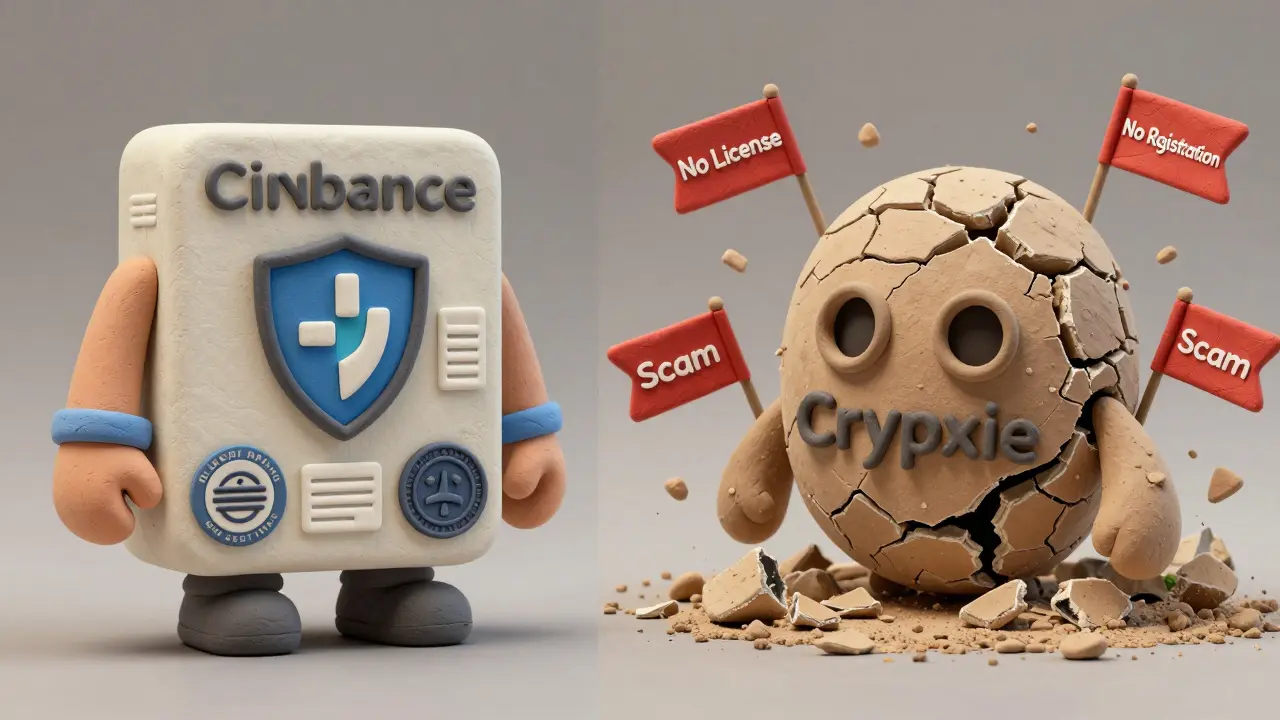
Crypxie Exchange? No public license. No regulatory filings. No transparency reports. No audit trail. If you can’t find where they’re legally based, they’re not legal.
Regulators Have Already Warned About This
The SEC’s October 2025 Investor Bulletin specifically called out “exchange impersonation scams” targeting new crypto users. They listed fake names like Crypxie, BitCryp, and CryptoVex as active threats.The Financial Action Task Force (FATF) tracks over 487 compliant Virtual Asset Service Providers worldwide. Crypxie isn’t on that list. The European Union’s MiCA regulations list 47 authorized exchanges. Crypxie isn’t there either. The U.S. has 28 FINRA-registered crypto brokers. Crypxie isn’t one.
If an exchange isn’t registered with regulators in at least one major jurisdiction, it’s not safe. Period.
How to Spot a Fake Exchange
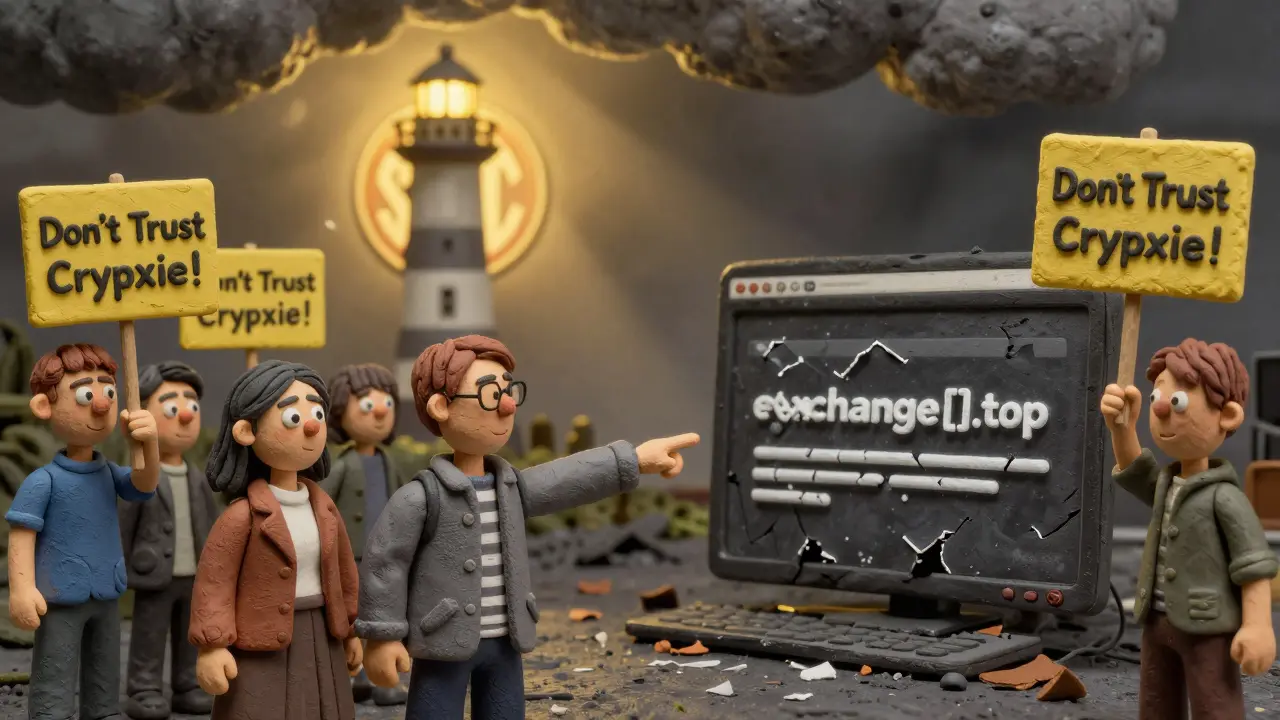
Here’s what to check before you deposit a single dollar:- Check the domain. Legit exchanges use clean domains like coinbase.com, kraken.com. Crypxie uses crypxie-exchange[.]top or crypxie[.]io - anything that’s not a .com or .org is a red flag.
- Look for regulatory info. Scroll to the bottom of the website. Do they list a license number? A regulatory body? If not, walk away.
- Search for reviews on Trustpilot or Reddit. Real exchanges have hundreds of reviews. Fake ones have zero - or dozens of identical, glowing reviews from new accounts.
- Check CoinGecko or CoinMarketCap. If it’s not listed, it’s not real. These sites don’t list every small exchange, but they don’t miss ones with real volume.
- Try to withdraw. Fake exchanges make deposits easy. Withdrawals? Impossible. Or they charge 50% in “processing fees.” That’s not a fee. That’s theft.
What to Do If You Already Sent Crypto to Crypxie
If you’ve already deposited funds, act fast - but don’t fall for recovery scams.There are companies claiming they can “recover your funds from Crypxie.” They’re just the next layer of the scam. They’ll ask for more crypto, a private key, or a “security deposit.” Don’t give it. You’re only losing more.
Here’s what to do instead:
- Report the site to the FTC at reportfraud.ftc.gov
- File a complaint with the SEC’s Office of Investor Education
- Alert Reddit’s r/CryptoCurrency and r/Scams
- Share your experience - not to blame yourself, but to warn others
Recovery is nearly impossible. But stopping others from falling for it? That’s powerful.
Where to Trade Crypto Safely in 2025
Stick with exchanges that have proven track records:- Coinbase - Best for beginners, U.S.-regulated, simple interface
- Kraken - Best for advanced traders, low fees, strong security
- CEX.IO - Good for fiat on-ramps, 200+ coins, clear fee structure
- Gemini - Strong compliance, insured custodial wallets
All of these are registered with U.S. regulators. All publish security audits. All have been around for years. None of them are called Crypxie.
Final Warning
The crypto market is full of opportunity. But it’s also full of predators. Scammers don’t need to be clever. They just need to be faster than your caution.Crypxie Exchange isn’t a platform. It’s a warning sign. If you see it, close the tab. Block the site. Warn your friends. And remember: if it sounds too good to be true - especially when it’s a name you’ve never heard of - it’s not real.
Real exchanges don’t need hype. They don’t need flashy ads. They don’t need fake testimonials. They just need to be trustworthy. And Crypxie? It’s not even close.
Is Crypxie Exchange a real crypto exchange?
No, Crypxie Exchange is not a real or legitimate crypto exchange. It does not appear in any regulatory databases, industry review platforms, or blockchain transparency reports. Major sources like CoinGecko, Kraken, and the SEC have no record of it. All references to Crypxie are part of known impersonation scams.
Why can’t I find Crypxie Exchange on CoinMarketCap or CoinGecko?
Because it doesn’t exist as a functioning exchange. CoinGecko and CoinMarketCap only list exchanges that meet minimum criteria for trading volume, security, and regulatory compliance. Crypxie meets none of these. Its absence is not an oversight - it’s proof it’s not real.
I deposited crypto to Crypxie. Can I get it back?
Recovering funds from a scam exchange like Crypxie is extremely unlikely. The platform is designed to steal, not return. Avoid any service claiming they can recover your funds - those are usually secondary scams. Report the incident to the FTC and SEC instead, and use the experience to warn others.
What’s the difference between Crypxie and CEX.IO?
CEX.IO is a legitimate, regulated crypto exchange with over 200 cryptocurrencies, transparent fees, and SEC registration. Crypxie is a fake name designed to look similar to CEX.IO to trick users into mistyping or clicking malicious links. CEX.IO has been operating since 2013. Crypxie has no operational history.
Are there any crypto exchanges with names like Crypxie that are safe?
No. Any exchange with a name that sounds like a misspelling of a real one - Crypxie, BitCryp, CryptoVex, KCEX (if not the real one) - should be avoided. Legitimate exchanges use clear, consistent branding. They don’t rely on confusion to attract users.
How do I know if a crypto exchange is safe to use?
Check if it’s listed on CoinGecko or CoinMarketCap, registered with FinCEN or equivalent regulators, has published security audits, and offers clear fee structures. Look for user reviews on Trustpilot and Reddit. If you can’t find any of these, it’s not safe. Never deposit money into an exchange you can’t verify.
John Sebastian
December 15, 2025 AT 06:20Wow, someone finally called this out. I saw a YouTube ad for Crypxie last week-looked slick as hell. Thought I was missing out on some new DeFi gem. Turned out it was a phishing site with a fake ‘support chat’ that asked for my seed phrase. Deleted it immediately. Don’t trust anything that looks too polished to be real.
Albert Chau
December 15, 2025 AT 09:22People still fall for this? It’s not even clever. The name’s a typo of CEX.IO-like, come on. If you can’t tell the difference between ‘Crypxie’ and ‘CEX.IO’ after two seconds of googling, maybe you shouldn’t be touching crypto at all. This isn’t rocket science. It’s basic digital hygiene.
Madison Surface
December 16, 2025 AT 15:25I just want to say-thank you for writing this. I know how scary it is when you realize you’ve been duped, and even scarier when you don’t know who to trust after. I lost $200 to something like this last year. I felt so stupid. But reading this? It didn’t make me feel dumb-it made me feel seen. If you’re reading this and you’re scared to speak up because you think you ‘should’ve known better’-you didn’t fail. The scammer won. And you’re not alone. Please, share this with someone you love. Someone who’s just getting into crypto. They might not know any better.
Tiffany M
December 17, 2025 AT 15:49Ugh, I just got DM’d on Instagram by someone saying ‘Join Crypxie now-limited spots!’ with a fake screenshot of their ‘1000% profit.’ Like, sis. I don’t even know you. You don’t even have a profile pic that’s not stolen from a TikTok influencer. And you’re trying to get me to send crypto to a site that doesn’t exist? I blocked them, reported the account, and then posted this thread in my group chat. We need to stop normalizing this nonsense. If you’re pushing a ‘new exchange’ with no history, no transparency, and no .com domain-you’re not a guru. You’re a predator.
Scot Sorenson
December 18, 2025 AT 22:32Let me get this straight-you’re telling me a scam with the name ‘Crypxie’ is still active in 2025? And people are still falling for it? I mean, the name alone is a joke. It’s like naming your fake bank ‘Chasey’ and hoping no one notices. The fact that this is still a thing means we’re not educating new users at all. We’re just throwing them into the ocean with a life jacket made of duct tape and hope. Someone needs to make a viral TikTok explaining how to spot these. Not a blog post. A meme. With a guy screaming ‘Crypxie?!?!’ while running away from a flaming wallet.
JoAnne Geigner
December 19, 2025 AT 05:58I’ve been in crypto since 2017. Seen every scam, every pump, every rug pull. But this one? It’s the quietest, most insidious. It doesn’t scream ‘I’m fake!’-it whispers. It looks like a real site. The fonts, the colors, the ‘customer service’ bot that replies in 3 seconds. It’s designed to feel safe. And that’s why it works. I wish more people understood: safety in crypto isn’t about how fancy the website looks. It’s about what’s behind it. Who’s accountable? Where’s the license? Who audits their code? If you can’t answer those questions-don’t deposit. Not even $5. Not even for ‘a quick test.’ It’s not worth it.
Patricia Whitaker
December 19, 2025 AT 16:27Ugh. Another ‘educational’ post about fake exchanges. Can we just move on? Everyone knows these scams exist. Nobody’s dumb enough to fall for ‘Crypxie’ anymore. This feels like rehashing the same thing every month. Let’s talk about actual innovation instead of reiterating basic internet safety.
Joey Cacace
December 20, 2025 AT 13:54Thank you for this. I shared it with my mom. She’s 68, just got her first crypto wallet because her book club said ‘it’s the future.’ She thought Crypxie was real because the website had a ‘24/7 support’ button. I showed her this post. She cried. Then she said, ‘I’m so glad you’re around.’ Please keep writing stuff like this. People like me-we’re not tech-savvy. We just want to be safe. And you made us feel seen.