Decentralized vs Centralized Wrapped Assets: What You Need to Know in 2026
 Feb, 23 2026
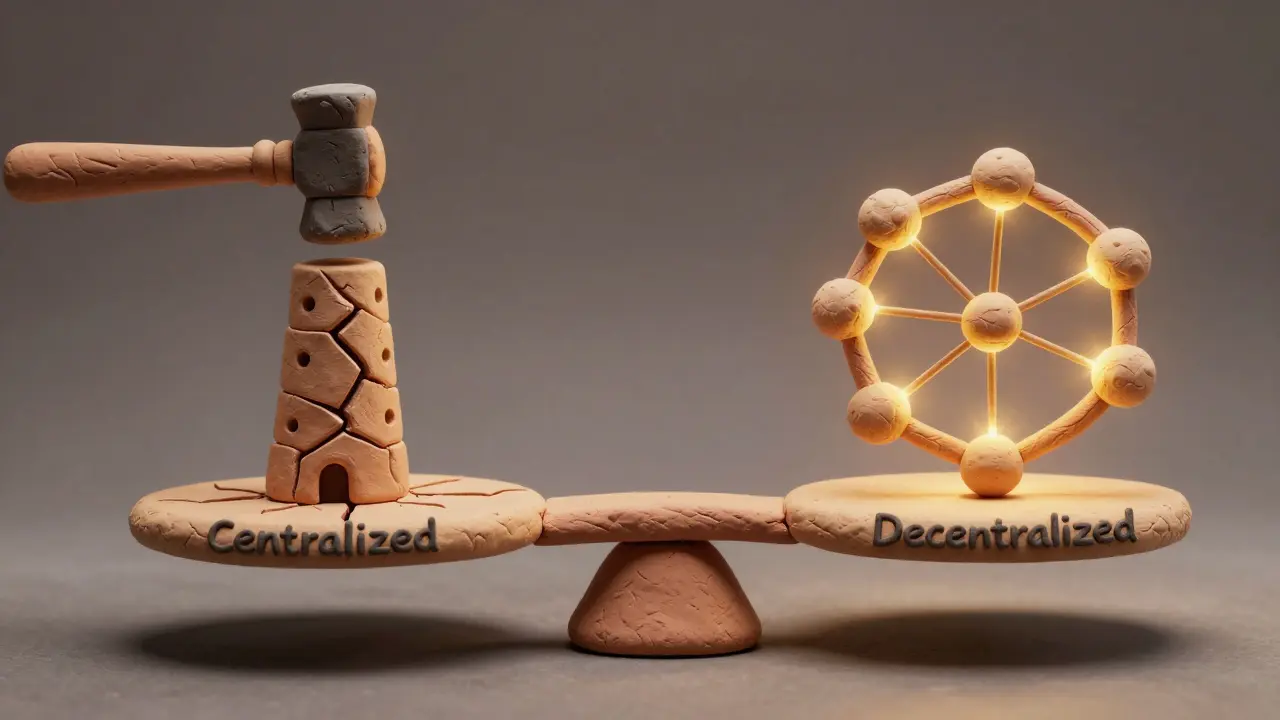
When you move Bitcoin to Ethereum, you don’t actually send Bitcoin. You send a promise - a token that acts like Bitcoin but lives on Ethereum. That promise is called a wrapped asset. And who makes that promise? That’s where the real split happens: centralized vs decentralized wrapped assets. One side trusts a company. The other side trusts code. Which one should you use? Let’s cut through the noise.
What Are Wrapped Assets?
A wrapped asset is a tokenized version of a cryptocurrency from one blockchain, locked and represented on another. For example, Wrapped Bitcoin (WBTC) lets you use Bitcoin on Ethereum-based apps like Uniswap or Aave. But WBTC isn’t Bitcoin. It’s a claim - backed 1:1 by real Bitcoin held somewhere.
There are two main ways these claims are created:
- Centralized wrapped assets: A single company or consortium holds the real asset and issues the wrapped version.
- Decentralized wrapped assets: Smart contracts and decentralized networks verify and mint the wrapped asset without a central authority.
The difference isn’t just technical - it’s about who controls your money.
Centralized Wrapped Assets: The Trusted Middleman
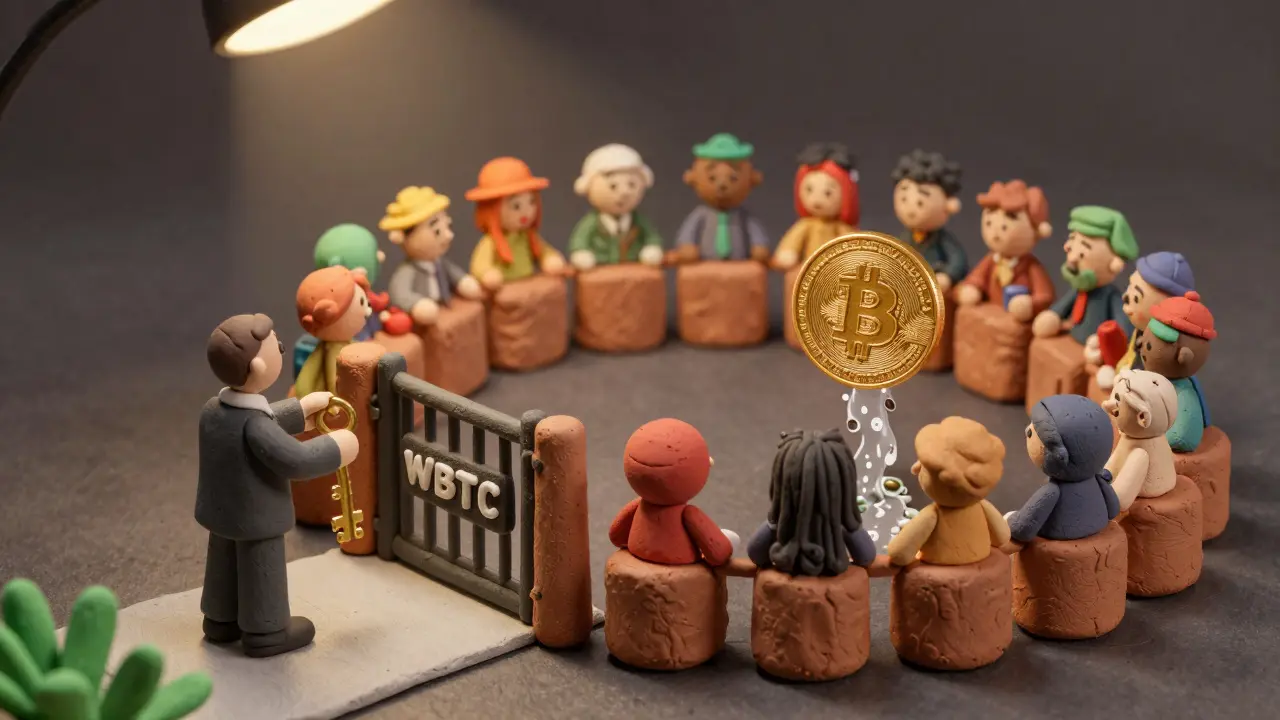
WBTC is the biggest example. It’s managed by a group called the WBTC DAO, but in practice, custody is handled by a single company: BitGo. BitGo holds the real Bitcoin. It locks them in cold storage. Then it tells the smart contract to mint WBTC on Ethereum. You get 1 WBTC = 1 BTC.
It’s simple. Fast. And widely accepted. Over 70% of all wrapped Bitcoin in circulation is WBTC. You’ll find it on almost every major DeFi platform.
But here’s the catch: if BitGo goes down, gets hacked, or refuses to release the Bitcoin, your WBTC becomes worthless. No one can mint new WBTC without them. No one can redeem it either. You’re trusting one company with billions in value.
And it’s not just WBTC. Other centralized wrapped assets like renBTC and tBTC (before it shut down) followed the same model. They rely on trusted custodians, multi-sig wallets, and manual approval processes. That means:
- Slower minting and redemption (hours or days)
- Higher fees to cover audits and compliance
- Single points of failure
In 2023, a major custodian for a popular wrapped asset froze redemptions for 11 days after a regulatory inquiry. Users couldn’t access their funds. No one could explain why. That’s the risk of centralization.
Decentralized Wrapped Assets: Trustless Bridges
Decentralized wrapped assets use smart contracts and distributed networks to lock and mint tokens without a single company in charge.
Take Portal Bridge or LayerZero. These systems use multiple independent nodes - often 20+ - to verify that Bitcoin was sent to a specific address. Once a threshold of nodes confirms the deposit, the system automatically mints the wrapped token on the destination chain.
No custodian. No middleman. No approval needed.
These systems use cryptographic proofs, not human oversight. If 15 out of 20 nodes agree that 10 BTC were locked, 10 wrapped BTC are created. It’s automatic. Transparent. And trustless.
There are trade-offs:
- Slower finality (sometimes 10-30 minutes)
- Higher complexity - more code = more attack surface
- Less liquidity - not all DeFi apps support them yet
But the upside? You don’t need to trust anyone. If one node goes offline, the system keeps working. If one node is compromised, it can’t steal your assets alone. It needs 16 out of 20 to collude - statistically near impossible.
In 2025, decentralized wrapped assets handled over $18 billion in cross-chain transfers. That’s up from $2 billion in 2022. Adoption is growing fast.
Security Comparison: Who’s Safer?
Let’s compare real-world outcomes.
| Factor | Centralized (e.g., WBTC) | Decentralized (e.g., Portal Bridge) |
|---|---|---|
| Custody Model | Single custodian (e.g., BitGo) | Distributed nodes (20+ validators) |
| Redemption Time | 6-48 hours | 10-30 minutes |
| Failure Risk | High - single point of failure | Low - requires collusion of majority |
| Smart Contract Risk | Low - simple minting contract | High - complex cross-chain logic |
| Regulatory Risk | High - custodian can be pressured | Low - no legal entity to target |
| Transparency | Partial - audits are private | Full - all transactions on-chain |
Centralized systems have fewer bugs. But they have one fatal flaw: they can be shut down.
Decentralized systems are harder to break - but harder to fix if they do break. In 2024, a bug in a popular decentralized bridge caused $200 million in temporary losses. It was recovered because the network paused and rolled back the transaction. A centralized system? It would’ve taken months to recover - if ever.
Market Adoption and Liquidity
WBTC still dominates. It’s in 90% of Ethereum DeFi protocols. If you want to use Bitcoin in a yield farm, WBTC is your only option.
Decentralized wrapped assets? They’re catching up. Projects like wstETH (wrapped staked ETH) and axlWBTC (Axelar’s version of WBTC) are gaining traction. In Q4 2025, decentralized wrapped assets saw a 210% increase in daily active users. That’s not a fluke - it’s a shift.
Why? Because DeFi users are getting smarter. They don’t want to rely on a company that can freeze their assets. They want control. Even if it means waiting 15 minutes longer for a transaction.
And the big exchanges are noticing. Coinbase and Kraken now support direct bridging to decentralized wrapped assets. That’s a signal: the market is moving.
Which Should You Use?
Here’s the simple guide:
- Use centralized wrapped assets if you’re a beginner, need instant liquidity, or are using mainstream DeFi apps like Aave or Compound.
- Use decentralized wrapped assets if you care about sovereignty, hate single points of failure, or are holding large amounts long-term.
Don’t assume one is "better." They serve different needs.
If you’re moving $500 to try out a new DeFi protocol? WBTC is fine. You’re not risking much.
If you’re moving $50,000 in Bitcoin to Ethereum for the long haul? Use a decentralized bridge. The risk isn’t worth it.
The Future of Wrapped Assets
By 2027, most major wrapped assets will be decentralized. Why? Because users demand it. And regulators are starting to crack down on centralized custodians.
Remember: wrapped assets aren’t just about moving tokens. They’re about trust. Centralized systems say: "Trust us." Decentralized systems say: "Trust the math."
Which one do you believe in?
Shannon Holliday
February 24, 2026 AT 12:54Mary Scott
February 24, 2026 AT 22:12Michelle Xu
February 25, 2026 AT 12:57Ryan Burk
February 27, 2026 AT 12:40Amanda Markwick
March 1, 2026 AT 10:45Sriharsha Majety
March 2, 2026 AT 00:57Tabitha Davis
March 2, 2026 AT 03:45Don B.
March 2, 2026 AT 13:11Jeremy buttoncollector
March 3, 2026 AT 16:53Arya Dev
March 4, 2026 AT 17:45