DePIN Investment Guide: How to Evaluate Decentralized Physical Infrastructure Projects
 May, 24 2026
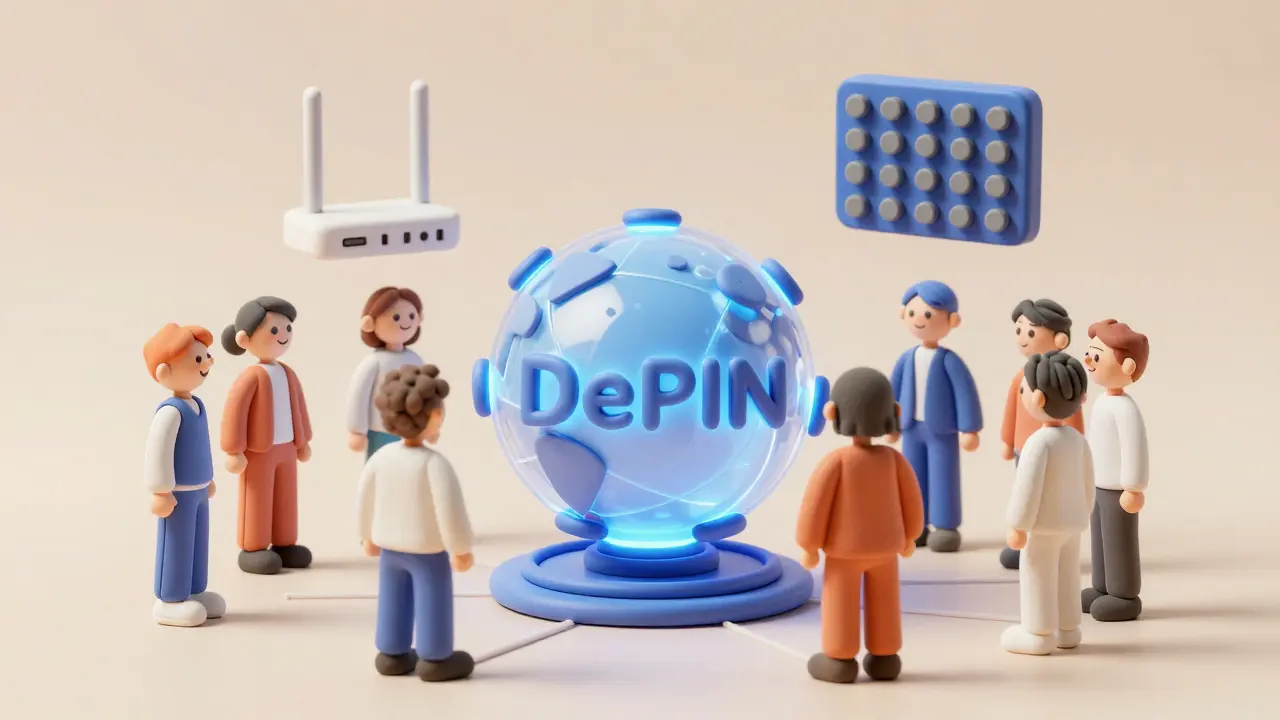
You’ve probably noticed that cryptocurrency is moving beyond just digital wallets and speculative trading. The next big wave isn’t about who has the most coins; it’s about who builds the most useful networks. This shift centers on DePIN, or Decentralized Physical Infrastructure Networks. These projects use blockchain technology to incentivize people to build real-world infrastructure-like wireless hotspots, storage servers, or sensor grids. Instead of a single corporation owning everything, communities own the network. For investors, this creates a unique opportunity: you aren’t just betting on a token price; you’re backing tangible assets with real-world utility.
The DePIN sector has exploded in relevance. As of late 2023, the market capitalization for these projects exceeded $3.2 billion, growing by over 1,500% since early 2022. While the broader crypto market grew by 180% in the same period, DePIN outpaced it significantly. But with great growth comes complexity. Not every project that calls itself DePIN will succeed. Many face regulatory hurdles, hardware failures, or unsustainable token economics. To invest wisely, you need to understand how these networks actually work, what drives their value, and where the hidden risks lie.
Understanding the Core Mechanics of DePIN
At its heart, a DePIN project solves a coordination problem. Building infrastructure is expensive and slow when one company handles everything. DePIN flips this model. It uses three key components to make it work:
- Blockchain Ledger: This provides transparency and security. Most DePIN projects run on established chains like Ethereum, Solana, or Polygon to ensure trustless transactions.
- Smart Contracts: These automate the process. When you provide a service (like storing data), the smart contract verifies it and automatically sends you tokens. This removes the need for middlemen and keeps fees low, often between 2-5%.
- Tokenomics: Tokens act as both currency and incentive. Participants earn tokens for contributing resources, which they can then sell or stake. The design of this reward system is critical-if it’s too generous, inflation kills the value; if it’s too stingy, no one joins.
The concept was formally articulated around 2022, but the roots go back further. Helium, founded in 2013, pioneered decentralized wireless networks. Filecoin, launched in 2020, revolutionized decentralized storage. Today, there are over 50 active DePIN projects, each trying to disrupt a different industry, from telecommunications to energy grids.
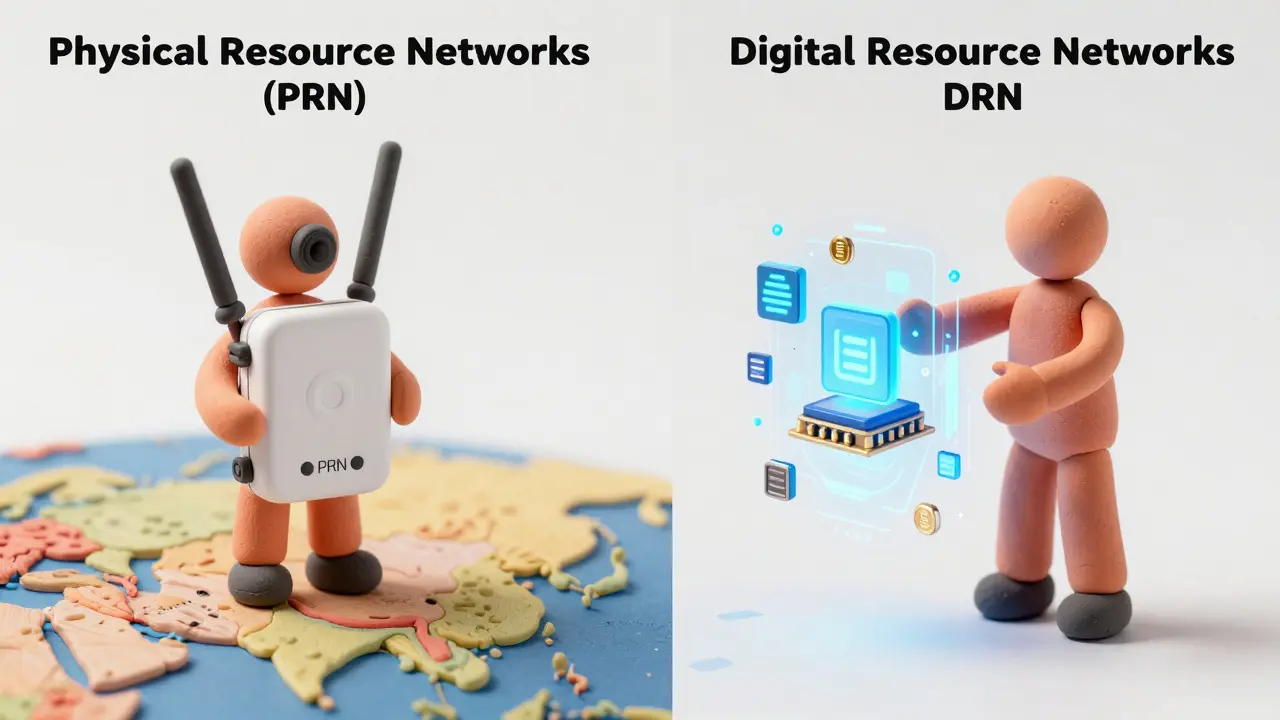
Physical vs. Digital Resources: Choosing Your Lane
Not all DePIN projects are created equal. They generally fall into two categories, and understanding the difference is crucial for your investment strategy.
| Feature | Physical Resource Networks (PRN) | Digital Resource Networks (DRN) |
|---|---|---|
| Examples | Helium Mobile, Hivemapper | Filecoin, Render Network |
| Entry Barrier | High ($100-$1,000+ for hardware) | Low (existing computer/GPU) |
| Resource Provided | Location-based services (WiFi, mapping) | Computing power, storage space |
| Growth Driver | Geographic coverage & density | Processing demand & efficiency |
| Risk Profile | Hardware failure, regulatory spectrum issues | Competition from cloud giants, tech obsolescence |
Physical Resource Networks (PRNs) require you to buy and deploy physical hardware. Think of Helium hotspots that provide 5G coverage or Hivemapper dashcams that map streets. These projects have higher entry barriers because you need to spend money upfront. However, they often create stronger network effects. If you live in an area with many Helium hotspots, the network becomes more valuable to everyone, including telecom companies looking for affordable coverage.
Digital Resource Networks (DRNs) leverage existing digital resources. Filecoin lets you rent out unused hard drive space. Render Network allows GPU owners to process graphics jobs for creators. The entry cost here is lower-you might already have the hardware. But the competition is fierce. You’re competing against massive cloud providers like AWS and Google Cloud, which have economies of scale that small networks struggle to match.
Evaluating Tokenomics and Real-World Utility
The biggest mistake new DePIN investors make is focusing solely on the token price. Price follows utility. To evaluate a project, look at its "jobs-to-be-done" metrics.
First, check the real-world usage. Does anyone actually use the network? Helium’s LoRaWAN network reached 1 million hotspots globally by mid-2023, showing massive adoption. Hivemapper collected 1.5 billion street images, used by enterprises like Ford and Uber. These aren’t just numbers on a chart; they represent actual customers paying for services. In contrast, many early DeFi projects relied on "Total Value Locked" (TVL), which can be manipulated. DePIN offers tangible proof of work.
Second, analyze the token emission schedule. According to Komodo Platform analysis, sustainable DePIN projects keep annual inflation below 5% after the initial distribution phase. If a project prints millions of new tokens every month to pay node operators, the value of your holdings will dilute rapidly. Look for projects that have moved past the heavy subsidy phase and are generating revenue from actual service fees.
Third, consider the verification mechanism. How does the network know you’re providing the service? A16z Crypto highlights the "verification problem" as a major hurdle. If a project can’t reliably prove that a hotspot is transmitting data or a server is storing files, fraudsters will exploit the system. Projects using advanced oracle solutions or zero-knowledge proofs tend to be more robust.
Risks and Regulatory Headwinds
Investing in DePIN isn’t without significant risks. The sector is young, and regulations are still catching up.
Regulatory Uncertainty is perhaps the biggest threat. Telecom and energy sectors are heavily regulated. In 2022, the U.S. FCC approved Helium’s spectrum usage, but new requirements in July 2023 temporarily reduced hotspot earnings by 20%. Nic Carter of Castle Island Ventures warned that many projects underestimate these hurdles. If a government decides that decentralized wireless networks violate local licensing laws, entire PRN projects could face shutdowns.
The Cold Start Problem affects all networks. A wireless network is useless if there are only five hotspots. A storage network is inefficient if data is scattered across unreliable nodes. Projects need to reach a critical mass to become valuable. This is why early adopters take on more risk-they’re helping build the foundation before the rewards stabilize. Data shows that 60% of early DePIN projects had to modify their reward structures within 18 months to survive this phase.
Hardware Dependency introduces physical risks. Hardware breaks. Internet connections fail. Electricity costs rise. For PRN investors, your return on investment depends on factors outside the blockchain. A user on Reddit reported earning $120 monthly from a $400 Helium hotspot, but also noted that daily earnings can fluctuate by ±35% week-to-week based on network demand. You must factor in electricity, maintenance, and potential hardware depreciation.

Strategic Entry Points for Investors
If you decide DePIN aligns with your portfolio goals, how do you get started? There are three main paths, each with different risk and effort levels.
- Token Purchase: The simplest approach. Buy tokens on major exchanges like Binance, Coinbase, or Kraken. As of late 2023, over 15 DePIN tokens were listed on these platforms. This gives you exposure to the sector’s growth without managing hardware. However, you’re purely dependent on market sentiment and network success.
- Infrastructure Deployment (PRN): Buy and set up physical hardware. This requires technical knowledge and upfront capital ($100-$1,000). You earn tokens directly from the network. This path offers higher potential returns if you choose a high-demand location, but it also carries operational risks. Research local regulations and electricity costs thoroughly.
- Resource Provision (DRN): Use your existing computer or GPU to participate in networks like Render or Filecoin. This is low-cost but competitive. Ensure your hardware meets the specific requirements of the network. Some projects offer developer support with <24-hour response times, while others rely on community forums with slower assistance.
Diversification is key. Don’t put all your eggs in one basket. Spread your investments across both PRN and DRN categories to balance geographic risks with technological ones. Also, monitor the "learning curve." Most investors report needing 20-40 hours to fully understand verification mechanisms and tax implications. In the U.S., 47 states treat infrastructure rewards as taxable income, so consult a tax professional familiar with crypto.
Future Outlook and Market Consolidation
The DePIN landscape is evolving rapidly. Delphi Digital forecasts that 70% of current DePIN projects will either merge or fail by 2025. This consolidation means that only the strongest projects with clear utility and sustainable economics will survive. The top 5-10 projects are expected to capture 80% of the market share.
Technological advancements are driving this change. Filecoin’s launch of the Filecoin Virtual Machine (FVM) in August 2023 enabled smart contracts on its network, boosting developer activity by 170%. Helium’s migration to Solana aims to reduce transaction costs by 80%, making micro-payments viable. These improvements address earlier scalability issues and open the door for enterprise adoption.
Gartner projects that 20% of new infrastructure deployments in connectivity, mapping, and storage will incorporate decentralized elements by 2026, up from just 5% in 2023. Traditional companies are taking notice. Deutsche Telekom partnered with Helium in May 2023, signaling that legacy players see value in hybrid models. A16z Crypto estimates that DePIN could eventually represent 5-10% of global infrastructure value, potentially reaching $500 billion to $1 trillion by 2030.
However, skeptics remain cautious. Nic Carter estimates a more conservative $50-100 billion market, citing regulatory and adoption hurdles. The truth likely lies somewhere in between. The key for investors is to focus on projects with verifiable revenue streams, strong community governance, and adaptable technology. Avoid those relying solely on hype or unsustainable subsidies.
What is the best way to start investing in DePIN?
For beginners, buying tokens on major exchanges is the lowest-risk entry point. It requires no technical setup and provides broad exposure. If you have technical skills and capital, deploying physical hardware (PRN) or using existing computers (DRN) can yield higher returns but involves more operational responsibility and risk.
Are DePIN projects safer than traditional DeFi?
DePIN projects often have stronger real-world utility anchors compared to pure DeFi protocols, which can rely on speculative TVL. However, DePIN faces unique risks like hardware failure and regulatory crackdowns in sectors like telecom. Both sectors carry significant volatility, but DePIN’s value is tied to tangible service delivery.
How do I verify if a DePIN project is legitimate?
Look for three things: 1) Verifiable real-world usage metrics (e.g., API calls, active users, not just token price). 2) Sustainable tokenomics with low inflation rates (<5% annually post-launch). 3) Transparent verification mechanisms that prevent fraud. Check official documentation and third-party audits from firms like Messari or a16z Crypto.
What are the tax implications of earning DePIN tokens?
In the United States, rewards earned from providing infrastructure services are generally treated as ordinary income at the fair market value when received. Over 47 states have specific guidelines for this. You must track the value of tokens at the time of receipt and report them accordingly. Consult a tax professional for personalized advice.
Which DePIN projects show the most promise for 2026?
Projects with strong enterprise adoption and scalable technology lead the pack. Helium continues to dominate wireless infrastructure with partnerships like Deutsche Telekom. Filecoin remains a leader in decentralized storage, especially with the FVM upgrade. Render Network is well-positioned in the AI and GPU computing boom. Always conduct your own research as market conditions change rapidly.