Divergence (DIVER) Airdrop: What You Need to Know About Token Distribution and Community Rewards
 Mar, 6 2026
There’s a lot of talk about DIVER airdrops, but here’s the truth: Divergence Protocol never ran a traditional airdrop. If you’re searching for free tokens handed out to wallet holders or social media followers, you won’t find it. Instead, Divergence used something more structured - a Dutch auction - to get its token into the hands of real users. And while there’s no “claim your free DIVER” button, there are ways to earn tokens by using the platform. Let’s cut through the noise.
How DIVER Was Actually Distributed
Divergence didn’t give away tokens. It sold them. Specifically, it ran a Dutch auction for 20 million DIVER tokens. This wasn’t some chaotic free-for-all. The auction started at $0.10 per token - a $7.75 million market cap - and dropped slowly over time until all tokens were sold or hit a floor price of $0.05. The goal? Fair access. No whales snapping up the whole supply. No pre-mined team allocations drowning out public participation. The auction was permissionless, open to anyone with a wallet, and designed to find a real market price.By the time the auction ended, the tokens were no longer trading at $0.10. As of early 2026, DIVER sits around $0.010686. That’s a steep drop, but it’s not unusual for DeFi projects. What matters is what happened next: most of the sale proceeds went into a liquidity pool on SushiSwap. That’s where you’ll find DIVER trading today. The team kept the rest for future listings on bigger exchanges, hoping to bring more buyers into the mix.
So Where’s the Airdrop?
You won’t find a DIVER airdrop because there isn’t one. But that doesn’t mean you can’t earn DIVER. The protocol rewards people who actually use it. Think of it less like a giveaway and more like a loyalty program.- If you provide liquidity to Divergence’s options markets, you get paid in DIVER.
- If you trade synthetic binary options on DeFi assets like ETH or SOL volatility, you earn rewards.
- If you hold DIVER tokens, you can vote on protocol upgrades - your stake gives you a voice.
This isn’t a one-time event. It’s ongoing. The team isn’t handing out tokens to random wallets. They’re paying people who help the platform grow. Liquidity providers don’t just get fees - they get DIVER as a bonus. Traders aren’t just paying gas - they’re building position history that unlocks future rewards. It’s a system built on participation, not luck.
What You Can Do Right Now
If you want DIVER tokens, here’s how to get them:- Go to the Divergence app - it’s live on the web. No login. Just connect your wallet (MetaMask, WalletConnect, etc.).
- Deposit assets into the liquidity pools. You can add ETH, USDC, or other supported tokens to back the synthetic options markets.
- Start trading - bet on whether ETH volatility will rise or fall over the next hour. Win or lose, you’re contributing to the market.
- Hold DIVER - even if you didn’t earn it, holding gives you governance rights. You can vote on fee structures, new asset listings, or protocol changes.
There’s no signup form. No Discord role to join. No Twitter retweet campaign. You don’t need to be a crypto expert. You just need to use the platform. The rewards come automatically, distributed based on your activity. No waiting. No surprises.
Why This Matters for DeFi
Most DeFi projects chase attention with airdrops. They blast tokens to wallets that never interact with the product. Then those tokens get sold immediately. The project gets no traction. The community gets no value.Risks You Can’t Ignore
Let’s be clear: Divergence isn’t risk-free. You’re trading synthetic derivatives. That means:- Your trades can lose value fast - volatility moves quickly.
- Smart contracts can have bugs. Even if audited, no code is perfect.
- Liquidity pools can suffer impermanent loss if asset prices swing wildly.
And while DIVER is now on SushiSwap, it’s not listed on Coinbase, Kraken, or Binance. That means low volume, wide spreads, and limited exit options. If you buy DIVER now, you’re betting on the team delivering exchange listings - which they’ve said they’re working on, but haven’t confirmed.
Don’t invest more than you can afford to lose. Treat this like a trading experiment, not a get-rich-quick scheme.
What’s Next for Divergence?
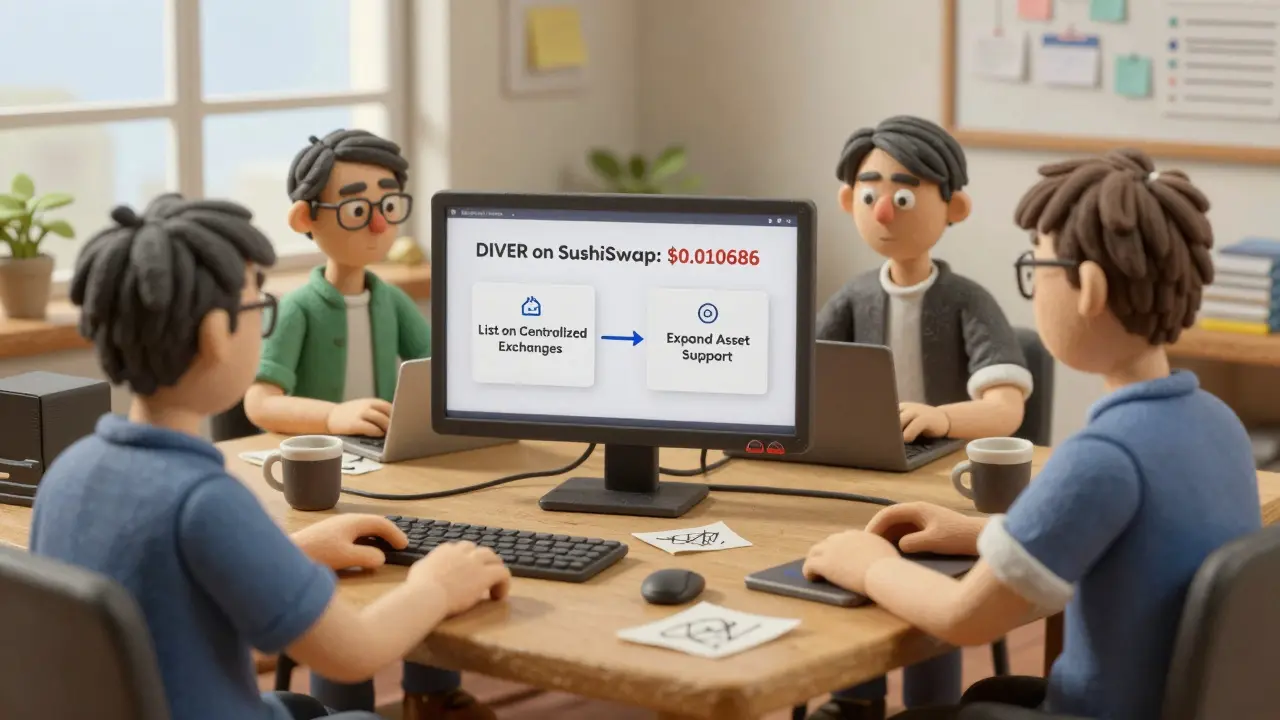
The team’s roadmap isn’t flashy. No NFTs. No metaverse. Just two clear goals:- List DIVER on major centralized exchanges
- Expand the types of assets you can hedge - starting with more DeFi-native tokens
If they succeed, liquidity will improve. Trading volume will rise. Rewards for providers will grow. But none of that happens without real users. The protocol’s success depends entirely on whether traders and liquidity providers stick around.
Right now, Divergence is quiet. No big marketing campaigns. No influencers pushing it. Just a working product. If you’ve ever wanted to trade volatility without relying on centralized derivatives platforms, this might be your chance.
Is there a DIVER airdrop I can claim right now?
No, there is no active airdrop for DIVER. Divergence Protocol did not distribute tokens through an airdrop. Instead, it used a Dutch auction to sell 20 million DIVER tokens. The only way to earn DIVER now is by using the platform - providing liquidity, trading synthetic options, or participating in governance.
How do I get DIVER tokens if there’s no airdrop?
You can earn DIVER by actively using the Divergence Protocol. Deposit assets into liquidity pools for synthetic options markets, trade volatility contracts on assets like ETH or SOL, or hold DIVER to vote on governance proposals. Rewards are automatically distributed based on your activity, not by claiming a drop.
What’s the current price of DIVER?
As of early 2026, DIVER trades at approximately $0.010686. This is significantly below its initial Dutch auction price of $0.10, reflecting market conditions and the lack of major exchange listings. The token is primarily available on SushiSwap.
Is Divergence safe to use?
Divergence is a decentralized protocol built on smart contracts. While it has been audited, all DeFi platforms carry risks - including smart contract bugs, impermanent loss, and extreme volatility. Never deposit more than you can afford to lose. Treat it as a trading tool, not a guaranteed investment.
Can I trade DIVER on Coinbase or Binance?
No, DIVER is not listed on Coinbase, Binance, Kraken, or other major exchanges as of early 2026. The team has stated plans to list on centralized exchanges in the future, but no dates or confirmations have been announced. The only place to trade DIVER right now is SushiSwap.
What’s the difference between an airdrop and a Dutch auction?
An airdrop gives tokens for free, often based on wallet activity or social engagement. A Dutch auction sells tokens at a declining price, letting the market decide the final price. Divergence chose the auction to avoid speculation and ensure fair access. It’s a more transparent way to launch a token, though it doesn’t guarantee price stability.
Issack Vaid
March 7, 2026 AT 19:54Most projects want you to believe they’re giving you wealth. Divergence wants you to believe in utility. And honestly? That’s way more valuable.
Shawn Warren
March 8, 2026 AT 03:30Megan Lutz
March 9, 2026 AT 10:00The fact that it’s still quiet? That’s the point. It doesn’t need to scream to be right.
Bryanna Barnett
March 11, 2026 AT 03:12Jackson Dambz
March 12, 2026 AT 12:48