El Salvador Bitcoin Tax Exemption: Rules, Restrictions & Reality in 2026
 Jun, 30 2026
You might have heard the headline: El Salvador has no capital gains tax on Bitcoin. It sounds like a dream for anyone looking to maximize their crypto profits. But if you are planning to move your assets or set up a business there in 2026, the reality is more complex than a simple "tax-free" tagline suggests. The landscape shifted dramatically between 2024 and 2025 due to pressure from international financial institutions. While the core tax exemption remains, the rules around how you buy, sell, and hold Bitcoin have tightened significantly.
This isn't just about saving money on taxes; it's about navigating a regulatory environment that is trying to balance radical innovation with global economic stability. If you ignore the recent changes, you could face compliance issues that outweigh any tax benefits. Let’s break down what actually applies to you today, who qualifies, and what traps to avoid.
The Core Rule: Zero Capital Gains on Bitcoin
At its heart, El Salvador’s policy is still unique in the world. Under the Digital Assets Law, transactions involving Bitcoin are exempt from capital gains tax. This means if you buy Bitcoin at $40,000 and sell it at $80,000 while operating under El Salvador’s jurisdiction, you do not pay income tax on that $40,000 profit. This applies to individuals and businesses alike, provided they follow the specific legal frameworks established by the government.
This exemption is the cornerstone of the country’s strategy to become a global hub for cryptocurrency. Unlike countries like Germany, which only waive taxes after a one-year holding period, or Portugal, which has been adjusting its non-habitual resident programs, El Salvador offers this benefit broadly for Bitcoin specifically. However, "broadly" does not mean "without conditions." You must be compliant with the National Commission of Digital Assets (CNAD) to enjoy these perks.
Does the zero tax apply to all cryptocurrencies?
No. The specific zero capital gains tax exemption is primarily tied to Bitcoin as legal tender. Other digital assets may fall under different regulatory categories and tax treatments depending on their classification by the CNAD.
Who Qualifies? The Foreign Investor Loophole
If you are not a Salvadoran citizen, can you still take advantage of this? Yes, but there is a threshold. The law specifically targets foreign investors who bring significant capital into the country. To qualify for complete capital gains tax exemption on Bitcoin profits, foreign investors generally need to invest over ₿3 (three Bitcoin) in the country. This isn't just about holding Bitcoin in a personal wallet abroad; it implies active investment within the Salvadoran ecosystem.
For smaller retail traders, the picture is murkier. While individual transactions might not trigger immediate audits, setting up a formal residence or business structure is often required to legally claim these exemptions. The government wants serious players, not just tourists flipping coins. If you are earning income outside of El Salvador, you also benefit from exemptions on import duties and pay no income tax on those foreign earnings. However, any money made *inside* El Salvador remains subject to local regulations, even if the specific gain is from Bitcoin.
The Big Shift: IMF Deal and New Restrictions
Here is where things get tricky for newcomers who only read news from 2021 or 2022. In December 2024, El Salvador signed a $1.4 billion loan agreement with the International Monetary Fund (IMF). This deal came with strings attached that fundamentally changed how Bitcoin operates in the country. An amendment to the Bitcoin law passed in February 2025 enforced these changes.
What did you lose? First, the mandatory acceptance of Bitcoin by merchants was removed. Businesses are no longer forced to accept Bitcoin as payment. Second, the government stopped accepting tax payments in Bitcoin. Third, the state-sponsored Chivo wallet, which was once a central part of the adoption strategy, was wound down. These moves were designed to reduce risk and align El Salvador with international financial standards. Despite these retreats, the core promise-zero capital gains tax on Bitcoin transactions-survived the negotiations. It remains the primary incentive for crypto-friendly businesses.
| Policy Area | Pre-2024 Status | Post-2025 Status |
|---|---|---|
| Capital Gains Tax | Exempt | Still Exempt |
| Mandatory Merchant Acceptance | Required | Removed (Voluntary) |
| Tax Payments in BTC | Allowed | Discontinued |
| Government Purchases | Aggressive Accumulation | Reduced/Halted |
Licensing Your Business: BSP vs. DASP
If you plan to run a crypto business in El Salvador, you cannot just open a website and start trading. You need a license from the CNAD. There are two main types, and choosing the wrong one can lead to fines or shutdowns.
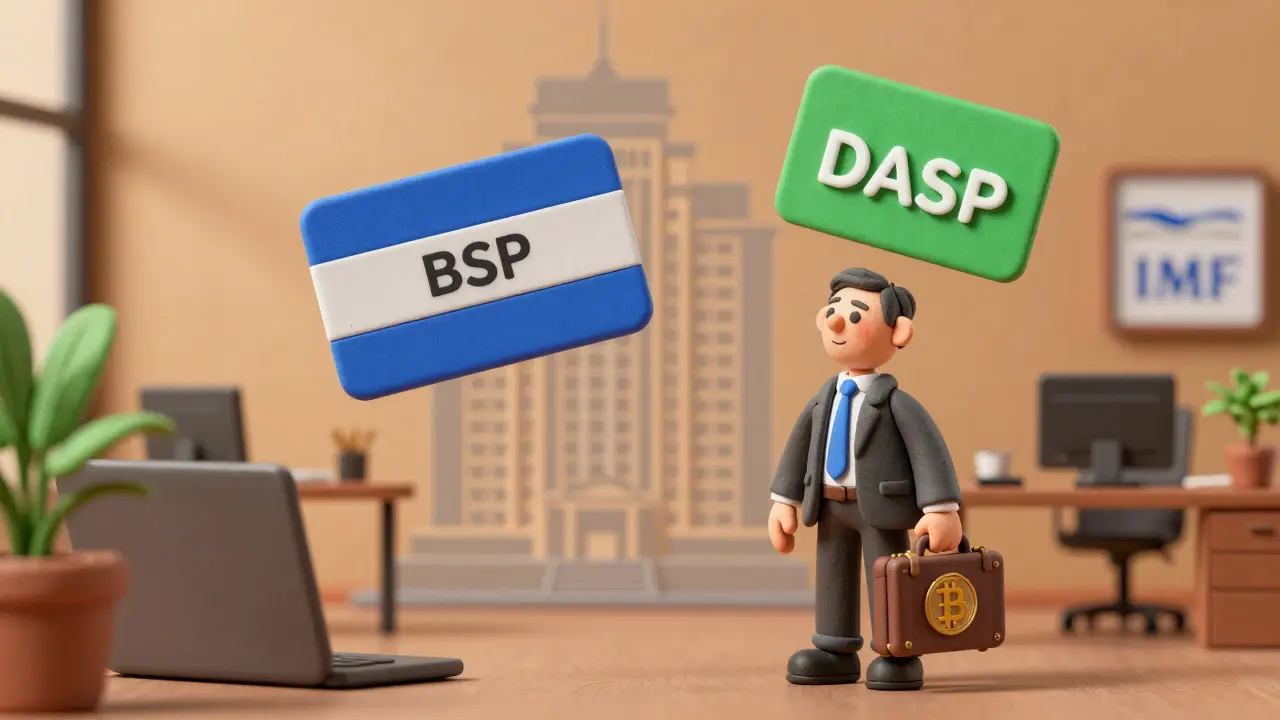
The Bitcoin Service Provider (BSP) license is for companies dealing exclusively with Bitcoin. This includes payment processors, custodial wallets, and exchanges that only trade BTC. If your business model is purely Bitcoin-focused, this is your path. It comes with certain tax incentives, including exemptions from corporate income tax and municipal taxes under the LEAD program.
On the other hand, the Digital Asset Service Provider (DASP) license covers everything else. If you handle Ethereum, Solana, NFTs, or stablecoins, you need a DASP. This license regulates non-Bitcoin exchanges, token issuance, and investment services. The distinction matters because the regulatory scrutiny and reporting requirements can differ. Both licenses require strict adherence to Anti-Money Laundering (AML) and Know Your Customer (KYC) protocols. You must keep clear records, report activities to the Ministry of Finance, and prepare annual financial statements. Tax exemption does not mean regulation exemption.
Is It Worth It? Adoption vs. Hype
Before you pack your bags, look at the numbers. Domestic adoption has struggled. According to data from the Instituto Universitario de Opinión Pública (Iudop), Bitcoin usage among Salvadorans dropped from 25.7% in 2021 to just 8.1% in 2024. Why? Because daily life in El Salvador is still conducted in US dollars. The volatility of Bitcoin makes it a poor medium for buying groceries or paying rent for most people.
However, for international investors and businesses, the story is different. The government’s own Bitcoin holdings showed a 50% profit by March 2024 when prices hit new highs. For entities looking to establish a base in Latin America with favorable tax laws, El Salvador offers a compelling, albeit risky, proposition. The "Bitcoin City" project promises a special zone with no income, property, or emissions taxes, aiming to attract remote workers and tech firms. While still in development, it signals the long-term intent of the administration.

Risks and Pitfalls to Avoid
Operating in a pioneering jurisdiction comes with inherent risks. Here are the biggest ones you need to manage:
- Regulatory Volatility: Laws can change quickly. The 2024-2025 amendments proved that political and economic pressures can alter the landscape overnight. Always stay updated on CNAD announcements.
- Banking Friction: Moving fiat currency in and out of El Salvador can be difficult. Traditional banks may hesitate to process transactions related to crypto businesses, even licensed ones. You will likely need to rely on specialized fintech solutions or correspondent banking relationships.
- Compliance Costs: While you save on capital gains tax, the cost of maintaining AML/KYC compliance, obtaining licenses, and hiring local legal counsel can be high. Factor these operational expenses into your profit calculations.
- Home Country Taxes: Just because El Salvador doesn’t tax your gains doesn’t mean your home country won’t. If you are a US citizen, for example, you are taxed on worldwide income. Failing to report foreign crypto assets can lead to severe penalties back home.
How It Compares to Other Havens
El Salvador isn’t the only place offering tax breaks. By 2025, five jurisdictions stood out for their crypto-friendly policies. Understanding the differences helps you choose the right fit.
| Country | Tax Policy | Key Restriction/Condition |
|---|---|---|
| El Salvador | Zero capital gains on Bitcoin | Must comply with CNAD; high regulatory scrutiny |
| Cayman Islands | No income, capital gains, or corporate tax | High setup costs; strict anti-money laundering rules |
| UAE | Zero tax on all crypto activity | Requires licensing from VARA or ADGM; strong regulatory clarity |
| Germany | Zero tax after 12-month holding | Short-term gains are taxable; complex EU regulations |
| Portugal | Tax-free long-term gains | NHR program benefits; policy shifts possible |
El Salvador stands out because it treats Bitcoin as legal tender, not just an asset. This creates a unique legal framework that doesn't exist elsewhere. However, the UAE offers broader coverage for all cryptocurrencies, and the Cayman Islands provide a more traditional offshore haven structure. Your choice depends on whether you want Bitcoin-specific integration or general crypto freedom.
Next Steps for Investors
If you are serious about leveraging El Salvador’s tax benefits, start with professional advice. Consult with a lawyer who specializes in Central American digital asset law. Do not assume that online guides are sufficient for navigating CNAD licensing. Secondly, verify your home country’s tax obligations. Ignorance of foreign account reporting requirements is not a valid defense. Finally, monitor the implementation of Bitcoin City. As it develops, it may offer additional infrastructure and incentives that make the location more viable for long-term residents.
Can I use the Chivo wallet in 2026?
The state-sponsored Chivo wallet has been largely wound down as part of the IMF agreement adjustments. Users are encouraged to use private, non-custodial wallets or licensed BSP providers for secure storage and transactions.
Do I need to live in El Salvador to avoid capital gains tax?
Not necessarily for the transaction itself, but to fully benefit from the investor exemptions (like the ₿3 threshold), you typically need to establish a formal presence or investment structure within the country. Remote trading without local ties may not qualify for the same protections.
Will the IMF force El Salvador to repeal the Bitcoin tax exemption?
As of 2026, the IMF agreement focused on reducing government purchases and ending mandatory merchant acceptance. The capital gains tax exemption was preserved as a key part of the country's economic strategy, though future reviews could introduce changes.
What happens if I don't get a CNAD license?
Operating a crypto business without a CNAD license is illegal. Penalties can include heavy fines, seizure of assets, and criminal charges. Compliance with AML and KYC standards is mandatory regardless of tax status.
Is Bitcoin City ready for residents?
Bitcoin City is still in the development phase. While the legal framework for its tax-free zone is established, physical infrastructure and widespread availability for residents are ongoing projects. Check current construction updates before making relocation plans.
Jay Sharma
June 30, 2026 AT 14:58the IMF didn't just 'adjust' things, they strangled the soul of the experiment to protect their fiat monopoly. you think this is about stability? it's about control. they forced the Chivo wallet shutdown because a sovereign nation trying to operate outside their banking rails is an existential threat to the globalist agenda. the zero tax remains only because Bukele played them like a fiddle until he couldn't anymore. watch closely as they slowly tighten the screws on CNAD compliance until even that exemption becomes a trap for anyone who actually tries to use it. this isn't financial freedom, it's a controlled demolition.
Maurice Flynn
July 2, 2026 AT 08:30i've been watching this unfold from the sidelines for years and honestly it feels like watching a slow motion car crash that somehow keeps moving forward. the idea that you need to invest three bitcoin just to qualify for the basic benefits they advertised is kind of hilarious if you think about it. most people here are retail traders hoping to flip some sats, not venture capitalists looking to set up a whole new life in central america. the reality is probably going to be that only the ultra wealthy or those with serious technical skills will ever really benefit from this setup while everyone else gets left behind with the regulatory headache.
Trent Erman1
July 4, 2026 AT 03:35it is fascinating how the narrative has shifted from radical adoption to cautious compliance. the removal of mandatory merchant acceptance was inevitable given the volatility issues mentioned in the post but what surprises me is how much the core tax exemption survived the IMF pressure. usually these institutions would demand total capitulation. i suspect the government realized that completely killing the crypto angle would destroy whatever tourism and investment momentum they had built up over the last few years so they kept the carrot dangling even if they took away the stick of mandatory usage.
Rebecca Shoniker
July 6, 2026 AT 01:06let us be absolutely clear about one thing: this is not a paradise for the average joe; it is a playground for institutional sharks who understand AML/KYC protocols inside out. the distinction between BSP and DASP licenses is not merely bureaucratic red tape; it is a deliberate filter designed to keep out the unregulated masses and ensure that only entities with significant legal budgets can operate within the jurisdiction. if you believe you can simply move your residence and ignore your home country's worldwide income taxation requirements, you are fundamentally misinformed and likely setting yourself up for severe penalties. the compliance costs alone will eat into any theoretical tax savings for smaller players.
Fiona Ellis
July 6, 2026 AT 10:31one must consider the broader implications of treating Bitcoin as legal tender versus merely an asset class. while El Salvador retains this unique status, the practical utility for daily transactions has clearly diminished as evidenced by the drop in domestic adoption rates. however, the symbolic value remains potent for international investors seeking a jurisdiction that explicitly recognizes the technology rather than just tolerating it. the comparison with UAE and Cayman Islands is apt but overlooks the ideological commitment present in San Salvador which may prove more resilient to political shifts than traditional offshore havens.
Scott Miller
July 7, 2026 AT 06:10stop overthinking the risks and start executing the plan! yes there are hurdles but every great opportunity has friction. if you have the capital and the guts to navigate the CNAD licensing process you are positioning yourself ahead of 99% of the market who are too scared to leave their comfort zone. the zero capital gains tax is still real and still powerful. don't let the fear of regulatory changes stop you from building wealth in a system that is actively trying to crush innovation elsewhere. get your lawyers involved and move fast before the window closes completely.
Nicole Woessner
July 7, 2026 AT 09:46having lived in both the US and parts of latin america i can tell you that the banking friction mentioned here is no joke. try opening a business account for a crypto company in el salvador without running into a wall of skepticism from local banks who are terrified of losing their correspondent relationships. it forces you to rely on fintech solutions which adds another layer of complexity and potential points of failure. the cultural shift required to operate there is also significant as you are dealing with a bureaucracy that is still learning how to regulate digital assets while maintaining traditional expectations.
Jon Milton
July 7, 2026 AT 23:52look i get the hype around bitcoin city but until that infrastructure is actually built and functional it is just vaporware. meanwhile the current reality is that you are trading one set of problems for another. sure you avoid capital gains tax on btc but you gain exposure to regulatory volatility that could change overnight based on political winds or international pressure. i would argue that the uae offers a much more stable and comprehensive framework for all types of crypto activity without the baggage of being a geopolitical lightning rod. unless you are ideologically committed to the el salvador experiment the practical choice is elsewhere.
Sajjad Ghorbani Moghaddam
July 9, 2026 AT 22:34just remember that ignorance is never a valid defense when it comes to tax law especially when dealing with cross-border assets. if you are a us citizen you owe taxes on your worldwide income regardless of where you live or what currency you trade in. failing to report foreign accounts or crypto holdings can lead to audits that are far more painful than simply paying the capital gains tax. always consult with a specialist before making any moves based on online articles.