Ellipsis Finance Review 2026: Is the EPS/EPX Token Worth Your Money?
 May, 27 2026
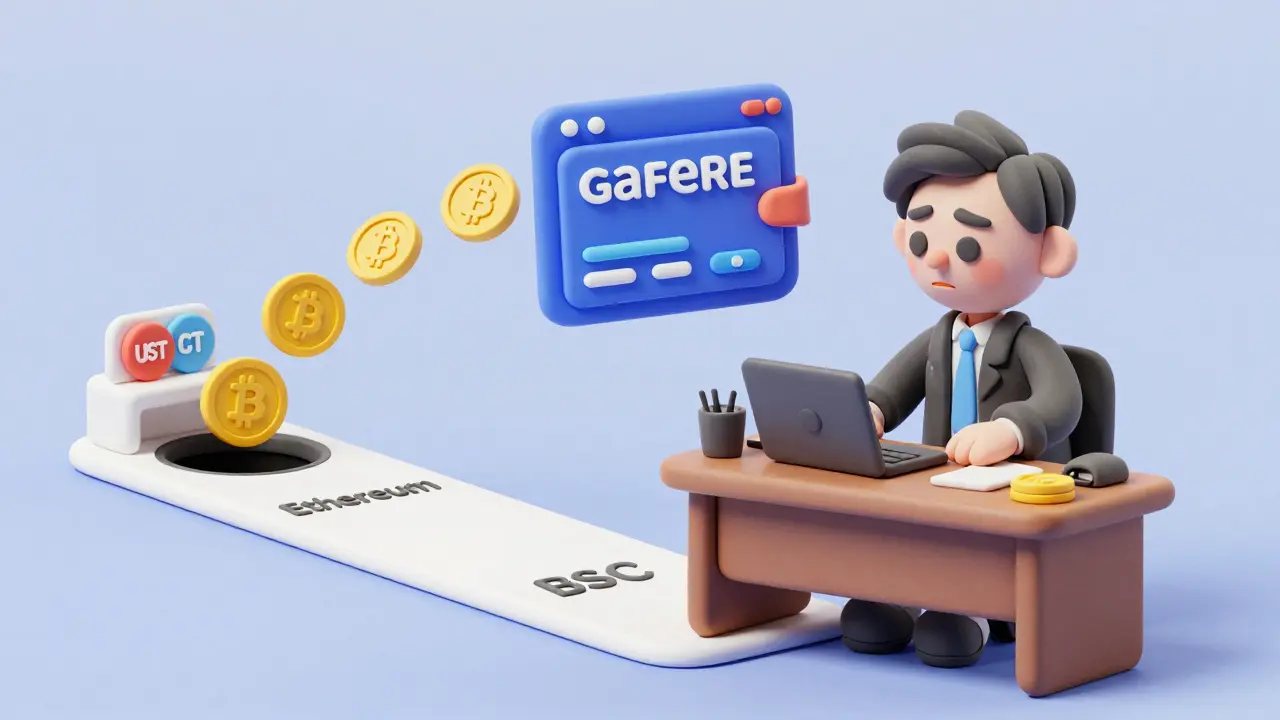
Have you ever swapped stablecoins on Ethereum and watched your wallet drain from gas fees? It’s a frustrating experience that many crypto traders know all too well. That is exactly why Ellipsis Finance was created. Launched in April 2021 as an authorized fork of Curve Finance, Ellipsis operates on the Binance Smart Chain (BSC) to offer lightning-fast, low-cost swaps specifically for stablecoins. But here is the catch: while the technology works, the native tokens-EPS and its successor EPX-have struggled with significant price volatility and community confusion since their inception. Before you connect your wallet or stake any assets, you need to understand what has changed in the protocol, how the messy token migration affects your holdings, and whether this platform still holds value in the crowded DeFi landscape of 2026.
What Exactly Is Ellipsis Finance?
At its core, Ellipsis Finance is a decentralized exchange (DEX) built entirely around stablecoins. Unlike general-purpose DEXs like Uniswap or PancakeSwap that handle everything from meme coins to blue-chip assets, Ellipsis focuses exclusively on swapping tokens like USDT, USDC, BUSD, and DAI. This specialization allows it to use concentrated liquidity pools similar to its parent project, Curve Finance, ensuring minimal slippage when you trade large amounts of stablecoins.
The platform runs on the Binance Smart Chain, which means transaction speeds are near-instant and fees are a fraction of a cent compared to Ethereum. For users who move capital frequently between different stablecoin issuers, this cost efficiency is a major selling point. However, being a "fork" means it relies heavily on the technical framework established by Curve. While this provides stability, it also raises questions about long-term differentiation. If Curve adds a new feature, does Ellipsis just copy it? Or does it innovate? So far, the answer leans toward adaptation rather than radical innovation.
The EPS vs. EPX Migration: What Happened?
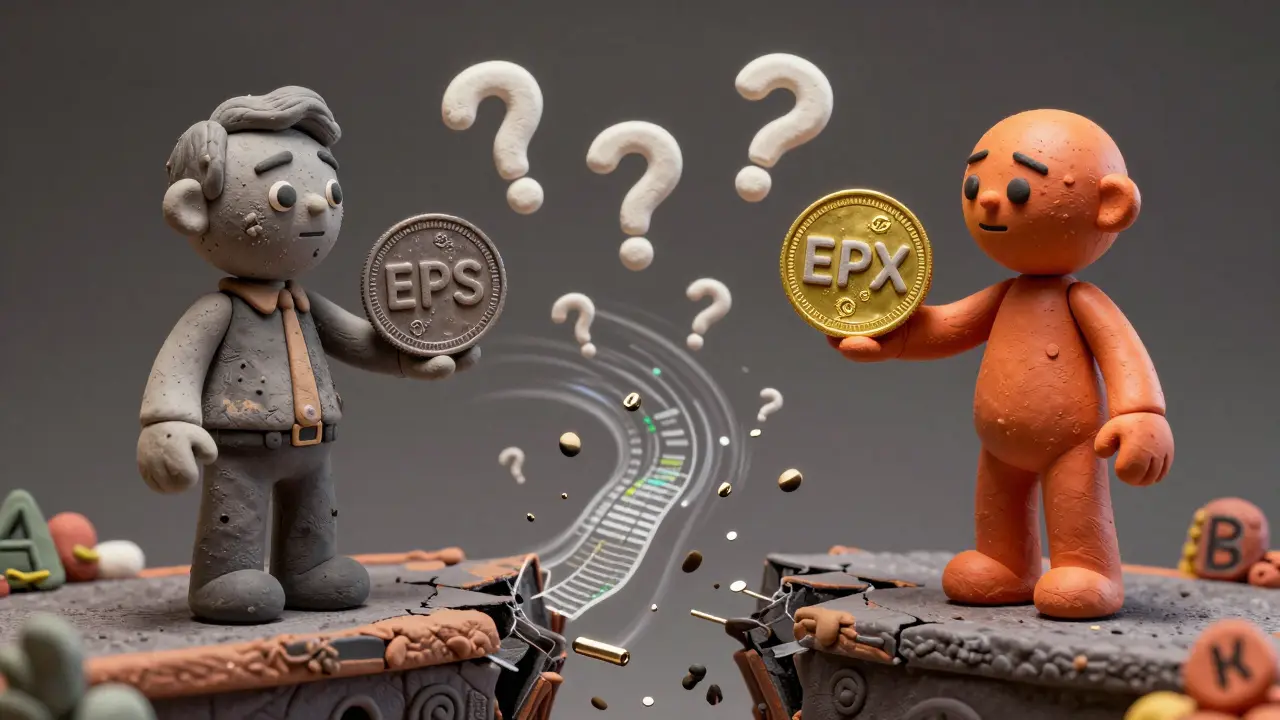
If you have been following Ellipsis since 2021, you likely remember the original governance token, EPS. In late 2022, the team announced a major upgrade to Ellipsis 2.0, which included migrating from EPS to a new token called EPX. This transition was supposed to streamline governance and improve the economic model. Instead, it created a fragmented ecosystem that confused many users.
Here is the reality of the situation today in 2026:
- EPS (Legacy Token): Still exists but has seen a massive decline in utility and price. The circulating supply sits at roughly 723 million tokens, with a market cap hovering around $25 million. Daily trading volume for EPS is often below $300,000, indicating low active interest.
- EPX (New Token): Designed to be the primary governance and reward token for the 2.0 protocol. It showed higher initial trading volumes after launch but has also faced downward pressure. Predictions for EPX vary wildly, with some analysts suggesting it might trade between $0.0014 and $0.004 in the short term.
This dual-token existence creates a risk. Liquidity is split between the two, meaning neither token commands the full attention of the market. If you are holding EPS, you need to verify if there are still mechanisms to migrate to EPX or if your old tokens are effectively stranded with diminishing returns.
| Feature | EPS (Legacy) | EPX (Current) |
|---|---|---|
| Network | Binance Smart Chain | Binance Smart Chain |
| Primary Use | Historical Governance/Staking | Protocol Governance & Rewards |
| Market Cap (Approx.) | $25 Million | Variable (Lower liquidity) |
| Price Trend | Stagnant/Downward | Volatile/Uncertain |
| Risk Level | High (Obsolescence) | Medium-High (Volatility) |
How Do You Actually Use Ellipsis?
Using Ellipsis is straightforward if you are already familiar with DeFi interfaces. Here is the step-by-step process for a typical user in 2026:
- Set Up a Wallet: You need a BSC-compatible wallet like MetaMask or Trust Wallet. Ensure your network settings are switched to Binance Smart Chain.
- Fund with BNB: Even though swap fees are low, you must hold a small amount of BNB in your wallet to pay for gas transactions on the network.
- Connect to Ellipsis: Visit the official site (ellipsis.finance) and connect your wallet. Always double-check the URL to avoid phishing sites, a common risk in DeFi.
- Swap Stablecoins: Select your input stablecoin (e.g., USDT) and output stablecoin (e.g., USDC). You will see the expected rate immediately. Because Ellipsis uses specialized curves, the slippage should be negligible even for large trades.
- Provide Liquidity (Optional): If you want to earn fees, you can deposit pairs of stablecoins into liquidity pools. In return, you receive LP tokens that represent your share of the pool.
- Stake for Rewards: Deposit your LP tokens into the Ellipsis staking contract to earn EPX rewards. This is where the yield farming aspect comes in.
The interface is clean and functional, lacking the flashy animations of newer platforms but prioritizing speed and clarity. There are no deposit or withdrawal fees charged by the protocol itself, which is a significant advantage over centralized exchanges.
Pros and Cons: A Balanced View
No platform is perfect. To help you decide if Ellipsis fits your strategy, let’s look at the hard facts.
Why You Might Like It:
- Low Slippage: Specialized algorithms ensure you get close to the 1:1 peg when swapping stablecoins, saving you money on large transfers.
- Cheap Transactions: Operating on BSC means you won’t pay $50 in gas fees for a simple swap.
- Established Backing: As an authorized fork of Curve Finance, it benefits from a proven codebase and indirect support from a leading DeFi entity.
- Passive Income Potential: Staking LP tokens can generate decent yields through trading fees and token emissions, especially during bull markets.
Why You Should Be Cautious:
- Limited Asset Variety: You cannot trade volatile assets like Bitcoin or Ethereum here. It is strictly for stablecoins and perhaps a few pegged assets.
- Token Price Performance: Both EPS and EPX have underperformed significantly since their launches. The promise of high governance value has not materialized into price appreciation.
- Competition: Other BSC-based DEXs like PancakeSwap now offer stablecoin pools with competitive rates. Why go to a specialized platform when a giant offers convenience?
- Migration Confusion: The lingering effects of the EPS-to-EPX switch have eroded trust among some long-term holders.
Is Ellipsis Finance Safe?
Safety in DeFi is never guaranteed, but we can assess risk based on track record and structure. Ellipsis has operated since 2021 without any major reported hacks or exploits of its core smart contracts. The fact that it is a fork of Curve Finance-a protocol that has secured billions in value for years-adds a layer of technical credibility. The code has been audited multiple times, and the team maintains transparency regarding upgrades.
However, "safe" does not mean "risk-free." The primary risks here are financial, not technical. Impermanent loss is theoretically minimized in stablecoin pools, but if one stablecoin de-pegs (loses its $1 value), you could lose significant capital. Additionally, the value of your staking rewards (paid in EPX) depends entirely on the market price of that token. If EPX drops 90%, your annual percentage yield (APY) looks great on paper, but your actual dollar earnings plummet.
Price Outlook: What Can You Expect?
Let’s talk numbers. As of mid-2026, the outlook for Ellipsis tokens remains cautious. Analysts generally agree that EPS will continue to trade in a narrow range, likely between $0.03 and $0.04, reflecting its status as a legacy asset with limited growth potential. For EPX, predictions are more varied due to lower liquidity and higher volatility. Some models suggest a slow climb toward $0.005-$0.01 if the broader DeFi sector enters a bull run, while bearish scenarios see it stagnating below $0.002.
It is crucial to ignore hype-driven forecasts that promise tenfold returns. Cryptocurrency markets are driven by sentiment, liquidity, and macroeconomic factors. Ellipsis lacks the viral marketing power of newer projects, so its price action will likely remain tied to its utility as a stablecoin router rather than speculative mania.
Final Verdict
Ellipsis Finance serves a specific niche very well: efficient, low-cost stablecoin swapping on the Binance Smart Chain. If you are a trader who constantly moves funds between USDT, USDC, and BUSD to chase yields across different protocols, Ellipsis saves you time and money. The technology is solid, the fees are fair, and the security record is clean.
However, do not enter this ecosystem expecting to get rich quick through token appreciation. The EPS and EPX tokens have disappointed many investors with their poor price performance. Treat Ellipsis as a tool, not an investment vehicle. Use it for its intended purpose-swapping and earning modest fees-and keep your expectations realistic regarding the governance tokens.
Is Ellipsis Finance safe to use in 2026?
Yes, Ellipsis Finance is considered technically safe. It has operated since 2021 without major hacks. As an authorized fork of Curve Finance, it uses a battle-tested codebase. However, always beware of phishing sites and remember that DeFi carries inherent smart contract risks, even for established protocols.
What is the difference between EPS and EPX?
EPS was the original governance token launched in 2021. EPX is the newer token introduced with the Ellipsis 2.0 upgrade. EPX is designed to be the primary token for future governance and rewards. EPS is largely considered a legacy token with declining utility and price.
Can I trade Bitcoin or Ethereum on Ellipsis?
No. Ellipsis Finance is specialized for stablecoin swaps. You can trade assets like USDT, USDC, BUSD, and DAI. For trading volatile cryptocurrencies like BTC or ETH, you would need to use a general-purpose DEX like PancakeSwap or Uniswap.
How much does it cost to swap on Ellipsis?
The protocol charges zero fees for deposits and withdrawals. Swap fees are extremely low, typically fractions of a percent, depending on the pool. You only pay standard Binance Smart Chain gas fees, which are usually less than $0.10 per transaction.
Is it worth staking EPS tokens?
Probably not. With the shift to EPX, the incentives for holding EPS have diminished. The price of EPS has remained stagnant or declined. New users should focus on the current protocol mechanics involving EPX and liquidity provision rather than accumulating legacy EPS tokens.