Famous Rug Pull Examples: The Costliest Crypto Scams and Investor Losses
 Jul, 29 2026
You trust the blockchain. You believe in decentralization. But what happens when the people behind that code decide to simply walk away with your money? This is the nightmare scenario known as a rug pull. It is not just a glitch or a bad market day; it is deliberate theft. In fact, according to research by Solidus Labs, over 300,000 scam tokens have been created, defrauding more than 2 million investors. The total harm caused by these scams surpasses the combined losses from major exchange collapses like FTX, Celsius, and Voyager.
Understanding how these scams work is no longer optional for anyone in crypto. It is survival. Whether you are a seasoned trader or a beginner looking at your first NFT, knowing the history of famous rug pulls helps you spot the red flags before you lose your capital. We will look at the biggest losses, the mechanics behind the theft, and how to protect yourself in 2026.
The Anatomy of a Rug Pull
Before we dive into the specific cases, you need to understand the two main ways scammers execute this crime. Knowing the method helps you identify the warning signs early.
First, there are DeFi scams. These rely on malicious smart contract programming. The developer writes code that looks normal but contains hidden functions. For example, they might include a function that allows them to mint unlimited new tokens, diluting your value to zero, or a "honeypot" mechanism that lets them buy tokens but prevents anyone else from selling. When the price spikes due to hype, they drain the liquidity pool, leaving investors holding worthless digital receipts.
Second, there are Exit scams. These are less about technical tricks and more about psychological manipulation. The team creates a project with aggressive marketing, fake partnerships, and often anonymous founders. They build up a massive following and raise significant funds. Then, one day, the website goes down, the social media channels are deleted, and the team disappears with the treasury. No complex code is needed-just greed and trust exploitation.
The Biggest Historical Losses
Some rug pulls are small, costing a few hundred dollars. Others are catastrophic, wiping out billions. Here are the most infamous examples that shaped the regulatory landscape.
Thodex: The $2 Billion Exchange Collapse
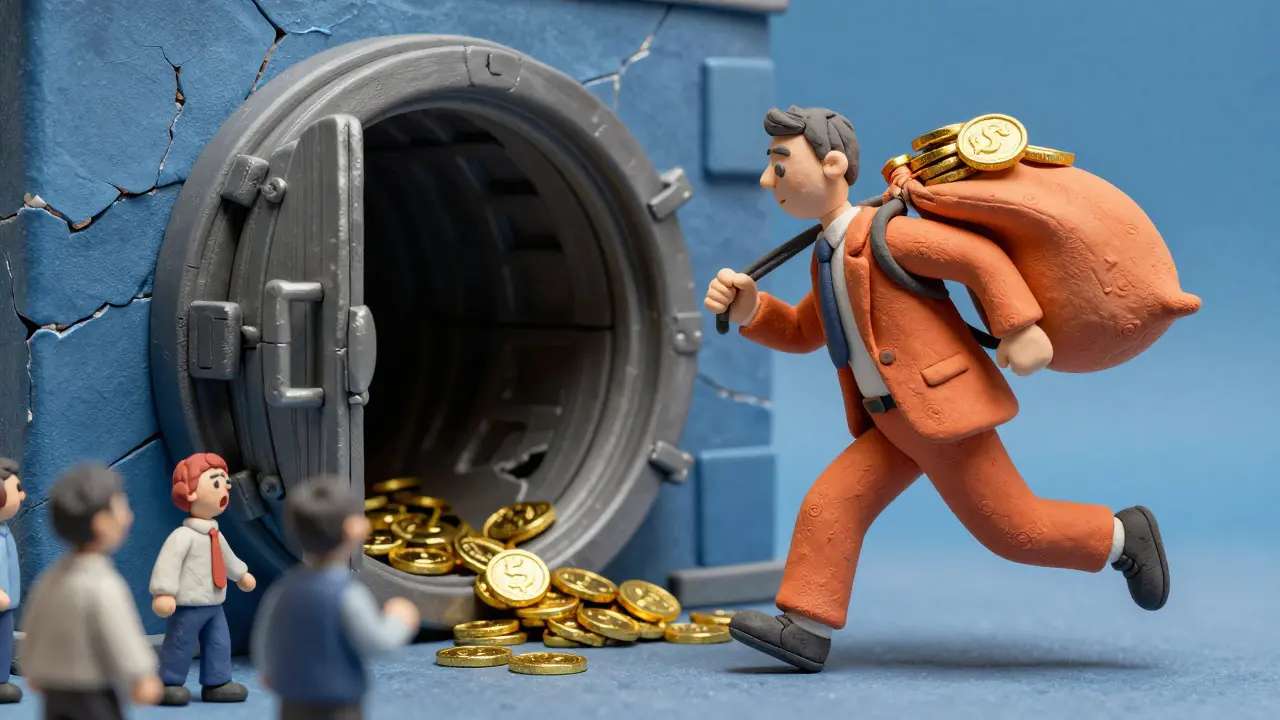
If you think rug pulls only happen in decentralized finance (DeFi), think again. The largest documented rug pull in history occurred in 2021 with Thodex, a centralized cryptocurrency exchange based in Turkey. Do not confuse this with a simple bankruptcy. Thodex was an exit scam on a massive scale.
The CEO, Faruk Fatih Özer, halted user withdrawals abruptly. Investors suddenly found themselves locked out of their accounts. The panic spread instantly. Özer fled the country, eventually being arrested in Georgia months later. The loss was staggering: over $2 billion worth of cryptocurrency vanished. This single incident accounted for nearly 90% of all value stolen in rug pulls during 2021. It proved that centralized platforms, which promise security and regulation, can be just as dangerous as anonymous DeFi projects if the leadership is corrupt.
AnubisDAO: The 20-Hour Heist
While Thodex was a slow-burn disaster, AnubisDAO was lightning-fast. Launched on October 28, 2021, this project claimed to be a decentralized, free-floating currency backed by a basket of assets. It had no white paper. It had no website. Its only branding was a logo inspired by Dogecoin.
Despite the lack of substance, the hype machine worked. Within 24 hours, it raised nearly $60 million from investors who swapped their Ethereum for ANKH tokens. The developers used pseudonyms, adding to the mystery. But the mystery ended quickly. Within just 20 hours of launch, the liquidity pool was drained. Over $58 million in wrapped Ethereum (wETH) disappeared. The project collapsed almost as soon as it began, making it the second-largest rug pull of that year. It highlighted how easily FOMO (Fear Of Missing Out) can override basic due diligence.
BitConnect: The Grandfather of Scams
Long before DeFi took over, BitConnect set the template for modern crypto fraud. Launching its Initial Coin Offering (ICO) in 2016, BitConnect promised guaranteed high returns through a trading bot. Investors traded Bitcoin for BitConnect coins, expecting daily profits of 1% or more.
It was a classic Ponzi scheme structure disguised as a tech innovation. New investor money paid old investors. When the SEC issued warnings and the hype faded, the house of cards collapsed. BitConnect stands as one of the first and most infamous exit scams, teaching the industry that "guaranteed returns" in crypto are always a lie.
Meme Coins and Celebrity Endorsements
In recent years, the target audience has shifted from technical traders to retail investors chasing viral trends. Meme coins and celebrity endorsements have become fertile ground for rug pulls.
Squid Game Token: The Honeypot Trap
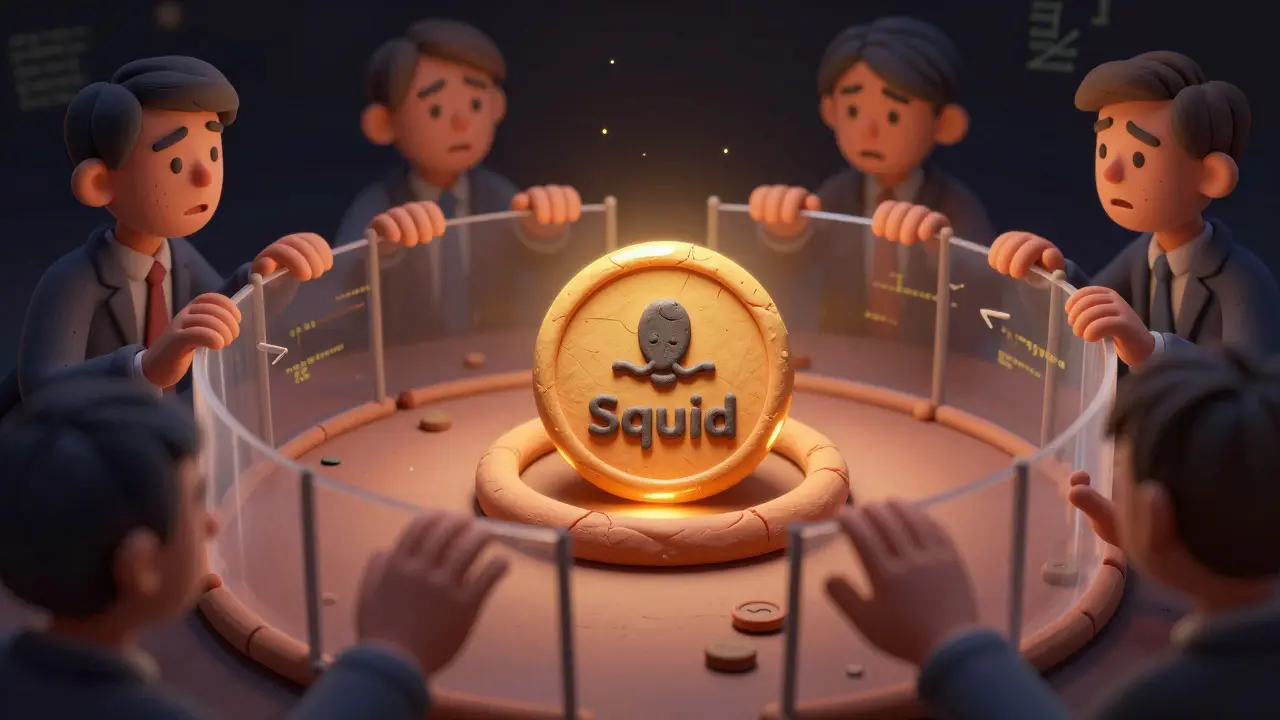
Capitalizing on the global popularity of the Netflix show Squid Game, the Squid Game token launched as a play-to-earn game. It started at $0.01 and skyrocketed to $2,861 in less than a week. Investors were ecstatic. Then, they tried to sell. They couldn't.
This was a textbook honeypot exploit. The smart contract was programmed to allow buying but block selling. Investigation revealed that the project founders were absent on LinkedIn, blocked users on Twitter, and shut down their Telegram and Discord groups. The developers sold their entire supply, causing the price to plummet 99% in one week. They reportedly made over $3.38 million. The whitepaper contained impossible claims, but the price action blinded investors to the truth.
Hawk Tuah: The Viral Flash Crash
In December 2024, social media celebrity Hailey Welch introduced the Hawk Tuah meme coin. Leveraging her viral internet fame, the token debuted with massive attention. However, within just 20 minutes, the value plummeted from $500 million to $60 million.
This incident sparked significant backlash and legal action. U.S. law firm Burwick Law filed a federal lawsuit against Welch and three other individuals involved. At the time of analysis, the HAWK token was trading at a fraction of its peak, representing a 71% decrease. This case marks a shift in regulatory response, showing that celebrities can be held legally accountable for endorsing fraudulent crypto projects.
NFT Rug Pulls: Fake Art and Fake Fame
The Non-Fungible Token (NFT) space is also rife with scams. Unlike token swaps, NFT rugs often involve false advertising and insider trading.
Bored Bunny: The Celebrity Illusion
Announced in December 2021, the Bored Bunny NFT project promised branded merchandise, a private metaverse, and 10x investment returns. To drive sales, they claimed endorsements from celebrities like Floyd Mayweather, Jake Paul, and David Dobrik.
The collection sold out in hours, generating approximately 2,000 ETH. However, blockchain investigators discovered a sinister trick. The NFTs supposedly owned by celebrities were actually purchased by wallets linked directly to the project developers. It was a coordinated effort to create false scarcity and legitimacy. After the initial hype died, the floor price crashed to just 0.085 ETH. Many founders had prior involvement in other questionable ventures, a detail missed by eager buyers.
| Project Name | Year | Estimated Loss | Primary Mechanism | Key Red Flag |
|---|---|---|---|---|
| Thodex | 2021 | $2 Billion+ | Centralized Exit Scam | CEO flight, halted withdrawals |
| AnubisDAO | 2021 | $58 Million | Liquidity Pool Drain | No white paper, anonymous team |
| Squid Game | 2021 | ~$3.38 Million (Dev profit) | Honeypot Smart Contract | Unable to sell tokens |
| Bored Bunny | 2021 | Significant Floor Drop | Fake Celebrity Endorsements | Insider wallet purchases |
| Hawk Tuah | 2024 | $440 Million (Market Cap drop) | Viral Marketing Dump | Celebrity association without utility |
How to Spot a Rug Pull Before It Happens
Prevention is better than litigation, especially since recovering lost crypto is rare. Here is a checklist to vet any new project:
- Check the Liquidity Lock: In DeFi, ensure the liquidity pool tokens are locked for a significant period (e.g., 1-2 years). If the devs hold the LP tokens, they can pull the liquidity anytime.
- Verify the Team: Anonymous teams are high-risk. Look for doxxed (publicly identified) founders with verifiable LinkedIn profiles and past track records. If a team uses only pseudonyms, proceed with extreme caution.
- Audit the Smart Contract: Use tools like Etherscan or specialized audit firms to check if the contract has ownership renounced or if it contains suspicious functions like `blacklist` or `mint`.
- Analyze Social Sentiment: Are the comments genuine or bot-generated? Real communities ask questions and discuss utility. Bot farms only post hype emojis and price predictions.
- Scrutinize Partnerships: Fake partnerships are common. Check the partner's official social media to see if they actually announced the collaboration.
The Future of Crypto Fraud Detection
As seen with the Hawk Tuah lawsuit, legal authorities are catching up. The pseudonymous nature of DeFi is becoming harder to hide behind as blockchain forensics improve. Chainalysis and similar firms now provide real-time tracking of illicit flows. However, the sheer volume of new tokens means new scams will always emerge. The responsibility ultimately falls on the investor to maintain skepticism. Remember: if it sounds too good to be true, it is almost certainly a rug pull waiting to happen.
What is the difference between a rug pull and a hard fork?
A hard fork is a legitimate protocol upgrade where the blockchain splits into two versions, often due to community disagreement. A rug pull is a fraudulent act where developers steal funds or abandon a project intentionally to cause financial loss to investors. One is a technical event; the other is a crime.
Can you recover money lost in a rug pull?
Recovery is extremely difficult and rare. Since transactions on public blockchains are irreversible, once funds are moved to a scammer's wallet, they are gone unless the scammer is caught and assets are seized by law enforcement. Most rug pull perpetrators use mixers and cross-chain bridges to hide their tracks.
Why did the Squid Game token crash so fast?
The Squid Game token crashed because it was a honeypot. The smart contract was coded to prevent regular users from selling their tokens. While investors could buy in, driving the price up, only the developers could sell. Once they sold their holdings, the price collapsed to near zero.
Is AnubisDAO still active?
No, AnubisDAO is dead. After the liquidity pool was drained within 20 hours of its launch in 2021, the project ceased all operations. The ANKH token became worthless, and the anonymous developers vanished.
How does a liquidity pool drain work?
In a DeFi liquidity pool, investors provide pairs of assets (like ETH and a new token) to enable trading. If the developers own the majority of the liquidity provider (LP) tokens, they can withdraw all the underlying assets from the pool. This removes the backing for the new token, causing its value to drop to zero instantly.
Alex Di Mango
July 30, 2026 AT 02:35Great overview of the landscape, though I think we need to remember that not every loss is a malicious rug pull. Sometimes projects just fail because the tech doesn't work or the market shifts. It's important to distinguish between bad code and bad intentions so we don't get too cynical about innovation. The Thodex case was definitely criminal, but AnubisDAO felt more like a collective hallucination than a calculated heist by a single mastermind. We should encourage due diligence without killing the spirit of experimentation.
Amor Jordan
July 30, 2026 AT 12:12I honestly feel for everyone who lost money in these situations. It’s terrifying to watch your savings vanish overnight. The Squid Game one was particularly heartbreaking because it preyed on people’s excitement over something they loved. We need more empathy in this space rather than just pointing fingers at victims for not checking the contract code. Not everyone has the technical skills to audit a smart contract before buying in!
Erica Johnson
July 30, 2026 AT 17:14You guys are missing the point entirely if you think 'due diligence' is optional. :/ If you can't read a basic Etherscan trace, you have no business touching DeFi. It's not rocket science, it's just math. The fact that people fall for 'guaranteed returns' every single cycle proves that retail investors are just walking ATMs for devs. Stop whining about scams and start learning how liquidity pools actually work. It’s embarrassing to see grown adults losing millions because they trusted a meme instead of the code. :-|
Ken G
July 31, 2026 AT 15:32the whole system is rigged from the top down. its not just scammers. its the banks and the government watching us through blockchain analytics. they let these rugs happen to keep us poor and distracted while they consolidate power. trust no one. cash is king. digital slavery is here.
Nick Darring
August 1, 2026 AT 19:51Look, I know everyone loves to hate on centralized exchanges after Thodex, but let's be real for a second: decentralized finance is just a fancy way to say 'unregulated casino where the house always wins because they wrote the rules.' You guys act like locking liquidity solves everything, but what happens when the oracle gets manipulated? Or when the bridge breaks? I’ve seen 'audited' contracts drain pools faster than you can blink. The only true security is holding physical gold under your mattress, not some token that relies on a server running in someone's garage in Estonia. But sure, keep telling yourselves that blockchain forensics will save you, because that’s cute. Meanwhile, the insiders are laughing all the way to the bank with their early bags dumped on unsuspecting normies who think they’re part of a revolution. It’s not a revolution; it’s a pyramid scheme with better marketing. And don’t even get me started on NFTs-paying thousands for a jpeg of a bored bunny is the definition of insanity. But hey, if you want to throw good money after bad, go ahead. Just don’t come crying to Reddit when your 'community-driven project' turns out to be a honeypot designed specifically to trap your ETH. The truth hurts, but ignoring it won’t make your portfolio grow.
Lorraine Surringer
August 2, 2026 AT 08:57omg yes! i totally agree with nick about the nft stuff. it was so crazy how those celebs were involved. i mean jake paul?? really?? like come on. people needed to see that coming. but also like, why do we keep falling for it? its like we want to lose money sometimes lol. anyway, great post tho! thanks for sharing this info. it helps me feel safer knowing what to look out for now. hope everyone stays safe out there! xoxo
Eden Tadesse
August 4, 2026 AT 05:46this is soo scary to read. i never thought about the honeypot thing before. makes me wanna check my wallets right now. thx for the heads up!
Eric Zehr
August 5, 2026 AT 11:31It is crucial to maintain a positive outlook while staying vigilant. Education is our best defense against these predatory practices. By sharing knowledge and supporting each other, we can build a more resilient community. Let's focus on the legitimate projects that are bringing real value to the table and ignore the noise. Stay strong, stay informed, and keep pushing forward together.