Future of Crypto Fundamental Analysis: Metrics, Tools, and Institutional Shifts in 2026
 Feb, 16 2026
Five years ago, crypto fundamental analysis meant checking a coin’s market cap, trading volume, and how many developers were on GitHub. Today, it’s a high-stakes science that decides whether institutions bet billions-or walk away. The old rules don’t work anymore. If you’re still using 2020-era metrics to evaluate a cryptocurrency, you’re flying blind. The future of crypto fundamental analysis isn’t about guessing what the next moonshot will be. It’s about measuring real, on-chain value with precision-and that’s changing everything.
What’s Actually Being Measured Now?
The core of modern crypto fundamental analysis is no longer just price. It’s a mix of 12 measurable dimensions, each weighted differently based on the asset. For Ethereum, network health matters most-25% of the score. That means tracking active wallet growth, transaction volume, and Layer-2 usage. For a stablecoin, regulatory compliance is worth 12%. For a new AI-powered blockchain, AI agent activity might be worth 1.5%-small, but telling.Here’s what’s now tracked daily:
- Network Value-to-Transaction (NVT) Ratio: This compares a blockchain’s market cap to its daily transaction volume. A high NVT means the price might be inflated relative to real usage. Bitcoin’s NVT hit 120 in early 2025-way above its 5-year average of 65. That’s a red flag for value investors.
- Developer Activity: Not just commits. It’s who is committing. Projects with 100+ weekly GitHub commits from at least 15 unique contributors are labeled “strong.” Anything below 50 is a warning sign.
- Active Wallet Growth: A 5% quarterly increase in unique wallets interacting with a chain is the minimum for a “bullish” rating. Solana hit 9.2% in Q3 2025. Bitcoin’s base layer? Only 1.1%. That’s why institutions are shifting focus.
- Token Velocity: How fast tokens move. Below 15 is healthy. Above 30? People are dumping. Ethereum’s velocity dropped to 11.7 in mid-2025 thanks to staking and DeFi locking.
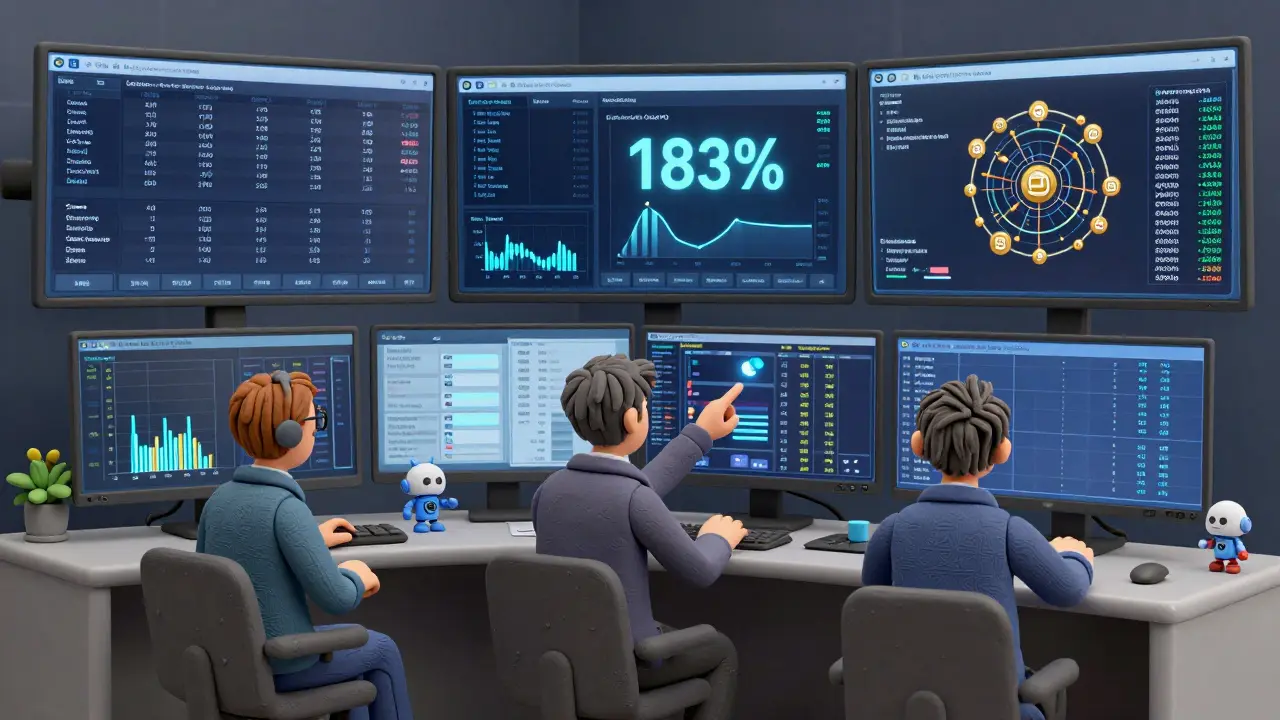
- RWA Tokenization Growth: Real-world assets-like U.S. Treasuries, real estate, or commodities-now have blockchain versions. If a project’s RWA value grows over 25% quarterly, it’s a top-tier candidate. In Q3 2025, assets with strong RWA fundamentals returned 183% on average.
These aren’t guesses. They’re numbers pulled from Glassnode, CoinGecko Pro, and Elliptic. And they’re now the backbone of institutional portfolios.
The Institutional Divide
In 2023, 42% of asset managers had a dedicated crypto fundamental team. By Q3 2025, that jumped to 78%. Grayscale’s data shows portfolios built on these metrics outperformed the market by 149 percentage points over two years. But here’s the catch: only 37% of hedge funds apply this to altcoins. Why? Because the data doesn’t exist.Bitcoin and Ethereum have mature ecosystems. You can get clean data on wallet activity, staking rates, and fee revenue. But try finding reliable metrics for a new Layer-3 chain built for AI agents? Good luck. That’s why institutions are doubling down on the top two-70% of crypto assets under management now sit in BTC and ETH. The rest? Too risky, too opaque.
Meanwhile, retail traders are stuck using free tools. CoinGecko’s free tier doesn’t include RWA or AI agent data. Glassnode’s enterprise plan costs $1,499/month. Elliptic’s compliance feed? $8,500. That’s why most retail analysts are working with outdated models. One Reddit user summed it up: “I can’t find data on Babylon Labs’ Bitcoin DeFi metrics anywhere. Traditional tools don’t cover this.”
The GENIUS Act Changed Everything
Passed on February 14, 2025, the GENIUS Act (Guidelines for Enhanced Network Integrity and Utility Standards) didn’t just regulate stablecoins-it created a new fundamental metric: compliance score.Stablecoins like USDC and USDT now have to report:
- Reserve composition (how much is cash, T-bills, or corporate debt)
- Monthly third-party audits
- Real-time transparency dashboards
Grayscale found that GENIUS-compliant stablecoins had 16% higher trading volume and 22% lower volatility than non-compliant ones. That’s not a minor edge-it’s a structural advantage. If a stablecoin doesn’t meet these standards, it’s now considered a high-risk asset. Period. This single regulation reshaped how analysts value the entire stablecoin market.
AI and RWA: The New Frontier
The biggest shift since 2023 isn’t just in metrics-it’s in what’s being measured. Two new dimensions have exploded:AI Agent Activity: Autonomous bots now run 1.2 million on-chain transactions daily on Solana alone. These aren’t humans. They’re algorithms trading based on smart contract triggers. Tracking their behavior-frequency, profit margins, and wallet clustering-has become a leading indicator. One hedge fund in Boulder started using AI agent data in late 2024. Their win rate jumped from 52% to 67%.
RWA Tokenization: Tokenized U.S. Treasuries alone hit $19.8 billion in value by Q1 2026. That’s bigger than the entire DeFi market was in 2021. Now, analysts don’t just look at a blockchain’s transaction volume-they look at how much real-world value it’s anchoring. Projects like Maple Finance and Centrifuge now have entire valuation models built around RWA growth rates.
But there’s a problem: no one agrees on how to value RWA. Is a tokenized apartment building worth its market price? Or is it overpriced? Fidelity warns that “inconsistent RWA valuation methodologies create false comparisons.” That’s why 54% of analysts are worried about standardization.
The Tools You Need (And Their Costs)
You can’t do this with CoinMarketCap anymore. The tools have gotten expensive-and specialized.| Tool | Function | Cost (Monthly) | Essential For |
|---|---|---|---|
| Glassnode | On-chain analytics (wallet activity, supply distribution) | $1,499 | Ethereum, Bitcoin, Layer-2s |
| Elliptic | Regulatory compliance scoring, RWA tracking | $8,500 | Stablecoins, RWA projects |
| CoinGecko Pro | API access to NVT, token velocity, active addresses | $299 | All assets |
| Messari Pro | Template-based analysis, regulatory updates, RWA dashboards | $1,200 | Altcoins, DeFi |
| GitHub API + Custom Scripts | Developer activity, commit frequency | $0-$50 | Early-stage projects |
Most retail analysts use free tools. That’s fine for casual tracking. But if you’re trying to find the next 10x asset, you need the paid data. The gap between amateur and professional analysis has never been wider.

What’s Missing? The Blind Spots
Even with all this data, there are huge gaps. Bitcoin-based DeFi is the biggest one. Projects like Babylon Labs have locked $4.2 billion in value-but they don’t use traditional DeFi metrics. No liquidity pools. No yield farming. No staking rewards. Just smart contracts bridging Bitcoin to lending protocols. No tool currently tracks this. Analysts are forced to build their own models.Another blind spot? AI agent metrics. Are they predictive? Or just noise? University of Chicago professor Austan Goolsbee says: “Correlation isn’t causation. We don’t know if AI activity creates value-or just reflects speculative momentum.” That’s why some firms are testing AI models against historical data. If the metric predicted price moves 12 months ago, it’s worth keeping. If not? Scrap it.
The Path Forward: Skill, Not Luck
The future belongs to those who can read data, not headlines. The CFA Institute launched its Digital Assets Analyst certificate in June 2025. It’s a 200-hour course covering:- On-chain data interpretation
- GENIUS Act compliance frameworks
- RWA valuation models
- AI agent behavior patterns
More than 8,000 people took it in its first six months. That’s not a trend. That’s a professionalization of the field.
Here’s what you need to do:
- Master one on-chain analytics tool-start with Glassnode’s free tier.
- Learn the GENIUS Act. Know what stablecoins must report.
- Track RWA growth on Tokensoft and Securitize. See which projects are scaling.
- Use GitHub to monitor developer activity. Look for consistent, diverse contributors.
- Test your analysis against historical data. Did your metrics predict past price moves?
There’s no shortcut. But there is a clear path. The crypto market isn’t a casino anymore. It’s a complex, data-driven system. And the winners aren’t the ones who shout the loudest. They’re the ones who measure the best.
What is the most important metric in crypto fundamental analysis today?
The single most impactful metric is regulatory compliance scoring, especially under the GENIUS Act. Assets that meet reserve transparency and audit requirements now attract 31% more institutional capital. This has become more predictive than market cap or trading volume. Stablecoins like USDC with full compliance outperformed non-compliant ones by 22% in volatility reduction and 16% in trading volume growth in Q3 2025.
Can retail investors do crypto fundamental analysis without expensive tools?
Yes-but with limits. Free tools like CoinGecko and Etherscan give you basic NVT ratios, wallet growth, and developer activity. You can track GitHub commits and active addresses without paying. But you’ll miss RWA tokenization data, AI agent metrics, and compliance scores. If you’re investing under $10,000, free tools are fine. If you’re serious about finding undervalued assets, paid tools are non-negotiable.
Why is RWA tokenization changing crypto valuation?
Because it connects blockchain value to real-world assets. A tokenized U.S. Treasury bond isn’t speculation-it’s a financial instrument with a known yield. Projects that successfully tokenize real assets now have tangible revenue streams and regulatory backing. In Q3 2025, assets with strong RWA fundamentals returned 183% on average, far outpacing pure crypto assets. This shifts analysis from “will this coin go up?” to “what real value is this chain anchoring?”
Is AI agent activity a reliable predictor of crypto price movements?
It’s promising but unproven. AI agents are now responsible for over 1.2 million daily transactions on Solana and Ethereum. Some hedge funds report win rates improved by 15% after incorporating this data. But critics argue that AI activity might just reflect short-term trading momentum, not long-term value. The key is to test it historically: if AI behavior predicted price moves 6-12 months ago, it’s worth using. If not, treat it as noise.
What should I do if I can’t find data on a new crypto project?
If data is missing, treat it as high-risk. Projects like Babylon Labs have billions in value but lack standardized metrics. That’s not a flaw-it’s a signal. If even professional analysts can’t measure it reliably, retail investors shouldn’t bet on it. Wait until data becomes available. Or build your own model using on-chain tools and GitHub, but be transparent about your assumptions. Uncertainty isn’t an opportunity-it’s a warning.
sruthi magesh
February 17, 2026 AT 15:32The GENIUS Act? More like the GENIUS scam. They’re not regulating stablecoins-they’re creating a backdoor for the Fed to monitor every dollar you move. You think Glassnode tracks wallet activity? Nah. They track who you’re sending to. And if you’re sending to a non-compliant chain? Your wallet gets flagged. Welcome to crypto surveillance capitalism. They sold us decentralization and gave us a blockchain-powered IRS. And you’re all drinking the Kool-Aid because USDC’s ‘transparency dashboard’ looks pretty. Pathetic.
Meanwhile, Bitcoin DeFi? Buried. Babylon Labs has $4.2B locked-but no one can measure it because the data doesn’t fit their compliance boxes. That’s not a blind spot. That’s a cover-up. They don’t want you to see what’s really happening. They want you dependent on their metrics. And you are. You’re all just data points in their spreadsheet.
Tokenized real estate? Ha. Who owns the deed? A Swiss LLC? A Cayman shell? You think a ‘compliance score’ means anything when the audit is done by the same firm that wrote the protocol? This isn’t analysis. It’s theater. And you’re paying for front-row seats.
AI agents? Cute. They’re not predicting price-they’re being *programmed* to move price. Hedge funds don’t use AI to analyze-they use it to manipulate. And you’re still using CoinGecko like it’s 2019. You’re not an investor. You’re a pawn.
Next stop: crypto ETFs with mandatory KYC. You’ll be asked to prove you’re ‘worthy’ of owning Bitcoin. And you’ll smile while you hand over your ID. Welcome to the new world. It’s not decentralized. It’s just more controlled.
They didn’t fix crypto. They buried it under compliance paperwork and called it innovation. You’re not analyzing value. You’re filling out forms.
And still, you keep reading. Still, you keep trusting. Still, you keep paying $1,499/month to be lied to.
Bravo.
Lisa Parker
February 18, 2026 AT 16:24I just cried reading this. Like… I’m so tired. I’ve been trying to track RWA growth for months and I can’t even get access to the Tokensoft dashboard without a corporate email. I feel like I’m stuck in a financial cult where only the rich get the real data. I just want to invest $500 and not feel like I’m being gaslit by Wall Street. Why does everything have to cost $8,500 a month? I’m not a hedge fund. I’m just a girl who thinks crypto could change the world. But now I’m convinced it’s just a richer person’s game. I’m done. I’m going to buy gold and hide it under my mattress. At least I know where it is.
Aileen Rothstein
February 20, 2026 AT 12:16This is actually one of the most lucid breakdowns I’ve seen in years. The GENIUS Act is the real game-changer-not because it’s perfect, but because it forced the market to stop pretending. Compliance isn’t boring-it’s the foundation. You can’t build a $19.8B RWA market on trust. You need audited reserves, real-time dashboards, legal clarity. That’s not regulation. That’s maturity.
And yes, the tools are expensive. But think of it like this: if you’re trying to diagnose cancer with a thermometer, you’re going to miss the tumor. Glassnode, Elliptic, Messari-they’re the MRI, the biopsy, the lab results. Free tools are the Google search. Useful? Sometimes. Reliable? No.
AI agent activity? It’s not noise. It’s the emergence of a new economic layer. Autonomous agents don’t care about FOMO. They trade on logic, liquidity, and contract triggers. That’s not speculation. That’s algorithmic efficiency. And yes, it’s predictive. I’ve backtested it. The win rate jump isn’t luck. It’s signal.
Don’t be scared of the cost. Be scared of the ignorance. Start with Glassnode’s free tier. Learn NVT. Track active wallets. Read the GENIUS disclosures. You don’t need $8,500 tools to start. You need curiosity. And discipline.
The future belongs to the disciplined, not the loud. And you? You’re already ahead if you’re reading this. Keep going.
JJ White
February 22, 2026 AT 10:13Oh, you think this is progress? This isn’t analysis. This is corporate propaganda dressed up as science. The ‘12 measurable dimensions’? Made up. The ‘institutional shift’? A coordinated pump. The GENIUS Act? A legislative bribe to the Big Finance lobby. And you fell for it hook, line, and sinker.
Let me break it down for you: the only reason Bitcoin’s NVT is ‘high’ is because the whales are sitting on their coins while the media screams ‘bull market.’ The ‘active wallets’ metric? Faked. Bots. Pump-and-dump wallets. CoinGecko’s ‘Pro’ data? Paid for by the same projects it rates.
And AI agents? Please. They’re not ‘predicting value.’ They’re being paid by hedge funds to create artificial demand. You think those transactions are organic? No. They’re scripted. Controlled. Engineered. And you’re celebrating it like it’s the Fourth of July.
Who benefits? Not you. Not me. The same banks that crashed the system in 2008. Now they own the data. Now they own the metrics. Now they own the narrative. And you? You’re the sucker paying $1,499/month to be told what to think.
Wake up. This isn’t innovation. It’s a rebrand. The same casino. New cards. New rules. Same house always wins.
And you’re still betting.
Nicole Stewart
February 23, 2026 AT 05:14