How Block Rewards Are Distributed to Miners: A 2026 Guide
 Jun, 14 2026
Every time you send a cryptocurrency payment, someone gets paid for keeping the network secure. That payment is called the block reward. It’s not just a bonus; it is the economic engine that prevents hackers from taking over the blockchain. But how exactly does this money get distributed? Who gets it, and why does the amount change?
If you are looking into mining or just trying to understand why Bitcoin’s price moves the way it does, you need to grasp how these rewards work. The system was designed by Satoshi Nakamoto in 2009 to distribute new coins fairly while incentivizing people to spend electricity on security. Today, the landscape has shifted dramatically. With the last major halving in April 2024 reducing the subsidy to 3.125 BTC per block, miners are relying more than ever on transaction fees to survive.
The Two Parts of a Miner’s Paycheck
When a miner successfully adds a new block to the blockchain, they don’t just get one lump sum. Their reward comes from two distinct sources. Understanding this split is crucial because their importance shifts over time.
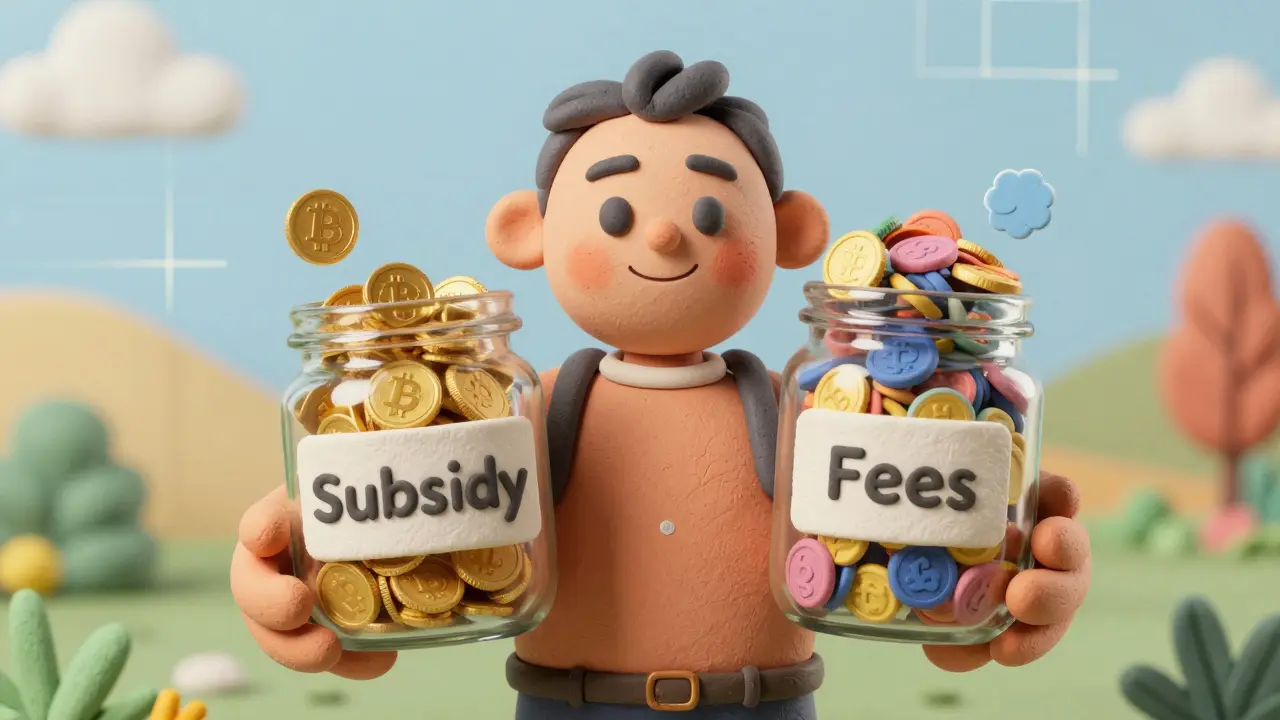
First, there is the Block Subsidy, which is newly minted cryptocurrency created out of thin air and awarded to the winning miner. This is the inflationary part of the system. In Bitcoin’s case, this number is hardcoded to decrease. Second, there are Transaction Fees, which are payments made by users who want their transactions included in the next block. These fees are market-driven. If everyone wants to move money at once, fees go up. If the network is quiet, fees drop.
| Component | Source | Predictability | Trend (2024-2030) |
|---|---|---|---|
| Block Subsidy | Protocol Creation | Fully Predictable | Decreasing (Halving) |
| Transaction Fees | User Payments | Variable/Market-Based | Increasing Share |
In the early days of Bitcoin, the subsidy was everything. Transaction fees were negligible. Today, after the April 2024 halving, fees make up a much larger slice of the pie. According to data from CoinShares, transaction fees accounted for nearly 24% of miner revenue in late 2023, a massive jump from just 1.5% in 2015. As we move through 2026, this trend continues. The subsidy is shrinking, so miners must compete harder for fee revenue.
How the Distribution Actually Happens
You might imagine miners sitting around waiting for a notification. In reality, the process is a high-speed race involving complex math and specialized hardware. Here is the step-by-step breakdown of how a reward is earned and distributed:
- Mining Pool Aggregation: Most individual miners join a pool. Instead of competing alone, thousands of miners combine their computing power. The pool coordinator assigns small chunks of work to each member.
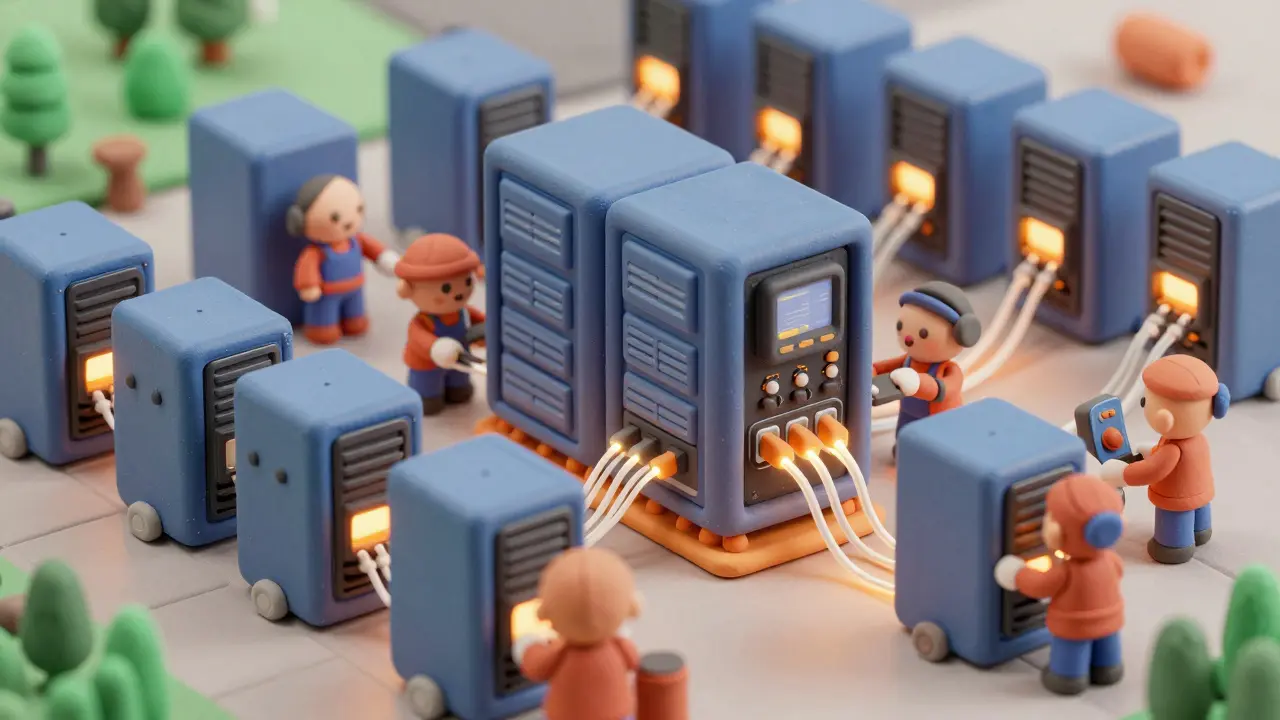
- Solving the Puzzle: Miners use ASICs (Application-Specific Integrated Circuits) to guess a random number called a nonce. They are trying to find a hash that is lower than the network’s target difficulty. This happens billions of times per second.
- Block Discovery: When one machine in the pool finds the correct hash, it broadcasts the solution to the network. Other nodes verify that the block is valid-meaning all transactions inside follow the rules.
- Reward Allocation: Once verified, the new block is added to the chain. The protocol automatically sends the block subsidy plus all collected transaction fees to the wallet address specified by the miner (or the pool).
- Pool Payouts: If the miner was in a pool, the pool takes its cut (usually 1-2%) and distributes the rest to members based on how much work they contributed. This payout might happen daily, weekly, or when a certain threshold is reached.
This entire cycle aims to take about 10 minutes on average for Bitcoin. If blocks start coming faster, the network automatically makes the math puzzle harder. If they slow down, it gets easier. This adjustment happens every 2,016 blocks, roughly every two weeks.
The Halving Effect: Why Rewards Shrink
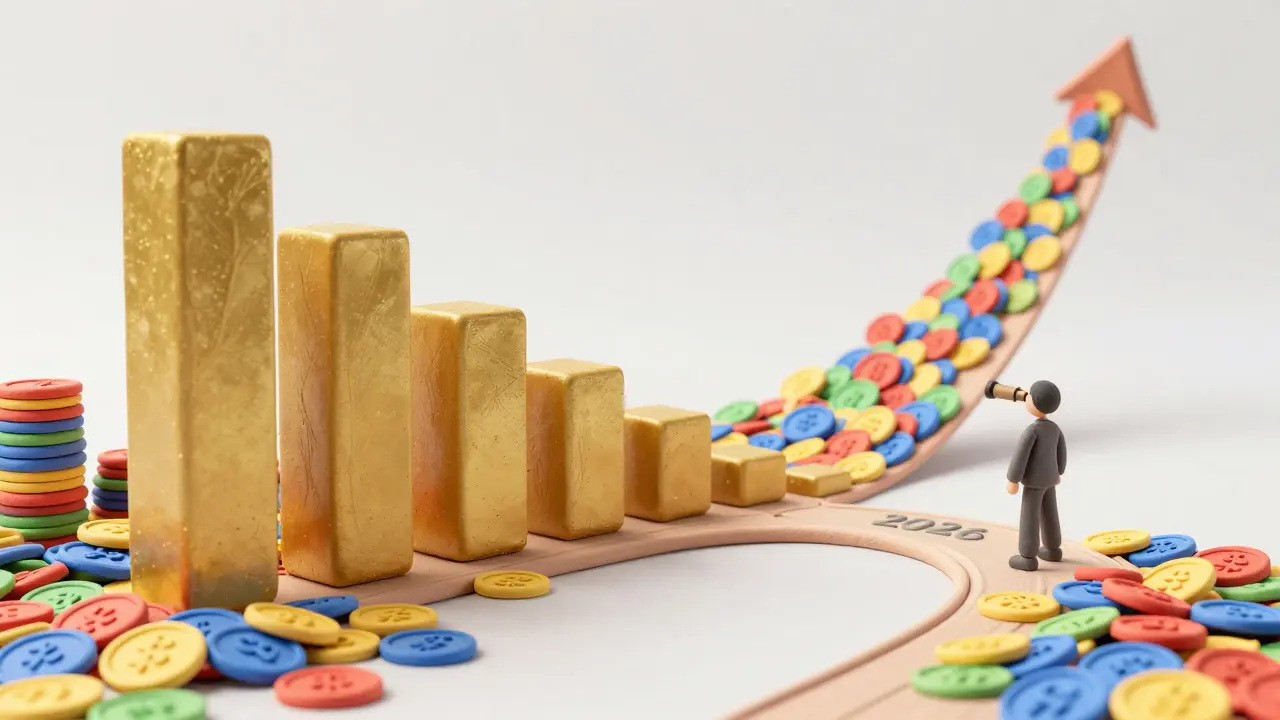
The most unique feature of Bitcoin’s block reward distribution is the Halving, which is an event where the block subsidy is cut in half every 210,000 blocks. This occurs approximately every four years. It is a programmed scarcity mechanism.
Here is how the schedule has played out:
- 2009: 50 BTC per block
- 2012: 25 BTC per block
- 2016: 12.5 BTC per block
- 2020: 6.25 BTC per block
- 2024: 3.125 BTC per block
The next halving will occur around 2028, dropping the reward to 1.5625 BTC. By the year 2140, the subsidy will effectively reach zero. At that point, Bitcoin will have issued its maximum supply of 21 million coins. From then on, miners will rely 100% on transaction fees for income.
This creates a critical question for 2026 and beyond: Is the fee market strong enough to support the network? Princeton University researchers raised concerns in 2020 that if fees don’t rise sufficiently, miners might shut down, leaving the network vulnerable to attacks. However, industry analysts argue that as Bitcoin adoption grows, so does the demand for block space, driving fees up naturally. Layer-2 solutions like the Lightning Network also help by moving smaller transactions off the main chain, allowing the base layer to focus on high-value settlements with higher fees.
Proof-of-Work vs. Proof-of-Stake
Not all blockchains distribute rewards the same way. Bitcoin uses Proof-of-Work (PoW), which requires miners to expend computational energy to secure the network. Ethereum, however, switched to Proof-of-Stake (PoS) in September 2022 during an event known as "The Merge".
In PoS, there are no miners solving puzzles. Instead, validators lock up (stake) their own coins as collateral. They are chosen to create blocks based on the size of their stake and other factors. Their "reward" comes from newly minted ETH and transaction tips. The key difference is efficiency. PoW consumes massive amounts of electricity. PoS uses less than 0.05% of the energy. For investors and developers, this distinction matters when evaluating the long-term sustainability and environmental impact of a project.
Real-World Economics for Miners in 2026
If you are considering mining today, the economics are tight. The April 2024 halving meant that overnight, revenue from the subsidy dropped by 50%. To stay profitable, miners had to either lower their electricity costs or increase their efficiency.
Current benchmarks suggest that Bitcoin mining needs electricity costs below $0.06 per kWh to remain viable post-halving. Many large operations have moved to regions with cheap power, such as Paraguay ($0.028/kWh) or Kazakhstan ($0.035/kWh). Hardware also plays a huge role. Older machines like the Antminer S19 are becoming obsolete. Newer models like the S21 offer better hashes per watt, but they cost nearly $5,000 each.
Most individuals cannot afford to mine solo. The chance of finding a block alone is like winning the lottery. Instead, 98.7% of Bitcoin’s hashrate comes from mining pools. While pools ensure regular payouts, they charge fees. Users often complain about unexpected fee structures or delays during network congestion. Always check the pool’s reputation and fee schedule before committing your hardware.
Future Outlook: The Fee-Only Era
Looking ahead to the next decade, the block reward distribution model will continue to evolve. By 2040, forecasts suggest that transaction fees could comprise 87% of miner revenue. This transition is already underway. Developers are debating whether to adjust block sizes to accommodate more transactions and thus generate more fees. Others advocate for strict limits to preserve decentralization.
For now, the system holds. Miners are adapting by improving efficiency and seeking alternative revenue streams, such as providing straggling services or integrating renewable energy. The block reward remains the core incentive, but its nature is shifting from a generous subsidy to a precise, scarce asset backed by user demand.
What is the current Bitcoin block reward in 2026?
As of 2026, the Bitcoin block subsidy is 3.125 BTC. This rate was established after the halving event in April 2024. The total reward for a miner includes this subsidy plus any transaction fees included in the block.
Why do miners need transaction fees?
Miners need transaction fees because the block subsidy decreases over time due to halvings. Eventually, the subsidy will reach zero around 2140. Transaction fees will become the sole source of income for miners, ensuring they continue to secure the network.
How does a mining pool distribute rewards?
Mining pools combine the computing power of many miners. When the pool finds a block, the reward is distributed among members proportional to the work they contributed (hashrate). The pool usually deducts a small percentage as a service fee before distributing the rest.
Is it profitable to mine Bitcoin in 2026?
Profitability depends heavily on electricity costs and hardware efficiency. Generally, you need electricity rates below $0.06 per kWh and modern ASIC hardware to be profitable. Solo mining is rarely profitable for individuals; joining a pool is recommended.
What happens after the next halving?
The next halving is expected around 2028, which will reduce the block subsidy to 1.5625 BTC. This will further increase the reliance on transaction fees for miner revenue, potentially leading to higher fees for users if demand remains strong.