How Citizens in Sanctioned Countries Access Crypto Exchanges
 Sep, 3 2026
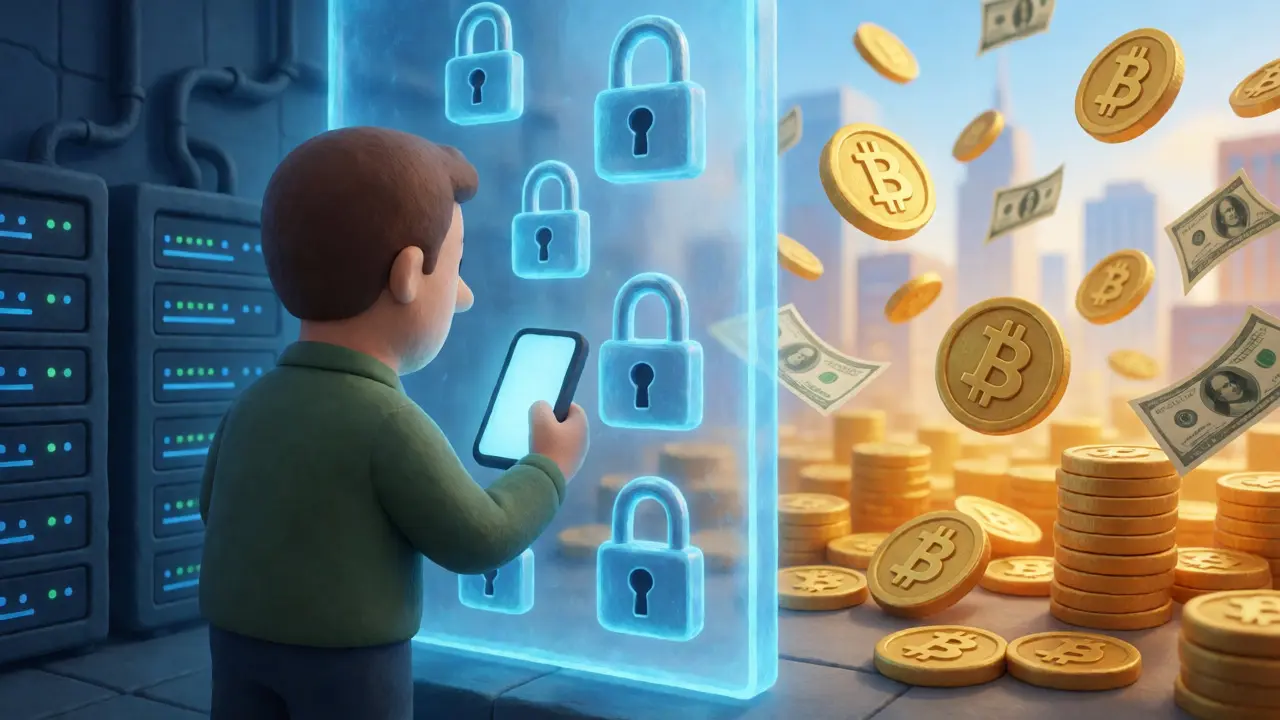
Imagine living in a country where your government is cut off from the global banking system. You want to buy Bitcoin or hold some US dollars in stablecoins, but every major exchange like Coinbase or Binance blocks your IP address. It feels like a digital iron curtain. Yet, millions of people in places like Iran, Russia, and Venezuela still trade crypto daily. How do they pull it off? They don’t just use a VPN and hope for the best. They use a mix of technical tricks, decentralized platforms, and clever financial maneuvering that often stays one step ahead of regulators.
The stakes are high. As of 2025, the Office of Foreign Assets Control (OFAC) has sanctioned over 1,200 specific cryptocurrency wallet addresses linked to illicit activity. That’s not just a number; it’s a warning shot. When Tether froze 42 addresses linked to Iranian users in July 2025, it wasn’t just a technical glitch-it was a coordinated enforcement action that forced thousands of traders to scramble. If you’re trying to understand how access works in these restrictive environments, you need to look beyond the headlines and see the mechanics on the ground.
The Enforcement Landscape: Why It’s Getting Harder
Sanctions aren’t static. They evolve as fast as technology does. In 2024, 23% of all new sanctions designations by OFAC were crypto-related, up from 17% the year before. This shift shows that regulators have stopped treating crypto as a niche hobby and started viewing it as a primary channel for moving value across borders. North Korea remains the biggest target, responsible for 38% of OFAC’s crypto actions in 2024, but Russia and Iran are close behind.
The tools used by citizens in these regions are under constant scrutiny. Bitcoin (BTC) still dominates, accounting for 65% of identified transactions by sanctioned entities, followed by Ethereum (ETH) at 18%. But here’s the twist: stablecoins are gaining ground, making up 12% of these transactions. Why? Because holding USD-pegged assets protects against local currency inflation. The challenge is keeping those stablecoins liquid when the issuer can freeze them at will.
Technical Workarounds: Beyond the Basic VPN
A simple Virtual Private Network (VPN) is no longer enough. Major exchanges use sophisticated geo-blocking and device fingerprinting. If you log in from an IP address associated with a sanctioned region, even if routed through a server in Germany, you might get flagged. So, what do savvy users do?
- Decentralized Exchanges (DEXs): Platforms like Uniswap or PancakeSwap don’t require KYC (Know Your Customer) checks. You connect your wallet directly. No ID, no passport, no block. However, DEXs rely on liquidity pools, which means slippage and higher fees during volatile markets.
- Cross-Border Payment Processors: Services like Exved facilitate dual-use goods imports into Russia and allow crypto settlements. These platforms act as intermediaries, masking the direct link between the sanctioned user and the global market.
- Layer-2 Networks: After Tether froze Iranian-linked funds, many users migrated to the Polygon network. Why Polygon? It’s cheaper than Ethereum mainnet and supports DAI, a decentralized stablecoin that isn’t controlled by a single central entity like Tether. Swapping USDT to DAI on Polygon became a survival tactic for preserving dollar exposure.
This migration wasn’t accidental. It was a rapid adaptation. Within days of the July 2025 freeze, retail and institutional participants alike shifted their holdings. This agility highlights a key truth: centralized control points are vulnerabilities. Decentralized alternatives offer resilience, albeit at the cost of user experience and liquidity depth.

The Rise of Successor Exchanges and Offshore Hubs
When one door closes, another opens-often in Dubai or Singapore. Consider the case of Garantex, a Russian exchange sanctioned by OFAC in 2022. By March 2025, law enforcement seized its domain and froze $26 million in crypto. Did Garantex disappear? No. It moved its customer base to Grinex, a successor platform. Meanwhile, MKAN Coin, a Telegram-based exchange operating from Dubai, replicated Garantex’s core functions.
Dubai has become a critical hub for this kind of activity. With the VARA authority regulating over 1,000 crypto firms and offering a tax-free environment for personal income, it attracts both legitimate businesses and those seeking regulatory arbitrage. Similarly, El Salvador’s adoption of Bitcoin as legal tender and Singapore’s lack of capital gains taxes create pockets of freedom that sanctioned-country citizens can tap into, either physically or digitally.
| Method | Pros | Cons | Risk Level |
|---|---|---|---|
| Centralized Exchange (CEX) | High liquidity, easy fiat on-ramps | KYC required, high risk of account freeze | High |
| Decentralized Exchange (DEX) | No KYC, censorship-resistant | Complex UX, lower liquidity, smart contract risks | Medium |
| P2P Marketplaces | Direct peer-to-peer trades, flexible payment methods | Scam risk, slow settlement times | Medium-High |
| Offshore Brokerages | Professional service, privacy focus | High fees, minimum deposit requirements | Low-Medium |
Compliance Failures and Legal Risks
It’s not just about hiding. Sometimes, exchanges simply fail to check who they’re serving. The ShapeShift case is a prime example. In 2025, the defunct Swiss exchange paid $750,000 to OFAC because it had no sanctions compliance program. It inadvertently allowed users in Cuba, Iran, Sudan, and Syria to trade on its platform. For users, this creates a gray area. Are you breaking the law by using a non-compliant exchange? Technically, yes, if you’re a U.S. person or dealing with U.S. touchpoints. But for locals in sanctioned countries, the risk is less about prosecution and more about losing access overnight.
Enforcement is expanding too. In January 2025, OFAC issued its first-ever sanction against a DeFi protocol, freezing $150 million in assets. This signals that even decentralized services aren’t safe havens anymore. Mixers, like Tornado Cash, face intense pressure, with five major enforcement actions in 2024 alone. The goal is clear: trace the flow of funds, regardless of the technology layer.

User Strategies: Staying Liquid Under Pressure
So, how do regular folks keep trading? They diversify. Holding everything in USDT on a centralized exchange is risky. Instead, many split their holdings across BTC, ETH, and DAI on Layer-2 networks. They also use P2P marketplaces, which remain popular in regions like Nigeria and Vietnam, though they carry scam risks.
Another trend is the use of local crypto influencers and community-driven channels. In Iran, after the Tether freeze, domestic exchanges and influencers pushed users toward DAI. This social coordination helps mitigate panic and ensures liquidity doesn’t dry up in the secondary markets. It’s a grassroots response to top-down regulation.
Furthermore, the Iranian government’s move in August 2025 to tax crypto speculation shows that states are adapting too. By imposing capital gains tax on crypto trading, they’re legitimizing it while capturing revenue. This dual approach-enforcing sanctions internationally while taxing locally-creates a complex environment for users who must navigate both external restrictions and internal fiscal policies.
The Future: An Arms Race Between Tech and Law
We are witnessing an arms race. On one side, authorities like OFAC collaborate with INTERPOL and Europol, leveraging data analytics to track wallet clusters. Penalties for violations hit $430 million in 2024, a 40% increase from the previous year. On the other side, users adopt new chains, new stablecoins, and new exchange models faster than regulators can write rules.
Will access be completely blocked? Probably not. The $6.9 billion in illicit crypto transactions linked to sanctioned entities over 24 months proves that money finds a way. As long as there is demand for financial sovereignty and hedge against inflation, citizens in sanctioned countries will find ways to participate in the global crypto economy. The methods will change, but the drive won’t stop.
Can I use a VPN to access banned crypto exchanges?
Yes, but it’s risky. While a VPN masks your location, exchanges use device fingerprinting and transaction history analysis to detect sanctioned users. If you’re caught, your funds could be frozen, and you may violate terms of service, leading to permanent bans.
Which stablecoins are safest for sanctioned users?
Decentralized stablecoins like DAI are generally safer than centralized ones like USDT or USDC. Centralized issuers can freeze addresses upon request from regulators like OFAC. DAI is backed by crypto collateral and managed by smart contracts, making it harder to censor individual users.
What happens if my wallet address gets sanctioned?
If your address appears on the OFAC Specially Designated Nationals (SDN) list, most compliant exchanges will block transactions to and from it. You may need to move funds to a new, clean wallet immediately. However, moving funds out of a sanctioned chain might still leave a traceable history.
Are decentralized exchanges immune to sanctions?
Not entirely. While DEXs don’t require KYC, front-end interfaces can block access based on IP. More importantly, if a DEX protocol itself is sanctioned (as happened in Jan 2025), interacting with it becomes legally risky for anyone subject to U.S. jurisdiction, and liquidity providers may withdraw.
How do users in sanctioned countries convert fiat to crypto?
Many use P2P platforms or local brokers who accept cash or bank transfers. Some use cross-border payment processors that handle the conversion off-chain. Others rely on offshore accounts in friendly jurisdictions like Dubai or Singapore to fund their wallets via wire transfer.