How Iran Uses Bitcoin Mining to Bypass International Sanctions
 Feb, 7 2025
Iran Bitcoin Mining Energy Calculator
Based on article data: Iran's Bitcoin mining consumes energy equivalent to 10 million barrels of oil per year (about 4% of Iran's total oil exports)
Energy Breakdown
Key Consequences
"Iran's power grid is crumbling. In 2023, the country had nationwide blackouts during peak demand. Why? Because mining farms were siphoning off electricity meant for hospitals, schools, and homes."
Source: Article "How Iran Uses Bitcoin Mining to Bypass International Sanctions"
Iran isn’t just mining Bitcoin-it’s using it as a lifeline. Since the U.S. pulled out of the Iran nuclear deal in 2018, the country has been cut off from the global banking system. Traditional exports like oil can’t be paid for in dollars. Banks won’t process transactions. Wire transfers get blocked. So Iran turned to something the sanctions can’t easily shut down: Bitcoin mining.
Why Bitcoin? Because It Can’t Be Stopped
Bitcoin doesn’t need banks. It doesn’t need SWIFT. It doesn’t care if your country is on a sanctions list. All it needs is electricity and an internet connection. Iran has both-in excess. The country sits on massive natural gas reserves and has surplus power plants that often run at half capacity. Instead of letting that energy go to waste, Iran started using it to run Bitcoin mining rigs. By 2025, Iran accounted for nearly 4.5% of the entire world’s Bitcoin mining power. That’s more than Russia, more than Canada, and just behind the U.S. and Kazakhstan. And unlike those countries, where mining is mostly driven by profit, Iran’s mining is state-directed. It’s not about making money-it’s about survival.The Infrastructure: Mining on Military Land
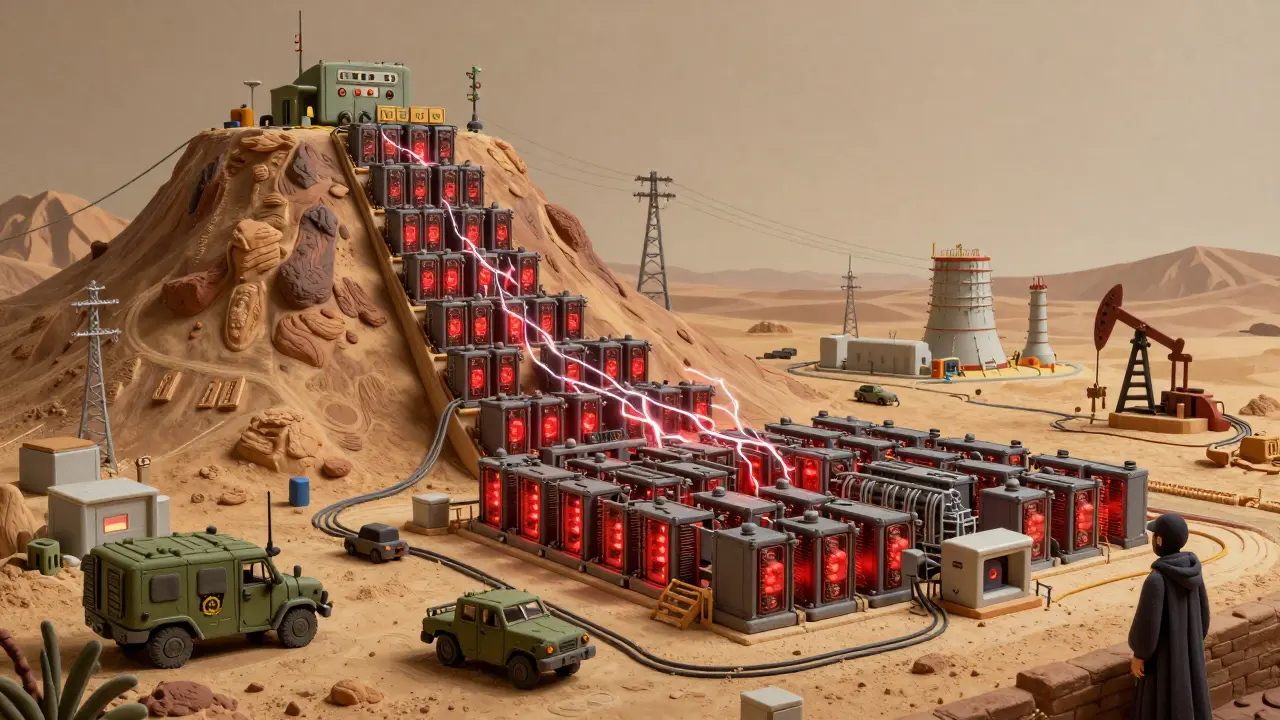
You won’t find Iran’s biggest mining farms in tech parks. You’ll find them on military bases, inside religious foundations, and in special economic zones where regulations don’t apply. The largest single facility, a 175-megawatt operation in Rafsanjan, is jointly run by the Islamic Revolutionary Guard Corps (IRGC) and Chinese investors. It runs on electricity so cheap it’s practically free-subsidized by the state, often paid for with political influence, not bills. These aren’t home setups. These are industrial-scale operations using thousands of Chinese-made ASIC miners, all hooked up to dedicated power lines that bypass the public grid. The IRGC doesn’t just run these farms-they own them. And they don’t pay for the power. They don’t pay taxes. They don’t answer to regulators. They answer to one person: the Supreme Leader.How It Turns Into Cash
Mining Bitcoin is just the first step. The real trick is turning it into something usable-like medicine, food, or spare parts for fighter jets. Iran doesn’t use Bitcoin to buy coffee online. It uses it to pay for imports. In 2020, Iran legalized crypto payments for imports. A year later, the first official $10 million order was placed using Bitcoin. By 2024, over $4.18 billion in cryptocurrency had left Iran. That’s a 70% jump from the year before. Most of it flows through exchanges like Binance, where Iranian-linked wallets processed over $8 billion since 2018, according to blockchain analysts. To hide the trail, Iran uses a mix of shell companies, stablecoins on the TRON network, and intermediaries in the UAE and Hong Kong. The money doesn’t go straight from Iran to a supplier. It goes through layers of crypto wallets, then converts into USDT or other stablecoins, then into local currency on the other end. It’s not perfect-but it works.It’s Not Just Bitcoin-It’s a Full Financial System
Iran didn’t stop at mining. It built an entire parallel financial system. In 2022, the government licensed over 10,000 mining operations and approved nearly 90 domestic cryptocurrency exchanges. These aren’t small startups. Many are backed by religious foundations like Astan Quds Razavi, which controls billions in assets and now controls crypto infrastructure too. The Central Bank of Iran even created a regulatory framework for crypto. It’s not meant to protect users. It’s meant to control the flow. Every transaction is monitored-not to stop crime, but to make sure the regime gets its cut. Iranian miners get paid in Bitcoin. They convert it on state-approved exchanges. The money goes into accounts that can only be used to buy sanctioned goods: pharmaceuticals, agricultural equipment, industrial machinery. This isn’t a side hustle. It’s a national strategy.
How It Compares to Other Sanctioned Nations
Venezuela tried something similar with the Petro-a state-backed cryptocurrency. It failed. No one trusted it. No one used it. North Korea? They hack exchanges. They steal crypto. They’re criminals. Iran? They mine it. Legally. With government backing. And they do it at scale. Even Russia, after its own sanctions in 2022, started encouraging crypto mining-but never matched Iran’s level of coordination. Iran has had seven years to build this system. It’s now a machine: miners, exchanges, converters, middlemen, tankers, and crypto wallets-all working in sync.The Cost: Blackouts and Broken Grids
There’s a dark side. Iran’s power grid is crumbling. In 2023, the country had nationwide blackouts during peak demand. Why? Because mining farms were siphoning off electricity meant for hospitals, schools, and homes. The energy used by Iran’s Bitcoin miners is equivalent to burning 10 million barrels of oil a year. That’s about 4% of Iran’s total oil exports. In other words, Iran is burning oil to make electricity to mine Bitcoin-which it then sells to buy more oil. It’s a loop. And it’s unsustainable. Energy analysts warn that if Iran doesn’t fix its grid, the mining operations themselves will start shutting down. But right now, the regime sees it as a necessary trade-off.Who Benefits? Not the People
Iranian citizens don’t see the money. They see rolling blackouts. They see long lines for bread. They see inflation hitting 40%. The profits from mining go to the IRGC, the religious foundations, and the regime’s elite. Ordinary Iranians can’t legally mine at scale. They can’t access the subsidized power. They can’t get licenses. The crypto economy is a tool of control-not empowerment. Even when Iranians try to mine on their own, they struggle. ASIC miners are hard to import. Internet connections are unreliable. And if you’re caught mining without a license, you risk fines-or worse.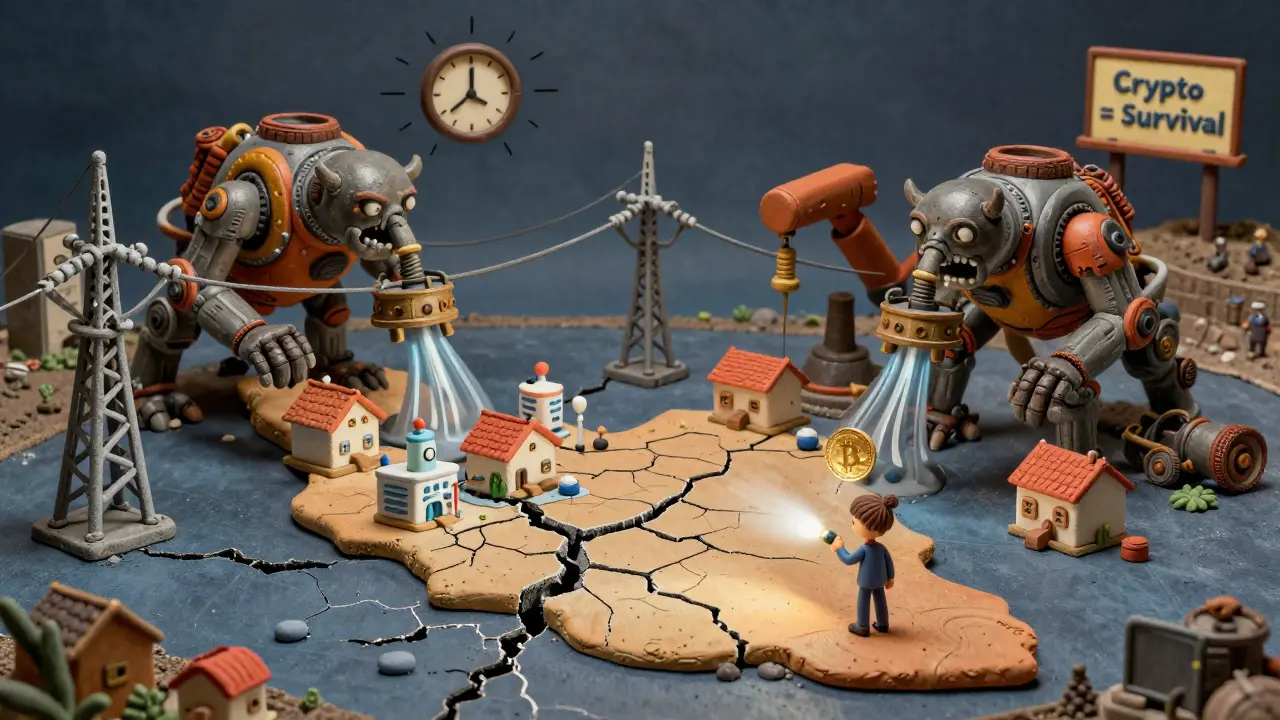
Can the West Stop It?
The U.S. and EU have tried. They’ve sanctioned Iranian mining companies. They’ve pressured exchanges to block Iranian wallets. They’ve pushed for better blockchain analytics. But Bitcoin is decentralized. You can’t shut down a network. You can’t arrest a hash rate. Even if one mining farm gets shut down, another pops up in a different city. The miners just move their rigs. Blockchain analytics firms like Chainalysis and Elliptic can trace Iranian-linked transactions-but they can’t stop them. Exchanges still process the money. Stablecoins still move through free zones. And Iran keeps adapting. The truth? Sanctions were meant to squeeze Iran’s economy. Instead, they pushed it to innovate. Bitcoin mining didn’t just fill the gap-it became a pillar of the economy.The Bigger Picture: A New Era of Sanctions
Iran’s Bitcoin mining strategy isn’t just about Iran. It’s a warning. If a country under crushing sanctions can build a working crypto economy, what’s stopping others? North Korea? Syria? Venezuela? Russia? All are watching. All are learning. This is the new reality: in a world of digital money, financial isolation doesn’t mean economic collapse. It means adaptation. The old tools-bank freezes, wire blocks, asset seizures-are losing power. Cryptocurrencies are the new offshore accounts. And Iran is the first country to weaponize them at a national level. The question isn’t whether other nations will follow. It’s whether the world is ready to respond.What’s Next for Iran’s Crypto Strategy?
Iran isn’t stopping. In 2025, new mining farms opened in Bushehr and Khuzestan, using surplus gas power and even solar installations. The government plans to increase mining capacity by 50% over the next two years. They’re also developing their own blockchain platforms. There are rumors of a state-backed digital currency-not to replace Bitcoin, but to control it. They want to track every crypto transaction inside Iran, so they know who’s getting what, and who’s not. Meanwhile, international pressure is growing. The U.S. Treasury is pushing for global coordination on crypto sanctions. But with over 320 tankers already running Iran’s shadow oil fleet, and billions in crypto flowing out every year, the regime has too many escape routes to be cornered. Bitcoin didn’t break the sanctions. But it gave Iran a way to live with them.Is Bitcoin mining legal in Iran?
Yes, but only under strict government control. Iran legalized Bitcoin mining in 2020 and now requires all miners to obtain licenses from the Ministry of Energy and register with the Central Bank. However, only state-linked entities-like the IRGC and religious foundations-get access to subsidized electricity and priority permits. Independent miners face high barriers, inconsistent rules, and frequent crackdowns.
How much electricity does Iran’s Bitcoin mining use?
Iran’s Bitcoin mining operations consume roughly the same amount of electricity as 10 million barrels of oil per year. That’s about 4% of Iran’s total oil exports. The power demand is so high that it has contributed to nationwide blackouts, especially during summer months when cooling needs and mining both spike. The government has tried to cap mining during peak hours, but enforcement is inconsistent.
Can Iran’s Bitcoin mining be stopped by sanctions?
No-not easily. Bitcoin’s decentralized nature means no single government can shut it down. While the U.S. and EU have sanctioned specific Iranian mining companies and exchanges, miners simply move operations, use intermediaries, or switch to other cryptocurrencies. Blockchain analytics can trace transactions, but they can’t prevent them. As long as Iran has electricity and internet, mining continues.
Does Iran use Bitcoin to buy weapons or fund terrorism?
There is strong evidence that proceeds from state-run Bitcoin mining flow into IRGC-controlled accounts, which fund proxy groups like Hezbollah and the Houthis. U.S. intelligence reports and blockchain forensics from TRM Labs and Elliptic have linked Iranian mining revenues to weapons procurement. While direct proof is hard to establish due to layered transactions, the financial trail consistently leads back to IRGC-affiliated entities.
Is Bitcoin mining profitable for ordinary Iranians?
Very rarely. While some individuals mine Bitcoin in small setups, they face high costs for hardware, unreliable internet, and no access to cheap electricity. Most profitable mining is controlled by the state or its allies. For average citizens, the benefits are minimal-while the costs, like power outages and inflation, are widespread. Many Iranians view mining as a regime tool, not an economic opportunity.
Alan Brandon Rivera León
December 5, 2025 AT 21:06It’s wild how sanctions backfired so hard. I used to think cutting off banks would cripple Iran, but they just built a whole new financial skeleton out of electricity and ASICs. Kinda genius, in a dystopian way. The fact that they’re using military land and religious foundations to run mining farms? That’s not evasion-that’s institutional innovation. I wonder if the U.S. realizes they didn’t break Iran’s economy… they just forced it to evolve into something unrecognizable.
Mohamed Haybe
December 7, 2025 AT 13:18Iran is the only country that turned sanctions into a fucking power grid upgrade. While the West screams about crypto crime, Iran’s miners are keeping hospitals alive with blackouts because the regime decided oil should fuel Bitcoin instead of cars. Who cares if the people suffer? At least the IRGC can buy missiles. This isn’t economics-it’s survival with a middle finger to the dollar.
Andrew Brady
December 7, 2025 AT 15:04This isn’t mining. It’s a covert state-funded money laundering operation disguised as energy policy. The IRGC is using Bitcoin to fund terrorists, and the U.S. is sitting on its hands because ‘decentralization’ sounds too complicated to crack. They’re not just bypassing sanctions-they’re weaponizing blockchain. If this isn’t a national security emergency, I don’t know what is. We need to shut down every exchange that touches Iranian wallets. No more diplomacy. No more fines. Total block.
Sharmishtha Sohoni
December 8, 2025 AT 02:59So the people get blackouts but the regime gets missiles. And the miners? Just tools. No wonder no one trusts crypto here.
Steve Savage
December 9, 2025 AT 15:32It’s like watching a civilization rebuild itself out of the ashes of a sanctions bomb. Iran didn’t just find a loophole-they rewrote the rules of economic warfare. Bitcoin didn’t save them. But it gave them a way to keep breathing while the world tried to suffocate them. The tragedy isn’t that they’re mining. It’s that they had to. And now everyone else is watching, learning, and quietly preparing their own version of this. We’re not just seeing Iran’s future. We’re seeing the future of every sanctioned nation. The dollar’s dominance is cracking. Not because of revolution. But because of necessity.