How Morocco's Underground Crypto Market Thrives Despite the Ban
 Feb, 4 2026
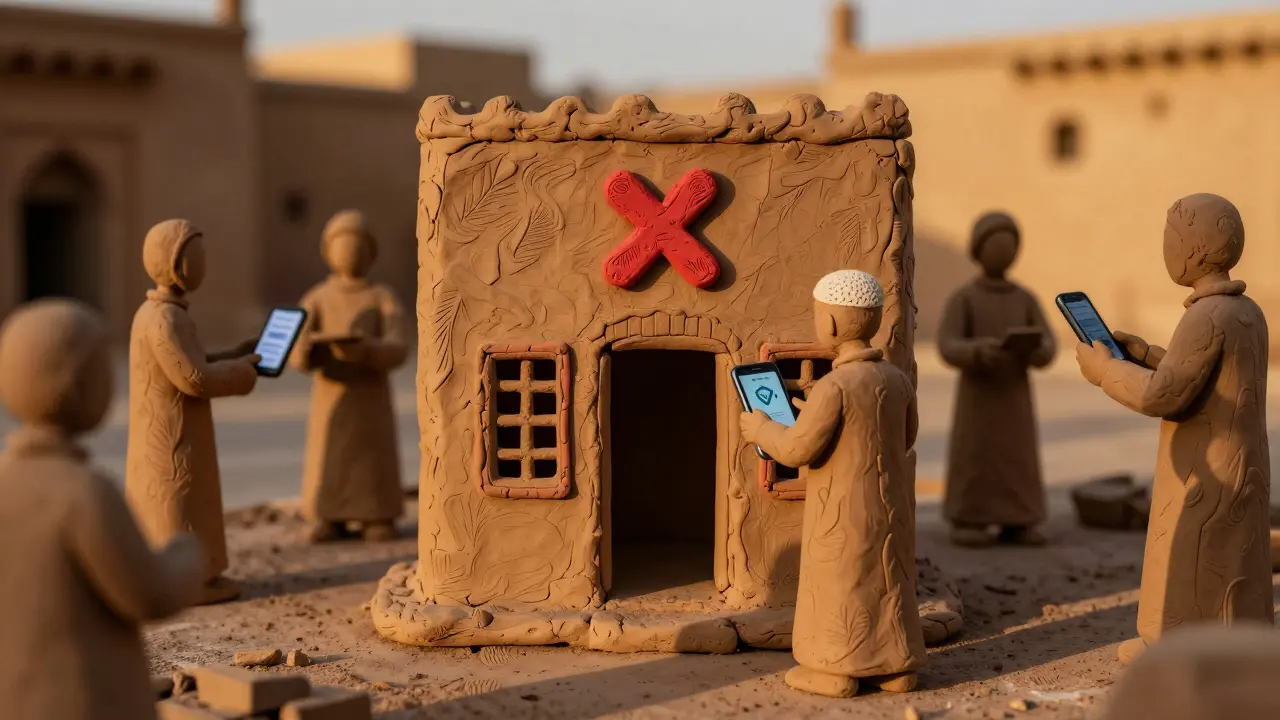
In Morocco, using Bitcoin or Ethereum is technically illegal. But here's the twist-despite a nationwide ban since 2017, millions of Moroccans are still using underground cryptocurrency. How? Let's unpack this Crypto Paradox.
The 2017 Ban: What Happened
On November 21, 2017, Morocco's central bank, Bank Al-Maghrib, and the Moroccan Exchange Office declared all cryptocurrency activities illegal. They cited violations of foreign exchange rules and threats to monetary sovereignty. The ban covered Bitcoin, NFTs, mining, trading, DeFi, and CBDCs. Authorities warned of punishment for non-compliance. But why did they ban it? The main reasons were: losing control over capital flight (37% of reasons), threats to central banking authority (28%), potential money laundering (22%), and consumer protection issues (13%).
How Crypto Flows Under the Radar
Even with the ban, crypto use keeps growing. Moroccans have adapted creatively. Underground cryptocurrency trading happens through peer-to-peer exchanges and over-the-counter (OTC) platforms. Most users access international exchanges like Binance, Bybit, and OKX using virtual private networks (VPNs). About 82% of users rely on mobile apps with VPNs to bypass restrictions. Additionally, 68% of transactions happen through WhatsApp groups and Telegram channels where people coordinate trades. These informal networks act as local hubs for buying and selling crypto.

The Numbers Don't Lie: Underground Market Stats
The underground market is huge. According to The Paypers (2025), Morocco's crypto market is projected to reach $278.7 million in 2025 and $292.4 million in 2026. Between 2018 and 2024, transaction volumes grew at a 19.7% compound annual growth rate. Average monthly transactions jumped from $8.2 million in early 2018 to $47.6 million in mid-2024. Bitcoin dominates at 57.3% of trading volume, followed by Ethereum (22.1%) and USDT (15.8%). Stablecoins like USDT are popular because they're less volatile, making them useful for everyday transactions.
Real Risks, Real Stories
Using crypto underground isn't without dangers. On Reddit's r/CryptoMorocco community, users report fraud attempts in 32% of cases-mostly non-delivery scams. Some face payment delays exceeding 96 hours. A user named u/CryptoDarija shared: "I've traded 147 times via local OTC groups over 3 years-made 22,000 MAD profit but lost 3,500 MAD in one scam when seller disappeared after payment." Trustpilot reviews show international exchanges get 3.8/5 ratings, with issues like geo-blocking and withdrawal restrictions. About 18% of users lost funds to scams, 12% had accounts frozen when converting crypto to fiat, and 9% faced legal threats.
The Regulatory Shift: From Ban to Oversight
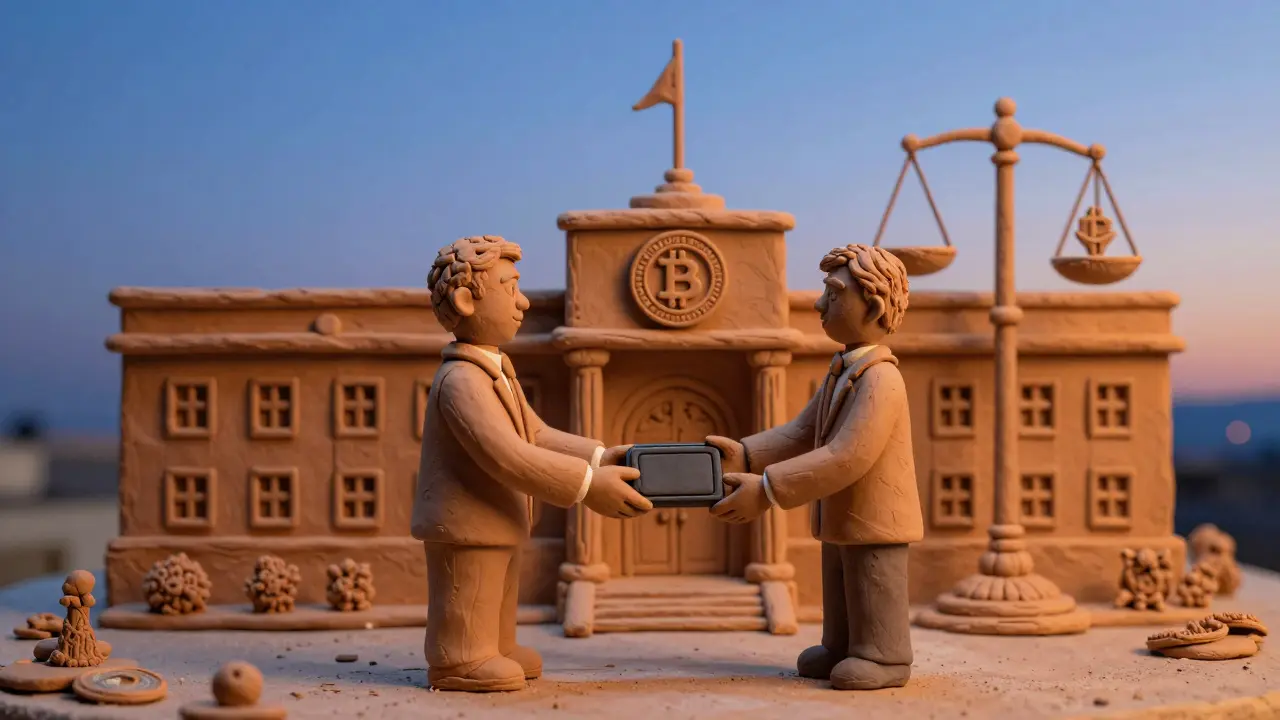
In November 2024, Bank Al-Maghrib Governor Abdellatif Jouahri announced a draft law to regulate crypto. This marks a shift from prohibition to regulation. The new framework includes mandatory AML/CFT compliance, KYC verification, licensing for exchanges (costing MAD 150,000-200,000), a 15% capital gains tax, and oversight by the Moroccan Capital Market Authority. Dr. Fatima Zahra El Moudni, a finance regulation professor, said: "The government's shift reflects recognition that prohibition has failed to suppress demand, with underground activity growing by an estimated 140% since 2017 while increasing financial risks for consumers." Bank Al-Maghrib's internal assessment found only 4.3% of crypto-related crimes involved illicit activities, suggesting regulation could better address risks.
What's Next for Morocco's Crypto Scene
The draft law is expected to be implemented in Q3 2025. While commercial payments with crypto will remain prohibited, regulated exchanges and wallet services will be allowed. Finance Minister Nadia Fettah Alaoui stated Morocco aims to become "a regional fintech hub in North Africa." Industry analysts predict formal regulation could boost the market by 35-40% within 18 months. This move may reduce consumer risks by 62% according to Bank Al-Maghrib's modeling. For now, Moroccans continue to navigate the underground market, balancing opportunity with risk as the country transitions from prohibition to a regulated system.
Is cryptocurrency legal in Morocco?
No. Since November 21, 2017, Morocco's central bank and Exchange Office banned all cryptocurrency activities, including trading, mining, and DeFi. However, enforcement has been inconsistent, leading to a thriving underground market despite the legal prohibition.
How do people trade crypto in Morocco despite the ban?
Most Moroccans use international exchanges like Binance or Bybit with a VPN to bypass restrictions. Transactions often happen through WhatsApp and Telegram groups where users coordinate peer-to-peer trades. OTC networks handle fiat conversions, with intermediaries facilitating cash exchanges for crypto.
What are the biggest risks of using crypto underground in Morocco?
The main risks include scams (32% of users report fraud attempts), payment delays (27% face delays over 96 hours), account freezes when converting to fiat (12%), and legal threats (9%). Transaction fees are also higher (3.8-5.2%) compared to regulated markets due to complex OTC processes.
When will the new crypto regulations take effect in Morocco?
The draft law was finalized in November 2024, with implementation expected in Q3 2025. This framework will regulate exchanges, require KYC/AML compliance, impose a 15% capital gains tax, and allow licensed crypto services while maintaining a ban on using crypto for commercial payments.
Why did Morocco initially ban cryptocurrency?
The 2017 ban was driven by four main concerns: loss of monetary sovereignty (37%), threats to central banking authority (28%), potential money laundering (22%), and consumer protection gaps (13%). However, Bank Al-Maghrib's 2024 assessment found only 4.3% of crypto-related crimes involved illicit activities, leading to the current shift toward regulation.
mahikshith reddy
February 6, 2026 AT 00:12Ban or no ban, crypto's here to stay. Deal with it.
Deeksha Sharma
February 7, 2026 AT 11:53It's fascinating how human ingenuity thrives despite restrictions. The underground crypto market in Morocco isn't just a loophole-it's a testament to people's need for financial freedom. While the ban was intended to protect the economy, it's clear that prohibition doesn't work. Instead of fighting this trend, the government should embrace regulation. A regulated system could reduce scams, protect consumers, and even integrate crypto into the financial ecosystem safely. After all, money is just a tool, and when people find ways to use it, the system has to adapt. This situation shows that the real issue isn't the technology itself, but how we choose to govern it. Maybe it's time to stop seeing crypto as a threat and start seeing it as an opportunity to innovate. The future of finance is decentralized, and countries that adapt will thrive. Look at how many Moroccans are using it-82% rely on VPNs, 68% through WhatsApp and Telegram. That's not going away. The central bank's own assessment found only 4.3% of crypto-related crimes are illicit. Regulation could actually help. Instead of banning, why not create a framework that protects people while allowing innovation? It's about balancing security with progress. The underground market isn't a failure; it's a sign that the current approach is flawed. We need to learn from this and build something better.
Mrs. Miller
February 8, 2026 AT 06:40Oh sure, because nothing says 'progress' like a black market thriving under the guise of 'freedom'. Classic case of 'if you ban it, they will come'-but let's be real, this isn't some revolutionary movement; it's just people trying to get around broken systems. The government's 'ban' is like trying to plug a leak with duct tape. Meanwhile, the real issue is that people need access to financial tools that the traditional system isn't providing. But hey, maybe the next step is to regulate it properly instead of pretending the problem doesn't exist. Or maybe not. Who knows? The fact that 82% use VPNs and 68% trade via WhatsApp groups shows how ineffective the ban really is. And then there's the whole 'only 4.3% of crimes are illicit' stat. So why not regulate instead of pretending it's all bad? It's like banning water because some people drown. Makes no sense. The central bank's own assessment found that 37% of the reason for the ban was 'losing control over capital flight'-which is ironic because they're losing control anyway. And let's not forget the 28% 'threats to central banking authority'-but if you're so threatened, why not engage with the technology instead of pretending it'll go away? The underground market is growing by 140% since 2017. That's not going to stop until there's a solution. So instead of enforcing a useless ban, why not create a framework that actually works? It's not rocket science. Just admit the ban failed and move on.
Udit Pandey
February 9, 2026 AT 20:57The government's decision to ban cryptocurrency was entirely justified. Allowing foreign currencies to undermine our monetary sovereignty is a dangerous path. The statistics show that the majority of the ban was due to capital flight (37%) and threats to central banking authority (28%). These are critical issues that cannot be ignored. We must protect our economy from external influences that could destabilize it. The underground market is a symptom of poor financial discipline among citizens who are not following the law. It's time to enforce the ban strictly and educate people on the risks of such activities. Crypto transactions are often linked to illegal activities, even if the numbers are low. The central bank's role is to safeguard the nation's financial health, and this ban is necessary for that purpose. Any attempt to circumvent this ban is a threat to national security. We need strong leadership to prevent further erosion of our economic stability. The government must not waver in its stance. This is not about suppressing innovation but safeguarding national interests. Moreover, the potential for money laundering (22%) and consumer protection issues (13%) further justifies the ban. These risks are too significant to overlook. It's time for Moroccans to prioritize their country's stability over personal gain.
Taybah Jacobs
February 10, 2026 AT 21:50While the current ban has led to an underground market, it's clear that regulation would be a more effective approach. The statistics show that only 4.3% of crypto-related crimes involve illicit activities, suggesting that the risks are manageable. A regulated framework could provide consumer protection, reduce scams, and integrate crypto into the financial system safely. It's important to recognize that prohibition hasn't stopped demand-instead, it's created risks. The government's shift toward oversight in 2024 is a step in the right direction. However, implementation needs to be careful to avoid unintended consequences. Education and clear guidelines will be key. This isn't about banning innovation but creating a safe space for it. Let's hope the new regulations strike the right balance. Looking at the data, transaction volumes have grown by 19.7% annually since 2018, which shows that people aren't going away. The central bank's own assessment found that the main reasons for the ban were loss of control over capital flight and threats to monetary sovereignty. But with proper regulation, these issues can be addressed without stifling innovation. It's time for policymakers to focus on solutions rather than prohibitions. The future of finance is decentralized, and countries that adapt will thrive. Moroccans deserve a system that balances security with opportunity.