How Pakistan Became a $300 Billion Crypto Trading Hub Despite Restrictions
 Mar, 12 2026
When the State Bank of Pakistan banned banks from handling cryptocurrency transactions in 2018, few expected the country to become one of the world’s biggest crypto markets. Yet by 2025, Pakistan was trading over $300 billion in crypto annually - a number that stunned regulators, economists, and global analysts alike. How did a country with strict financial controls and limited banking access end up at the center of a digital asset revolution? The answer isn’t about regulation. It’s about necessity.
The Rise of Crypto Despite the Ban
Pakistan’s crypto market didn’t grow because the government encouraged it. It grew because people had no other choice. Traditional banking systems made it nearly impossible to send or receive money internationally. Freelancers working for U.S. or European clients couldn’t get paid. Families relying on overseas remittances faced delays and high fees. The Pakistani rupee, meanwhile, kept losing value - dropping over 60% against the U.S. dollar between 2020 and 2025. In this environment, crypto became the default solution. Bitcoin, Ethereum, and especially USDT (Tether) became lifelines. USDT, pegged to the U.S. dollar, offered a stable store of value. Traders used it to protect savings from inflation. Freelancers used it to get paid without waiting weeks for wire transfers. Even small business owners began accepting crypto for goods and services. The numbers tell the story. By 2025, over 40 million Pakistanis were actively using cryptocurrency - roughly one in five adults. That’s more than the entire population of Australia. CoinLaw recorded 18.2 million verified users, but those numbers only capture exchange accounts. The real scale comes from peer-to-peer (P2P) trading, where users trade directly using mobile wallets like Easypaisa and JazzCash. These platforms became the backbone of Pakistan’s crypto economy, bypassing banks entirely.How $300 Billion in Trading Volume Is Possible
The $300 billion figure doesn’t come from one exchange. It’s the sum of millions of small, daily trades across dozens of platforms. Most of this activity happens on international exchanges like Binance, Bybit, and OKX, where Pakistani users deposit fiat through P2P sellers. Others trade directly with local buyers using mobile money. Think of it like this: a freelance developer in Lahore earns $500 in crypto each month. They sell it for Pakistani rupees via a P2P trader in Karachi. That trader then buys more crypto and sells it to someone in Faisalabad. That person uses it to pay for an online course. The cycle repeats. Each trade adds to the volume. Unlike traditional markets, where trades are counted once, crypto trades can be flipped multiple times a day. A single $1,000 transaction might turn into five trades within hours. Multiply that by millions of users, and the numbers explode. The Asia-Pacific region saw a 69% jump in crypto activity from 2024 to 2025. Pakistan accounted for nearly 30% of that growth. According to the Global Crypto Adoption Index 2025, Pakistan ranked third in the world - behind only India and Vietnam. It outpaced the United States, Germany, and Japan in adoption rate per capita.What People Are Trading
Bitcoin dominates. It’s the most trusted name, the most liquid, and the easiest to convert into cash locally. But USDT is the real workhorse. Because it’s pegged to the dollar, it’s used for everything: paying rent, buying groceries, sending money to family abroad. In cities like Islamabad and Lahore, you’ll find shops with QR codes for USDT payments. Even street vendors now accept it. Ethereum is popular among tech-savvy users who dabble in DeFi, NFTs, or smart contracts. But for most, it’s Bitcoin and USDT. A 2025 survey of 12,000 Pakistani crypto users showed 78% held Bitcoin, 65% held USDT, and only 18% held Ethereum. The rest were spread across Solana, Dogecoin, and other altcoins - mostly for speculation.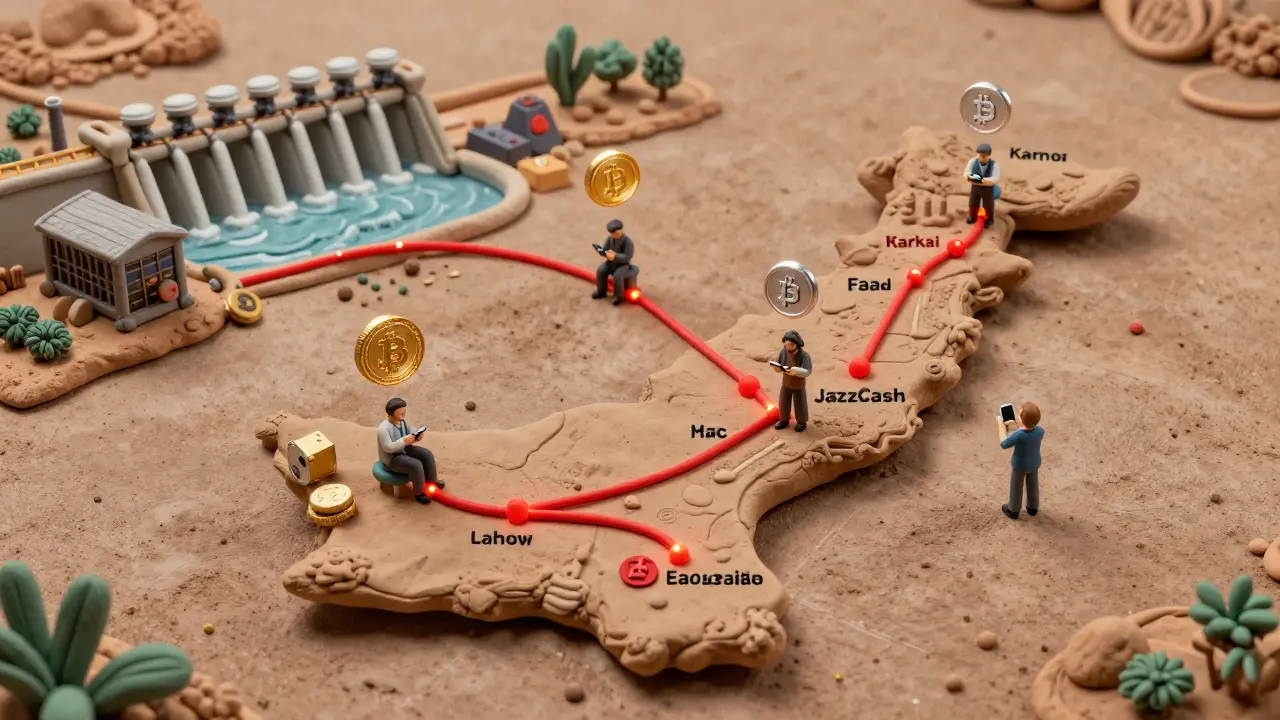
Why Pakistan Leads in P2P Trading
Most countries rely on centralized exchanges. Pakistan doesn’t have that luxury. Banks won’t touch crypto. So traders built their own system. P2P platforms like Paxful, LocalBitcoins, and local Telegram groups became the primary gateways. Sellers list their USDT or BTC, and buyers pay via JazzCash or Easypaisa. The trade completes in minutes. No bank approval. No paperwork. No delays. This system works because it’s simple. A buyer opens the app, finds a seller with good ratings, sends rupees via mobile wallet, and gets crypto in their wallet. Sellers earn a 1-3% fee. Buyers get dollars without needing a foreign bank account. It’s informal, but it’s effective. The result? Pakistan now handles over 15% of all global P2P crypto volume. That’s more than Nigeria, Brazil, or Argentina. And it’s growing. In 2025 alone, 5.4 million new users joined the crypto ecosystem - mostly under age 30.The Role of Energy and Mining
While most traders are buying and selling, a growing number are mining. Pakistan has one of the lowest electricity costs in South Asia. In 2025, the government quietly allocated 2,000 megawatts of surplus power - mostly from underused hydropower plants - to Bitcoin mining operations. It wasn’t announced as a policy. It was quietly done through industrial zones. Mining farms popped up in Punjab and Sindh, using cheap, off-peak power to run ASIC rigs. These aren’t massive industrial facilities. Most are small, home-based setups - 5 to 20 machines in a garage or basement. But together, they contribute to Pakistan’s growing hash rate. Some miners sell their Bitcoin directly on P2P platforms. Others use the crypto to pay for utilities or equipment. This isn’t official policy. But it’s happening. And it’s part of why the market keeps growing - even without regulation.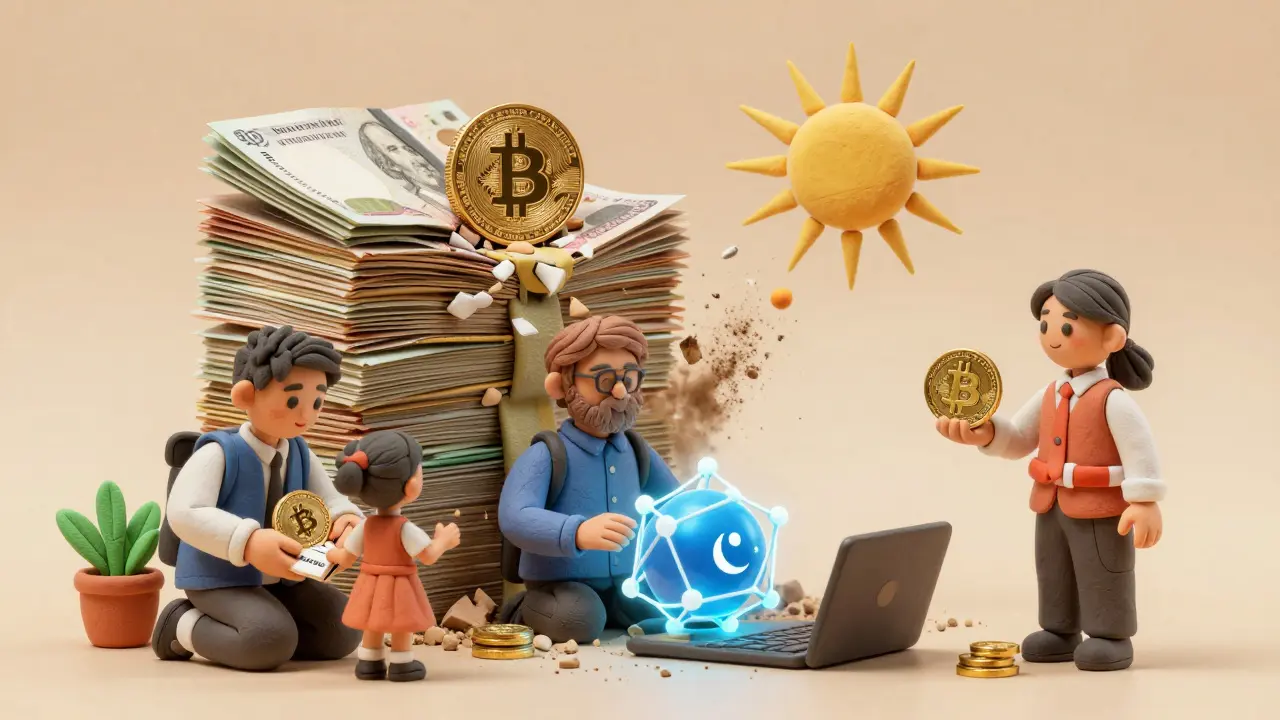
Zephora Zonum
March 12, 2026 AT 10:02And mining? 2000 MW? That's more than the entire grid capacity of some provinces. Where's the data? Who's auditing this? This reads like a crypto influencer's fantasy.
Mara Alves Mariano
March 13, 2026 AT 19:48Also-USDT for groceries? That’s not innovation. That’s desperation with a QR code.
Sharon Tuck
March 15, 2026 AT 00:56And honestly? If your government won’t help you, why shouldn’t you build your own system? The fact that teachers and truck drivers are using USDT to survive? That’s not a bug. That’s a feature.
karan narware
March 15, 2026 AT 16:13And let’s not pretend USDT is ‘stable.’ It’s a Tether-backed gamble with a 30% premium on P2P. But hey, at least it’s not rupees, right? Still, I find it amusing that Western analysts treat this as a ‘revolution’ while ignoring that the same people have been circumventing state control since the 1970s. It’s not crypto-it’s survival. And we’ve been doing it longer than your smartphone has existed.
Michael Suttle
March 16, 2026 AT 07:06And don’t get me started on the 40 million users. That’s not adoption. That’s a botnet. 🤖👀
Jenni James
March 18, 2026 AT 07:00