How the FATF Blacklist Is Reshaping Crypto Use in Iran
 Feb, 21 2026
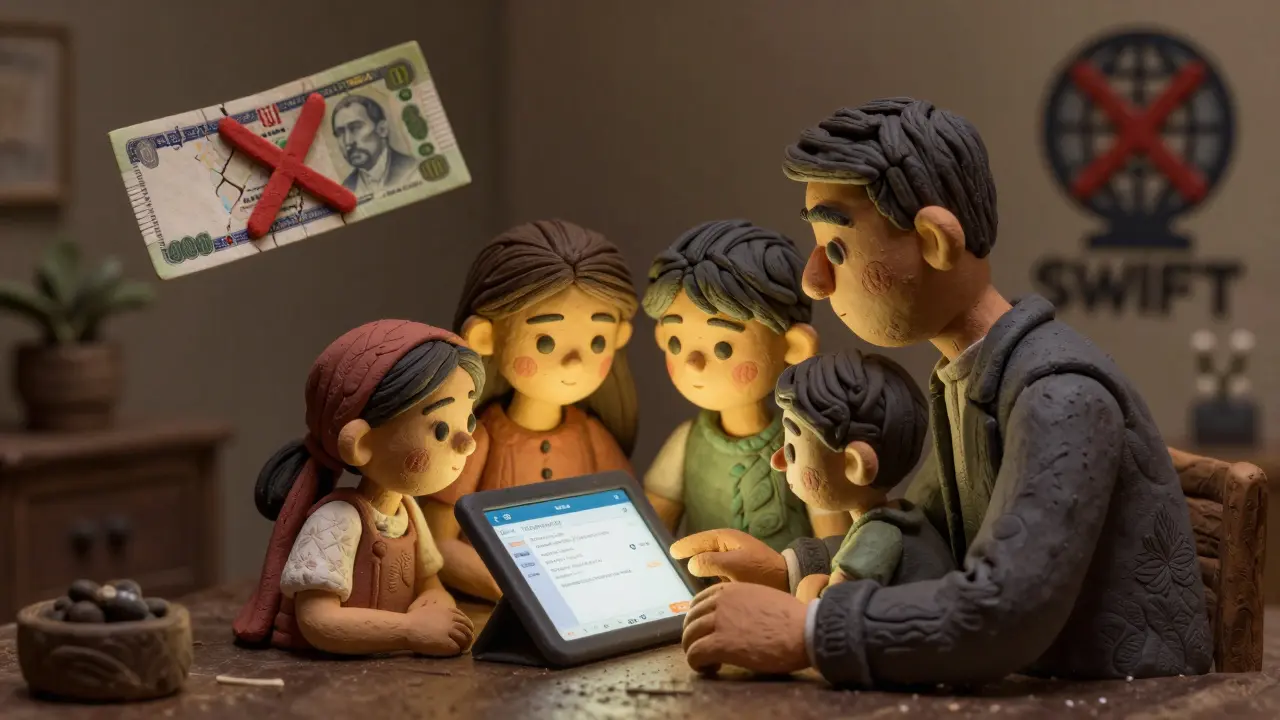
When the FATF added Iran to its blacklist in 2019, few expected it to trigger a full-scale financial rebellion. But that’s exactly what happened. With international banks cut off, SWIFT blocked, and foreign currency access nearly vanished, millions of ordinary Iranians turned to cryptocurrency-not for speculation, but for survival. Today, crypto isn’t just an alternative in Iran; it’s the only functioning financial pipeline left. And the data shows it’s working, even if it’s messy, risky, and constantly under pressure.
Why the FATF Blacklist Hit Iran So Hard
The Financial Action Task Force doesn’t just list countries-it enforces consequences. When Iran was placed on the FATF blacklist, global banks were told: do not process any transactions tied to Iranian entities. No wire transfers. No correspondent banking. No access to the global financial system. This wasn’t a suggestion. It was a mandate. The result? Iran’s banking ties collapsed. From 28 international banking relationships in 2018, the number dropped to just 3 by 2025. That’s not a glitch. That’s a shutdown. For regular people trying to pay for medicine, send money to family abroad, or buy basic goods, the doors slammed shut. And when the door to the traditional financial world closes, people find another way in.Crypto Adoption Soared-Not Because It Was Cool, But Because It Was Necessary
In 2024, Iran accounted for $9.2 billion of the $15.8 billion in cryptocurrency transactions flowing into all sanctioned countries combined. That’s more than Russia, Venezuela, and North Korea put together. Why? Because Iranians had no other choice. Centralized exchanges like Nobitex and Wallex saw transaction volumes jump 63% between January and December 2024. Monthly outflows went from $290 million to over $480 million. People weren’t trading for profit. They were converting their rials into Bitcoin to protect their savings from hyperinflation and to move money out of the country. Bitcoin made up 78% of these flows-not because it’s the most advanced, but because it’s the hardest to block. Even Ethereum, with its smart contract capabilities, only made up 14%. Monero, the privacy coin, was used in just 5% of cases. That tells you something: Iranians aren’t looking for anonymity. They’re looking for access. They want to send value across borders without asking permission.The Paradox: More Crypto, More Risk
Here’s the cruel twist: the very tools Iranians use to bypass sanctions also make them vulnerable. Global exchanges like Binance and Bybit are required by FATF to follow the “travel rule”-which means collecting and sharing personal data on every transaction over $1,000. But Iran’s government also demands identity verification. So when an Iranian user signs up on Binance to send Bitcoin to Turkey, they’re giving their ID to two hostile systems: one that might freeze their account, and another that might arrest them. Reddit user ‘TehranTrader’ lost $8,200 after Binance froze their account for three small transfers under $1,500. That’s not an outlier. A September 2025 survey of 14,200 Iranian users found that 33% had accounts frozen on global exchanges. Meanwhile, Iran’s Central Bank throttles internet traffic during peak crypto hours-8 to 10 PM-causing 74% of users to experience transaction failures. The result? A fragmented, underground system. Most transactions now happen through mobile wallets like Trust Wallet and Exodus. Average transaction size dropped 40% since 2023-down to under $1,500-to avoid triggering monitoring flags. Users split large sums into dozens of small transfers. It’s not efficient. It’s not elegant. But it works.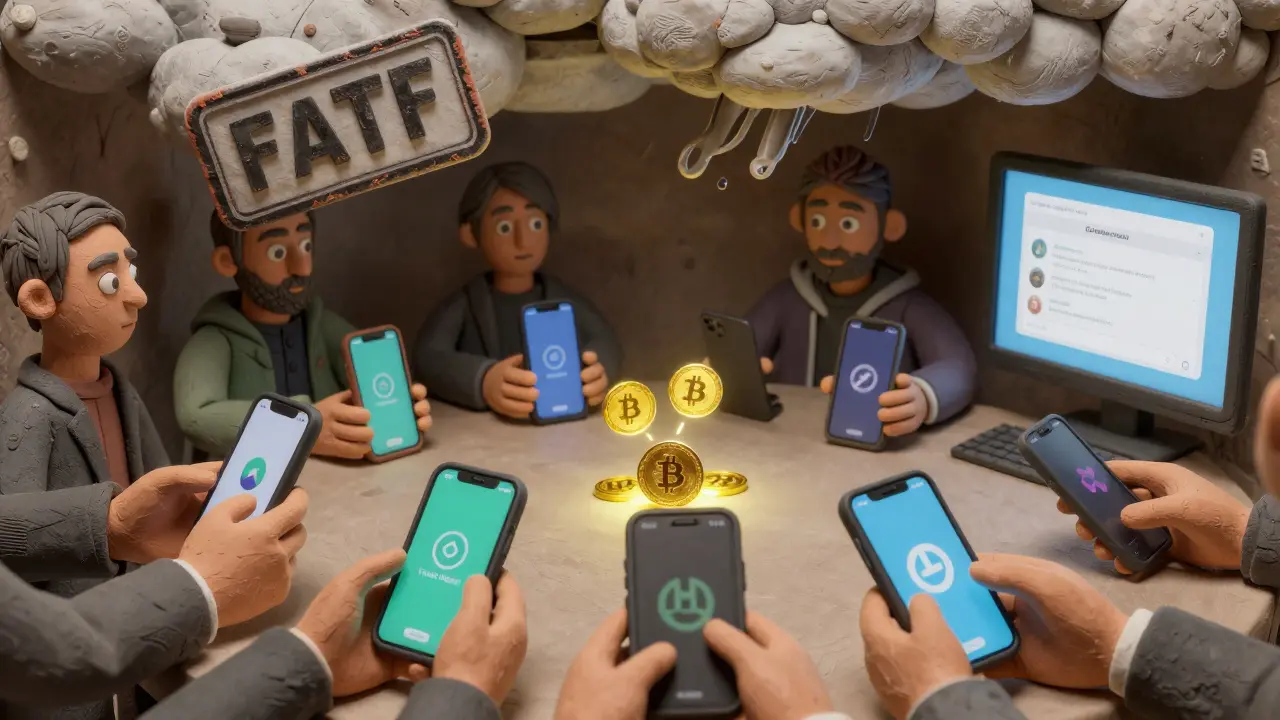
How Iranians Are Bypassing the Blockades
The solutions aren’t coming from governments. They’re coming from users. Peer-to-peer (P2P) trading on platforms like LocalBitcoins has a 78% success rate-but at a cost. Buyers pay an average 22% premium just to get Bitcoin in their wallet. That’s how much extra you pay when the system is broken. Some users are turning to decentralized exchanges like PancakeSwap. Success rates are lower-63%-but they don’t require KYC. The trade-off? Slippage of 15% due to thin liquidity. Still, it’s better than getting your account locked. Then there’s the underground network: atomic swaps, multi-hop transactions, and local P2P meetups. One user on Bitpin described moving 2.3 BTC to Turkey in 17 minutes using a custom-built swap protocol. No bank. No exchange. Just code and trust. The catch? These methods cost 15-20% more in fees and carry real security risks. 37% of users who downloaded unvetted tools from GitHub reported breaches or stolen funds.The Government’s Half-Measures
Iran’s government hasn’t stayed silent. It launched its own “Halal Stablecoin” (HSC) in August 2025, pegged to gold. Over 4 million users transacted $280 million in the first month. Sounds promising? It is-until you realize it can’t interact with the outside world. Because of FATF, no foreign exchange can touch it. No international merchant accepts it. It’s a digital rial, trapped in a digital cage. Iran also ratified two international anti-terrorism conventions in 2024 and 2025. But FATF hasn’t moved it off the blacklist. Why? Because those agreements don’t fix the core problem: Iran still doesn’t have the systems to monitor crypto transactions, trace illicit flows, or enforce AML rules on its own exchanges. Experts like Dr. Emad Kiyaei argue this policy backfires. “The blacklist has become counterproductive,” he wrote in September 2025. “It didn’t stop crypto use-it made it the backbone of Iran’s economy.”
Megan Lavery
February 21, 2026 AT 21:36It’s wild to think that what started as a punishment turned into a lifeline. I’ve read so much about sanctions, but seeing how everyday Iranians are using crypto just to buy medicine or send cash to family? That’s not tech innovation-that’s human resilience. They didn’t ask for this, but they built something functional anyway. Honestly, we should be learning from them, not just judging the system that forced them here.
Also, the part about elderly people spending 72 hours learning seed phrases? That broke my heart. No one should have to become a crypto expert just to survive.
Mae Young
February 23, 2026 AT 04:19Oh, so now ‘survival’ is a virtue? Let me guess-the next thing you’ll say is that looting is just ‘resource redistribution’ when the government collapses? How convenient. The FATF blacklist exists because Iran funds terrorism, supports militias, and runs a theocracy that jails women for not wearing hijabs properly. And now we’re supposed to applaud them for turning Bitcoin into their personal underground economy? Brilliant. Let’s rename it: ‘The Art of Criminal Adaptation.’
Also, ‘access’? Please. You don’t get access when you’re laundering money through 17 different wallets and paying 22% premiums to strangers on Telegram. That’s not finance-it’s chaos with a blockchain sticker on it.
Trenton White
February 23, 2026 AT 11:51I’ve spent time in Tehran. The people I met there-teachers, shopkeepers, nurses-they weren’t talking about DeFi or NFTs. They were talking about how to get insulin for their kids. Crypto isn’t a political statement there. It’s a quiet act of dignity. The system failed them. So they coded their own way out.
It’s not pretty. It’s not scalable. But it’s real. And honestly? That’s more than most Western governments have done for their own citizens in crisis.
Cheryl Fenner Brown
February 25, 2026 AT 10:46ok but like… 78% bitcoin?? why not monero?? 😭
also i just learned that iranians are using atomic swaps and i’m like… that’s so cool?? but also so risky?? like why not just use a stablecoin??
and the 37% who got hacked from github tools?? that’s wild. i’d be too scared to even open a wallet. but then again, what choice do they have??
also the halal stablecoin?? lmao. it’s like a digital prison. 🤡
also i’m crying thinking about grandmas learning seed phrases. 💔
Michael Teague
February 26, 2026 AT 16:11So let me get this straight. People are breaking the rules to get around rules that were made to stop bad people… and now we’re supposed to be impressed? Cool. So if I rob a bank to buy groceries because my paycheck got delayed, that’s heroic too?
Also, 22% premium? That’s just a tax on desperation. And yeah, sure, it ‘works’-but it’s a house of cards held together by duct tape and hope. One day, the whole thing just… collapses. And then what? Everyone’s broke again.
It’s not a solution. It’s a symptom. And we’re pretending it’s progress.
kati simpson
February 28, 2026 AT 03:16People are doing what they have to do. There’s no glory in it. No celebration. Just fear and effort and quiet courage. The numbers don’t show the nights spent staring at a phone waiting for a transaction to go through. They don’t show the anxiety of sending your last savings to someone you met online. They don’t show the mothers who trade their jewelry for Bitcoin so their kids can eat tomorrow.
This isn’t about politics. It’s not about technology. It’s about survival. And if we’re going to talk about it, we should start by saying that clearly.
And maybe, just maybe, we should ask why this had to happen at all.