How to Buy Crypto for Fiat in Nigeria (2026 Guide)
 May, 22 2026
Buying cryptocurrency with Nigerian Naira (NGN) feels like navigating a maze where the walls keep moving. For years, the Central Bank of Nigeria (CBN) has restricted banks from processing crypto transactions, making it tricky to turn your hard-earned fiat into digital assets. But here is the truth: you can still buy Bitcoin, Ethereum, and other tokens easily. The landscape has shifted significantly since 2021, especially with major platforms adapting to local needs.
In 2026, the process isn't about finding loopholes; it's about choosing the right tool for your specific situation. Whether you are a beginner wanting simplicity or a trader looking for the best rates, there are clear paths forward. This guide breaks down exactly how to convert NGN to crypto safely, avoiding common pitfalls and leveraging new integrations that have emerged recently.
Understanding the Current Landscape
To buy crypto effectively, you first need to understand why it feels complicated. The core issue stems from regulatory friction. While owning cryptocurrency is not illegal for individuals in Nigeria, the CBN’s directives restrict financial institutions from facilitating these trades. This means you cannot simply log into your GTBank or Zenith Bank app and click "Buy Bitcoin."
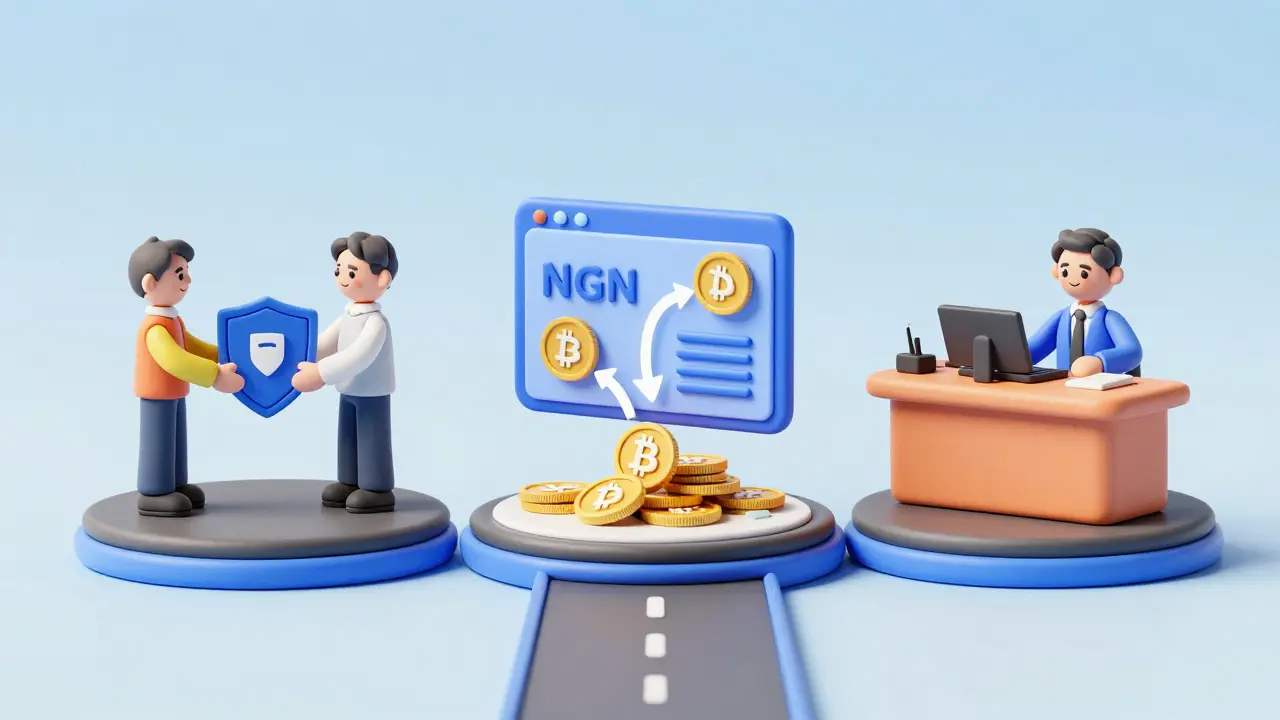
This restriction forced the market to innovate. Instead of direct bank-to-exchange pipelines, Nigerians rely on three main channels:
- Peer-to-Peer (P2P) Markets: You pay another person directly via bank transfer or mobile money, and they release the crypto to your wallet. The platform acts as an escrow agent.
- Integrated Brokers: Platforms that have found compliant ways to accept NGN directly, often through third-party payment processors.
- Over-the-Counter (OTC) Desks: Specialized services for larger transactions that handle conversions manually.
- Create an account and complete identity verification (KYC). This usually takes just minutes if you have a valid ID ready.
- Deposit NGN directly using supported payment methods.
- Buy Bitcoin, Ethereum, or Dogecoin instantly at market rates.
- KYC Thresholds: Transactions under $150 might not require full verification, but larger amounts will trigger strict ID checks.
- Payment Methods: Supports Apple Pay, Google Pay, and PayPal, which can be useful if you have international cards linked to these services.
- Foreign Nationals: If you are expat living in Nigeria, Changelly is friendly as long as you provide proof of address.
- Diversify Your Accounts: Do not use your primary salary account for crypto trades. Use a secondary account dedicated to these transactions.
- Vary Transaction Amounts: Regularly sending exact round numbers (e.g., ₦50,000) can flag automated monitoring systems. Vary your amounts slightly.
- Use Clean References: When transferring NGN, leave the narration blank or use generic terms like "Services" or "Gift." Never write "Bitcoin" or "USDT" in the bank transfer notes.
Knowing which channel fits your needs saves time and reduces risk. If you want speed and anonymity, P2P is king. If you want ease of use, integrated brokers are better. Let’s look at the specific options available today.
The Rise of Direct NGN Support
A significant shift occurred in early 2025 when Blockchain.com announced official support for the Nigerian Naira. This was a game-changer because it eliminated the need for complex workarounds for many users. Before this, Nigerians had to convert NGN to USD or EUR before buying crypto, losing value on double conversion fees.
With Blockchain.com, the process is straightforward:
This integration works because Blockchain.com partnered with local payment infrastructure providers who comply with anti-money laundering (AML) standards while bypassing the direct banking ban. It is one of the few legitimate "direct" routes left for retail investors. However, availability can fluctuate based on regulatory updates, so always check the current deposit options in your region.
Mastering Peer-to-Peer (P2P) Trading
For most Nigerians, P2P remains the most reliable method. Platforms like Binance and Bybit dominate this space. Here is why P2P works well despite the bans: the money never touches the exchange’s bank account. You send NGN to a seller’s personal bank account, and the exchange holds the crypto in escrow until the seller confirms receipt.
Here is how to execute a safe P2P trade:
| Step | Action | Critical Safety Tip |
|---|---|---|
| 1 | Select "Buy" and choose NGN as your currency. | Filter by payment method (e.g., Transfer, Moniepoint). |
| 2 | Choose a seller with high completion rate (>95%) and many orders. | Never choose the cheapest price if the seller is new. |
| 3 | Enter the amount and click "Buy USDT" or "Buy BTC". | Read the seller's terms carefully before confirming. |
| 4 | Transfer NGN to the provided bank details via your banking app. | Do not include crypto keywords in the transfer reference. |
| 5 | Click "Transferred" in the app and wait for confirmation. | Keep screenshots of the transaction receipt. |
The biggest risk in P2P is fraud. Scammers may ask you to send money to a different account than the one shown in the app. Never do this. Also, avoid sellers who ask for "proof of funds" before releasing crypto. Stick to the platform’s chat system for all communication.
Alternative Platforms: Changelly and Breet
If P2P feels too manual, Changelly offers a semi-automated alternative. Changelly connects you with verified providers who accept NGN via Visa/Mastercard or bank transfers. The interface is cleaner than P2P markets, but fees are generally higher.
Key points for Changelly users:
On the flip side, Breet is popular but serves a different purpose. Breet is primarily an OTC desk for selling crypto to get Naira quickly. They do not allow you to buy crypto with NGN. Many users confuse this, so remember: use Breet to cash out, not to enter the market.
Security and Regulatory Risks
Even with easy access, risks remain. The primary threat is not the technology but human error and regulatory shifts. Banks occasionally freeze accounts involved in P2P trading if they detect suspicious patterns. To mitigate this:
Additionally, keep your KYC documents updated. Platforms like Binance and Bybit periodically request re-verification. Failing to update your info can lead to frozen assets.
Choosing the Right Platform for You
Your choice depends on your priority: speed, cost, or convenience.
| Platform | Best For | Pros | Cons |
|---|---|---|---|
| Binance P2P | Most users | Highest liquidity, low fees, wide seller base | Complex interface, requires vigilance against scams |
| Blockchain.com | Beginners | Direct NGN support, simple UI, reputable brand | Limited coin selection, occasional downtime |
| Bybit P2P | Traders | Good bonuses, strong security, USDT focus | Fewer sellers than Binance |
| Changelly | Card holders | Accepts Visa/Mastercard, fast swaps | Higher fees, strict KYC for large amounts |
If you are new, start with Blockchain.com for its simplicity. If you trade frequently, master Binance P2P for the best rates. Always keep a small amount of stablecoins (like USDT) on hand to take advantage of market dips without waiting for bank transfers.
Future Outlook
The regulatory environment in Nigeria is evolving. With global trends pushing for clearer crypto frameworks, we may see more direct banking integrations in the coming years. Until then, the hybrid model of P2P and specialized brokers will remain the standard. Stay informed, prioritize security, and never invest more than you can afford to lose.
Is it legal to buy crypto in Nigeria?
Yes, owning cryptocurrency is legal for individuals in Nigeria. However, the Central Bank of Nigeria (CBN) restricts banks from facilitating crypto transactions, which makes direct purchases difficult. Users must use P2P platforms or specialized brokers to comply with these regulations.
Which bank is best for crypto transactions in Nigeria?
No bank officially supports crypto transactions due to CBN directives. However, some fintech apps like Moniepoint and OPay are more tolerant of P2P transfers than traditional banks. It is safer to use a secondary bank account for these activities to avoid freezing your primary funds.
Can I buy Bitcoin with my debit card in Nigeria?
It is challenging. Most local debit cards are blocked from making direct crypto purchases on international exchanges. However, platforms like Changelly sometimes accept Visa/Mastercard if processed through specific payment gateways. P2P bank transfers remain the most reliable method.
What is the safest way to store crypto bought in Nigeria?
For small amounts, keeping crypto on a reputable exchange like Binance or Blockchain.com is acceptable. For larger holdings, transfer your assets to a non-custodial wallet like Trust Wallet or a hardware wallet like Ledger. This ensures you control your private keys and are not affected by exchange hacks or bans.
Why did Blockchain.com add NGN support?
Blockchain.com added direct Naira support in March 2025 to serve Nigeria's large and active crypto community. This move allows users to buy and sell Bitcoin and other coins directly with NGN, reducing the complexity and fees associated with converting to foreign currencies first.