How Venezuelans Use Bitcoin and Stablecoins to Survive the Economic Crisis
 May, 30 2026
Imagine waking up to find that the money in your pocket is worth half of what it was yesterday. For millions of Venezuelans, this isn't a hypothetical nightmare-it's daily life. When the national currency, the bolívar, loses value faster than you can spend it, people don't look for new jobs; they look for new ways to store value. That is why Bitcoin and stablecoins have become less of an investment trend and more of a survival tool in Venezuela.
In 2024 and moving into 2026, Venezuela didn't just adopt cryptocurrency because people liked blockchain technology. They adopted it because the traditional banking system failed them. With annual inflation hitting 229% in mid-2024 and the bolívar losing over 70% of its value in less than a year, citizens turned to digital assets to keep their savings from evaporating. According to Chainalysis' 2024 Crypto Adoption Index, Venezuela ranked 13th globally for crypto usage, driven by this sheer necessity rather than speculative greed.
The Shift from Bolívares to Digital Dollars
You might think everyone is buying Bitcoin, but the reality on the ground is different. While Bitcoin holds symbolic importance as decentralized money, most daily transactions in Venezuela happen using stablecoins, specifically Tether (USDT). Why? Because Bitcoin's price swings too wildly for buying groceries or paying rent. A merchant selling bread needs to know exactly how much the bread costs in dollars, not in a volatile asset.
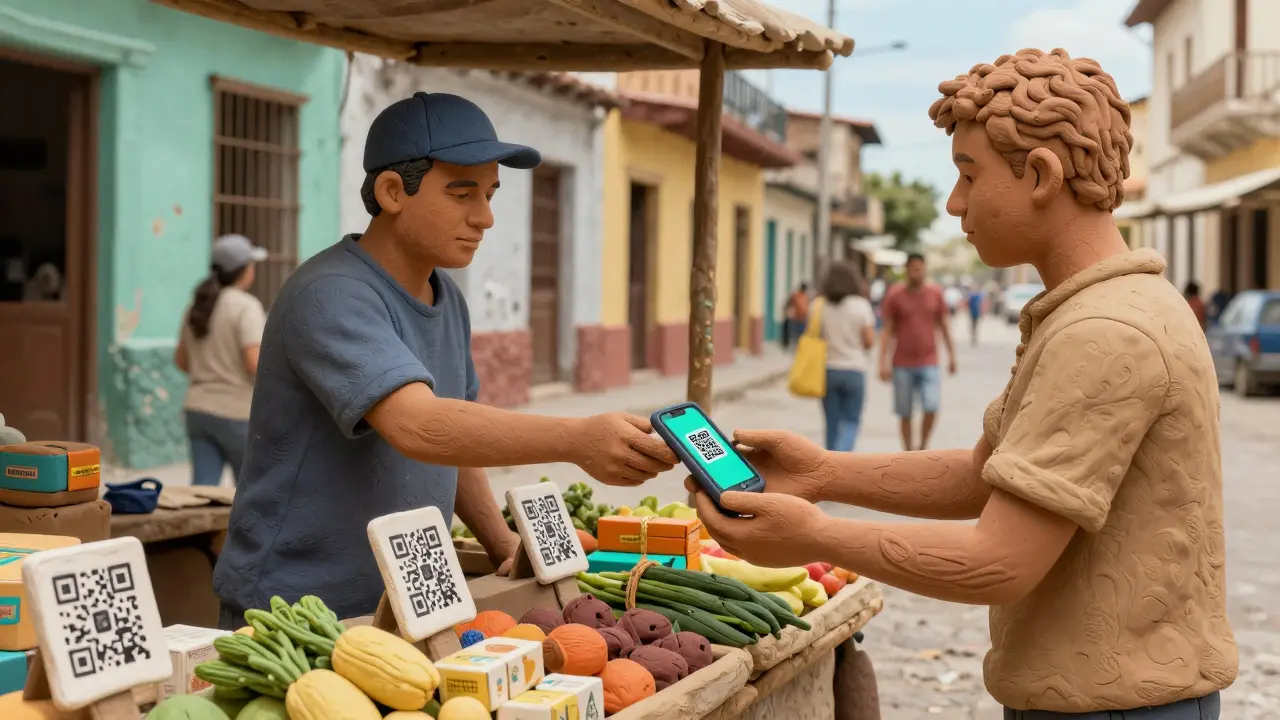
Locals often call USDT "Binance dollars." This nickname reveals how deeply integrated these tokens are into everyday commerce. In Caracas, if you walk into a phone shop or a pharmacy, there’s a good chance they accept USDT. Over 65% of surveyed merchants in the capital now accept cryptocurrency for routine transactions. It’s not about supporting a tech revolution; it’s about avoiding the hassle of exchanging physical cash for a currency that might be worthless by tomorrow.
| Asset Type | Primary Use Case | Transaction Speed | Volatility Risk |
|---|---|---|---|
| Bitcoin (BTC) | Long-term savings, cross-border transfers | 10-60 minutes | High |
| Tether (USDT) | Daily purchases, salary payments | Under 2 minutes (Tron network) | Low (pegged to USD) |
| Bolívar (VES) | Government taxes, small informal trades | Instant | Extreme (Hyperinflation) |
The speed matters. When you’re trying to buy medicine for your child, waiting an hour for a Bitcoin confirmation isn’t practical. USDT transactions on the Tron network confirm in under two minutes. This technical advantage has made stablecoins the backbone of Venezuela’s parallel economy. However, this convenience comes with a catch: dependency. Tether Limited controls 76% of Venezuela’s stablecoin market. If that centralized issuer faces issues, the entire local economy could face immediate disruption.
How People Actually Buy and Sell Crypto
If you’ve never tried to buy crypto in a country with strict capital controls, you might assume you just use a bank card. In Venezuela, that option doesn’t really exist. U.S. sanctions since 2017 have severely restricted traditional banking infrastructure. You can’t just link your Venezuelan bank account to Coinbase or Binance easily. Instead, people rely on Peer-to-Peer (P2P) platforms.
Binance P2P is the dominant player here, holding about 63% of the market share for P2P trading volume. LocalBitcoins follows with 22%, while decentralized exchanges like Bisq make up a smaller slice. Here’s how it works: You meet a seller (or connect digitally), agree on a price, and transfer funds via mobile payment apps like Pago Móvil. Once the seller confirms receipt, they release the crypto to your wallet. It’s essentially a digital marketplace where trust is mediated by the platform’s escrow system.
This method bypasses the need for a formal bank relationship, which is crucial given that many Venezuelans struggle to open accounts abroad due to sanctions. However, it’s not without friction. About 18% of attempted transactions get blocked due to U.S. sanctions restrictions targeting specific banks or individuals. And during high-demand periods, the spread-the difference between the buy and sell price-can average 3.7%. That’s a hidden tax on survival.
The Internet Barrier and Connectivity Challenges
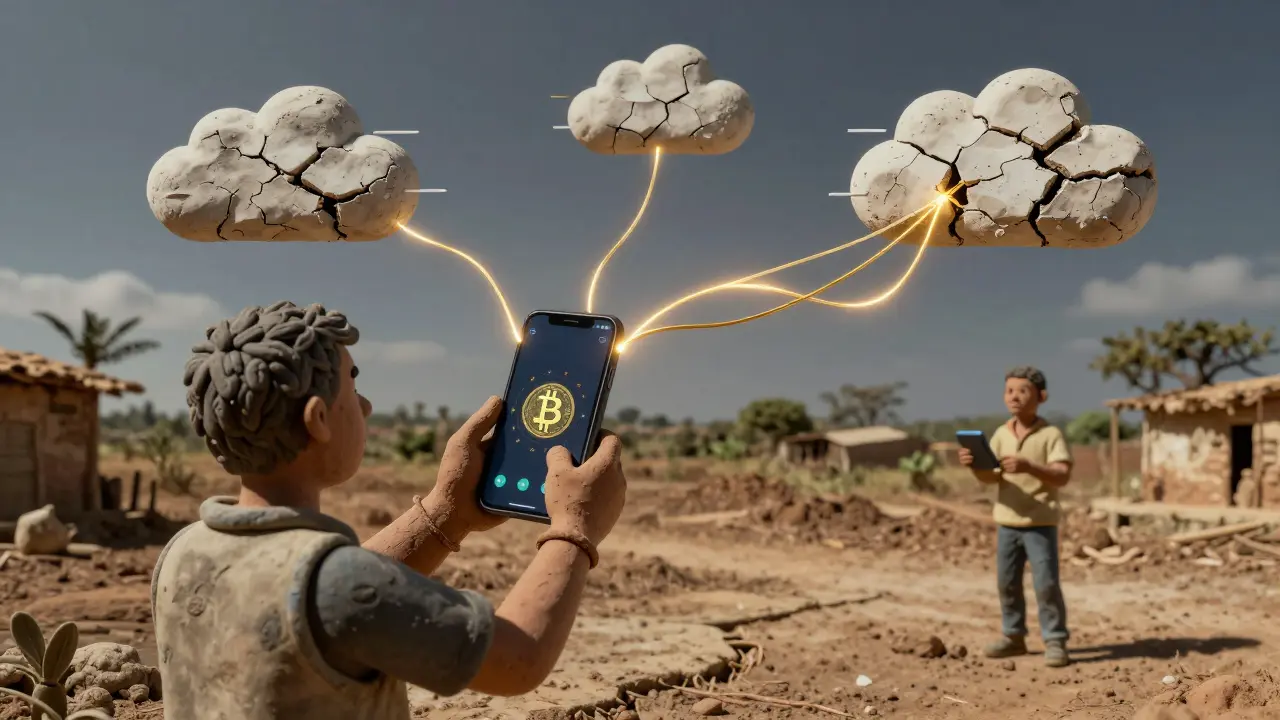
Crypto requires internet access, and that’s where the dream hits a wall. Venezuela ranks 153rd globally for internet speed, averaging just 14.79 Mbps download speed in Q2 2025. While that sounds decent compared to some developing nations, the reliability is the real issue. Power outages and network congestion are common.
Consider this: 68% of Venezuelans have smartphones, but only 45% have reliable internet connectivity. For the remaining 55%, accessing a crypto exchange during a blackout means missing out on remittances or being unable to pay for essentials. A survey by Markets.com found that 37% of respondents reported connectivity issues affecting their transactions. Imagine trying to complete a time-sensitive trade while your Wi-Fi drops every few seconds. It’s stressful, expensive, and sometimes impossible.
Community-driven solutions have emerged to fill this gap. YouTube channels like 'Cripto Para Todos,' with over 127,000 subscribers, provide tutorials in Spanish. Universities like Universidad Central de Venezuela even launched mandatory cryptocurrency courses in January 2025. These educational efforts help users navigate the steep learning curve, but they can’t fix broken infrastructure. The digital divide remains a stark reality, leaving rural populations behind as urban centers embrace the crypto economy.
Remittances: The Lifeline from Abroad
A huge chunk of Venezuela’s crypto activity stems from family members living abroad sending money home. Remittances total around $5.4 billion annually. In 2023, crypto accounted for 9% of this flow, roughly $461 million. Why send crypto instead of using Western Union or bank wires?
Speed and cost. Traditional remittance services charge high fees and take days to process. Crypto transfers happen almost instantly and cost fractions of a cent. For a family in Miami sending support to relatives in Maracaibo, this efficiency is vital. But it also creates a dependency. If the sender’s platform gets sanctioned or the recipient’s connection fails, the lifeline snaps. The Venezuelan Finance Observatory documented over 1,200 consumer complaints related to crypto transactions in early 2025 alone, mostly about volatility during conversion and platform failures.
Victor Sousa, a resident of Caracas, put it simply when interviewed by Financial Times: "There's lots of places accepting it now... The plan is to one day have my savings in crypto." He wasn't talking about getting rich. He was talking about keeping his purchasing power intact while the official economy crumbled.
Regulatory Uncertainty and Government Stance
The Venezuelan government’s attitude toward crypto is confusing at best. In 2018, they launched their own cryptocurrency, the Petro, tied to oil reserves. It collapsed in 2024 amid corruption allegations. Meanwhile, the state regulator, SUNACRIP, shut down private exchanges in 2023, yet crypto usage skyrocketed anyway. This inconsistency creates a risky environment for businesses.
On one hand, the Central Bank acknowledged crypto’s role in a 2024 report. On the other, there’s no clear legal framework protecting users. If your exchange gets hacked or freezes your funds, who do you call? No one. This lack of recourse makes every transaction a gamble. Economist María Fernández from the University of Caracas warned that crypto doesn’t solve systemic issues like production shortages. It just provides a way to move money around a broken system.
U.S. sanctions add another layer of complexity. Executive Order 13850 restricts international banking relationships, pushing more activity underground or onto decentralized networks. While this fosters innovation in workarounds, it also isolates Venezuela from global financial stability. Any change in U.S. policy could drastically alter the landscape overnight.
Is This Sustainable?
Looking ahead, experts are divided. Optimists see crypto evolving into a formalized parallel payment system. Pessimists, including 43% of economists polled by the Venezuelan Finance Observatory in June 2025, believe adoption will drop quickly if the bolívar stabilizes even moderately. Without the pressure of hyperinflation, would people still tolerate the risks of crypto?
Probably not all of them. But until inflation falls below 50% annually-a threshold unlikely before 2027 according to IMF projections-crypto remains essential. The integration with regional systems like the BRICS cross-border payment initiative offers a potential future path, providing infrastructure less vulnerable to U.S. sanctions. Until then, Venezuelans will continue to treat Bitcoin and stablecoins not as investments, but as insurance against economic collapse.
Why do Venezuelans prefer USDT over Bitcoin for daily spending?
Venezuelans prefer USDT because it is pegged to the U.S. dollar, offering price stability. Bitcoin’s volatility makes it unsuitable for buying groceries or paying rent, where merchants need predictable values. USDT transactions also confirm faster, often in under two minutes on the Tron network, compared to Bitcoin’s 10-60 minute window.
How do people buy crypto without traditional banks?
Most Venezuelans use Peer-to-Peer (P2P) platforms like Binance P2P. Users connect directly with sellers, transfer funds via mobile payment apps like Pago Móvil, and receive crypto once the seller confirms receipt. This bypasses restricted banking infrastructure and U.S. sanctions on formal institutions.
What are the biggest risks of using crypto in Venezuela?
Key risks include dependency on centralized issuers like Tether, vulnerability to U.S. sanctions blocking transactions, poor internet connectivity causing failed trades, and lack of regulatory protection if platforms fail or hack users. Additionally, price spreads during conversion can eat into savings.
Does the Venezuelan government support cryptocurrency?
The government’s stance is inconsistent. They launched their own failed crypto, the Petro, and shut down private exchanges, yet acknowledge crypto’s economic role. There is no clear legal framework, creating a gray area where usage thrives despite regulatory uncertainty and occasional crackdowns.
Will crypto adoption decrease if the economy stabilizes?
Many experts believe yes. Crypto in Venezuela is largely a survival mechanism driven by hyperinflation. If the bolívar stabilizes and inflation drops below 50%, the urgency to use crypto may vanish, potentially leading to a rapid decline in adoption as users return to traditional finance.
Craig Swanson
June 1, 2026 AT 02:06It is absolutely infuriating that people in the US get to sit there and debate crypto as an investment while folks in Venezuela are using it just to buy bread without losing half their savings overnight. The article highlights the sheer desperation driving this adoption, and it makes me angry that our financial systems are so broken for them but we treat it like a tech trend here. We need to stop romanticizing 'blockchain innovation' when it's really just a band-aid on a hemorrhage caused by sanctions and mismanagement.
Rosie Morris
June 2, 2026 AT 07:16i can only imagine how scary it must be to wake up every day not knowing if your money will still work later that afternoon. it breaks my heart to read about parents trying to buy medicine for their kids with unstable currency. its not fair that they have to deal with such high stress just to survive basic needs. i hope things get better for them soon because no one should live like that.
stalin brian
June 2, 2026 AT 12:21its wild to think that binance p2p is basically the central bank for millions of people now. the fact that 63% of trading happens there shows how completely traditional banking has failed them. i wonder if the fees are getting any lower or if thats just the cost of doing business in a sanctioned country. also cool that univ classes are starting to teach this stuff even if the internet sucks.
kamal ifrani
June 3, 2026 AT 22:42You naive fools are ignoring the elephant in the room. This isn't about 'survival,' it's about enabling a regime that stole from its own people. By using Tether, you are funding a centralized issuer that answers to no one, creating a new layer of exploitation. The 'Toxic Analyst' in me sees right through this narrative. You're celebrating the symptom while ignoring the disease. It’s pathetic that you think digital tokens fix hyperinflation caused by decades of socialist policy failures. Wake up.
saradee dee
June 4, 2026 AT 20:23Oh wow, that was harsh! I don’t think anyone here is ignoring the politics, Kamal. Most of us are just looking at the human side of it. It’s really dramatic how fast life changes when money loses value. I agree with Rosie that it’s sad for the families involved. Let’s try to keep things peaceful here, okay? We’re all just trying to understand what’s happening down there.
lorna erni
June 6, 2026 AT 15:07SARADEE IS RIGHT YOU TOXIC JERK. Stop acting like you are smarter than everyone else. People are just trying to eat and keep their families safe. If you have a better solution then spit it out instead of typing angry paragraphs. No one asked for your moral superiority lecture. Go touch grass or something because your attitude is ruining the thread. We are all on the same side here wanting stability for Venezuelans, so shut up and listen for once.
Bill Gunn
June 7, 2026 AT 04:06Look, let’s take a breath everyone 🧘♂️. Lorna, chill out a bit. Kamal, maybe dial back the aggression? The reality is nuanced. 💡 While the political context matters, the technical shift to Tron-based USDT is fascinating from a logistics standpoint. Speed kills volatility risk for daily goods. 🚀 It’s a pragmatic adaptation. We can critique the system while acknowledging the ingenuity of the users. Let’s focus on the tech solutions that actually help people navigate these blackouts and sanctions. 🌐✨
Dana Rapoport
June 8, 2026 AT 19:26The philosophical implication here is profound: when state currency fails, trust migrates to code. However, this trust is fragile. As long as Tether holds 76% of the market, the decentralization promise remains hollow. We are witnessing a transition period where necessity overrides ideology. It is a stark reminder that freedom of finance is not just a libertarian ideal but a humanitarian imperative in crisis zones.