How Wrapped Tokens Enable Cross-Chain Trading
 Jan, 27 2025
Wrapped Token Fee Calculator
Calculate Wrapping Costs
Results
• Service fee is 0.1-0.5% of your Bitcoin amount
• Gas fee varies based on Ethereum network congestion
• These are estimated costs only
Before wrapped tokens, your Bitcoin was stuck on Bitcoin. You couldn’t use it to lend on Aave, trade on Uniswap, or earn interest in a DeFi pool. Ethereum had all the tools, but Bitcoin couldn’t join. That changed in 2019 when Wrapped Bitcoin (WBTC) launched - a simple idea with huge consequences: wrapped tokens let assets move between blockchains without changing what they are.
What Exactly Is a Wrapped Token?
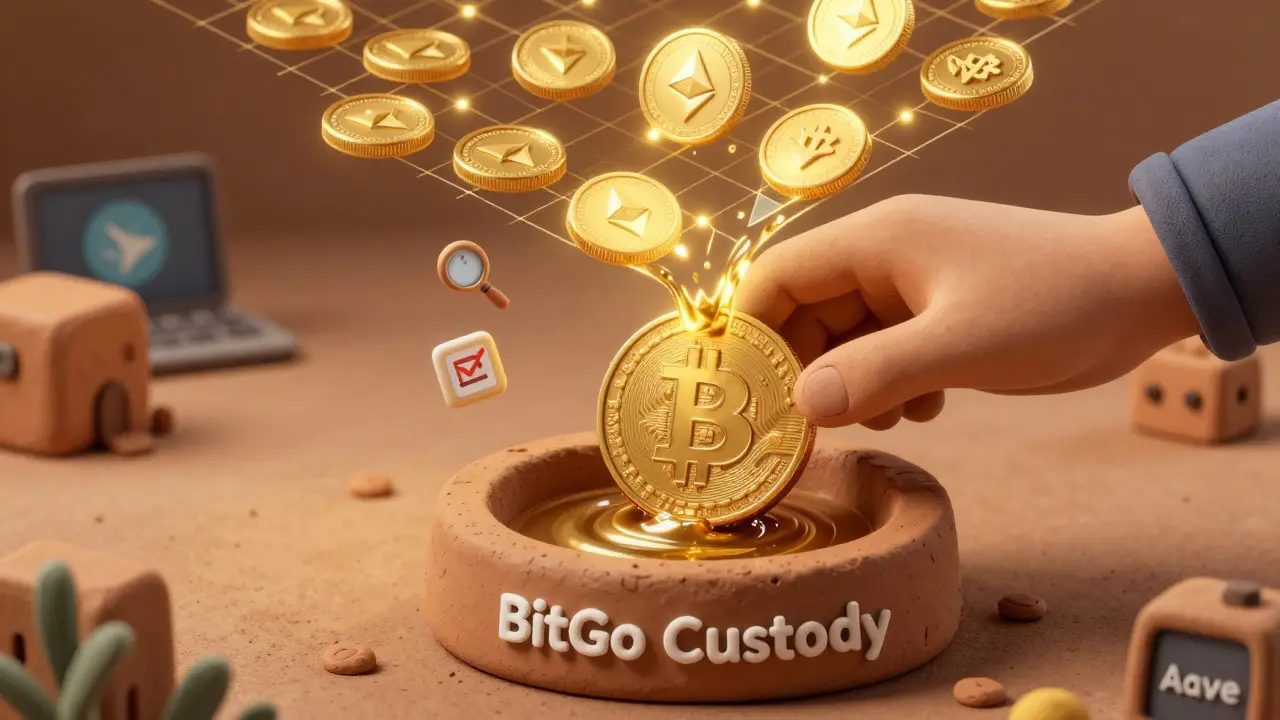
A wrapped token is a 1:1 representation of a cryptocurrency on a different blockchain. Think of it like a voucher. You hand over your original Bitcoin to a trusted party, and in return, you get WBTC - a token on Ethereum that’s worth exactly 1 BTC. You can use WBTC like any other ERC-20 token: swap it, stake it, borrow against it. When you want your Bitcoin back, you burn the WBTC and get your original BTC released.
This isn’t magic. It’s a system built on smart contracts and custodians. For WBTC, BitGo holds the real Bitcoin in cold storage. Every month, they publish proof that they have enough Bitcoin to back all the WBTC in circulation. Armanino LLP audits those reports. No Bitcoin is created out of thin air. The system only works because every wrapped token is fully backed.
How Does It Actually Work?
The process is straightforward:
- You send your Bitcoin to a custodian’s wallet (like BitGo’s).
- The custodian verifies the deposit and triggers a smart contract.
- Equivalent WBTC is minted on Ethereum and sent to your wallet.
- You now use WBTC on DeFi apps - Uniswap, Compound, Aave - just like you would with ETH.
- When you’re done, you send WBTC back to the custodian.
- The smart contract burns the WBTC, and your original Bitcoin is released.
This same logic applies to other assets. Wrapped Ether (wETH) lets you use ETH on chains that don’t natively support it. Wrapped Bitcoin isn’t the only game - there’s renBTC, sBTC, and even wrapped Litecoin or Dogecoin. But WBTC dominates, with over $11 billion locked as of late 2023.
Why Do We Need Wrapped Tokens?
Blockchains don’t talk to each other. Ethereum can’t natively read Bitcoin’s ledger. Solana doesn’t know what a Bitcoin transaction looks like. That’s a huge problem for DeFi. If you own Bitcoin but want to earn yield, you’re out of luck - unless you wrap it.
By mid-2023, over $45 billion was locked in Ethereum DeFi. But only a fraction of that came from Ethereum-native assets. WBTC alone made up 23% of Ethereum’s total DeFi liquidity, according to Dune Analytics. That’s not a small number - it’s the difference between a quiet pool and a thriving ecosystem.
Wrapped tokens turned dormant assets into active ones. Over 412,000 BTC - worth more than $14 billion - were wrapped across different chains by Q3 2023. That’s Bitcoin working in places it was never designed to go.
Two Ways to Wrap: Lock and Mint vs. Burn and Mint
Not all wrapped tokens work the same way. There are two main models:
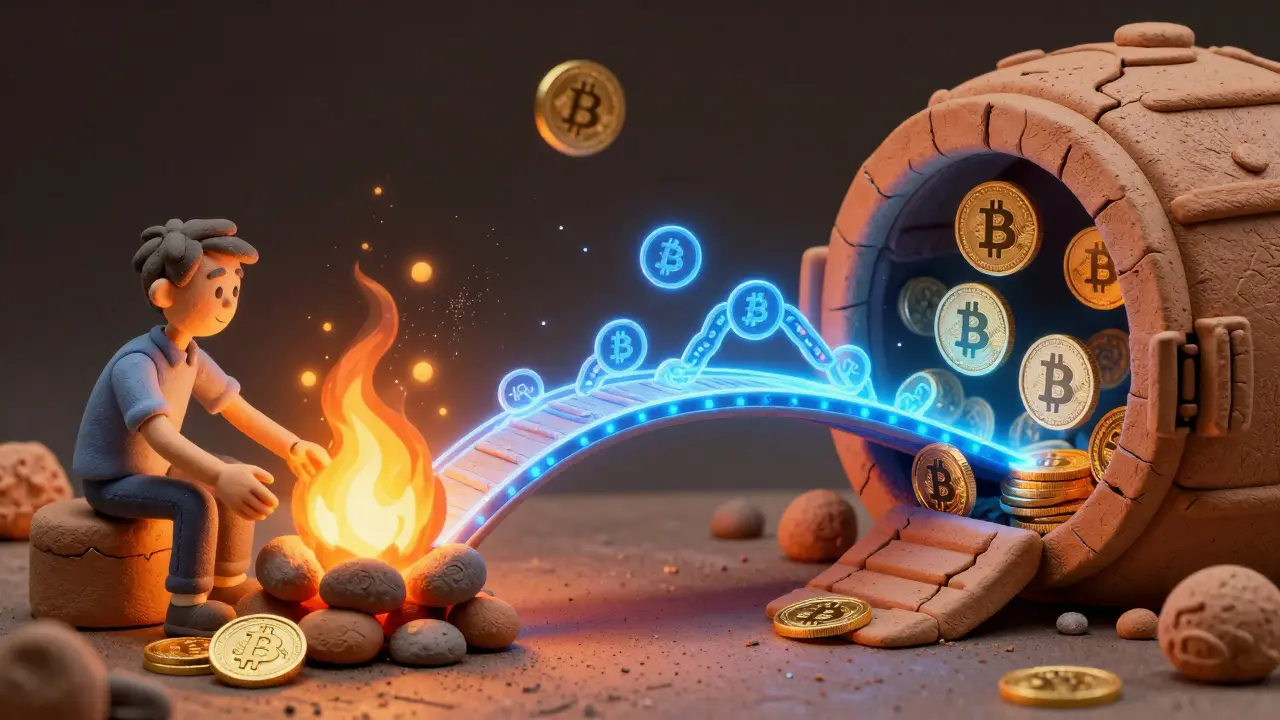
Lock and mint - the most common method. Your original asset is locked in a reserve. New wrapped tokens are created on the target chain. This is how WBTC, wETH, and most bridges work. The downside? Someone has to hold your assets. That’s a single point of failure. If the custodian gets hacked or goes rogue, your wrapped tokens could lose value. In 2022, bridges lost $2.3 billion to hacks - most of it from lock-and-mint systems.
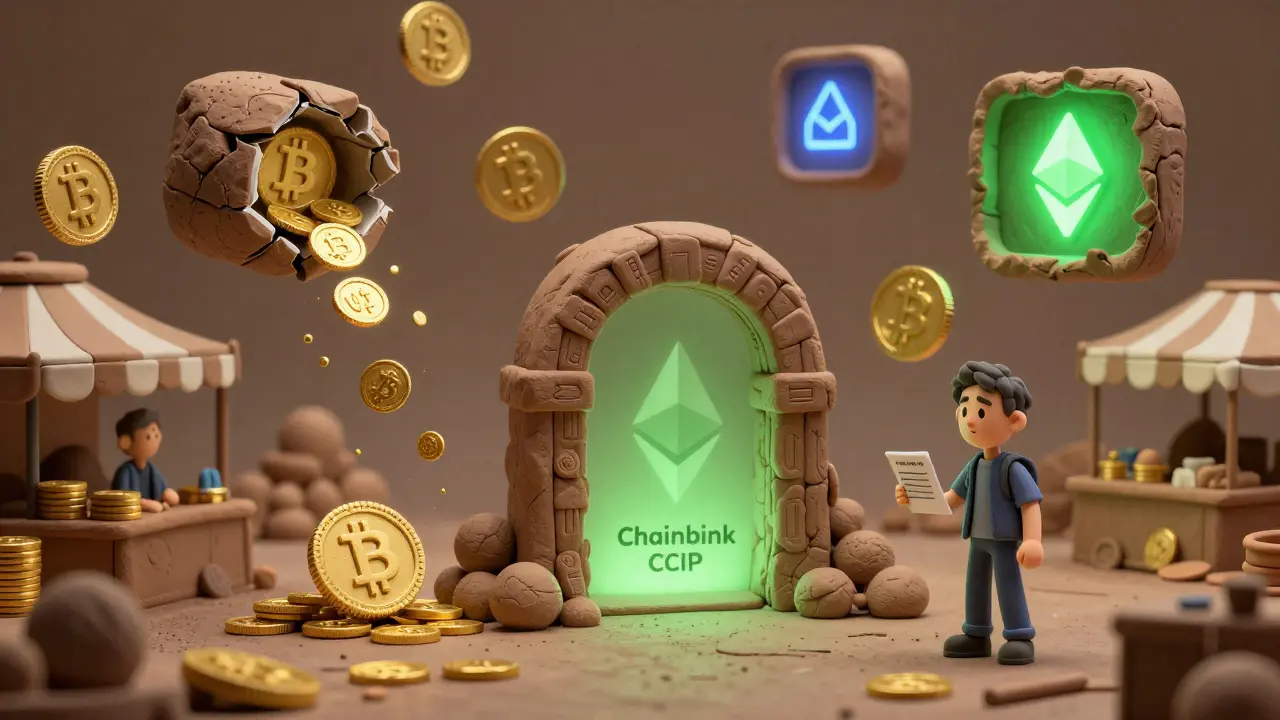
Burn and mint - a newer, more secure approach. Instead of locking assets, you destroy (burn) them on the source chain and create new ones on the destination chain. Chainlink’s CCIP uses this model. No reserves. No custodians. No single wallet holding billions in Bitcoin. It’s safer, but it requires the target chain to support the token’s native contract. That’s harder to set up.
Right now, 78% of bridges use lock and mint. But burn and mint is growing fast - 47% quarterly adoption growth, according to Messari. It’s the future, but it’s not everywhere yet.
The Big Risks: Custody, Hacks, and Pegs
Wrapped tokens are useful, but they come with real dangers.
Custodial risk - WBTC’s $11 billion is held by BitGo and 17 other approved merchants. If any of them get compromised, the whole system is at risk. The SEC has even hinted that wrapped tokens could be classified as securities if the custodian has too much control. That’s a legal gray area.
Bridge hacks - In November 2022, the Wormhole bridge was exploited. Hackers drained $320 million in wETH because of a flaw in the smart contract. Users lost money because the system didn’t verify the burn before minting. That’s a design flaw, not a bug - and it’s happened before.
Peg instability - Wrapped tokens are supposed to be worth exactly 1:1. But during market stress, they can drift. In March 2023, WBTC dropped to 95.3% of BTC’s value for a few hours. Why? Panic selling. Traders dumped WBTC faster than arbitrage bots could correct it. That’s not supposed to happen - but it does.
What Do Real Users Say?
On Reddit, users like u/CryptoTrader89 say they’ve earned 6.2% APY on Aave using WBTC. Others, like u/DeFiLoser, lost $12,500 in the Wormhole hack. Trustpilot reviews for wrapping services average 4.1/5. Most praise how easy it is to connect MetaMask and wrap tokens in under five minutes. But complaints about slow redemptions are common - 37 minutes on average, according to user reports.
Advanced users check reserves on Etherscan. They verify that the number of WBTC matches the Bitcoin held by BitGo. It’s not hard - just time-consuming. For most people, trust is built on reputation, not verification.
What’s Next?
The market for wrapped tokens is massive - $15.7 billion in daily cross-chain volume as of 2023. But the infrastructure is still fragile. Ethereum holds 58% of wrapped assets. Other chains like Cosmos and Polkadot are building native interoperability (IBC and XCMP), but they’re years away from matching the liquidity of wrapped tokens.
Chainlink’s CCIP launched in October 2023, enabling burn-and-mint transfers across 11 chains. Ethereum’s EIP-3664, a proposed standard for token wrapping, is in draft. If adopted, it could make wrapping safer and more uniform.
Delphi Digital predicts daily wrapped token volume will hit $42 billion by 2025. That’s 3.7 times today’s level. But they warn: “Custodial models represent single points of failure that could trigger systemic risk.”
For now, wrapped tokens are the glue holding the multi-chain DeFi world together. They’re not perfect. But they’re necessary. Until blockchains can talk natively, we’ll keep wrapping.
Are wrapped tokens the same as the original cryptocurrency?
Yes and no. A wrapped token like WBTC is pegged 1:1 to Bitcoin and represents the same value. But it’s not Bitcoin on the Bitcoin blockchain - it’s a token on Ethereum. You can’t send WBTC to a Bitcoin wallet, and you can’t spend it like BTC. It’s a digital representation, not the original asset.
Can I get hacked just by using a wrapped token?
Not directly. Your wallet isn’t at risk just because you hold WBTC or wETH. But if you use a vulnerable bridge to wrap or unwrap your assets, you could lose funds. The hack targets the bridge or custodian, not your personal wallet. Always use well-audited platforms like BitGo, Chainlink CCIP, or Synthetix - never unknown bridges.
Why is WBTC so much bigger than other wrapped Bitcoin tokens?
WBTC launched first, had strong backing from major players like BitGo and Kyber Network, and quickly became the standard for Ethereum DeFi. It’s widely supported by exchanges, wallets, and protocols. Other tokens like renBTC or sBTC offer decentralization, but they lost trust after security incidents. WBTC’s centralized model is actually a strength for adoption - it’s predictable and audited.
Do I need to pay fees to wrap a token?
Yes. You pay two types of fees: the network fee (gas) to send your original asset to the custodian, and a wrapping fee charged by the service. For WBTC, the fee is typically 0.1% to 0.5% of the amount wrapped. On-chain gas fees on Ethereum can be high, especially during congestion. Some platforms bundle the fees - check before you proceed.
Can wrapped tokens be used on any blockchain?
No. WBTC only exists on Ethereum and a few EVM-compatible chains like Polygon or BSC. To use it on Solana or Avalanche, you’d need a different wrapped version - like wBTC on Solana via a bridge. Each chain requires its own wrapped token. That’s why there are so many versions of USDC - USDC.e, USDC.bC, axlUSDC - and why experts say it’s confusing. The goal is to reduce this fragmentation over time.
Will wrapped tokens become obsolete?
Not anytime soon. Native cross-chain solutions like Polkadot’s XCMP and Cosmos IBC are promising, but they’re still experimental and lack liquidity. Wrapped tokens are the only way most users can move Bitcoin, Ethereum, or other assets between chains today. Even if native tech improves, wrapped tokens will likely remain for legacy assets like Bitcoin that won’t change their protocol. They’re the bridge, not the destination.
Joe West
December 5, 2025 AT 01:59Wrapped tokens are such a slick workaround for the blockchain silo problem. I’ve been using WBTC on Aave for over a year now and the 6% APY is legit. No need to sell BTC just to earn yield - just wrap, stake, repeat. The audits are public, the custodians are reputable, and the gas fees? Worth it.
Richard T
December 6, 2025 AT 23:46It’s wild how something so simple - a 1:1 token on another chain - unlocked billions in liquidity. But I wonder how many people actually check the reserves on Etherscan, or just trust BitGo because it’s ‘the standard’? There’s a difference between convenience and security.
jonathan dunlow
December 8, 2025 AT 18:45Look, I get it - wrapped tokens are the duct tape holding DeFi together right now. But let’s not pretend this is the endgame. We’re living in the analog era of blockchain, where we’re still using paper checks when we could have instant digital wire transfers. The fact that we need custodians, audits, and manual verifications just to move Bitcoin to Ethereum? That’s not innovation - that’s compromise. And yeah, the $11 billion locked in WBTC sounds impressive, but it’s also a single point of failure that could blow up in our faces like Wormhole did. The burn-and-mint model? That’s the future. Chainlink CCIP is the real MVP here. We just gotta stop being lazy and push for it. No more waiting for permission. We’re builders, not beggars.
Mariam Almatrook
December 10, 2025 AT 14:05One must lament the grotesque commodification of digital scarcity under the guise of interoperability. Wrapped tokens, in their very essence, represent a profound epistemological rupture - the substitution of ontological authenticity with symbolic representation. The Bitcoin blockchain, a decentralized ledger of immutable truth, is now reduced to a mere collateralized asset, held hostage by corporate custodians whose fiduciary duties are enforced by... what? Marketing press releases? The SEC’s looming shadow? One cannot help but observe the tragic irony: the very technology born to eliminate intermediaries now thrives on their existence. It is not progress - it is regression dressed in Etherscan.
Chris Mitchell
December 12, 2025 AT 05:54Wrapped tokens aren’t magic. They’re a bridge. And bridges collapse if you ignore the load limits.
rita linda
December 14, 2025 AT 01:30Let’s be real - this whole WBTC thing is just Wall Street’s way of laundering Bitcoin into Ethereum’s sandbox. You think these custodians are holding your BTC? They’re sitting on it like a hedge fund’s secret weapon. And don’t get me started on the ‘audit’ theater - Armanino LLP? Please. That’s just a PR line to make retail investors feel safe while the real players rake in the fees. This isn’t decentralization. It’s re-centralization with a blockchain sticker on it.
nicholas forbes
December 14, 2025 AT 19:15Someone mentioned the Wormhole hack. That’s not a bug - that’s a feature of trust-minimized systems that still rely on centralized trust. I’m not saying don’t use WBTC. I’m saying don’t sleepwalk into it. Check the reserves. Know who’s holding your keys. If you can’t verify it, you’re not a user - you’re a liability.
Regina Jestrow
December 15, 2025 AT 19:27OMG I JUST REALIZED - WBTC is basically digital gold in a vault with a fancy digital key. I wrapped 0.5 BTC last month and now I’m earning yield on it like it’s a savings account. But then I thought… what if BitGo gets bought by a bank? Does my WBTC become a security? Does my ‘Bitcoin’ turn into a stock? My brain hurts. But also… I’m so glad I did it. The APY is too good to ignore. 😭
Martin Hansen
December 16, 2025 AT 00:17Anyone using WBTC without checking the custodian’s KYC docs is just a crypto bro with a debit card and a dream. You think you’re decentralized? You’re just renting a blockchain. Real degens run their own nodes. You? You’re using a custodial wrapper like a middle-class suburbanite uses a credit card. Pathetic.