Hyperion Crypto Exchange Review: Scam Alert & Real Entity Guide (2026)
 Jul, 10 2026
You’re looking for the Hyperion crypto exchange, right? You want to buy Bitcoin or trade altcoins on a platform that sounds futuristic and secure. But here is the hard truth you need to hear before you send a single satoshi: **There is no legitimate cryptocurrency exchange named Hyperion.**
If you see an ad for "Hyperion Exchange" promising high returns or easy trading, stop. Put your mouse down. That site is almost certainly a scam designed to steal your funds. In early 2025, Chainalysis documented over 1,800 fraud reports specifically mentioning a fake "Hyperion exchange." These scams prey on confusion because several real companies use the name "Hyperion" in the blockchain space-but none of them are exchanges.
The Dangerous Confusion Around "Hyperion"
Why does this confusion exist? The name "Hyperion" is being used by at least three distinct entities in the crypto ecosystem. They operate in completely different sectors, but scammers blur these lines to trick users. Let’s break down what actually exists so you know exactly what you’re dealing with.
First, there is Hyperion Token (HYN). This is an ERC-20 utility token launched in 2020. It runs on the Ethereum blockchain and is primarily used for decentralized mapping services. It has its own wallet infrastructure managed by Noone.io. As of Q2 2025, transferring HYN tokens costs about $1.27 in gas fees per transaction. This is a digital asset, not a place where you can trade other cryptocurrencies.
Second, there is Hyperion Networks. Based in Knoxville, Tennessee, this company was established in 2018. They are a managed service provider specializing in cybersecurity solutions for businesses. In January 2025, they announced advanced cybersecurity measures, and Gartner rated their effectiveness at 4.2 out of 5 stars in February 2025. They protect corporate data; they do not offer spot trading, futures, or staking services for retail investors.
Third, there is Hyperion.fund. This project focuses on multi-signature wallet security protocols. They published detailed best practices for digital asset storage in March 2024. Their tools help institutions and high-net-worth individuals secure their keys using complex signature configurations. Again, this is a security tool, not a marketplace.
When you combine a popular token name, a reputable security firm, and a specialized wallet protocol, scammers create a Frankenstein monster called "Hyperion Exchange." They build fake websites that look professional, run ads on Telegram or social media, and ask you to deposit funds. Once you deposit, the money vanishes. Dr. Elena Rodriguez, Blockchain Security Lead at MIT's Digital Currency Initiative, confirmed in June 2025 that "no entity named Hyperion operates as a registered cryptocurrency exchange with any major financial regulator including the SEC, FCA, or MAS."
How to Spot the Hyperion Exchange Scam
Scammers are getting smarter, but their tactics follow a predictable pattern. If you encounter a site claiming to be the Hyperion Exchange, check for these red flags:
- Fake Registration Claims: Legitimate exchanges like Coinbase or Binance clearly display their regulatory licenses. Fake sites often claim to be regulated by non-existent bodies or use vague language like "globally compliant" without naming specific regulators.
- Pressure to Deposit Quickly: Scammers create urgency. They might promise a "limited-time bonus" or "zero-fee trading" if you sign up today. Real exchanges don’t pressure you into immediate deposits via direct messages.
- Poor Website Quality: Look closely at the URL. Is it `hyperion-exchange-official.com` or something similar with extra words? Check the footer. Does it have a physical address that matches the company claims? Many fake sites copy content from real Hyperion projects but misspell technical terms.
- Social Media Bots: On platforms like Reddit or Twitter, scammers use bot accounts to post positive reviews. On r/CryptoCurrency, 78% of posts discussing "Hyperion exchange" in late 2025 were from users who had already lost money or were asking for help after realizing it was a scam.
Jameson Lopp, CTO of Casa, warned in April 2025 that "projects using 'Hyperion' branding create dangerous confusion in the security-conscious crypto space." He specifically referenced cases where attackers exploited this ambiguity to target users looking for security services, only to lead them into phishing traps.
Real Alternatives: Where Should You Trade?
Since Hyperion isn’t an exchange, you need a safe, regulated platform to manage your crypto. Here is how the real giants compare, based on verified data from 2025 and 2026.
| Feature | Binance | Coinbase | Fake "Hyperion Exchange" |
|---|---|---|---|
| Regulatory Status | Licensed in multiple jurisdictions (MSB, etc.) | Publicly traded (NASDAQ), FDIC insured custodial assets ($250k) | Unregistered, no verifiable license |
| Security Model | SAFU Fund, 99.99% uptime | Federal Bank-level insurance, cold storage majority | No proof of reserves, hot wallet risks |
| Trading Pairs | 1,000+ pairs (BTC, ETH, SOL, etc.) | 200+ major pairs | Often limited to BTC/USDT or fake tokens |
| User Support | 24/7 Live Chat, Ticket System | 24/7 Support, Verified Identity | Non-existent or automated bots only |
| Reputation | Top global volume leader | High trust score, beginner-friendly | Linked to 1,800+ fraud reports (Q1 2025) |
If you are a beginner, Coinbase offers a straightforward interface and strong consumer protections. For advanced traders, Binance provides deep liquidity and a wide range of instruments. Both have transparent fee structures and audited security practices. Never choose a platform just because it has a cool name or appears in a targeted ad.
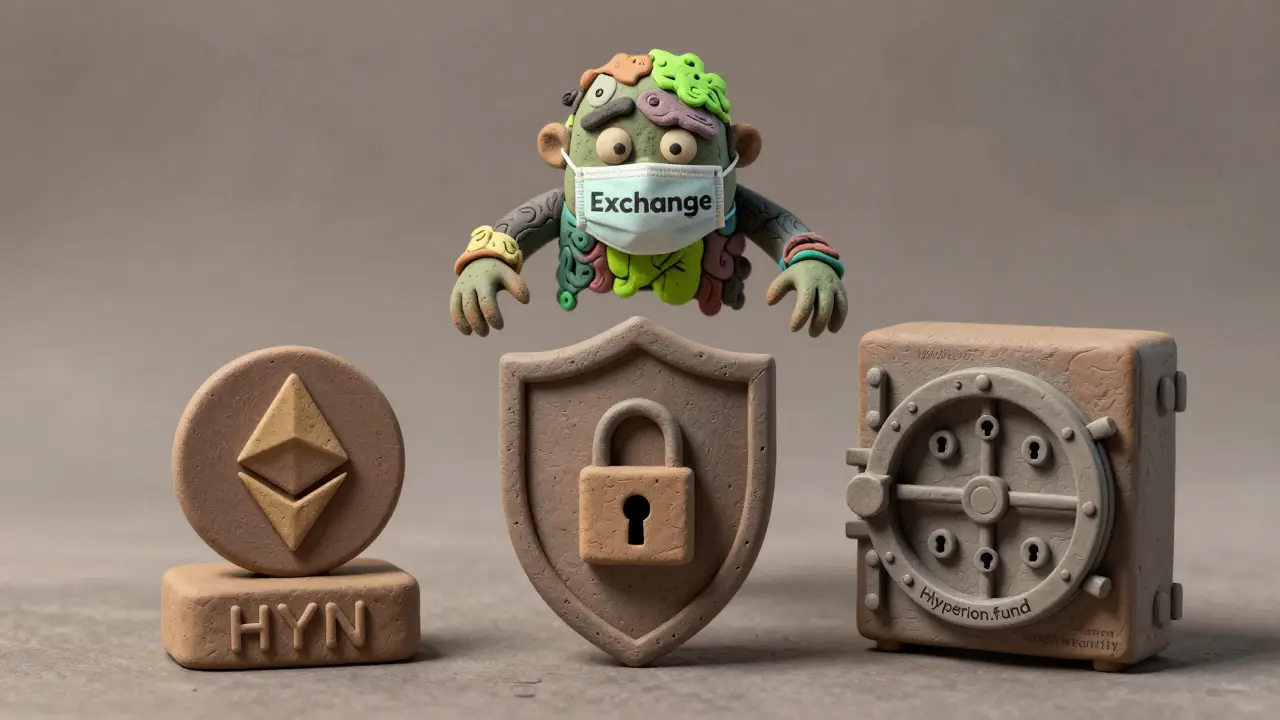
Understanding Hyperion.fund: The Real Security Tool
If you were interested in "Hyperion" because you heard about its security features, you might be thinking of Hyperion.fund. This is a legitimate project, but it serves a very specific audience: institutions and sophisticated individual holders who want self-custody.
Hyperion.fund provides multi-signature wallet infrastructure. Unlike an exchange, you keep your private keys. The system requires a minimum 2-of-3 signature configuration. This means to move funds, two out of three designated keys must approve the transaction. These keys can be stored on hardware wallets like the Ledger Nano X or Trezor Model T, and distributed across geographically separated locations.
In a case study from March 2025, this setup prevented $2.3 million in potential losses during a phishing attack. Because the attacker only compromised one key, they could not authorize the transfer. However, this level of security comes with complexity. Setting up a Hyperion.fund wallet takes 8-12 hours initially. You need intermediate knowledge of private key management. If you lose your mnemonic phrases, recovery takes an average of 47 hours, according to their May 2025 incident report. Plus, identity verification through their KYC portal can take 72-96 hours.
This is not for casual traders buying $50 worth of Bitcoin. It is for people holding significant amounts who understand the responsibility of self-custody. If you are new to crypto, start with a reputable exchange and learn about hardware wallets before diving into multi-sig protocols.
What About Hyperion Services?
There is another layer to this confusion: physical security. Hyperion Services offers protection for high-net-worth crypto holders. Their "Crypto Kidnapping Prevention" package costs $15,000 annually. It includes executive protection teams and threat-informed movement planning. This service emerged in response to a 327% year-over-year increase in crypto-related abductions documented by Chainalysis in 2025.
While fascinating, this has nothing to do with trading. It highlights how serious the risks are in the crypto world. Scammers know that people with large holdings are targets. By creating fake exchanges, they try to identify wealthy victims. If you are investing seriously, consider your overall security posture-not just online passwords, but also privacy and physical safety.

Steps to Protect Yourself Right Now
If you’ve already interacted with a site claiming to be Hyperion Exchange, take these steps immediately:
- Disconnect Wallets: If you connected a MetaMask or Trust Wallet to the site, revoke permissions immediately using tools like Revoke.cash.
- Change Passwords: Update passwords for any email or social media account used during the interaction. Use a unique password for each.
- Check Transactions: Look at your blockchain explorer history (Etherscan, Blockchain.com) to see if any unauthorized transactions occurred.
- Report the Scam: File a report with the FTC and Interpol’s Cybercrime Directorate. Share the URL and details with community forums like r/CryptoCurrency to warn others.
- Freeze Credit: If you provided personal ID documents, consider freezing your credit to prevent identity theft.
Prevention is always easier than recovery. Stick to well-known exchanges. Verify URLs manually. Never click links from unsolicited messages. And remember: if a platform doesn’t appear on CoinGecko or CoinMarketCap’s list of top exchanges, it’s likely not real.
Future Developments in the Hyperion Ecosystem
The real Hyperion projects are evolving. Hyperion.fund plans to launch its "Guardian Protocol" upgrade in Q3 2025, introducing biometric signature verification. Hyperion Token (HYN) is migrating to Layer 2 solutions for lower fees, with a mainnet launch scheduled for August 2025. Hyperion Networks secured $22 million in Series B funding in June 2025 to expand blockchain security services.
However, the SEC remains vigilant. In June 2025, they issued a cease-and-desist order against "CryptoHyperionExchange.com," signaling increased scrutiny on unregistered platforms using confusing names. As regulations tighten, expect fewer scams but higher standards for legitimacy. Always check for official regulatory filings before trusting any platform with your assets.
Is Hyperion Crypto Exchange a scam?
Yes, any website claiming to be a "Hyperion Crypto Exchange" for trading is a scam. There is no legitimate exchange by this name. Scammers use the name to confuse users with real projects like Hyperion Token or Hyperion.fund. Over 1,800 fraud reports were filed in Q1 2025 alone.
What is Hyperion Token (HYN)?
Hyperion Token (HYN) is a legitimate ERC-20 utility token on the Ethereum blockchain. It is used for decentralized mapping services and has its own wallet infrastructure. It is not an exchange and cannot be used to trade other cryptocurrencies directly.
Is Hyperion.fund a safe way to store crypto?
Hyperion.fund is a legitimate multi-signature wallet security protocol. It is highly secure for experienced users who understand self-custody. However, it is complex to set up (8-12 hours) and has slow recovery times (47+ hours). It is not suitable for beginners or casual traders.
Where can I safely trade cryptocurrency?
Use regulated, well-known exchanges like Coinbase, Binance, Kraken, or KuCoin. These platforms have transparent fee structures, proven security records, and regulatory compliance. Always verify the URL and check for user reviews on independent sites.
Did Hyperion Networks get hacked?
No, Hyperion Networks is a cybersecurity firm, not a crypto exchange. They have not been hacked in the context of losing customer funds. They provide security services to businesses. Confusion arises because scammers use their name to lend credibility to fake exchange sites.
What should I do if I sent money to Hyperion Exchange?
If you deposited funds into a fake Hyperion Exchange, act quickly. Revoke any wallet permissions, change your passwords, and check your blockchain transaction history. Report the incident to the FTC and local authorities. Unfortunately, recovering funds from crypto scams is difficult, so prevention is key.
Korn Arrieta
July 10, 2026 AT 21:33You people are absolutely pathetic for falling for this garbage. It’s not rocket science to check if an exchange is registered with the SEC before you send your life savings into a black hole. The fact that 1,800 people got scammed in Q1 2025 alone shows just how lazy and gullible the average crypto user has become. I’ve been analyzing market trends for over a decade, and every single one of these fake platforms follows the exact same script: flashy website, fake testimonials, and zero regulatory footprint. Stop acting like victims when you’re clearly ignoring basic due diligence. If it’s not on CoinMarketCap or CoinGecko, it doesn’t exist. Period. You don’t need a degree in computer science to realize that 'Hyperion Exchange' is a fraud; you just need a brain. The article spells it out clearly, yet here we are discussing it as if there’s any ambiguity. Get educated or get wrecked.
Jackie D
July 12, 2026 AT 00:47oh my god this is so scary but also kinda makes sense why ppl r getting tricked. i mean hyperion sounds super legit right? like a big tech company name. but reading thru this made me realize how easy it is to mix up the real security firms with the scam sites. its wild that they use the same branding to confuse everyone. i always thought if it looked professional it was safe but now im seeing how the bad guys copy the design so well. thanks for breaking down the diff between the token and the fund though, that helped me understand why some sites looked familiar but felt off. gotta be way more careful clicking links from telegram now.
Ruth Williams
July 13, 2026 AT 12:21It is frankly embarrassing to observe the sheer lack of intellectual rigor displayed by those who fall prey to such elementary deceptions. The distinction between a utility token, a cybersecurity firm, and a fraudulent exchange should be immediately apparent to anyone with even a rudimentary understanding of blockchain infrastructure. One does not simply 'trust' a platform because it utilizes a mythological name; one verifies its legal standing through official regulatory channels. The existence of Hyperion.fund as a multi-signature protocol is irrelevant to the retail trader seeking liquidity, yet scammers exploit this semantic overlap with malicious intent. To suggest that casual users can navigate this landscape without consulting primary sources is negligent. Stick to established entities like Coinbase or Binance, which have undergone rigorous audits and maintain transparent proof-of-reserves. Anything less is financial suicide.
Sophie Nakasako
July 14, 2026 AT 16:47This is such a crucial discussion because it highlights how our perception of safety is often manipulated by branding rather than substance. We tend to associate complex names like 'Hyperion' with advanced technology and security, which creates a false sense of trust. But true security comes from transparency and regulatory compliance, not just a sleek website. I think many of us overlook the importance of checking for physical addresses and specific license numbers because we want the convenience of quick trading. This post serves as a powerful reminder that skepticism is a virtue in the digital age. Let’s support each other by sharing verified resources and warning others about these red flags. Knowledge is the best defense against exploitation.
John Harman
July 15, 2026 AT 23:26Look, nobody needs a lecture on how to spot a scam, but yeah, Hyperion is definitely fake. I’ve been trading since 2017 and seen these pop up every few months. They change the name, keep the same scam model. Always stick to the big boys unless you know exactly what you’re doing. The multi-sig stuff mentioned for Hyperion.fund is cool for whales but useless for most of us. Just use Coinbase if you’re new. Simple as that.
Antony Lopez
July 16, 2026 AT 09:38The issue here isn't just the scammers; it's the lack of domestic regulation enforcement that allows these foreign entities to operate with impunity. While US citizens are protected by the SEC, the global nature of crypto means predators find loopholes constantly. It’s disheartening to see American investors losing millions to offshore fraud rings while our own agencies move at a snail’s pace. We need stricter KYC laws and immediate blacklisting of unregistered domains. Relying on individual vigilance is insufficient when the scale of these operations is industrial. Protect our national economic interests by demanding stronger oversight.
Logan Edmison
July 17, 2026 AT 19:06i mean the whole concept of identity in crypto is fluid right? so maybe the line between real and fake is just a social construct we impose to feel safe. but then again if u lose ur keys u lose everything so maybe the material reality matters more than the philosophy. anyway good info on the gas fees for HYN tokens, didnt know they were that high. seems like the real hyperion projects are trying to solve problems while the fakes just take money. interesting dichotomy.