Interdax Crypto Exchange Review: Fees, Leverage & Safety
 Mar, 31 2026
What Exactly Is Interdax?
If you've been hunting for a place to trade cryptocurrency derivatives without the hassle of identity verification, you've probably heard whispers of Interdax is a specialized cryptocurrency derivatives exchange that launched its mainnet in November 2019. Incorporated in Seychelles, the platform distinguishes itself by targeting experienced traders who prioritize anonymity. Unlike the giants dominating headlines, Interdax operates as an unregulated exchange designed specifically for those seeking high-leverage positions. By mid-2026, the crypto landscape has become increasingly regulated. This makes platforms like Interdax rare finds for users who prefer trading without submitting passports. They offer up to 100x leverage on their derivative contracts, positioning themselves squarely in the aggressive trading niche. While mainstream exchanges have tightened security checks, Interdax maintains a policy that allows for anonymous trading, provided you already hold cryptocurrency.
Is it for everyone? Absolutely not. This platform assumes you understand the basics of margin trading. If you are new to crypto, jumping straight into 100x leverage is dangerous. The platform serves as a tool, not a tutorial. In this review, we break down the fee structure, the unique sub-account system, and whether the safety measures justify the risks involved.
The No-KYC Privacy Advantage
The biggest draw for Interdaxa Seychelles-based crypto derivatives platform remains its no-KYC policy. In an era where banks are scrutinizing every cent moving into digital assets, having a trading venue that doesn't ask for your name is a significant benefit for many power users.
Here is how the signup works:
- Email Only: You register simply with an email address.
- No Documents: You do not upload ID cards or proof of residence.
- Instant Access: Once the email is verified, your account is active immediately.
This contrasts sharply with the standard procedure at regulated firms. However, the trade-off is clear. Because the exchange does not collect personal data, they also cannot act as a bridge between traditional finance and crypto. There is no fiat currency support on Interdax. You cannot deposit USD, EUR, or other government currencies directly. You must fund your account using cryptocurrency deposits only, typically BTC, ETH, or USDT.
This constraint filters out casual investors who want to buy crypto with a credit card. It forces users to already be part of the crypto ecosystem. For someone who already has Bitcoin in a wallet and wants to speculate on price movements, this friction point isn't a dealbreaker. It acts as a natural barrier against money laundering concerns, though ironically, it is exactly this type of barrier that makes regulators nervous about the platform's long-term viability.
Trading Mechanics and the Sub-Account System
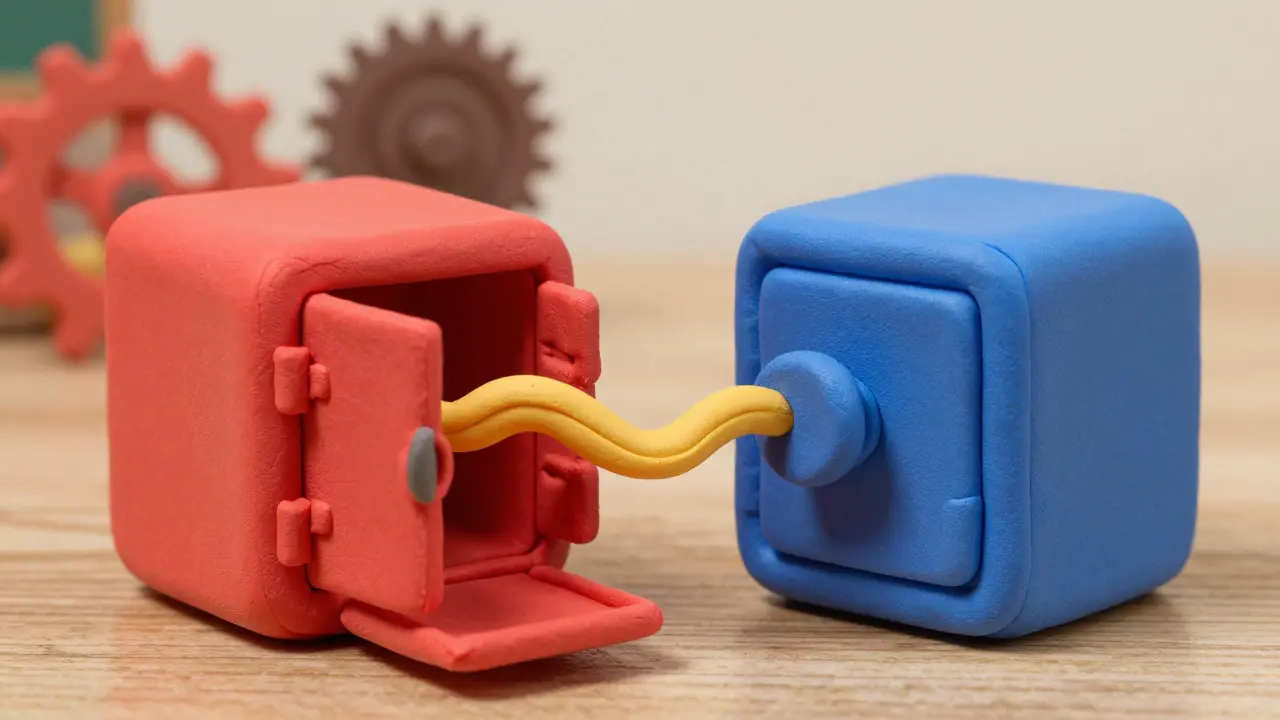
The technical architecture of Interdax separates it from competitors through its Sub-Account System is a risk management feature splitting funds into two distinct wallets within a single login. Most exchanges lump all your balance into one hot wallet. Interdax divides them to give you granular control over leverage.
Let's visualize how this works:
| Account Type | Primary Function | Fund Accessibility |
|---|---|---|
| Sub-Account 1 | Active Trading Positions | Funds here are locked in open trades |
| Sub-Account 2 | Cash Reserve / Margin Buffer | Transferable instantly to Account 1 for more leverage |
This setup solves a common problem for manual traders. On standard exchanges, you deposit $1000, and your leverage limit is fixed based on that total balance. With Interdax, you can keep a reserve in Sub-Account 2. If your position in Sub-Account 1 starts moving against you, you can transfer funds from the reserve account to cover maintenance margins without closing the position. This creates a dynamic form of self-hedging that helps prevent liquidation during volatile markets.
You can adjust your leverage up to 100x by shifting these funds freely. The transactions between accounts are free and instant. This is powerful, but it requires discipline. New traders often max out leverage too quickly. If you aren't comfortable managing margin calls manually, this feature could work against you.
Fee Structure and Hidden Costs
When evaluating profitability, the cost basis is everything. Interdax boasts some of the most competitive rates in the industry.
- Taker Fee: 0.05%
- Maker Fee: 0%
- Withdrawal Fees: Generally standard network gas fees apply
A 0% maker fee is incredibly attractive for liquidity providers. If you place limit orders that sit on the order book until filled, you pay nothing to execute. This effectively lowers your entry cost compared to platforms charging 0.02% to 0.04% maker fees. Even compared to giants like Bybit is a major crypto futures platform offering derivatives, Interdax holds its own ground.
However, you must factor in the spread-the difference between buy and sell prices. During periods of extreme volatility, spreads can widen. Since Interdax relies on an algorithmic market model, slippage can occur if liquidity is thin. While the explicit fees are low, execution quality matters more than the percentage charged when you are trading large sizes.
Security Protocols and Regulatory Reality
The question on everyone's mind is safety. Can you trust your funds on an unregulated exchange?
Interdax implements several layers of protection despite the lack of external audits:
- Two-Factor Authentication (2FA): Mandatory via Google Authenticator for all critical actions.
- PGP Encryption: All communications regarding transfers are encrypted, protecting your metadata.
- Shielded Multi-Signature Scheme: A proprietary security method to protect customer funds from unauthorized internal access.
These features are robust for a platform of its size. However, the "unregulated" tag carries weight. In 2025 and heading into 2026, regulatory pressure on global crypto markets has intensified. Exchanges located in jurisdictions like the EU face strict MiCA regulations. Interdax, operating from the Seychelles is an island country serving as the incorporation hub for the exchange, avoids these direct mandates. This freedom is what keeps them running, but it also means you don't have the same recourse a bank account holder has.
There is no insurance fund disclosed publicly comparable to FDIC banking protections. If the exchange were to fail technically, recovery is uncertain. For this reason, experts recommend only trading with funds you can afford to lose and never leaving large amounts on any exchange, regardless of its security claims. Cold storage remains the gold standard for holding assets.
Market Position Against Alternatives
To truly judge Interdax, we have to compare it to the heavyweights. Here is how it stacks up against similar services available in 2026.
| Platform | Max Leverage | KYC Required | Fiat Support |
|---|---|---|---|
| Interdax | 100x | No | No |
| Binance Futures | 125x | Yes | Yes |
| BitMEX | 100x | Yes | No |
| Coinbase Prime | 3x | Yes | Yes |
Binance offers higher leverage and deeper liquidity, making it safer for institutional-sized moves, but they require full identification. Coinbase is fully regulated but restricts leverage to 3x, rendering it useless for aggressive traders. BitMEX used to be the king of high leverage but has recently increased compliance requirements. Interdax sits in the sweet spot of "High Leverage + Anonymity." It competes best in a specific niche where privacy is valued over convenience.
Liquidity can be the bottleneck. CoinGecko data from Q1 2025 showed major players processing trillions in volume. Interdax is a niche player. Order books aren't as thick. If you plan to trade millions of dollars in a single click, slippage on Interdax could eat your profits. For retail traders handling smaller capital, the liquidity is generally sufficient.
User Experience and Developer Tools
The interface is web-based, requiring no software installation. It runs smoothly on modern browsers. For those who automate strategies, Interdax provides REST and Websocket APIs. Developers can access documentation with code examples in Python and JavaScript. This integration capability allows for algorithmic trading bots, a feature crucial for professional operations.
They also offer a Testnet environment. Before risking real capital, you can practice with demo BTC, ETH, and USDT. This feature alone makes it superior to some legacy exchanges that force you to learn by burning money. The testnet mimics the live environment accurately enough to test execution logic.
Is Interdax suitable for beginners?
Probably not. The platform targets intermediate to advanced traders. The ability to toggle 100x leverage and manage complex sub-accounts introduces significant risk of loss for those unfamiliar with margin mechanics. Start with the Testnet to get your bearings before depositing real funds.
Can I deposit cash directly into Interdax?
No. Interdax does not support fiat currency (USD, EUR, etc.). You must acquire cryptocurrency elsewhere and transfer it to the exchange. This adds a step to the onboarding process but preserves privacy.
Why is Interdax considered risky?
The primary risk is its unregulated status. Being incorporated in Seychelles means it falls outside major financial oversight bodies. While their internal security is good, lack of regulation means no formal insurance for funds if the platform faces a catastrophic event.
What is the purpose of Sub-Account 2?
Sub-Account 2 acts as a reserve fund. It holds assets separate from your active trading positions. You can move funds here to lower leverage or move them back to Sub-Account 1 to increase position size, giving you immediate control over exposure without needing external withdrawals.
Are there limits on withdrawals?
While specific limits vary by asset network, generally Interdax allows standard blockchain transaction times. Due to the 2FA and PGP measures, security checks may delay processing slightly to verify request integrity, but there are no rigid fiat banking delays.
Lisa Walton
April 1, 2026 AT 17:27Seychelles sounds like a vacation spot until you realize your life savings disappear into the sea
The sub-account feature looks clever on paper but mostly just gives you more ways to lose money faster than usual
We pretend we understand margin calls when really we are just gambling with borrowed house
Joy Crawford
April 2, 2026 AT 07:29I am always scared about putting my money into these places because nothing feels safe anymore and I worry every single night :.
People say they are secure but security is just a word they use to sell trust and trust is fragile like glass in this digital world
I remember reading about exchanges collapsing overnight and losing everything so I hesitate even when others rush forward without thinking twice about consequences
The idea of hiding behind anonymity feels good but it also feels wrong because you don't know who holds the keys or where the servers actually live physically
It makes me sad to think about families losing their retirement to a leveraged trade gone wrong during some volatile crash event nobody saw coming
We chase high numbers and percentages but forget that the base layer is always unstable sand shifting under our feet constantly
Even with encryption and PGP protocols the human element remains the weakest link in any chain protecting your actual assets from theft
I wish there was a way to trade without the constant fear gnawing at your brain cells while you wait for price action to move in your favor
Most of us ignore the warning signs because greed blinds us to the red flags waving clearly right in front of our eyes repeatedly
This platform might work for a month but what happens when regulators finally decide to shut the door quietly without warning anyone beforehand
I hope nobody loses everything because I cannot stand seeing people suffer financially due to bad system designs built for profit instead of safety
It is lonely trying to explain these risks to friends who only see green candles on their screens today ignoring the eventual crash tomorrow
You can call me paranoid but I would rather hold cold storage than leave coins on a server owned by anonymous guys overseas somewhere unknown
There is a deep sadness involved in realizing that financial freedom requires accepting infinite risk instead of managed growth strategies
We need better protections before we all get swept up in the next wave of regulatory crackdowns sweeping away unregistered platforms globally soon enough :.
Wade Berlin
April 4, 2026 AT 04:37Nobody survives 100x leverage long enough to complain about fees anyway.
Colin Finch
April 5, 2026 AT 02:55Privacy is a ghost haunting the halls of traditional finance whispering promises of freedom while regulation lingers like a fog outside the windows
There is poetry in trading without a name yet tragedy lies in the silence when the lights go out forever
Tools shape us just as much as we shape the tools especially when those tools offer infinite power wrapped in anonymity
I believe the spirit of the market demands transparency but the heart of the trader craves the shadow
We are dancing on a tightrope strung over a canyon of digital debt and hoping the wind stays still
Justin Garcia
April 6, 2026 AT 21:32You are all asleep at the wheel if you think this Seychelles shell game works indefinitely
Greed always finds a way to bleed you dry regardless of how many extra accounts you create