KaiaSwap Review 2026: Is This Micro DEX Worth Your Time?
 Jun, 8 2026
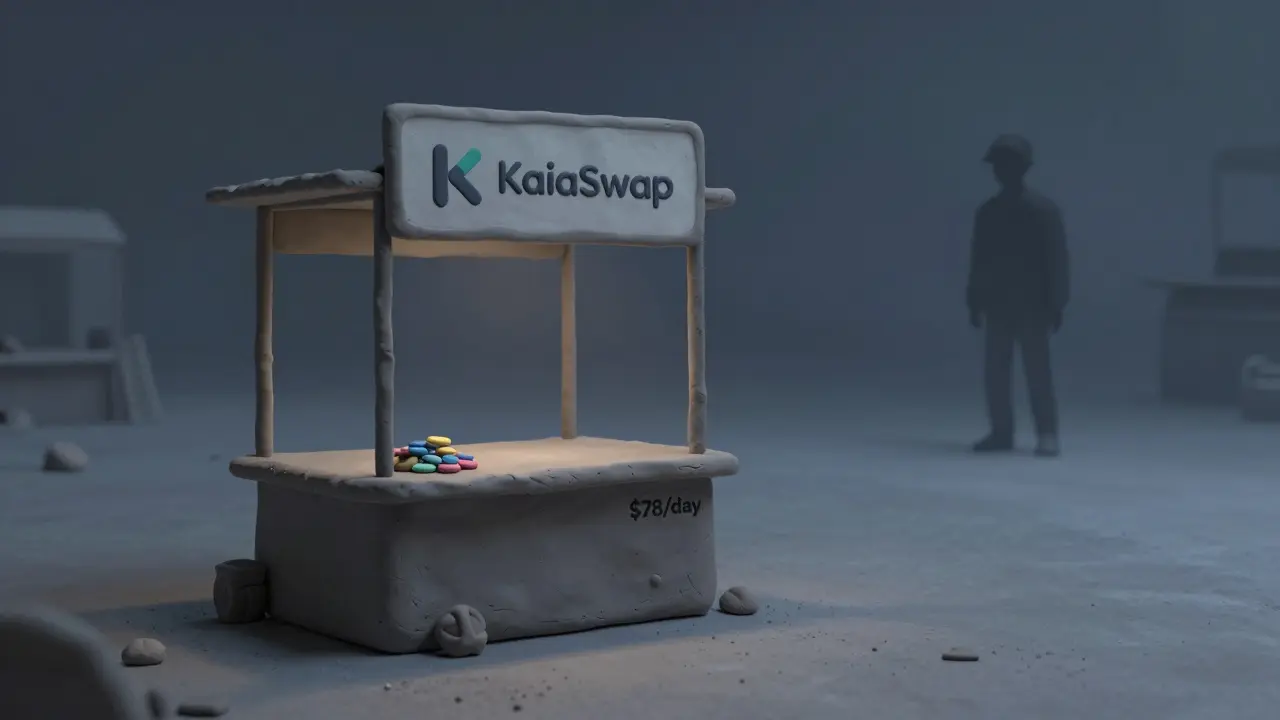
Picture this: you’re holding some Kaia tokens and want to swap them for another asset in the ecosystem. You hear about a platform called KaiaSwap. It sounds simple, right? But when you look closer at the numbers from late 2025 into 2026, things get weird. The daily trading volume is sitting around $78. That’s less than the cost of a fancy lunch in Boulder.
This isn’t a typo. According to data tracked by CoinGecko through December 2025, KaiaSwap operates with extreme limitations. If you are looking for a robust place to trade crypto with deep liquidity and low slippage, you might be disappointed. However, if you are deeply embedded in the Kaia blockchain (formerly known as Klaytn) ecosystem and need to move specific niche tokens, it serves a very narrow purpose. Let’s break down exactly what this exchange is, who it is for, and why you should probably think twice before connecting your wallet.
What Exactly Is KaiaSwap?
KaiaSwap is a decentralized cryptocurrency exchange (DEX) established in 2024 that operates exclusively on the Kaia blockchain. Unlike centralized exchanges like Coinbase or Binance, where a company holds your funds, KaiaSwap uses smart contracts to facilitate trades directly between users. It relies on an Automated Market Maker (AMM) model, which means you trade against a pool of liquidity provided by other users rather than matching with a specific buyer or seller order book in the traditional sense.
The platform was built specifically to support the Kaia Foundation's network. Kaia itself is a Layer 1 blockchain that originated from South Korea, formerly operating under the name Klaytn. It has strong corporate ties in Asia, including partnerships with LG Electronics and Shinhan Bank. KaiaSwap acts as the primary native gateway for swapping assets within this specific environment. Its main quote currency is WKLAY (Wrapped KLAY), which allows the native token to be used in smart contract interactions.
The Numbers Don't Lie: Liquidity and Volume Crisis
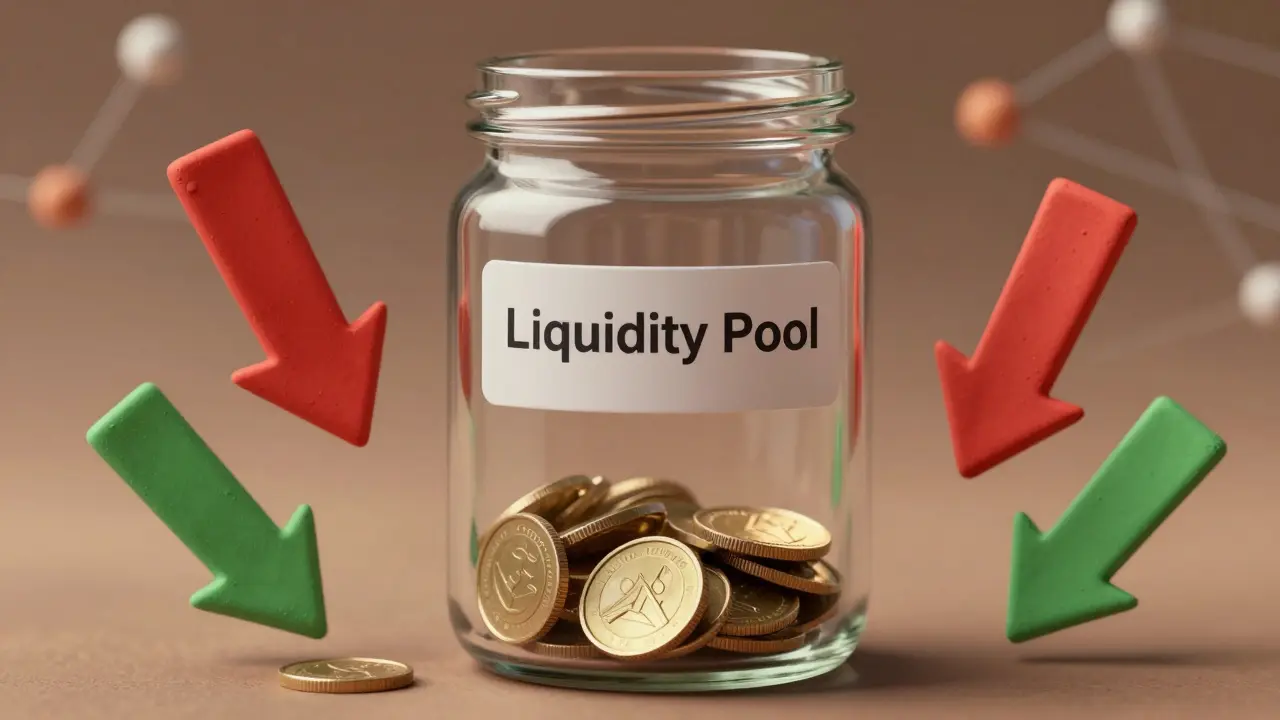
Here is where we need to have a serious conversation. In the world of decentralized finance (DeFi), liquidity is king. Without it, you face massive slippage-meaning you sell one token but get significantly less value back because there isn’t enough money in the pool to fill your order at the expected price.
As of December 2025, KaiaSwap reported a 24-hour trading volume of just $78.73. To put that in perspective:
- Uniswap, the industry leader, processed over $1.24 billion in a single day.
- PancakeSwap handled roughly $487 million.
- Even smaller, niche competitors like Trader Joe saw $28.3 million in volume.
KaiaSwap’s volume represents a mere 0.00024% of the total DEX market. When you try to trade on a platform with such thin liquidity, the spread-the difference between the buy and sell price-widens drastically. KaiaSwap’s average bid-ask spread sits at 0.752%, which is high for a basic swap. For the most active pair, STKAIA/WKLAY, the spread can hit 0.9%. If you are trading large amounts, you will lose significant value instantly due to these spreads and shallow order book depths (often under $100).
| Exchange | 24h Volume | Trading Pairs | Primary Chain | Liquidity Depth |
|---|---|---|---|---|
| KaiaSwap | $78.73 | 4 | Kaia | Very Low ($45-$107) |
| Uniswap v3 | $1.24 Billion | 15,000+ | Ethereum/Multi-chain | High |
| PancakeSwap | $487 Million | 1,200+ | BSC/Aptos | High |
| Trader Joe | $28.3 Million | 500+ | Avalanche | Moderate |
Limited Selection: What Can You Actually Trade?
If you go to KaiaSwap expecting to find Bitcoin, Ethereum, or even popular stablecoins like USDT paired with major assets, you won’t find them. The platform currently supports only 4 coins and 4 trading pairs. This is an incredibly narrow selection.
The two most notable pairs are:
- STKAIA/WKLAY: This involves Staked KAIA. It accounts for about 70% of the exchange's tiny volume. If you are trying to unstake or restake your rewards within the Kaia ecosystem, this is likely your only native option without bridging out.
- PING/WKLAY: PING is a governance or utility token within specific Kaia-based projects. The depth here is slightly better at around $107, but still dangerously low for any meaningful trade size.
There are no cross-chain bridges integrated directly into the interface. You cannot swap ETH for KAIA here. You cannot trade USDC for WKLAY unless a specific pool exists (which it doesn't appear to based on current data). This makes KaiaSwap useless for general portfolio diversification. It is strictly a tool for moving assets already inside the Kaia walled garden.
User Experience and Technical Limitations
Using KaiaSwap requires a Web3 wallet compatible with the Kaia network. Most users will use Kaikas, a wallet specifically designed for this chain, or configure MetaMask to recognize the Kaia network parameters. The interface itself is barebones. There are no limit orders, no stop-losses, and no margin trading. You simply input an amount, see the estimated output (with a warning about high slippage if applicable), and sign the transaction.
One major drawback for modern mobile-first traders is the lack of a dedicated app. As of early 2026, KaiaSwap is not available on the Apple App Store or Google Play Store. You must access it via a mobile browser, which can be clunky compared to the smooth experiences offered by PancakeSwap or Uniswap apps.
Customer support is virtually non-existent. There is no help desk, no live chat, and minimal documentation. If something goes wrong with your transaction-say, you send funds to the wrong address or get stuck in a failed swap-you are on your own. This is typical for decentralized platforms, but the lack of community resources (like active Discord servers or detailed guides) makes it riskier for beginners.
Is KaiaSwap Safe?
Safety in DeFi comes down to smart contract audits and code transparency. While KaiaSwap operates on the relatively secure Kaia blockchain, the exchange itself has limited public security disclosures. There are no widespread reports of hacks, but that’s partly because there isn’t enough money in the pools to make it a target for sophisticated attackers.
However, "safe" also means "reliable." With such low liquidity, the risk isn't necessarily theft; it's financial loss through slippage. If you try to swap $500 worth of tokens on a pool with only $100 in depth, you could end up receiving almost nothing in return. Always check the "Slippage Tolerance" setting before confirming any trade on KaiaSwap.
Who Should Use KaiaSwap? (And Who Should Avoid It)
Let’s be realistic about the use cases. KaiaSwap is not for everyone. In fact, it’s for almost no one outside a very specific group.
You might consider using KaiaSwap if:
- You hold STKAIA or PING tokens and need to convert them to WKLAY quickly without leaving the Kaia network.
- You are participating in a specific Kaia-native yield farming protocol that requires tokens to be swapped within this specific DEX.
- You are a developer testing transactions on the Kaia testnet or mainnet and need a simple interface for gas-efficient swaps of native assets.
You should avoid KaiaSwap if:
- You want to trade major cryptocurrencies like BTC, ETH, or SOL.
- You care about getting the best possible price (low slippage).
- You are new to crypto and need customer support or educational resources.
- You want to bridge assets from other chains like Ethereum or BSC.
Better Alternatives for Kaia Users
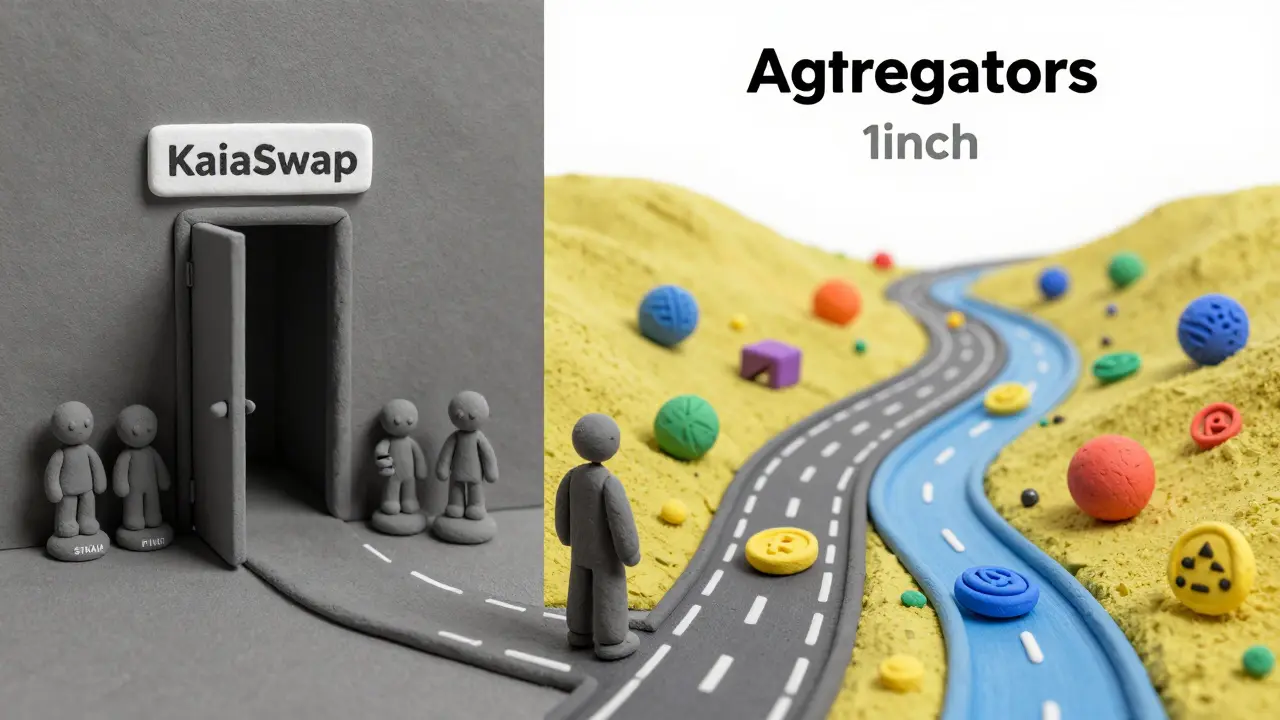
If you are interested in the Kaia ecosystem but need more functionality, you have options. While KaiaSwap is the "native" DEX, many users prefer aggregators or larger multi-chain platforms that support Kaia.
1inch and Matcha are excellent alternatives. These are DEX aggregators. They split your order across multiple exchanges (including KaiaSwap, if necessary, but mostly others) to find you the best rate. Even if KaiaSwap has poor liquidity, an aggregator might route your trade through a bridge to a deeper pool on another chain, saving you money on slippage.
Additionally, keep an eye on the broader Kaia DeFi landscape. Projects like Clv.Finance or other lending protocols on Kaia often have their own swap interfaces or partner with more liquid DEXs. The ecosystem is growing, but slowly. Daily active addresses on Kaia rose by 21.5% in 2025, but this hasn't yet translated into massive DEX volume.
Final Verdict: A Niche Tool, Not a Trading Platform
KaiaSwap fills a technical gap-it provides a way to swap tokens on the Kaia blockchain without relying on external bridges. But as a trading venue, it fails on every major metric: volume, liquidity, selection, and user experience. With a daily volume of less than $80, it is effectively a ghost town.
For the average crypto investor, I recommend sticking to established aggregators like 1inch or using centralized exchanges for major pairs. Only connect your wallet to KaiaSwap if you absolutely must trade STKAIA or PING and have no other option. And even then, proceed with caution, double-check your slippage settings, and never trade more than you can afford to lose to fees and bad pricing.
Is KaiaSwap safe to use?
KaiaSwap operates on the secure Kaia blockchain, but its safety is compromised by extremely low liquidity. While there is little risk of hacking due to small pool sizes, there is a high risk of financial loss through slippage. Always verify smart contract addresses and use reputable wallets like Kaikas or MetaMask.
Why is KaiaSwap's trading volume so low?
The volume is low because KaiaSwap is a new, specialized DEX with only 4 trading pairs. It lacks marketing, liquidity mining incentives, and broad token support. Most traders prefer larger platforms like Uniswap or aggregators like 1inch that offer better prices and more options.
Can I trade Bitcoin or Ethereum on KaiaSwap?
No. KaiaSwap currently only supports 4 coins, primarily focused on Kaia-native assets like STKAIA, PING, and WKLAY. It does not support major cryptocurrencies like BTC or ETH, nor does it offer cross-chain bridging features.
What wallet do I need for KaiaSwap?
You need a Web3 wallet compatible with the Kaia network. The most common choice is Kaikas, a browser extension wallet built for Kaia. You can also use MetaMask if you manually add the Kaia network configuration details.
Are there better alternatives to KaiaSwap?
Yes. For better prices and liquidity, use DEX aggregators like 1inch or Matcha, which can route your trades across multiple exchanges. If you need to trade major tokens, stick to centralized exchanges like Coinbase or Binance, or larger DEXs like Uniswap.
Does KaiaSwap have a mobile app?
No, KaiaSwap does not have a dedicated mobile application on iOS or Android. Users must access the platform through a mobile web browser, which may offer a less optimized experience compared to native apps.
What is WKLAY?
WKLAY stands for Wrapped KLAY. It is a tokenized version of the native Kaia (formerly Klaytn) token that allows it to be used in smart contracts and decentralized applications on the network. It serves as the primary quote currency on KaiaSwap.
Lee Paige
June 9, 2026 AT 05:05They are trying to bury the truth about centralized control disguised as decentralization. The low volume is not an accident; it is a calculated suppression of organic growth to force users into compliant, monitored ecosystems. Do not trust these 'native' gateways.
Caitlin Donahue
June 9, 2026 AT 10:35i mean like its kinda sad but also makes sense? if nobody uses it then why would they update it lol
Karthikeyan S
June 10, 2026 AT 13:29look at this garbage 💀💀💀 who even designed this interface?? it looks like it was built in 2015 by someone who hates money. i tried swapping $10 and lost half to slippage. absolute scam vibes. stay away people 🚩🚩🚩
Steven Jacobowitz
June 11, 2026 AT 10:30You need to understand the underlying mechanics of automated market makers to grasp why this fails. The liquidity depth is insufficient for any meaningful arbitrage or large-cap movement. It is fundamentally broken from a technical standpoint.
Sylvia Mossman
June 13, 2026 AT 02:25Oh please, stop acting like KaiaSwap is the only option. You guys are so obsessed with niche chains that you forget basic economics. If a platform has less volume than my grocery bill, it’s dead. Move on.
Alexis Abster
June 14, 2026 AT 07:54I feel your pain! It is so frustrating when projects promise the moon and deliver a rock. But hey, maybe one day they will fix it! We have to keep hope alive, right? The community spirit must remain strong despite these setbacks!
Brad Ranks
June 15, 2026 AT 14:47I literally cried when I saw the spread on that STKAIA pair. My heart dropped out of my chest. It was a tragic moment for finance. I felt betrayed by the blockchain itself. Why does this happen to me?
Yogendra Dwivedi
June 15, 2026 AT 19:31It seems like the ecosystem is still finding its footing. Perhaps focusing on aggregators like 1inch is a more prudent approach for now until native liquidity improves significantly.