KCAKE Airdrop by KangarooCake: What We Know and What’s Missing
 Mar, 23 2026
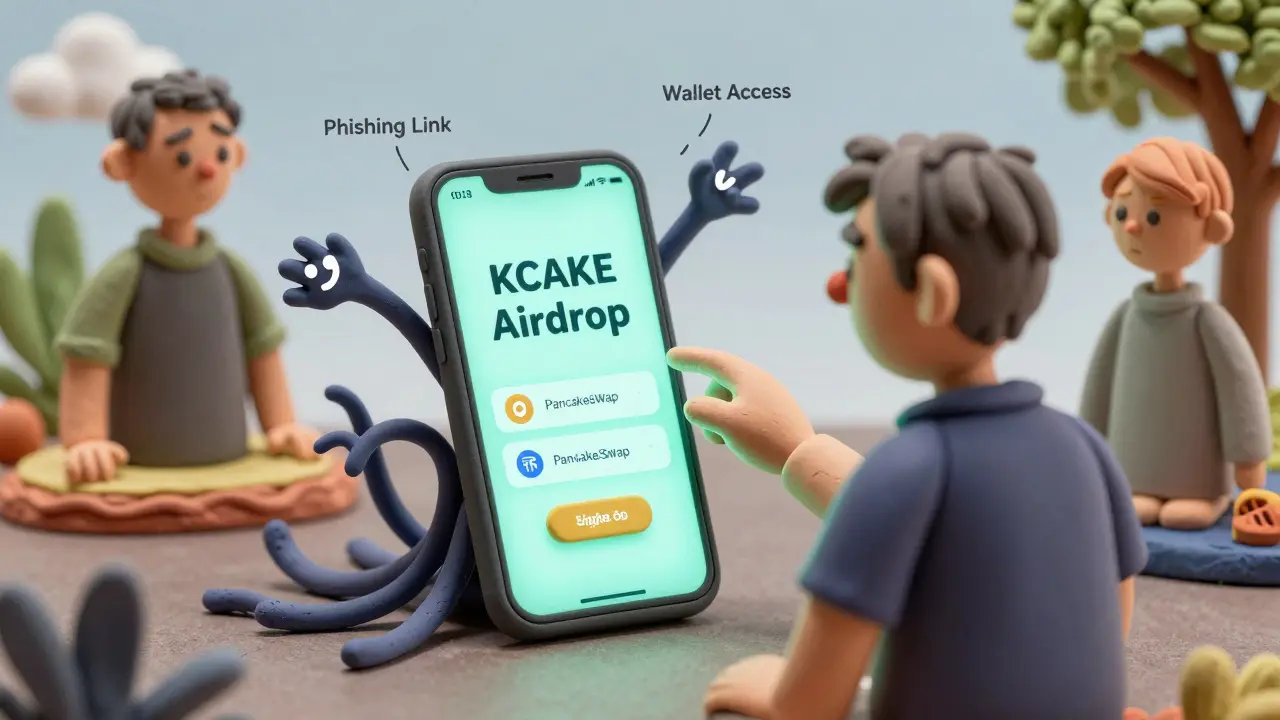
There’s no verified KCAKE airdrop by KangarooCake - at least not yet. If you’ve seen ads, tweets, or Discord posts promising free KCake tokens, you’re likely being targeted by a scam or a rumor. As of March 2026, no official project named KangarooCake has launched a token called KCAKE, and no legitimate airdrop program exists under that name.
This isn’t just a case of missing information. It’s a red flag. The crypto space is flooded with fake projects that copy names from real ones - like PancakeSwap’s CAKE token - to trick people into giving up private keys, paying gas fees, or joining phishing links. If you’re searching for details about KCAKE, you’re not alone. But here’s what you need to know before you click anything.
Why You Can’t Find Details About KCAKE
Search engines, crypto databases like CoinMarketCap and CoinGecko, and blockchain explorers like BscScan don’t list a token called KCAKE. There’s no whitepaper. No GitHub repo. No official website. No verified social media accounts with more than a few hundred followers. Even major crypto news sites like CoinDesk, The Block, and Cointelegraph have no articles about KangarooCake or KCAKE.
Compare that to real airdrops. Take PancakeSwap’s CAKE token airdrops for Coinbase One members. Those are well-documented: $4,200 in CAKE distributed every two weeks to users who trade at least $100 across BNB Chain, Base, or Arbitrum. The rules are clear. The eligibility criteria are public. The smart contracts are audited and verifiable.
KCAKE has none of that.
What KangarooCake Might Be (And Why It’s Dangerous)
The name “KangarooCake” sounds like a mashup of two things: the popular meme coin culture (think Dogecoin) and PancakeSwap’s CAKE token. It’s designed to feel familiar - to trick you into thinking it’s part of the same ecosystem. But that’s exactly how scams work.
There’s a real company called KangarooCake that sells themed cakes - yes, actual food cakes shaped like kangaroos. That’s unrelated. But scammers use the name to create fake websites that look like they’re selling “KCAKE tokens” or “KangarooCake NFTs.” They’ll ask you to connect your wallet. They’ll say you need to pay a small fee to “claim” your tokens. They’ll even show fake dashboard screenshots with numbers rising.
Once you approve a transaction, they drain your wallet. Not $5. Not $50. Sometimes $5,000. We’ve seen cases where users lost their entire holdings because they trusted a name that sounded legit.
How to Spot a Fake Airdrop
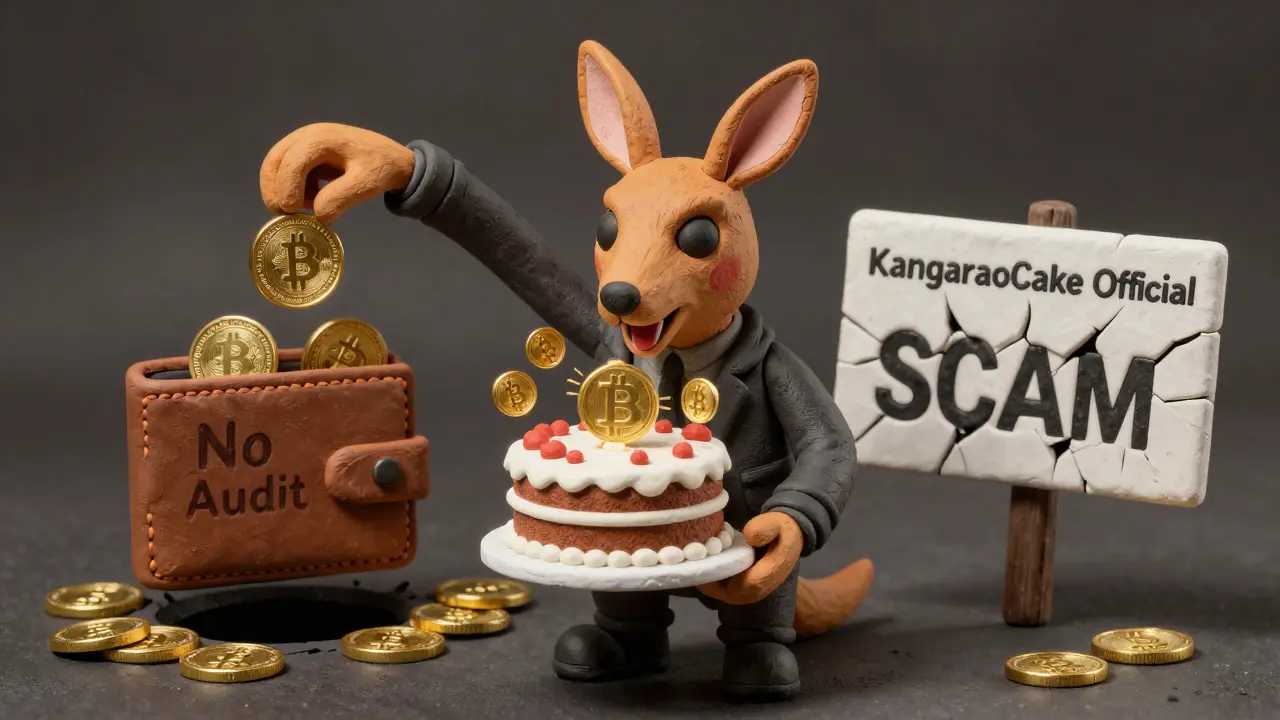
Here’s a quick checklist to protect yourself:
- No official website? Real projects have .com or .org domains with clear team info, roadmaps, and contact emails.
- Asking for wallet access? Legit airdrops don’t ask you to connect your wallet before claiming. They use third-party platforms like LayerZero or airdrop.io - never direct contract interactions.
- Pressure to act fast? “Limited spots!” or “Claim in 24 hours!” is a classic scam tactic.
- No audit? If the token contract isn’t audited by CertiK, Hacken, or SolidProof, treat it like a landmine.
- Only on Telegram or Discord? Real projects have Twitter (X), GitHub, and Medium. If it’s only on private chat groups, run.
Remember: if it sounds too good to be true - free tokens, guaranteed returns, no effort needed - it is.
What to Do Instead
If you’re looking for real crypto airdrops, here are safer options:
- Follow PancakeSwap - they run regular CAKE rewards for users who trade on their platform.
- Check Coinbase One - eligible members get CAKE tokens every two weeks as part of their subscription.
- Use AirdropAlert.com - it vets every listing and flags fake campaigns.
- Join LayerZero or Starknet airdrops - these have public eligibility criteria and verified token distributions.
None of these require you to send crypto or give up your seed phrase.

What Happens If You’ve Already Engaged
If you’ve connected your wallet to a KangarooCake site or clicked a link claiming to give you KCAKE tokens, take these steps immediately:
- Disconnect all approvals using revoke.cash (yes, this link is safe - it’s a well-known tool).
- Check your wallet’s transaction history on BscScan or Etherscan. Look for any recent approvals or transfers you didn’t make.
- If funds were stolen, there’s no recovery. But you can prevent future theft by moving your remaining assets to a new wallet.
- Report the scam to the FTC and IC3.
Don’t wait. Scammers reuse the same phishing links across dozens of fake projects. The sooner you act, the less damage they can do.
The Bigger Picture
This isn’t just about one fake token. It’s about how easy it is to exploit hype in crypto. Projects with real utility - like decentralized exchanges, lending protocols, or gaming networks - don’t need to rely on fake airdrops to gain attention. They build products. They earn trust.
KangarooCake, as a brand, doesn’t exist in blockchain. And KCAKE? It’s not a token. It’s a trap.
The next time you see a name that sounds like a real project, pause. Google it. Check the domain. Look for audits. Ask in a crypto forum. Don’t let a clever name fool you.
Shayne Cokerdem
March 24, 2026 AT 09:50Brad Zenner
March 25, 2026 AT 11:06Always check revoke.cash after any interaction. And never, ever trust a Discord DM with a link.
Pradip Solanki
March 27, 2026 AT 03:25aravindsai pandla
March 28, 2026 AT 07:52The checklist you provided should be shared in every local community group. A simple image with these five points could prevent hundreds of losses.
Kevion Daley
March 28, 2026 AT 21:32Also, I just used revoke.cash and found 7 approvals I didn't know I gave. One was from 'KangarooCake-Lite' last week. Yikes.
Thanks for the heads-up. Now I'm gonna go move my assets to a hardware wallet. 😅
Domenic Dawson
March 30, 2026 AT 02:38This post is basically the checklist I’ve been using. Thank you. I’m sharing it with her right now.
Also-side note-KangarooCake the bakery is actually amazing. I ordered one for my niece’s birthday. The chocolate kangaroo had tiny fondant ears. It was cute. Not crypto. But still, delicious.