Korbit Crypto Exchange Review: Is It Worth Using in 2026?
 May, 18 2026
Buying Bitcoin with Korean Won feels different than buying it with Dollars or Euros. If you are sitting in Seoul, Busan, or anywhere in South Korea, the friction of converting fiat to crypto is a massive hurdle. This is where Korbit comes into play. Founded in 2013 by Kangmo Kim and co-founders Louis Jinhwa Kim and Tony Lyu under the banner of Korea Bitcoin Exchange Co., Ltd., Korbit was the first exchange in South Korea to offer BTC/KRW trading pairs. Today, it stands as one of the most established names in the region’s digital asset market.
But does being the oldest mean it is the best? Not necessarily. The crypto landscape has shifted dramatically since 2013. With new regulations, stricter security standards, and fierce competition from global giants, Korbit has had to evolve. In this review, we break down whether Korbit remains a viable option for traders in 2026, looking at its fees, security, user experience, and strict eligibility requirements.
The Verdict: Who Should Use Korbit?
Before diving into the technical details, let’s get straight to the point. Korbit is not for everyone. In fact, it is almost exclusively for residents of South Korea who need seamless integration with local banking systems.
- Best For: South Korean residents who want to trade major cryptocurrencies using KRW (Korean Won) with minimal friction.
- Good For: Beginners who prefer a simple, clean interface over complex charting tools.
- Not For: International users outside of South Korea. You will likely face verification blocks or inability to deposit funds.
- Not For: Advanced traders needing deep liquidity on obscure altcoins or advanced derivatives like futures and options.
If you fit the "Best For" category, Korbit offers a stable, regulated environment that many offshore exchanges cannot match. If you do not, you might find yourself frustrated by the geographic limitations.
Security and Regulatory Compliance
In the world of cryptocurrency, trust is earned through security and compliance. Korbit has spent over a decade building this trust within the South Korean regulatory framework. As of 2026, the exchange operates under the leadership of CEO Oh Se-jin and maintains strong backing from major shareholders including NXC, SK Square, and Nexon. These tech-heavy investors have helped raise $82.5 million in venture capital, providing the financial muscle needed to maintain robust infrastructure.
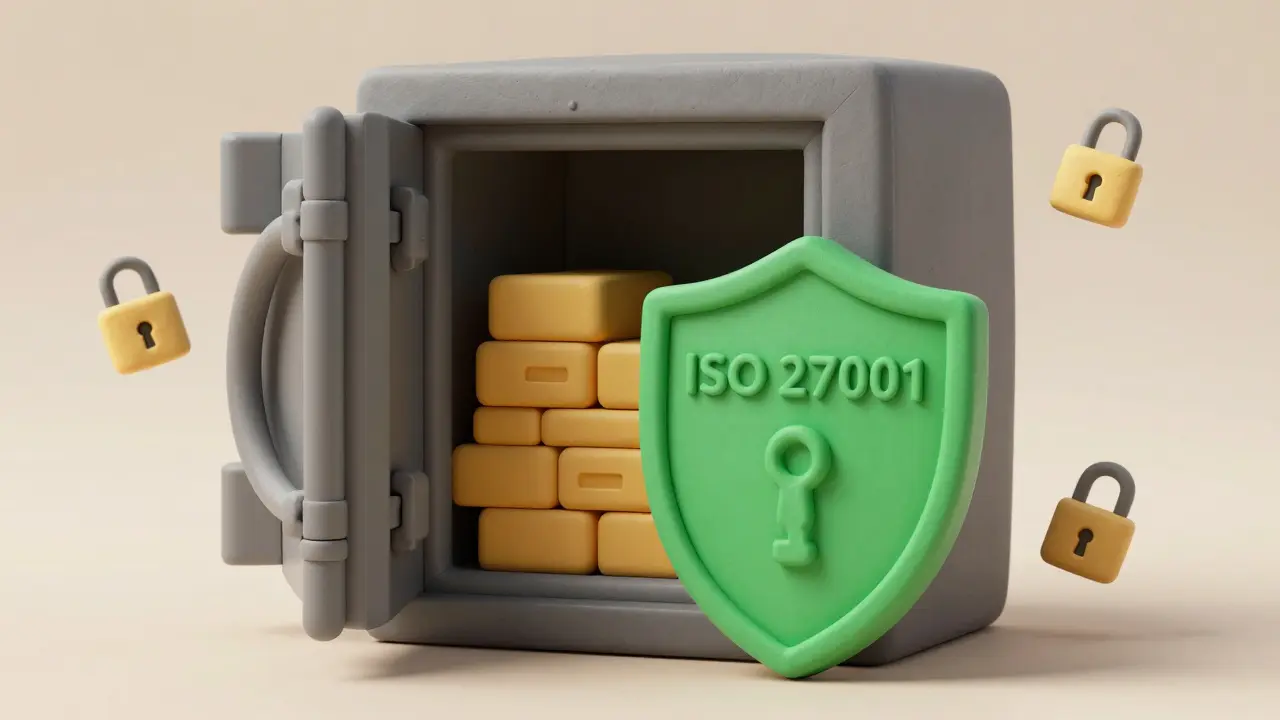
One of Korbit’s biggest selling points is its certification history. In July 2018, it became the first Korean crypto exchange to achieve ISO 27001 certification, an international standard for information security management. It also holds SOC 1 Type 2 certification for financial internal controls. These aren’t just buzzwords; they mean independent auditors regularly check their systems for vulnerabilities.
From a practical standpoint, Korbit uses cold storage for the majority of user funds. This means your coins are kept offline, away from potential hackers. The platform also enforces two-factor authentication (2FA) for all accounts. However, unlike some newer competitors like OKX or Kraken, Korbit does not yet utilize advanced biometric features like facial recognition for login security. While this isn’t a dealbreaker, it highlights a slight lag in adopting the latest identity verification technologies.
Regulatory compliance is another double-edged sword. Korbit strictly adheres to the rules set by the Korean Financial Intelligence Unit (KoFIU). This ensures the platform is safe from sudden shutdowns but results in rigorous Know Your Customer (KYC) checks. You cannot hide here. Every transaction is monitored, and every user must be verified.
Fees and Trading Costs
Trading fees can eat into your profits faster than bad market timing. Korbit keeps things relatively straightforward with two main fee structures. Understanding which one applies to you is crucial for calculating your break-even point.
| Fee Plan | Maker Fee | Taker Fee | Best For |
|---|---|---|---|
| Basic Plan | 0.1% | 0.1% | Casual traders, beginners |
| Free Plan | 0.0% | 0.2% | High-volume limit order users |
The Basic plan charges a flat 0.1% on both makers (those who add liquidity via limit orders) and takers (those who remove liquidity via market orders). This is competitive compared to many international exchanges that often charge 0.1% to 0.2% for retail users.
The Free plan is interesting. It offers 0.0% fees for makers. If you are a patient trader who places limit orders and waits for the market to come to you, you can trade without paying any commission. However, if you use market orders to buy or sell instantly, you pay a higher taker fee of 0.2%. This structure encourages patience and adds depth to the order book, which benefits the overall ecosystem.
Keep in mind that there are minimum thresholds. The minimum deposit is KRW 10,000, and the minimum trade size is KRW 5,000. These low barriers make it easy for small-scale investors to start, but high-frequency scalpers might find the fixed costs less efficient than zero-fee platforms.
Supported Cryptocurrencies and Trading Pairs
Unlike Binance or Coinbase, which list hundreds or even thousands of tokens, Korbit takes a selective approach. As of late 2025, the platform supports approximately 192 Crypto/KRW trading pairs. This number includes both major assets and some niche projects, but the focus remains on quality and liquidity rather than quantity.
The core lineup includes the essentials:
- Bitcoin (BTC): The primary store of value.
- Ethereum (ETH): The leading smart contract platform.
- Ripple (XRP): Popular for cross-border payments.
- Litecoin (LTC): Often used for quick transactions.
- Bitcoin Cash (BCH) and Bitcoin Gold (BTG): Forks of Bitcoin.
- Zcash (ZCH) and Monero (XMR): Privacy-focused coins.
You will also find older altcoins like Dash, Augur, Steem, and Ethereum Classic (ETC). Notice what is missing? Many of the trendy meme coins or newly launched DeFi tokens you see on Twitter are not here. Korbit prioritizes assets that have survived market cycles and have established use cases. For a conservative investor, this is a safety feature. For a degenerate gambler looking for the next 100x gem, it is a limitation.
All trades are paired against the South Korean Won (KRW). There are no USDT or EUR pairs. This simplifies the mental math for locals but isolates the platform from the global crypto economy. If you want to trade ETH for BTC directly, you may need to execute two separate trades (ETH to KRW, then KRW to BTC), incurring fees twice.
User Experience and Interface
When you log into Korbit, you are greeted with a clean, minimalist design. The web interface and mobile applications are intuitive, making them ideal for beginners. The navigation is logical: Deposit, Trade, Withdrawal, and Portfolio are clearly marked. There is no cluttered dashboard filled with confusing widgets.
However, experienced traders might feel limited. The charting tools are basic. While you can view price history and place orders, you won’t find the advanced technical analysis indicators available on TradingView-integrated platforms. If you rely on complex Fibonacci retracements or custom moving averages, you might find yourself switching between Korbit for execution and another platform for analysis.
The mobile app performs well, reflecting the high mobile usage rates in South Korean financial services. Recent updates in 2025 focused on optimizing the mobile experience, ensuring that trading on the go is smooth and responsive. The app supports all key functions, including deposits, withdrawals, and spot trading.
Customer support is a mixed bag. Reviews suggest that while the team is helpful, response times can be slow during peak market volatility. Most issues are resolved, but if you are stuck in the middle of a trade and need immediate assistance, you might face a wait. Email support is the primary channel, with live chat availability varying based on time zones and server load.

Account Setup and Verification
Getting started with Korbit requires more than just an email address. Due to strict Korean financial regulations, the verification process is rigorous. New users must complete three levels of identity verification beyond the initial email confirmation.
- Email Verification: Standard step to confirm your inbox.
- Identity Verification: Uploading government-issued ID and possibly proof of residence.
- Bank Account Linking: Connecting a South Korean bank account for fiat deposits and withdrawals.
This process typically takes 24 to 48 hours to complete. During this time, your account will have limited functionality. Once approved, you gain full access to deposit KRW and trade. The strict KYC (Know Your Customer) and AML (Anti-Money Laundering) protocols ensure that the platform remains compliant with KoFIU standards, reducing the risk of fraud and illegal activities.
For non-Korean residents, this is where the door closes. The system is designed to integrate with local banking networks, making it nearly impossible to fund an account from abroad. Even if you manage to verify your identity, you will likely struggle to move money in or out.
Beyond Spot Trading: Staking and NFTs
Korbit isn’t just about buying and selling. They offer additional services to help users grow their holdings. One notable feature is Ethereum staking. Users can stake their ETH to earn annual percentage rates (APR) of up to 5.2%. This was particularly attractive during the transition to Ethereum 2.0, offering passive income on idle assets.
The platform also hosts an NFT marketplace. While not as vibrant as OpenSea or Rarible, it provides a localized hub for South Korean artists and collectors to trade digital art and collectibles. Additionally, the "Piggybank challenge" feature encourages savings habits by allowing users to set aside small amounts of cryptocurrency regularly, gamifying the investment process.
Market Position and Future Outlook
As of October 2025, Korbit processes approximately $2.6 million in 24-hour trading volume, ranking it as the second-largest crypto exchange in South Korea by volume. This position is impressive given the competition from larger domestic players like Bithumb and Upbit, as well as international giants trying to enter the Korean market.
The exchange’s longevity is its greatest asset. Having operated since 2013, Korbit has survived multiple bull and bear markets, regulatory crackdowns, and technological shifts. Its future viability depends heavily on maintaining this regulatory moat. As long as South Korea continues to enforce strict compliance standards, Korbit’s adherence to these rules will protect it from the risks that plague unregulated offshore exchanges.
However, the company faces challenges. The lack of advanced trading features and limited altcoin selection could drive younger, more sophisticated traders to competitors. To stay relevant, Korbit will need to continue investing in platform optimization, particularly in mobile UX and potentially expanding its derivative offerings if regulations allow.
Can I use Korbit if I live outside South Korea?
Practically, no. While you might be able to create an account, the deposit and withdrawal processes are tightly integrated with South Korean banking systems. Without a local bank account and residency status, you will likely be unable to fund your account or withdraw funds.
Is Korbit safe for storing large amounts of crypto?
Korbit employs industry-standard security measures, including cold storage for the majority of funds, ISO 27001 certification, and SOC 1 Type 2 audits. However, no exchange is immune to risk. For very large holdings, it is always recommended to use a personal hardware wallet for long-term storage rather than leaving assets on any exchange.
What are the minimum deposit requirements?
The minimum deposit requirement for KRW is 10,000 KRW. The minimum trade size is 5,000 KRW. These low thresholds make the platform accessible for small-scale investors.
Does Korbit support USDT or other stablecoins?
No. Korbit exclusively supports trading pairs denominated in South Korean Won (KRW). You cannot trade Bitcoin for USDT directly on the platform. You would need to convert your crypto to KRW first.
How does Korbit compare to Binance or Coinbase?
Korbit is more specialized for the South Korean market. Unlike Binance or Coinbase, which serve a global audience with hundreds of currencies and fiat options, Korbit focuses solely on KRW pairs and local regulatory compliance. It offers fewer coins but deeper integration with local banks, making it easier for Koreans to buy and sell crypto without dealing with international wire transfers.