Legal Status of Cryptocurrencies in Russia: What’s Allowed and What’s Banned in 2025
 Dec, 27 2025
As of 2025, owning cryptocurrency in Russia is legal-but using it to pay for coffee, rent, or even a smartphone is not. The country has built a bizarre, two-tier system where only the wealthiest investors can legally trade crypto, while everyone else is stuck in a gray zone: they can hold it, but not spend it. This isn’t about banning technology-it’s about controlling money. And Russia’s approach is one of the most extreme in the world.
Own It, But Don’t Use It
You can buy Bitcoin, Ethereum, or any other cryptocurrency in Russia. There’s no law saying you can’t hold it in your wallet. But if you try to use it to pay for groceries, order a taxi, or settle a bill with a local business, you’re breaking the law. The Russian ruble-and soon, its digital version-is the only legal tender. That rule hasn’t changed since 2021, when the government passed the On Digital Financial Assets law. That law was meant to regulate tokenized securities and digital claims, but it deliberately left out Bitcoin and other decentralized coins. Why? Because the Central Bank of Russia (CBR) sees them as dangerous substitutes for the ruble.The CBR has been clear: cryptocurrencies aren’t money. They’re not issued by any government. They’re not backed by anything. And they’re too volatile. One day you own $10,000 worth of Ethereum; the next, it’s $6,000. The bank says that kind of risk doesn’t belong in the hands of ordinary people. So while you’re allowed to buy and hold crypto, using it as payment is banned. And if you try? You could face fines or even criminal charges.
The Two-Tier System: Only the Rich Can Play
Here’s where things get strange. While regular Russians are locked out, a tiny group of people can legally trade crypto-on a massive scale. In 2025, Russia launched an experimental legal regime that lets only “especially qualified investors” access cryptocurrency markets. To qualify, you need to have:- At least ₽100 million ($1.1 million) in securities or bank deposits
- Annual income of at least ₽50 million ($550,000)
That’s not just rich. That’s billionaire-tier. Companies can also qualify if they meet existing standards for qualified investors under Russian financial law. These people can now legally buy Bitcoin, trade crypto derivatives, and even invest in tokenized assets tied to cryptocurrency prices. But here’s the catch: they don’t even need to hold the actual coins. The CBR allows financial firms to offer crypto-linked derivatives-meaning you can bet on Bitcoin’s price without ever touching a wallet.
This system wasn’t created to help Russians get rich. It was created to help Russian companies survive sanctions. In 2025 alone, over 1 trillion rubles ($11 billion) in international trade was settled using cryptocurrencies. Russian exporters used Bitcoin and other coins to pay suppliers in Turkey, India, and China-bypassing Western banking systems that froze Russian banks after 2022. The CBR didn’t stop them. In fact, they gave them permission. It’s not about crypto being good. It’s about Russia needing a workaround.
The Digital Ruble Is the Real Goal
While the government lets a few billionaires trade Bitcoin, it’s pouring billions into its own digital currency: the digital ruble. The Central Bank started testing it in 2021, ran pilot programs with banks and retailers, and now has a clear launch date: September 2026. This isn’t just another app. It’s a state-controlled digital cash system that will replace physical cash over time.The digital ruble gives the government total control. Every transaction is tracked. No anonymity. No cross-border freedom. No risk of capital flight. Unlike Bitcoin, which is decentralized and global, the digital ruble is designed to keep money inside Russia’s financial system. It’s the perfect tool for a government that wants to use technology without losing control.
That’s why the CBR opposes free crypto. Not because it’s illegal-it’s just not useful for their goals. Bitcoin can’t be frozen. It can’t be taxed in real time. It can’t be shut down by a single bank. The digital ruble can. And that’s why the government is pushing it so hard.

What About Mining? Is That Legal?
Yes. Mining is still legal-and it’s one of the few crypto activities open to regular Russians. Since 2014, mining has been classified as a legitimate economic activity under Russian law. You can buy hardware, run rigs in your garage, and sell the coins you mine. Many Russians do. It’s one of the few ways to legally earn crypto without crossing into the forbidden zone of domestic payments.But even mining isn’t easy. Electricity costs have risen, and the government has started cracking down on illegal energy use. Some regions now require miners to register and pay taxes. Others have banned large-scale operations near residential areas. So while it’s legal, it’s not simple. And the profits? They’re shrinking. Still, for people without access to banks or foreign currency, mining is one of the few ways to get exposure to global markets.
Why Is the Government So Conflicted?
There’s a quiet war inside the Russian government. The Central Bank wants to ban crypto completely. They’ve called it a “money surrogate,” warned about scams, and insisted it threatens financial stability. Their stance is consistent: no crypto for the public. Ever.But the Treasury disagrees. Deputy Finance Minister Ivan Chebeskov has publicly pushed for a national digital asset strategy. He argues that Russia should use crypto to grow its economy, not just bypass sanctions. The Finance Ministry wants to regulate stablecoins, expand access to crypto products, and maybe even allow small investors to buy crypto through licensed platforms. They see opportunity. The CBR sees risk.
In September 2025, the Treasury recommended easing the qualified investor rules. That means the ₽100 million threshold might drop. It’s a small change, but it’s a signal. The government might be preparing to open crypto access to a slightly larger group-maybe millionaires, not just billionaires. But even then, it won’t be for ordinary people. It’s still about control. Still about limiting exposure.
The Underground Market Is Booming
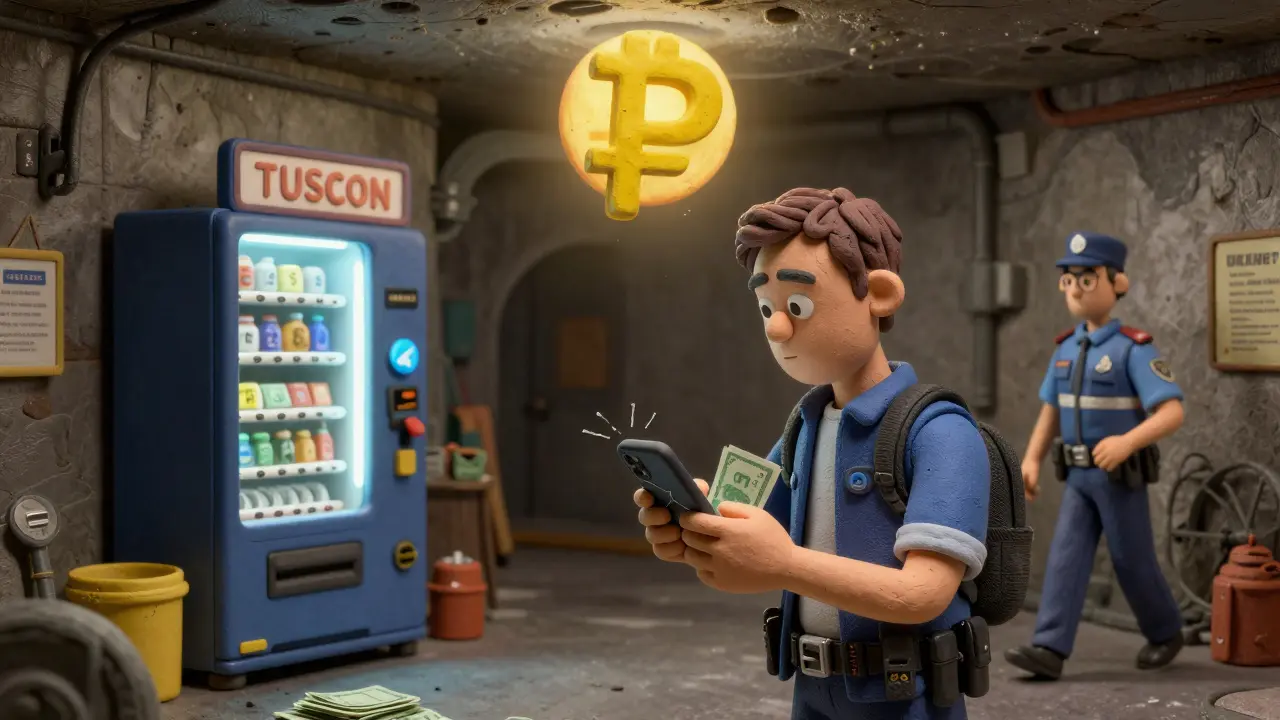
Despite all the rules, crypto use in Russia keeps growing. According to the Russian Association of Cryptoeconomics, Artificial Intelligence, and Blockchain, the number of crypto users in Russia has grown 15% every year since 2021. The total value of crypto held by Russians is now estimated at over $40 billion.How? Because people are finding ways. Peer-to-peer exchanges. Telegram bots. Offline cash trades. Crypto ATMs hidden in shopping malls. Some use VPNs to access foreign exchanges. Others buy stablecoins like USDT through friends in Turkey or Kazakhstan and bring them back. These aren’t legal. But they’re widespread. And they’re not going away.
The government knows it. That’s why recent laws targeting financial fraud have been used to shut down crypto-related services-even ones that don’t involve fraud. It’s not about crime. It’s about control. They want to make it harder, riskier, and more expensive to use crypto outside the state-approved channels.
What’s Next? The Three-Year Experiment
The experimental legal regime for crypto trading runs until 2028. That’s three years to test how far the system can stretch. Will the qualified investor threshold drop? Will stablecoins get legal status? Will mining regulations tighten further? All of that is still up in the air.One thing is certain: Russia won’t allow crypto to become a domestic payment system. The ruble, and its digital twin, are the future. Crypto is just a tool-for trade, for capital flight, for elite investors. Not for the public.
For now, if you’re not a billionaire, your best bet is to hold crypto quietly, mine if you can, and avoid using it for anything real. The law won’t stop you from owning it. But it will punish you for trying to use it.
Can I legally buy Bitcoin in Russia?
Yes, you can legally buy and hold Bitcoin and other cryptocurrencies in Russia. There’s no law banning ownership. But you cannot use it to pay for goods or services within Russia. Only the Russian ruble-and soon, the digital ruble-is legal tender for domestic transactions.
Is crypto trading legal in Russia?
Crypto trading is only legal for “especially qualified investors”-those with over ₽100 million in assets and ₽50 million in annual income. Regular citizens cannot trade crypto on licensed platforms. However, peer-to-peer trading and over-the-counter deals happen informally, though they’re not protected by law and carry legal risks.
Can I use cryptocurrency to pay bills in Russia?
No. Using cryptocurrency to pay for anything within Russia-rent, utilities, groceries, or services-is illegal. The law requires all domestic transactions to be conducted in Russian rubles. Violating this rule can lead to fines or legal action.
Is crypto mining legal in Russia?
Yes, crypto mining is legal and has been since 2014. It’s classified as a legitimate economic activity. Many Russians mine Bitcoin and other coins, especially in regions with low electricity costs. However, large-scale operations now face stricter regulations, including registration and energy usage limits.
Will Russia ever allow regular people to use crypto?
It’s unlikely. The government’s priority is protecting the ruble and launching the digital ruble by September 2026. Crypto is seen as a tool for international trade and elite investment-not as a currency for everyday use. Even if regulations loosen slightly, full domestic adoption is not on the table. The digital ruble is the real endgame.
What happens if I get caught using crypto for payments?
You could face administrative fines, asset freezes, or even criminal charges if the transaction is linked to sanctions evasion or money laundering. While casual use by individuals hasn’t led to mass prosecutions yet, authorities are increasingly targeting crypto-related financial activity under anti-fraud and sanctions enforcement laws.
Prateek Chitransh
December 28, 2025 AT 14:40So Russia lets billionaires play with Bitcoin like it’s a luxury yacht, but if you try to buy a burrito with ETH, you’re a criminal? Classic. The digital ruble isn’t even a currency-it’s a surveillance tool with a UI. At least China’s digital yuan doesn’t pretend it’s about financial freedom. This is just state capitalism with extra steps.
Meanwhile, my cousin in Siberia mines Bitcoin in his garage using stolen grid power and pays his mom’s medical bills in USDT. The state looks the other way… until the electricity bill comes due. Then it’s ‘fraud’ and ‘sanctions evasion.’ Double standards don’t even cover this.
They’re not banning crypto. They’re banning *equality* in crypto. And it’s brilliant. For them.
Also, mining is legal? Cool. So is owning a flamethrower. Doesn’t mean you should light your neighbor’s mailbox on fire.
Rick Hengehold
December 30, 2025 AT 09:43This is exactly why crypto needs to be decentralized. No government should control money. Russia’s system is just a prison with a fancy dashboard. The digital ruble is a digital leash. And they wonder why people use Telegram bots.
It’s not about legality. It’s about power. And power always fears freedom.
Brandon Woodard
December 30, 2025 AT 23:28Let me be perfectly clear: this is not a regulatory framework. It is a psychological warfare campaign disguised as financial policy. The Central Bank is not protecting citizens-it is protecting its own irrelevance. The digital ruble is the final act of central banking’s last gasp. And yet, despite all this, millions still hold crypto. Not because they’re reckless. But because they’re rational.
When the state denies you access to the global economy, you don’t wait for permission. You build your own. That’s not rebellion. That’s survival.
Antonio Snoddy
December 31, 2025 AT 03:19Think about it. The state says: ‘You can own Bitcoin, but you can’t use it.’ So it’s like owning a Ferrari… but only if you never turn the key. You can stare at it. You can polish it. You can take pictures of it. But if you even *think* about driving it, the police show up with a tow truck and a notepad.
It’s not capitalism. It’s not socialism. It’s… existential capitalism? A system where value exists only as a concept, not as a tool. Like art you can’t hang on the wall. Like love you can’t touch.
And the digital ruble? It’s the ghost in the machine. Every transaction tracked. Every movement logged. Every ruble a breadcrumb leading back to you. They don’t want to control money. They want to control *you*. And they’re winning because we’re too distracted by memes to notice.
Meanwhile, I’m mining Bitcoin in my basement with a toaster oven and a dream. The state can’t arrest a dream. Can they?
:(
Ryan Husain
December 31, 2025 AT 21:58While the Russian government’s approach is deeply concerning from a civil liberties perspective, it’s also pragmatically understandable given the geopolitical context. Sanctions have forced innovation in unconventional financial channels. The fact that over $11 billion in trade has been settled via crypto since 2022 suggests that the system is working-for those who can access it.
Perhaps the real question isn’t whether Russia should ban crypto, but whether any state should be able to monopolize the medium of exchange. The digital ruble may offer stability, but at what cost to autonomy? We should be asking how to build systems that balance control with freedom-not just how to enforce one over the other.
Rajappa Manohar
January 2, 2026 AT 17:00mining is legal? cool. but elctricity cost is crazy now. also the cops came to my friend’s house last month ‘cause his rig was making noise. he had to pay a fine. lol. still holding btc tho. no regrets.
nayan keshari
January 3, 2026 AT 15:53Everyone’s acting like this is some new thing. It’s not. The USSR didn’t let you buy IBM stock either. This is just the same old control, but with blockchain glitter on it. The digital ruble? More like the digital gulag. And the ‘qualified investors’? Just the new nomenklatura.
Also, if you think this is unique to Russia, you haven’t been paying attention to the Fed, the ECB, or even the SEC. They all want the same thing: total control. Russia’s just honest about it.
Kenneth Mclaren
January 5, 2026 AT 01:59WAIT. WAIT. WAIT. This isn’t just about crypto. This is a psyop. The digital ruble? It’s not a currency. It’s a backdoor for the FSB to track *every* purchase you make. Even your milk. Even your toilet paper. They’re building a total surveillance state and calling it ‘modernization.’
And the ‘qualified investors’? They’re not rich. They’re *compromised*. They’re the ones taking bribes to trade crypto on the side so the government can launder money for oligarchs. The whole system is a shell game.
And don’t even get me started on the crypto ATMs. They’re not for you. They’re for the GRU to move funds without triggering SWIFT alerts. This isn’t a financial policy. It’s a covert operation. And we’re all just NPCs in their simulation.
They’re watching. They’ve always been watching. And now they’ve got your transaction history.
...I’m deleting my wallet. I’m moving to Canada. Goodbye.