MBOX MOBOX BSC GameFi Expo III Airdrop: How It Worked and What Participants Got
 Feb, 10 2026
Back in October 2021, the crypto world was buzzing with GameFi projects racing to grab attention. Among them, MOBOX stood out-not just because it was part of Binance Smart Chain’s third GameFi Expo, but because of how smartly it ran its MBOX airdrop. If you were there, you might’ve scrambled to bookmark links, watched live streams, and cracked open quizzes just to snag up to 4,500 MBOX tokens. If you weren’t, here’s exactly what happened, how it worked, and why it still matters today.
What Was the MOBOX BSC GameFi Expo III Airdrop?
The MOBOX BSC GameFi Expo III airdrop wasn’t just another free token giveaway. It was a week-long, multi-project event running from October 23 to October 30, 2021, designed to drive real engagement with three major GameFi platforms: MOBOX, Dragonary, and DSG Metaverse. Together, they distributed over $60,000 in tokens, with MOBOX alone putting up around $20,000 worth of MBOX tokens for distribution.
This wasn’t a random giveaway. It was structured. You didn’t just sign up and get paid. You had to earn it-by learning, watching, and participating. The whole thing ran through CoinMarketCap’s airdrop platform, which added a layer of trust. No shady contracts. No sketchy wallet connections. Just a clean, verified system that thousands of users trusted.
How Did You Actually Get the Tokens?
Getting your hands on MBOX tokens during the airdrop wasn’t simple, but it wasn’t impossible either. Here’s how it broke down:
- Bookmark the page early. The airdrop page on CoinMarketCap didn’t go live until October 23. Participants had to monitor BSC’s social channels and bookmark the link ahead of time-otherwise, they missed the window.
- Watch the live stream. On October 25 at 12:00 UTC, Simran hosted a live event on YouTube, Twitter, and Binance Live App. It wasn’t just a promo-it was a tutorial. You learned how MOMOs (MOBOX’s NFT characters) worked, how hash power was calculated, and how to maximize your mining potential.
- Pass the quiz. After the stream, you had to take a short quiz testing what you learned. Get it right? You earned bonus tokens. Get it wrong? You still got the base allocation, but not the full 4,500 MBOX.
- Connect your wallet. You needed a BSC-compatible wallet (like MetaMask or Trust Wallet) already set up with some BNB for gas fees. No wallet? No tokens.
The maximum reward-4,500 MBOX-wasn’t handed out to everyone. It went to users who completed every step. Most people got between 500 and 2,000 tokens, depending on how deeply they engaged. That’s still hundreds of dollars in value at today’s prices.
What Was MOBOX Even Doing?
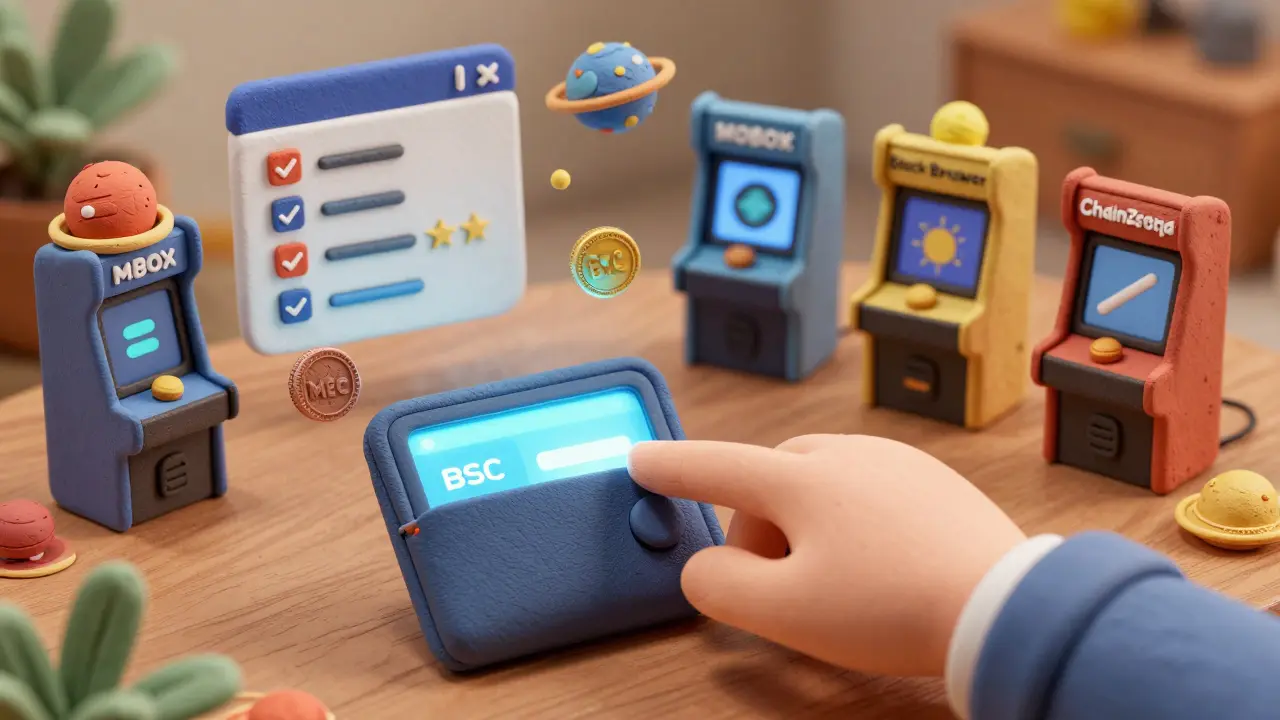
If you didn’t know MOBOX before the airdrop, you weren’t alone. But the project had already built something unusual: a gaming metaverse built on DeFi mechanics. At its core was the MOMO-a cute, cubic NFT character that acted like a mining rig.
Here’s how it worked:
- You owned one or more MOMOs.
- Each MOMO had a hash power level based on its rarity (Common, Rare, Epic, Legendary).
- You could upgrade hash power using MEC tokens (MOBOX Crystals), which you earned by playing games.
- Grouping MOMOs together gave you bonus hash power-so owning a mix of rarities was smarter than hoarding one type.
This wasn’t just collectible art. It was functional. Your MOMOs generated MBOX tokens passively, like a mini crypto farm. The more you played, the more you mined. And you played through three games: Token Master (with mini-games like MOMOpoly and Plunder), Block Brawler (an RPG with six classes), and ChainZ Arena (the first cross-blockchain idle RPG).
The dual-token economy was key: MBOX for governance and staking, MEC for in-game upgrades. That structure kept the economy balanced and encouraged long-term play-not just cashing out and leaving.
Why Did This Airdrop Stand Out?
Most airdrops in 2021 were lazy. You connected your wallet, did a tweet, and got 100 tokens. MOBOX didn’t do that. It treated users like learners, not just wallets.
It forced you to understand the product. You had to watch the stream. You had to answer questions. You had to think about how the system worked. That created a smarter, more loyal user base. And it showed in the numbers: MOBOX was the second-highest funded GameFi project on BSC in the month before Expo III, pulling in more capital than most of its peers.
Plus, the partnership with CoinMarketCap gave it credibility. Users knew this wasn’t a rug pull. They knew their tokens were real, their data was safe, and the distribution was transparent.
What Happened After the Airdrop?
The real test wasn’t the airdrop-it was what came after.
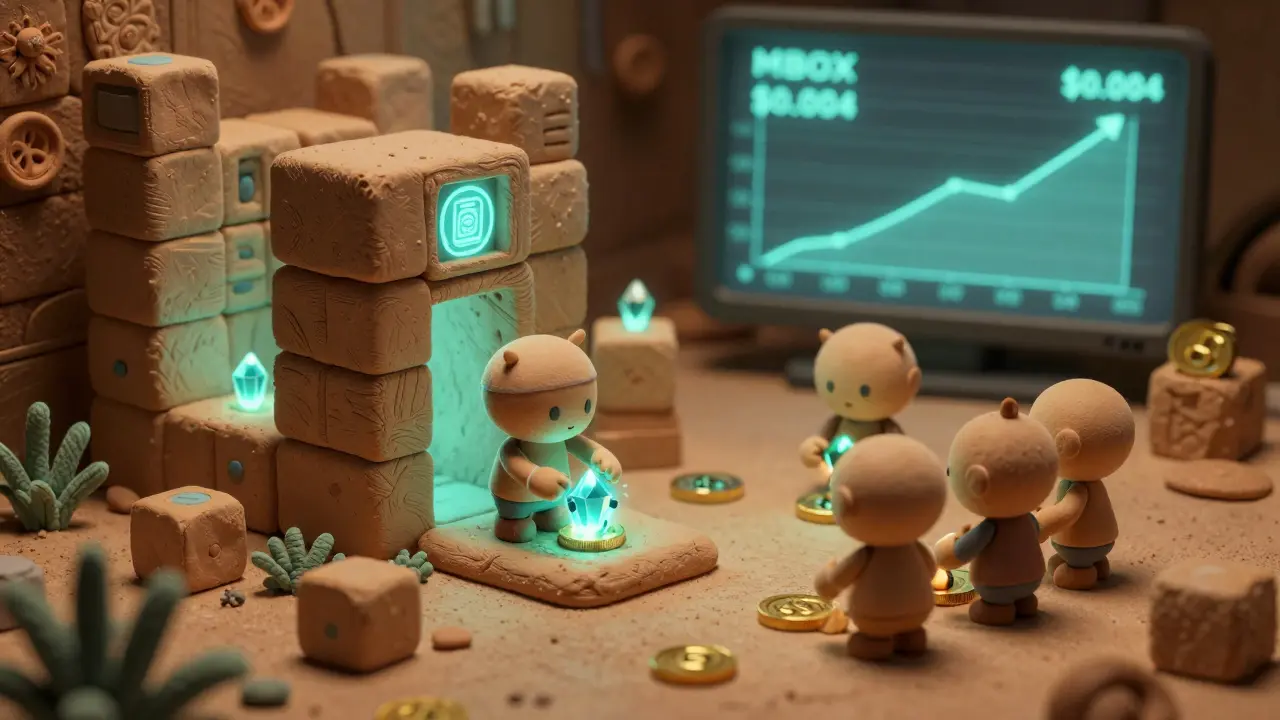
At the time, MBOX was trading around $0.004. A 4,500 token reward was worth about $18. Today, MBOX trades at roughly $0.06104. That same 4,500 tokens are now worth over $275. For users who held on, the airdrop turned into a life-changing windfall.
MOBOX didn’t fade after 2021. It kept building. ChainZ Arena went live. Cross-chain support expanded. Trading volume hit over $7 million daily. The project went from a “GameFi rookie” to one of the most mature platforms in the space.
And the airdrop? It became a blueprint. Other projects copied its model: educational content, live streams, quizzes, structured rewards. MOBOX didn’t just give away tokens-it gave away knowledge. And that’s what stuck.
Was It Worth the Effort?
Yes-if you were willing to put in the work.
If you just wanted a quick freebie, you’d have been frustrated. The process was complex. You needed to understand NFTs, DeFi, hash power, and wallet management. It wasn’t for casual users.
But if you wanted to learn, engage, and potentially benefit long-term? This was one of the best airdrops of 2021. It didn’t just hand you tokens. It handed you a foothold in a growing ecosystem.
Today, MOBOX is still active. Its games are live. Its community is growing. And those who participated in the Expo III airdrop? They didn’t just get free tokens. They got early access to something that’s still evolving.
Did the MOBOX BSC GameFi Expo III airdrop require a wallet?
Yes. Participants needed a Binance Smart Chain-compatible wallet like MetaMask or Trust Wallet. The wallet had to have some BNB for gas fees to claim and interact with the tokens. Without a wallet, you couldn’t receive or use your MBOX tokens.
How many MBOX tokens could you get from the airdrop?
The maximum reward was 4,500 MBOX tokens per participant. This required completing all campaign steps: watching the live stream, passing the quiz, and connecting your wallet. Most users received between 500 and 2,000 tokens depending on their level of engagement.
Was the MOBOX airdrop only for BSC users?
Yes. The airdrop was specifically tied to the Binance Smart Chain ecosystem. MOBOX’s games and token mechanics were built on BSC, so participants needed to use BSC-compatible wallets and understand BSC-based transactions. Ethereum or Solana wallets wouldn’t work.
What games were part of the MOBOX platform during the airdrop?
At the time of the airdrop, MOBOX offered three games: Token Master (with MOMOpoly, Plunder, and MOBOXer), Block Brawler (an RPG with six professions and PVP/PVE modes), and ChainZ Arena (a cross-blockchain idle RPG that launched shortly after the event). All games used MOMO NFTs to generate MBOX tokens through gameplay and mining.
Is the MBOX token still valuable today?
Yes. As of early 2026, MBOX trades at approximately $0.06104, up from around $0.004 during the 2021 airdrop. A 4,500 MBOX reward from the Expo III campaign would now be worth over $275. The token continues to trade with daily volumes exceeding $7 million, and MOBOX remains an active platform with ongoing game updates and ecosystem growth.
Peggi shabaaz
February 11, 2026 AT 02:41most projects just wanted your wallet but mobox made you actually care about the game
i watched the stream twice just to get the quiz right and yeah it was worth it
my momo collection still mines a little every day and i dont even play much anymore
its rare to see a project that builds loyalty like that
still think about how they turned a simple token drop into something educational
not everyone got the full 4500 but even the 800 i got was a win
no drama no rug pulls just clean fun
thank you mobox for not treating us like wallets
Sanchita Nahar
February 11, 2026 AT 21:15Ben Pintilie
February 13, 2026 AT 18:38spent 20 mins rewatching the stream just to get 1 question right
but hey 275 bucks later im not mad
Sakshi Arora
February 15, 2026 AT 01:10got like 1200 mobx and just forgot about it
then one day checked my wallet and boom 200 bucks
its wild how something so simple turned into a win
still use my momos for the bgm when i work lol
bala murali
February 16, 2026 AT 15:30MEC for utility-driven progression and MBOX for governance-layer sustainability
the incentive alignment between gameplay duration and passive yield generation created a non-extractive feedback loop
this was not a liquidity grab-it was a foundational ecosystem architecture
the integration with CoinMarketCap provided verifiable auditability
which is why the retention curve post-airdrop remained statistically significant
most contemporaries collapsed under speculative pressure
but mobox engineered for longevity
the community’s retention metrics still outperform 90% of 2021-era GameFi launches
an academic case study in tokenomics design