P2P Crypto Trading in Bangladesh: Peer-to-Peer Methods & Risks
 May, 3 2026
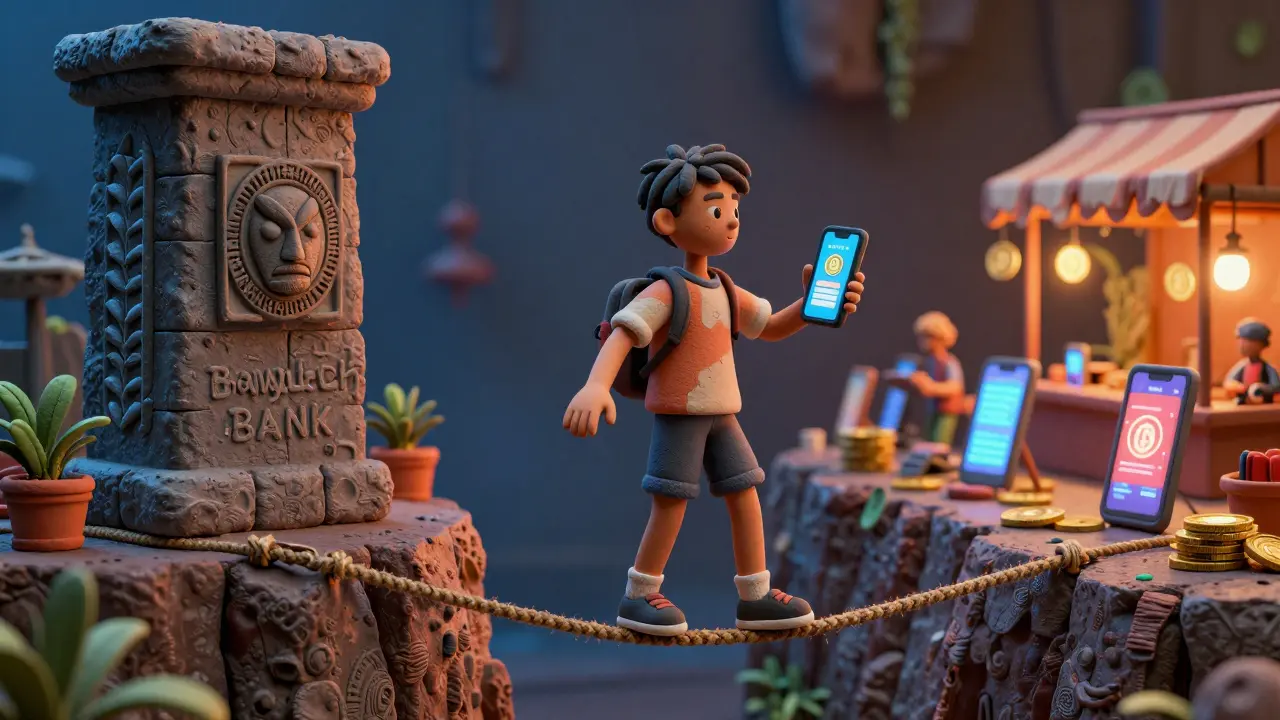
Buying cryptocurrency in Bangladesh feels like walking a tightrope without a safety net. On one side, you have the strict warnings from Bangladesh Bank, which explicitly bans converting Taka into foreign currency or digital assets without approval. On the other side, there is a massive underground economy where millions of people trade daily to send money home, invest, or simply bypass high banking fees. If you are looking to trade crypto in Bangladesh right now, you are not just learning how to use an app; you are navigating a legal grey zone that carries real risks.
This guide breaks down exactly how peer-to-peer (P2P) trading works in this unique environment. We will look at the specific methods traders use, the mobile payment integrations that make it possible, and the serious legal hurdles you need to understand before sending your first Taka.
The Legal Reality: Banned But Active
To understand P2P trading here, you must first accept the paradox. Cryptocurrency is effectively illegal for residents. The central bank’s Circular No. 13 from 2017 states clearly that any transaction involving the conversion of Taka into foreign currency without prior approval violates Section 33 of the Foreign Exchange Regulation Act 1947. Despite this, adoption has skyrocketed. In 2024, Bangladesh ranked 35th globally in crypto adoption, with roughly 3.5 million users actively trading.
Why do people risk it? The main driver is remittances. Bangladesh received $21.5 billion in official remittances in 2022. Traditional channels charge fees between 3% and 8%. Crypto P2P offers fees as low as 0.5% to 2%. For a family sending money across borders, that savings is significant enough to ignore the legal warnings. However, ignorance is not a defense. In 2022, authorities arrested 17 traders in Dhaka under Section 411 of the Penal Code for 'possessing stolen property,' referring to their crypto holdings. You need to know what you are getting into.
How P2P Trading Works in Bangladesh
Peer-to-peer trading allows you to buy crypto directly from another person rather than through the exchange itself. The exchange acts only as an escrow agent. Here is the step-by-step process most Bangladeshi traders follow:
- Create an Account: You sign up on an international platform like Binance or Bybit. These platforms are accessible despite blocks by the Bangladesh Telecommunication Regulatory Commission (BTRC).
- KYC Verification: You must complete identity verification. This is mandatory for transactions above $1,000 and helps the platform comply with global anti-money laundering rules.
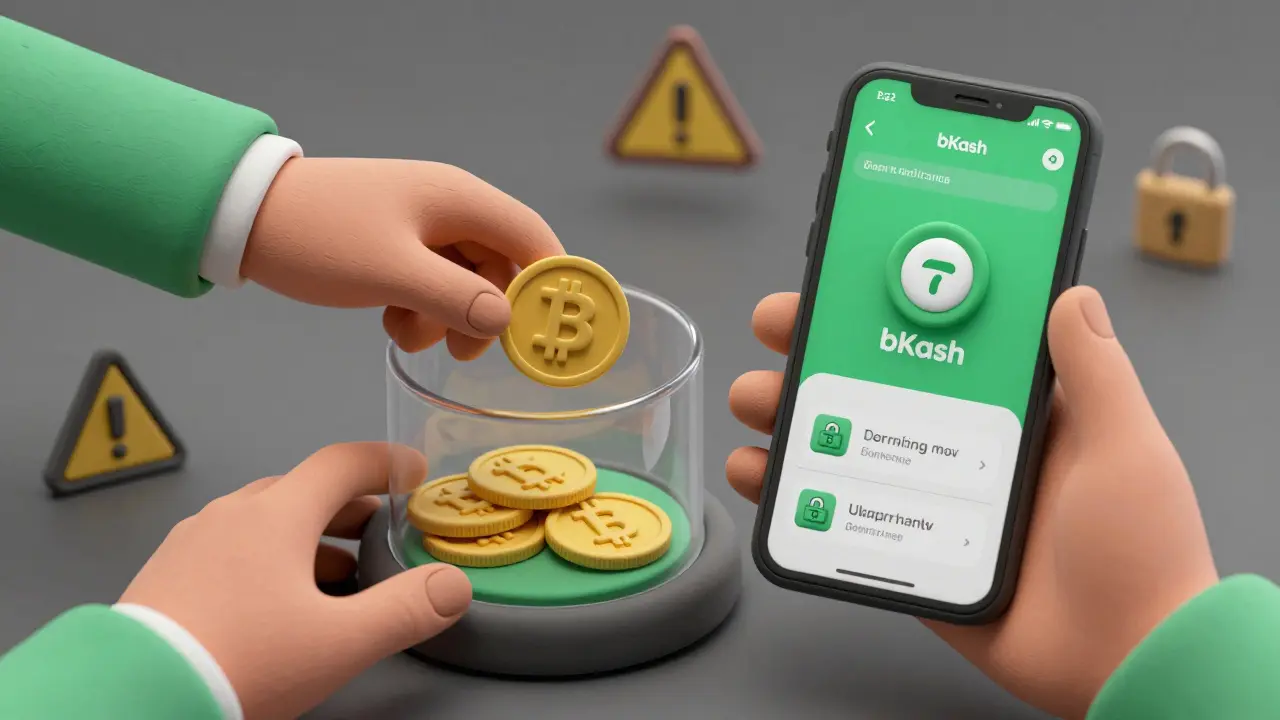
- Select Payment Method: You choose a local payment method. In Bangladesh, this is almost exclusively bKash or Nagad.
- Place an Order: You agree to buy a specific amount of USDT or Bitcoin from a seller at a set price.
- Transfer Funds: You send the Taka via your mobile banking app to the seller’s account. The crypto remains locked in the exchange’s escrow system.
- Release Crypto: Once the seller confirms receipt, they release the crypto to your wallet. If they don’t, you open a dispute.
This entire process typically takes 8.2 minutes during peak hours. The key advantage is speed and lower costs compared to banks. The disadvantage is that you are relying entirely on the counterparty’s honesty and the platform’s dispute resolution.
Top Platforms and Payment Integrations
Not all exchanges work well in Bangladesh. You need platforms that support local payment rails and have high liquidity for Taka pairs. Here is how the major players compare:
| Platform | Market Share | Primary Payment Methods | Average Spread | Best For |
|---|---|---|---|---|
| Binance | 61% | bKash, Nagad, Bank Transfer | 1.2% - 3.5% | Beginners, High Liquidity |
| Bybit | 19% | bKash, Nagad | 1.5% - 4.0% | Margin Trading, Leverage |
| KuCoin | 11% | bKash, Bank Transfer | 2.0% - 5.0% | Altcoin Diversity |
| PancakeSwap (DEX) | 8% | Crypto Only (BNB Gas) | 0.8% | Advanced Users, Anonymity |
Binance dominates the market because it integrates seamlessly with bKash, which has 72.5 million active users. About 61% of all P2P transactions in Bangladesh use bKash. The platform processes over 1.2 million monthly trades from the country. Bybit is popular among traders who want leverage, offering up to 50x options, but it has less liquidity for small Taka amounts. KuCoin is chosen mainly for its vast selection of altcoins, though spreads are wider.
Decentralized Exchanges (DEX) like PancakeSwap offer near-anonymity and lower fees (0.8% average), but they require technical knowledge. You need a wallet like MetaMask and must pay gas fees in BNB. Only 8% of Bangladeshi traders use DEXs due to the steep learning curve and network congestion issues on the Binance Smart Chain.
Risks: Fraud, Bans, and Disputes
You cannot talk about P2P trading in Bangladesh without addressing the dangers. There are three main categories of risk:
- Agent Fraud: This is the most common issue. A seller might receive your bKash payment and then reverse it using a chargeback or claim the transfer was unauthorized. In 2023, 214 fraud cases were reported, totaling $11 million. Always check the seller’s completion rate and number of orders. Avoid new accounts.
- Mobile Banking Blocks: Nagad and bKash have anti-fraud algorithms. Transactions above ৳50,000 often trigger automatic freezes. In Q4 2024, over 1,800 accounts were temporarily frozen due to suspicious activity linked to crypto. Keep your trading volume low and spread it out.
- Legal Enforcement: As mentioned, the government is cracking down. The Financial Compliance Unit conducted 87 raids in late 2024 and early 2025. While individual small-scale traders are rarely targeted, large-volume agents are vulnerable.
To mitigate fraud, always keep communication within the platform’s chat system. Never move to Telegram or WhatsApp for deal details. If a dispute arises, provide clear screenshots of your payment confirmation. Binance’s dispute resolution team responds in Bengali and usually resolves issues within 12 hours.
Getting Started: A Practical Checklist
If you decide to proceed, follow these steps to minimize errors and risks. The average beginner spends 17.5 hours learning the ropes before feeling comfortable.
- Download the App: Use the official Binance or Bybit app. Ensure your Android device runs version 8.0 or higher for stability.
- Verify Identity: Complete KYC immediately. This prevents your account from being locked when you try to withdraw later.
- Link Mobile Wallet: Connect your bKash account. Note that you should use the 'Send Money' function, not 'Cash In,' to avoid rejection flags.
- Start Small: Your first trade should be under ৳10,000. This tests the process without exposing you to significant loss.
- Check Seller Metrics: Look for sellers with over 95% completion rates and at least 100 completed orders.
- Monitor Fees: Be aware of the spread. The price you see on P2P is often 1-3% higher than the global market price. Factor this into your calculations.
Community resources can help. The 'Crypto BD Guide' Telegram channel has nearly 50,000 members who share real-time updates on fraudulent agents and platform changes. They have blacklisted over 200 scammers since 2023.
The Future: Regulation and CBDC
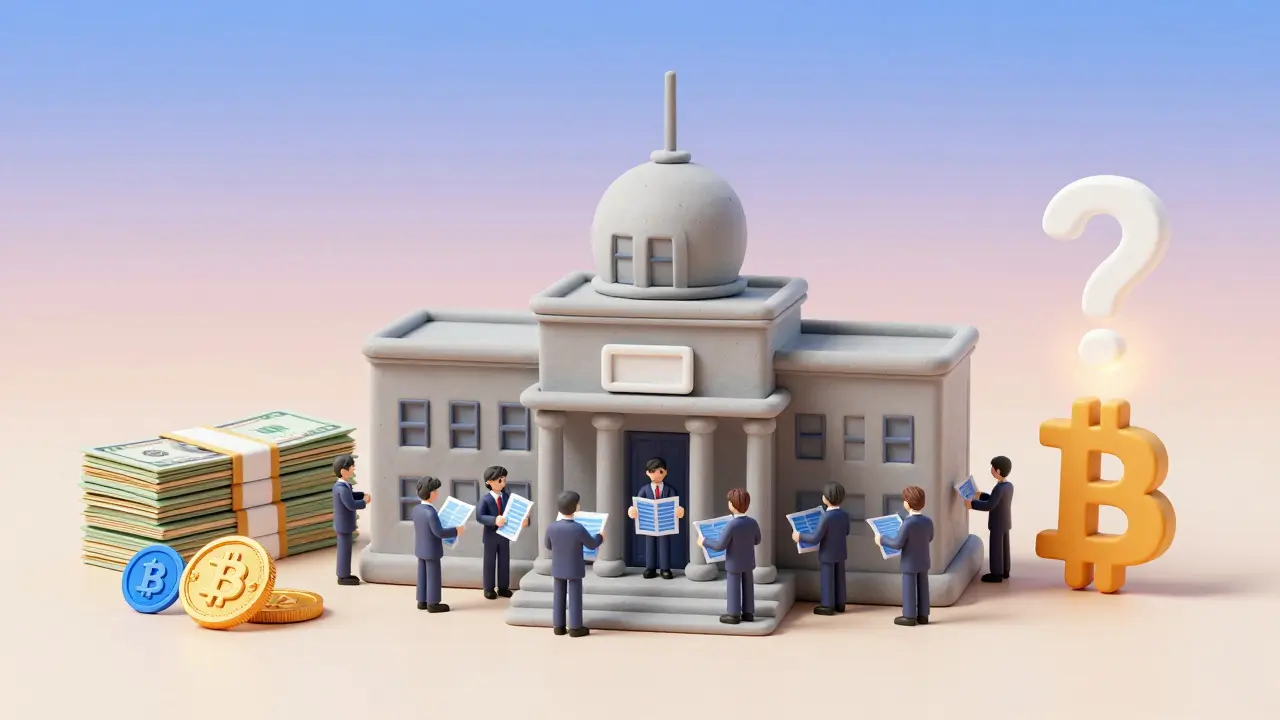
The landscape is shifting. In February 2025, the government formed a 12-member Crypto Asset Task Force. Their goal is to submit regulatory recommendations by December 2025. Industry experts predict a "dual-track" approach: embracing blockchain technology for enterprise use while keeping speculative crypto trading restricted.
Simultaneously, Bangladesh Bank is piloting a Central Bank Digital Currency (CBDC). Results from this pilot are expected in Q3 2025. If successful, this could legitimize digital asset infrastructure but might also accelerate the prohibition of private cryptocurrencies like Bitcoin and USDT. For now, P2P trading remains a high-risk, high-reward activity driven by necessity rather than legality.
Is P2P crypto trading legal in Bangladesh?
No, it is not legal. Bangladesh Bank explicitly prohibits the conversion of Taka into cryptocurrency under the Foreign Exchange Regulation Act. However, enforcement is inconsistent, and many citizens engage in P2P trading for remittances and investment.
Which payment method is best for buying crypto in Bangladesh?
bKash is the most widely used method, accounting for 61% of P2P transactions. It offers fast verification and widespread acceptance among sellers. Nagad is the second most popular option.
What happens if a seller doesn't release my crypto?
You can open a dispute on the P2P platform. Provide proof of payment (screenshots from bKash/Nagad). The platform's support team will review the case and release the funds to the rightful owner. Always communicate within the platform's chat.
Are there limits on how much I can trade?
There are no official limits on the exchange side, but mobile banking apps like Nagad may block transactions above ৳50,000 due to anti-fraud filters. To stay safe, keep individual transactions below this threshold.
Will the government ban crypto completely soon?
The government is forming a task force to regulate crypto assets by late 2025. While a total ban is possible, analysts expect a more nuanced approach that restricts speculation but allows regulated blockchain use. Until then, current restrictions remain in place.
Emily A
May 4, 2026 AT 09:12It is fundamentally irresponsible to suggest that individuals should simply 'navigate a legal grey zone' without acknowledging the severe statutory penalties involved. The Foreign Exchange Regulation Act of 1947 is not a suggestion; it is a binding legal framework that explicitly criminalizes the conversion of Taka into foreign currency or digital assets without prior approval from Bangladesh Bank. To frame this as merely a matter of 'risk management' rather than outright illegality is misleading and potentially dangerous for uninformed readers. Furthermore, the reliance on platforms like Binance, which are actively blocked by the BTRC, necessitates the use of unauthorized VPN services, thereby compounding the legal violations with telecommunications infractions. One must also consider that participating in an underground economy undermines the nation's financial sovereignty and exposes participants to predatory practices devoid of consumer protection mechanisms. The assertion that ignorance is not a defense is correct, yet many traders operate under the delusion that their small-scale transactions render them invisible to authorities, a notion that has proven catastrophically incorrect given the recent arrests in Dhaka. It is imperative that any discussion on this topic prioritizes legal compliance over convenience, as the latter inevitably leads to significant personal and financial repercussions.
Gabby Puche
May 5, 2026 AT 23:56Hey everyone! 👋 I totally get why people are doing this, especially when you look at those huge fees for remittances 💸 It’s wild how much money families lose just trying to send support home 😔 But yeah, the risks are real! 🚨 Just remember to keep your trades small and stick to reputable sellers with high completion rates ✅ Stay safe out there! 🙌
Lynne Teperman
May 7, 2026 AT 12:37its fascinating how culture shapes these economic behaviors really. the need to send money home is so deeply rooted here that even strict laws cant stop it completely. i think we should respect that drive while being careful about the methods used. maybe there is a middle ground where technology helps but doesnt break rules entirely. its a complex dance between tradition and modernity indeed
Rachel S
May 7, 2026 AT 19:19Oh my goodness, the sheer audacity of the regulatory environment here is quite staggering! 😲 One moment you are carefully following the steps outlined in the guide, ensuring your KYC is pristine and your bKash transfer is executed with precision, and the next moment your account is frozen due to some algorithmic suspicion! 🤯 It is truly a dramatic rollercoaster of emotions for anyone attempting to navigate this landscape. The fact that over 1,800 accounts were frozen in Q4 2024 alone speaks volumes about the volatility of the situation! 😱 You have to be absolutely vigilant, keeping every screenshot and chat log because one slip-up could mean losing everything! It is not just trading; it is a high-stakes performance where the audience is the government and the critics are the fraudsters! 🎭
Jan Conrad
May 8, 2026 AT 09:17I am curious about the specific mechanics of the dispute resolution process mentioned in the article. While it states that Binance support responds in Bengali and resolves issues within 12 hours, I wonder if this efficiency holds up during periods of high volume or political tension. Additionally, does the platform provide any recourse if the funds are flagged by the mobile banking provider before the seller confirms receipt? It would be interesting to know more about the technical safeguards in place for such transactions.
Rushell Perry
May 10, 2026 AT 08:15it sounds like a really tough situation for everyone involved. i hope people can find safer ways to handle their finances without getting into trouble. maybe the new task force will bring some clarity soon. let us all stay open to learning and supporting each other through these changes