Post-Quantum Cryptography for Cryptocurrency: What You Need to Know Now
 Mar, 5 2026
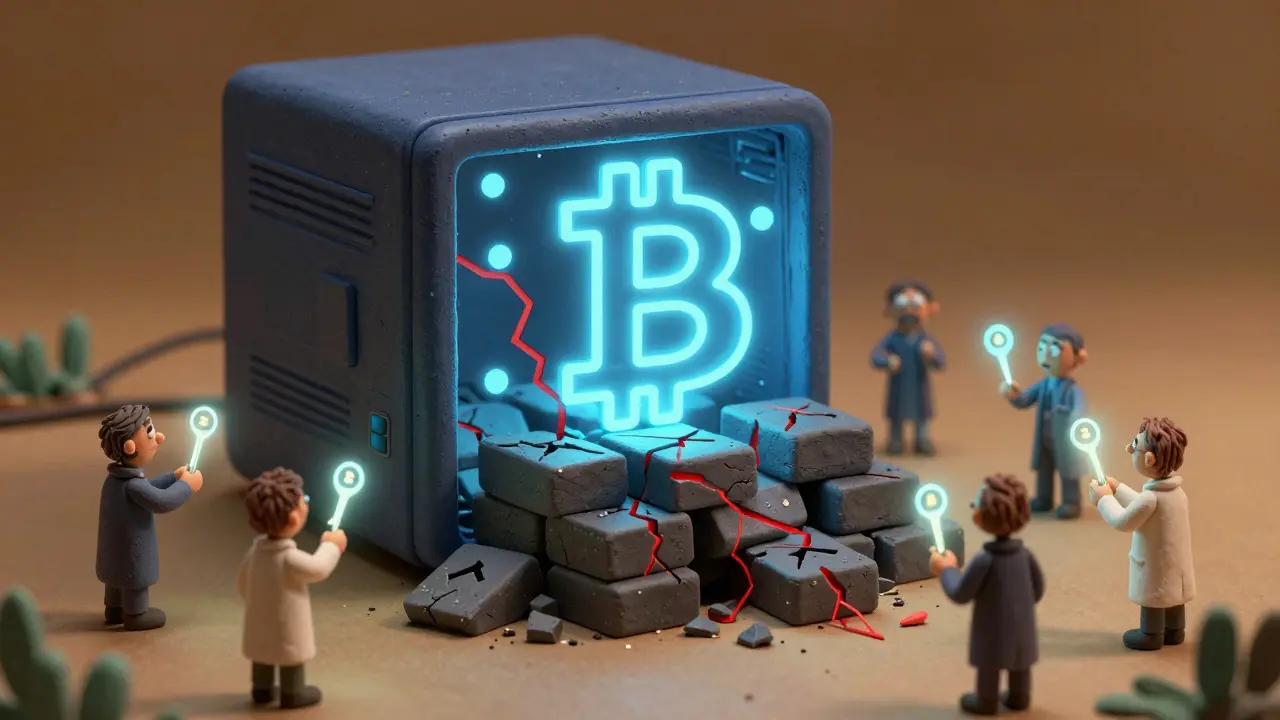
Imagine this: one day, someone unlocks billions in Bitcoin not by hacking a wallet, but by using a quantum computer to crack the math that protects every transaction. It sounds like science fiction, but it’s not. Cryptographers warn that quantum computers could break the encryption behind Bitcoin and Ethereum within the next decade. And right now, most of the world’s cryptocurrency is sitting there, vulnerable.
Why Your Bitcoin Could Be at Risk
Bitcoin and Ethereum rely on Elliptic Curve Digital Signature Algorithm (ECDSA) to verify transactions. It’s fast, efficient, and has worked perfectly for over 15 years. But ECDSA was never designed to resist quantum attacks. A quantum computer running Shor’s algorithm could crack a 256-bit ECDSA key in minutes - something that would take classical supercomputers billions of years. The scary part? Attackers don’t need to break the encryption today. They just need to collect your transaction data now and store it. When quantum computers become powerful enough - possibly by 2026, according to Dr. Michele Mosca of the University of Waterloo - they’ll go back and decrypt those old transactions. That means anyone who hasn’t moved their coins from legacy addresses could lose everything. About 4 million BTC, worth over $114 billion as of 2023, are still in vulnerable pay-to-public-key-hash (p2pkh) addresses. These are the older-style Bitcoin addresses that expose public keys during spending. If someone cracks the private key linked to that public key, they can steal the coins. And according to Chainalysis, state-backed actors are already collecting this data.What Is Post-Quantum Cryptography?
Post-quantum cryptography (PQC) is a new generation of encryption built to survive attacks from both classical and quantum computers. Unlike ECDSA, PQC algorithms don’t rely on the mathematical problems that quantum computers can easily solve. Instead, they use structures like lattices, hash functions, or multivariate polynomials - problems even quantum machines struggle with. In 2022 and 2023, the U.S. National Institute of Standards and Technology (NIST) finalized its first PQC standards. The two most promising for cryptocurrency are:- Crystals-Dilithium: A lattice-based digital signature algorithm. It’s the leading candidate to replace ECDSA.
- Crystals-Kyber: A lattice-based key encapsulation mechanism. Used for secure key exchange.
The Big Problem: Size Matters
ECDSA signatures are tiny - just 72 bytes. Public keys? 33 bytes. That’s why Bitcoin can fit thousands of transactions into one block. Crystals-Dilithium? Its signatures are around 2,420 bytes. That’s over 33 times larger. Public keys? Up to 4,000 bytes. Compare that to SPHINCS+, a hash-based alternative used by Quantum Resistant Ledger (QRL): signatures hit 8,000 bytes. What does this mean for Bitcoin? Right now, a single block can hold roughly 3,000 ECDSA transactions. With Dilithium, that drops to 120-250. SPHINCS+? Only about 50. Ethereum’s average transaction fee in 2023 was $1.50. If it switched to Dilithium without changes, fees could jump to $50 or more. That’s not just inconvenient - it kills scalability. DeFi, NFTs, microtransactions - all of it becomes unviable.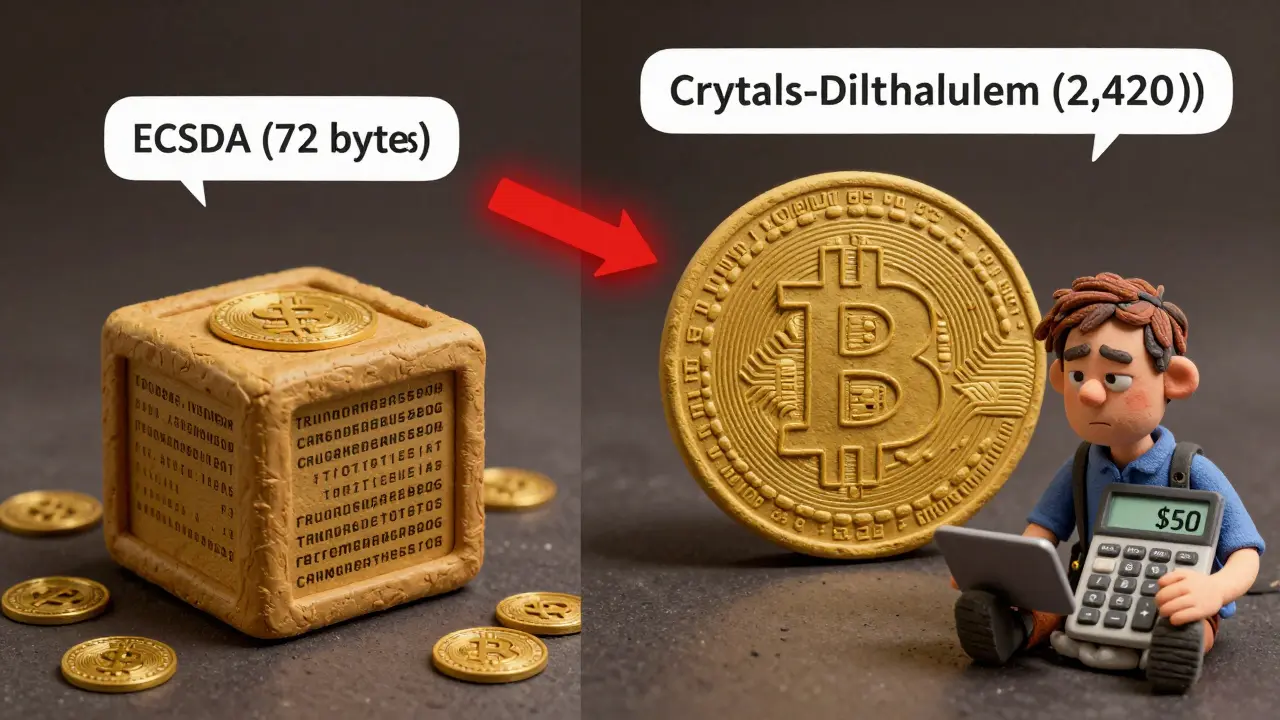
Who’s Already Doing It?
There’s one blockchain that’s been quantum-resistant since day one: Quantum Resistant Ledger (QRL). Launched in June 2018, it uses hash-based signatures (XMSS) and has never used ECDSA. Its network is small - market cap around $35 million - but it proves PQC can work. QRL’s trade-off? Slower speeds and higher fees. Average transaction cost on QRL is $0.85 - 8.5x higher than Bitcoin’s $0.10. It’s secure, but not practical for everyday use. Other projects are experimenting:- Ethereum published EIP-3037 in 2021 proposing quantum-resistant signatures. Research is ongoing, with full implementation targeted for 2025.
- QANplatform and Cardano are exploring hybrid models.
- IPFS added quantum-resistant storage options in early 2023.
Why You Should Care - Even If You’re Not a Developer
You don’t need to understand lattice math to protect your assets. Here’s what you can do right now:- Move your coins to segwit or bech32 addresses. These don’t expose public keys until you spend - making them slightly harder to target.
- Avoid legacy Bitcoin addresses (starting with 1). They’re the most vulnerable.
- Don’t reuse addresses. Each new address reduces exposure.
- Consider diversifying. A small portion of your portfolio in QRL or other quantum-resistant chains could hedge against future risk.
The Road Ahead: Hybrid Solutions and Hard Forks
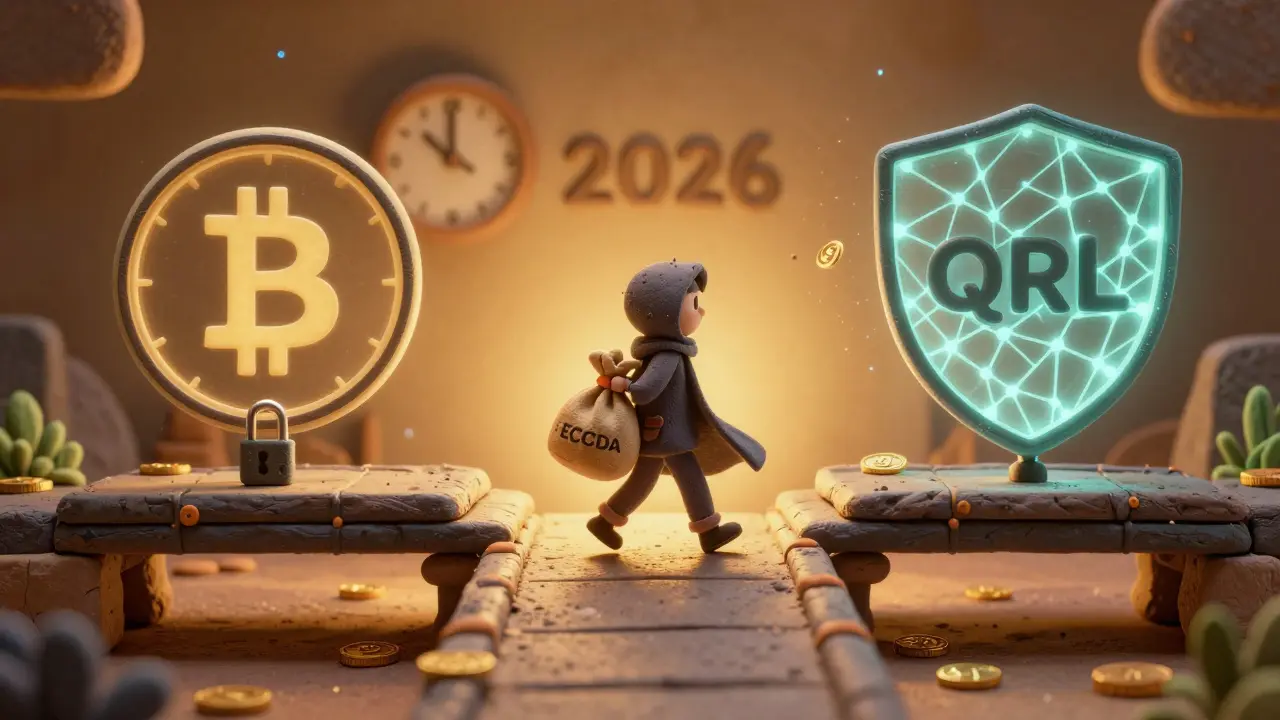
There’s no easy fix. Switching Bitcoin or Ethereum to full PQC would require a hard fork - a major network upgrade that needs near-universal agreement. That’s politically and technically difficult. The smarter path? Hybrid cryptography. Start by layering PQC on top of ECDSA. For example, a transaction could require both a classical signature and a quantum-resistant signature. This way:- Legacy wallets keep working.
- New wallets get quantum protection.
- Network load doesn’t spike overnight.
What’s Next? The Race Against Time
Quantum computers are advancing fast. IBM’s roadmap targets 100,000-qubit machines by 2033. Google’s quantum team says breaking ECDSA will be possible with just 10,000 qubits - which could happen by 2030. The clock is ticking. The U.S. National Security Agency warned in August 2023 that state actors are already harvesting blockchain data. This isn’t a future threat - it’s a present one. The good news? We know the solution. We have the algorithms. We have the time - for now. The question isn’t whether PQC will come to cryptocurrency. It’s whether the industry will act before it’s too late. If you hold crypto, you’re part of this. The next upgrade won’t just be about faster blocks or lower fees. It’ll be about survival.Can quantum computers already break Bitcoin?
No, not yet. Current quantum computers have fewer than 1,000 qubits and aren’t stable enough to run Shor’s algorithm at scale. But they don’t need to break Bitcoin today. They just need to collect transaction data now and wait. Experts estimate a functional attack could be possible by 2026-2031.
Which cryptocurrencies are quantum-resistant?
Quantum Resistant Ledger (QRL) is the only major blockchain built entirely on quantum-resistant cryptography since its launch in 2018. Other projects like QANplatform and some Layer-2 solutions are testing PQC, but Bitcoin, Ethereum, and most altcoins still rely on ECDSA. No large-scale network has fully switched yet.
Will PQC make transaction fees higher?
Yes - significantly, if implemented without changes. Crystals-Dilithium signatures are 33x larger than ECDSA, which would reduce block capacity by over 95%. Without increasing block sizes or moving to Layer-2 solutions, fees could jump from $1-$2 to $50 or more per transaction. Hybrid approaches and protocol upgrades aim to avoid this.
Should I move my Bitcoin to a quantum-resistant chain?
Only if you’re comfortable with lower liquidity and higher fees. QRL and similar chains are secure, but they’re not as widely accepted or liquid as Bitcoin or Ethereum. A better short-term move is to shift your coins from legacy addresses to segwit or bech32 addresses - it’s free, easy, and reduces your risk.
Is post-quantum cryptography proven to be secure?
Yes, the NIST-standardized algorithms like Crystals-Dilithium and Crystals-Kyber have withstood years of public scrutiny and cryptanalysis. While no system is 100% immune, these are the best options we have today. The real risk isn’t that they’re broken - it’s that we delay implementing them until it’s too late.
How long will it take for Bitcoin to adopt PQC?
It could take 5-10 years. Bitcoin’s decentralized governance makes major protocol changes slow. Experts predict the first hybrid PQC fork will happen between 2026 and 2028. Until then, the best defense is using modern address formats and staying informed.
Steven Lefebvre
March 6, 2026 AT 07:42So let me get this straight - we’re sitting on billions in crypto like it’s cash under a mattress, and the quantum genie is already peeking through the keyhole? 😅
It’s wild that we’ve got algorithms ready to go, but the blockchain world is stuck in ‘wait and see’ mode. I get the scalability fears, but if your life savings could vanish in 2027 because you didn’t move from a legacy address, that’s not a risk - it’s negligence.
Why aren’t wallets auto-migrating users to segwit by default? Why is this still a ‘technical discussion’ and not a mandatory update? We’re not talking about a new emoji feature - we’re talking about survival.
Someone needs to build a tool that scans your wallet and screams ‘YOU’RE VULNERABLE’ in neon red. I’d pay for that.
And yeah, QRL’s fees are high, but isn’t that better than losing everything? I’ve already shifted 15% of my holdings there. Not because I believe in QRL as an investment - but because I believe in not being a sitting duck.
nalini jeyapalan
March 6, 2026 AT 08:14Anyone who thinks this is just a ‘crypto problem’ is delusional. The entire financial system is built on the same math - RSA, ECDSA, you name it. Banks, stock exchanges, government bonds - all of it’s a house of cards waiting for a quantum breeze.
And yet, nobody’s talking about it in the mainstream. Why? Because admitting this is real means admitting we’ve been playing Russian roulette with global finance for 15 years.
QRL’s $35M market cap? That’s not a failure - it’s a warning shot. The fact that JPMorgan filed a patent for this tech while the average Bitcoin holder still uses a 1P address? That’s criminal negligence.
Move your coins. Now. Not tomorrow. Not ‘when it’s easier.’ Now. Your future self will thank you - or sue you.
Christina Young
March 7, 2026 AT 07:40Stop pretending segwit fixes anything. It only delays exposure until you spend. The public key is still there - just hidden until the moment of truth. That’s not security - it’s a delay tactic.
Crystals-Dilithium signatures are 33x larger? That’s not a ‘problem’ - it’s a feature. It forces the network to evolve. You want low fees? You want scalability? Then accept that the old system is obsolete.
Hybrid models are a band-aid on a severed artery. The only real solution is a hard fork - and Bitcoin’s community is too fractured to do it. That’s not a technical issue. That’s a leadership failure.
QRL’s fees are high? So what? At least your coins aren’t being harvested by NSA-grade quantum sniffers right now.
And yes - you’re still vulnerable if you’re using a legacy address. Stop making excuses. Move your coins.
Drago Fila
March 8, 2026 AT 22:54Hey - I know this sounds scary, but here’s the good news: we’re not helpless.
Yes, quantum computers are coming. Yes, your old Bitcoin address is risky. But you don’t need to be a cryptographer to protect yourself.
Just move your coins to a bech32 address. It takes two minutes. Free. No fees. No risk.
And if you’re feeling extra safe? Put 5% into QRL. Not because it’s going to moon - but because it’s your insurance policy.
Think of it like fire insurance. You hope you never need it - but you’re way better off having it.
Also - if you’re reading this and you’re new to crypto? Welcome. You’re lucky. You got the heads-up. Most people won’t. Don’t wait for someone else to fix it. Do it yourself. You’ve got this.
jack carr
March 9, 2026 AT 23:51Okay, okay, okay - I get it, I get it, I get it... quantum computing is coming, and we’re all basically walking around with our crypto keys taped to our foreheads...
But here’s the thing - even if Dilithium signatures are 33x bigger, Layer 2 solutions like Lightning Network could still handle the load, right? We don’t need to put everything on-chain.
And honestly? I think the market will solve this. If QRL proves it works, even with higher fees, people will start using it - and then Bitcoin will have no choice but to upgrade.
Also - I moved my BTC to a segwit wallet last week. I’m not paranoid... I’m just... prepared.
And yes, I did it on a Tuesday. Because why not? :)
Eva Gupta
March 11, 2026 AT 15:09As someone from India, where crypto adoption is growing fast but awareness is still low, I’m amazed that this conversation is even happening.
Most people I know think Bitcoin is just digital gold - they don’t even know what ECDSA is.
But if quantum computing can break it, then we’re not just talking about tech - we’re talking about financial justice. Millions of people who can’t afford to lose everything need to know this.
I’ve started sharing this post with my crypto groups. Not to scare them - but to empower them.
Segwit? Check.
Don’t reuse addresses? Check.
One small step? Check.
Maybe we won’t save the whole system - but we can save our own wallets.
And that’s worth doing.