Regulatory Framework for Security Tokens: Global Rules in 2025
 Dec, 26 2025
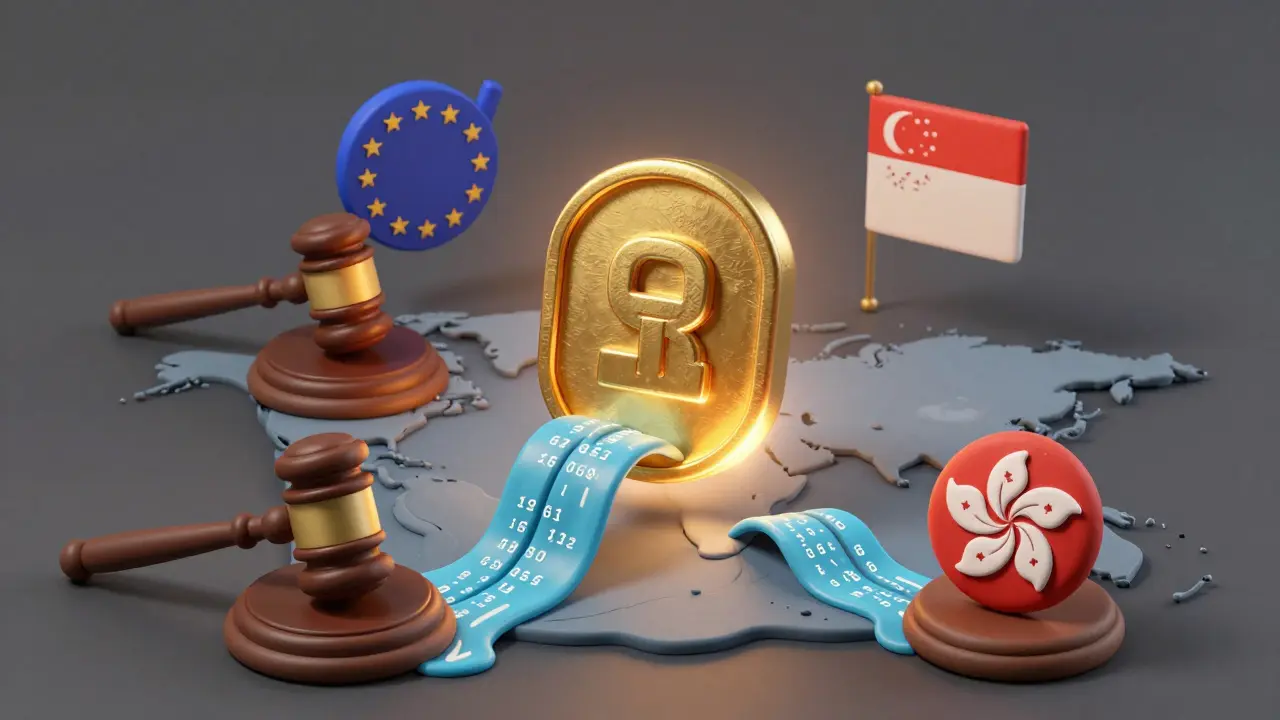
Security tokens aren’t just digital assets-they’re legal securities wrapped in blockchain code. If you’re issuing or investing in one, you’re not just dealing with smart contracts and wallets. You’re navigating a patchwork of global regulations that can make or break your project. By 2025, the rules have shifted from vague warnings to concrete frameworks, and ignoring them isn’t an option anymore.
What Exactly Is a Security Token?
A security token represents ownership in a real-world asset-like shares in a company, a slice of real estate, or a stake in a fund. Unlike utility tokens, which give access to a service, security tokens are bound by securities laws. That means they’re subject to disclosure rules, investor accreditation checks, and anti-fraud protections. The key difference? If it’s a security token, you’re buying an investment contract, not a tool or a membership.
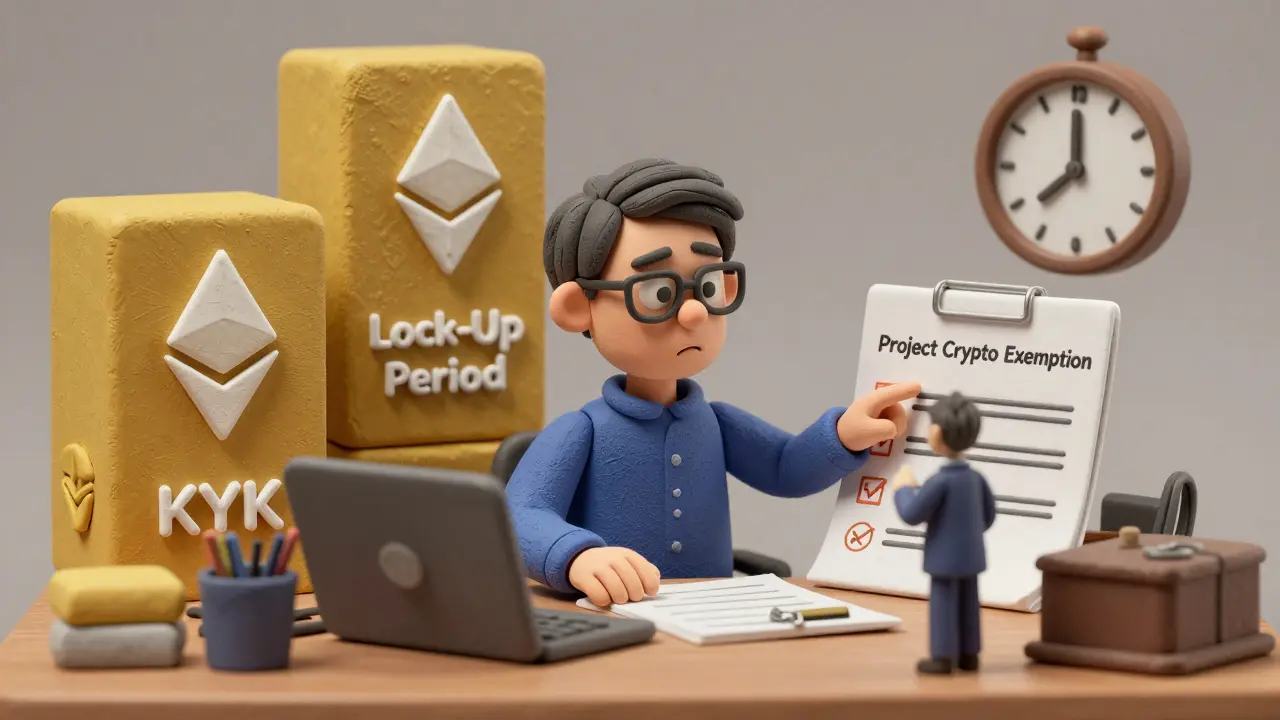
They’re built on blockchains, mostly Ethereum, and use smart contracts to enforce compliance automatically. For example, a token might block a transfer if the buyer isn’t accredited, or freeze trading until a lock-up period ends. That’s not magic-it’s code enforcing SEC, MAS, or MiFID II rules.
U.S. Rules: Project Crypto and the Three-Year Exemption
The U.S. Securities and Exchange Commission (SEC) moved from enforcement-only tactics to structured guidance in 2025 with Project Crypto. Chairman Paul Atkins made it clear: digital assets aren’t one-size-fits-all. Some tokens start as securities but can evolve into something else if the network becomes decentralized and functional.
The biggest change? A proposed three-year exemption for certain tokens. To qualify, issuers must:
- Post clear disclosures on a public website
- Offer tokens primarily for network development, not speculation
- File a notice with the SEC
- Submit an exit report after three years showing the network’s maturity
This is huge. It gives startups breathing room to build without immediately jumping through full registration hoops. But it’s not a loophole. The SEC still uses the Howey Test to decide if something is a security. And if you’re selling tokens to non-accredited investors without registration, you’re still at risk.
Europe: MiCA Doesn’t Cover Security Tokens
The EU’s Markets in Crypto-Assets (MiCA) regulation was supposed to be the big answer for crypto. But it deliberately leaves security tokens out. Why? Because they’re already covered by existing financial laws like MiFID II and Prospectus Regulation.
That means if you’re issuing a security token in the EU, you need to follow the same rules as if you were issuing stock on a traditional exchange. Prospectus approval, investor suitability checks, and ongoing reporting-all required. No shortcuts. This creates a high barrier but also clarity: if you comply with MiFID II, you’re compliant with EU token rules.
But here’s the catch: MiCA doesn’t harmonize rules across all 27 EU countries. Some national regulators interpret things differently, leading to inconsistent enforcement. A token that’s legal in Germany might face extra scrutiny in France.
Singapore: The Sandbox Approach
Singapore’s Monetary Authority (MAS) takes a pragmatic, innovation-friendly stance. They don’t create new rules for tokens-they apply existing ones. Tokenized shares? Treated exactly like traditional shares under the Securities and Futures Act.
But MAS also runs the Project Guardian sandbox. This lets companies test tokenized bonds, funds, and other assets with temporary regulatory relief. They can pilot real-world use cases without full licensing upfront. It’s a win for startups: test fast, learn, then scale under real rules.
Unlike the U.S., Singapore doesn’t offer a time-limited exemption. But it offers flexibility. If you’re building a tokenized fund and need to raise capital from professional investors, you can use private placement exemptions instead of a full prospectus.
Hong Kong: Strict Licensing, Limited Access
Hong Kong’s Securities and Futures Commission (SFC) is one of the strictest. Any company marketing or distributing security tokens must hold a Type 1 license for dealing in securities. That’s the same license required by traditional brokers.
And tokenized securities are classified as “complex products.” That means you can’t just sell them to anyone. You must prove the buyer understands the risks and that the product suits their financial situation. Most STOs here are limited to professional investors only-unless you go through the full, costly prospectus process.
This makes Hong Kong a tough market for early-stage startups. But it’s also one of the most trusted. Investors know the rules are enforced, and fraud is rare.
Australia and Dubai: New Frontiers
Australia’s 2025 Treasury Laws Amendment Bill requires all crypto exchanges to hold an Australian Financial Services License (AFSL) from ASIC. That means if you’re listing a security token on an Australian exchange, you’re not just dealing with tech-you’re dealing with financial regulators who can shut you down.
Dubai’s VARA and DFSA took a different path. As of October 2025, they’re shifting responsibility for investor suitability from regulators to licensees. If you’re a Dubai-based platform selling security tokens, you’re now on the hook to assess whether each investor understands the risks. No more regulator hand-holding. It’s a bold move toward market-driven compliance.
How Compliance Actually Works in Practice
Technical compliance isn’t optional. You need:
- Whitelisted wallets: Only approved investor addresses can receive or trade tokens.
- KYC/AML integration: Every investor must be verified before buying-no exceptions, not even friends or family.
- Smart contract rules: Code that blocks trades based on jurisdiction, accreditation status, or lock-up periods.
According to Cooley LLP, founders spend 35-45% of their time on compliance for security token offerings-almost double what they spend on traditional equity deals. That’s because you’re not just filing paperwork. You’re coding legal rules into blockchain logic.
Most projects use Ethereum-based platforms (68% adoption, Deloitte 2025). But not all blockchains support compliance features. You need one that allows for transfer restrictions, identity verification, and audit trails.

Market Trends and Adoption
The global security token market hit $12.3 billion in Q3 2025-up 147% from the year before. Real estate leads the pack at 41% of volume, followed by private equity (29%) and venture capital funds (18%).
Why now? Because tokenization lowers barriers. A $100,000 minimum private equity investment? Now it’s $1,000. That’s opening up access to retail investors who were locked out before.
Seventy-eight of the S&P 100 companies have launched or announced security token projects. State Street, BlackRock, and JPMorgan are all building infrastructure. This isn’t fringe tech anymore-it’s institutional.
Where the System Still Falls Short
Despite progress, big problems remain:
- Fragmentation: U.S. accredited investor rules clash with EU’s MiFID II. 42% of STOs struggle with cross-border compliance (PwC, 2025).
- Custody risks: 63% of platforms lack proper custody or dispute resolution (IOSCO, 2025).
- Regulatory lag: Professor Angela Walch called the SEC’s three-year exemption “seven years too late.” Many projects left the U.S. for Singapore or Dubai because of uncertainty.
The Bank for International Settlements warned of “compliance arbitrage”-where issuers pick the laxest jurisdiction, undermining global standards.
What’s Next? Harmonization and the Future
Things are moving toward alignment. The SEC’s Regulation Crypto proposal, due in Q1 2026, aims to create tailored disclosure rules and safe harbors. The Financial Stability Board is running a 17-jurisdiction sandbox to test cross-border token interoperability-results expected mid-2026.
McKinsey forecasts 10-15% of traditional securities will be tokenized by 2030. That’s $5-7 trillion. But that future only happens if regulators keep moving toward clarity, not chaos.
For issuers: Start with compliance from day one. Pick your jurisdiction wisely. Build smart contracts that enforce the law-not bypass it. For investors: Know what you’re buying. Just because it’s on a blockchain doesn’t mean it’s safe. The rules are finally catching up. Now you have to keep up too.
Are security tokens the same as cryptocurrencies like Bitcoin?
No. Bitcoin and Ethereum are cryptocurrencies-they’re digital currencies designed as mediums of exchange or stores of value. Security tokens represent ownership in real assets like stocks, bonds, or real estate. They’re regulated as securities, meaning they must follow investor protection laws, disclosure rules, and trading restrictions. Bitcoin is not a security; a tokenized share of a building is.
Can I issue a security token without a lawyer?
Technically, yes-but you shouldn’t. Security token offerings involve complex securities laws that vary by country. Even small mistakes-like failing to verify an investor’s accreditation or missing a disclosure requirement-can lead to fines, lawsuits, or forced token buybacks. Legal experts estimate that 35-45% of STO prep time is spent on compliance. Skipping legal counsel risks your entire project.
Which blockchain is best for security tokens?
Ethereum dominates the market, used in 68% of security token projects (Deloitte, Q3 2025). Why? It supports smart contracts with built-in compliance features like transfer restrictions and KYC integration. Other chains like Polygon, Stellar, and Algorand are gaining traction for lower fees and faster settlement, but Ethereum remains the standard for regulatory compatibility and institutional adoption.
Is it legal to sell security tokens to regular investors?
Yes-but only under specific conditions. In the U.S., you can use Regulation A+ or Regulation CF to offer to non-accredited investors, but with strict limits on how much they can invest. In the EU, you need a full prospectus approved by regulators. In Hong Kong, it’s nearly impossible unless you’re a licensed broker. Most platforms restrict retail access unless they’ve gone through full regulatory approval. Always check local rules before offering to non-professional investors.
What happens if I ignore the regulations?
You risk enforcement actions: fines, asset freezes, criminal charges, or being forced to refund all investors. The SEC has already sued multiple projects for unregistered securities offerings. In 2025, the SEC issued a no-action letter for certain token structures-but only after detailed review. Ignoring rules isn’t a shortcut; it’s a gamble with your business, reputation, and freedom.
How do I know if my token is a security?
Use the Howey Test. If your token involves (1) an investment of money, (2) in a common enterprise, (3) with an expectation of profit, (4) primarily from the efforts of others, then it’s a security. Even if you call it a “utility token,” regulators will look at how it’s marketed and used. If investors expect returns from your team’s work, it’s likely a security. When in doubt, consult a securities lawyer.