SafeLaunch (SFEX) Token Airdrop: Guide and Security Analysis
 Apr, 30 2026
Finding a surprise token in your wallet feels like winning a mini-lottery, but in the current crypto climate, it is often a trap. The buzz around the SafeLaunch SFE Token airdrop is growing, yet there is a glaring lack of official documentation. Before you connect your wallet to any claiming site, you need to know if you are looking at a legitimate reward or a sophisticated wallet-drainer.
The Current State of SFEX
If you search for SFEX on major trackers, you will see some worrying red flags. Currently, the token is listed with a price of $0 USD and zero trading volume. In a healthy project, you would see active liquidity and a fluctuating price. When a token shows absolutely no movement, it usually means one of three things: the project is dead, it has been delisted, or it was never truly launched on a public exchange.
For anyone chasing an airdrop, this is the first major warning sign. Legitimate airdrops are designed to bootstrap liquidity-meaning they want people to trade the token to create a market. A token with no volume suggests that even if you receive a thousand SFEX tokens, you might not have a way to sell them for actual cash.
How Modern Airdrops Actually Work
Gone are the days when you just followed a Twitter account to get free coins. In 2026, legitimate projects use a "Proof of Contribution" model. Instead of social media likes, they look for real on-chain behavior. If you want to know if a cryptocurrency airdrop is real, check if it requires one of these common qualification methods:
- Testnet Interaction: Using a beta version of the network to find bugs.
- Liquidity Provision: Locking your assets in a pool to help others trade.
- Governance Voting: Participating in the decision-making process of a DAO.
- Point Systems: Accumulating points based on the volume of transactions you make.
If a project like SafeLaunch asks you to "claim" tokens without you having previously used their platform or interacted with their smart contracts, be extremely skeptical. Real rewards are earned; surprise rewards are often scams.

Comparing SFEX to Verified Projects
To understand what a legitimate distribution looks like, let's look at Safe Global and their SAFE token. They provided a clear blueprint: a maximum supply of 1 billion tokens, a specific 5% allocation for airdrops, and a transparent vesting schedule. This means the tokens weren't just dumped into wallets; they were released slowly to prevent the price from crashing.
| Feature | SafeLaunch (SFEX) | Verified Projects (e.g., SAFE) |
|---|---|---|
| Public Tokenomics | None / Limited | Detailed Whitepaper |
| Trading Volume | $0 USD | Millions in Daily Volume |
| Claim Requirement | Often unexpected | Based on on-chain activity |
| Team Transparency | Low / Anonymous | Verified / Doxxed |
The Danger of the "Claim" Button
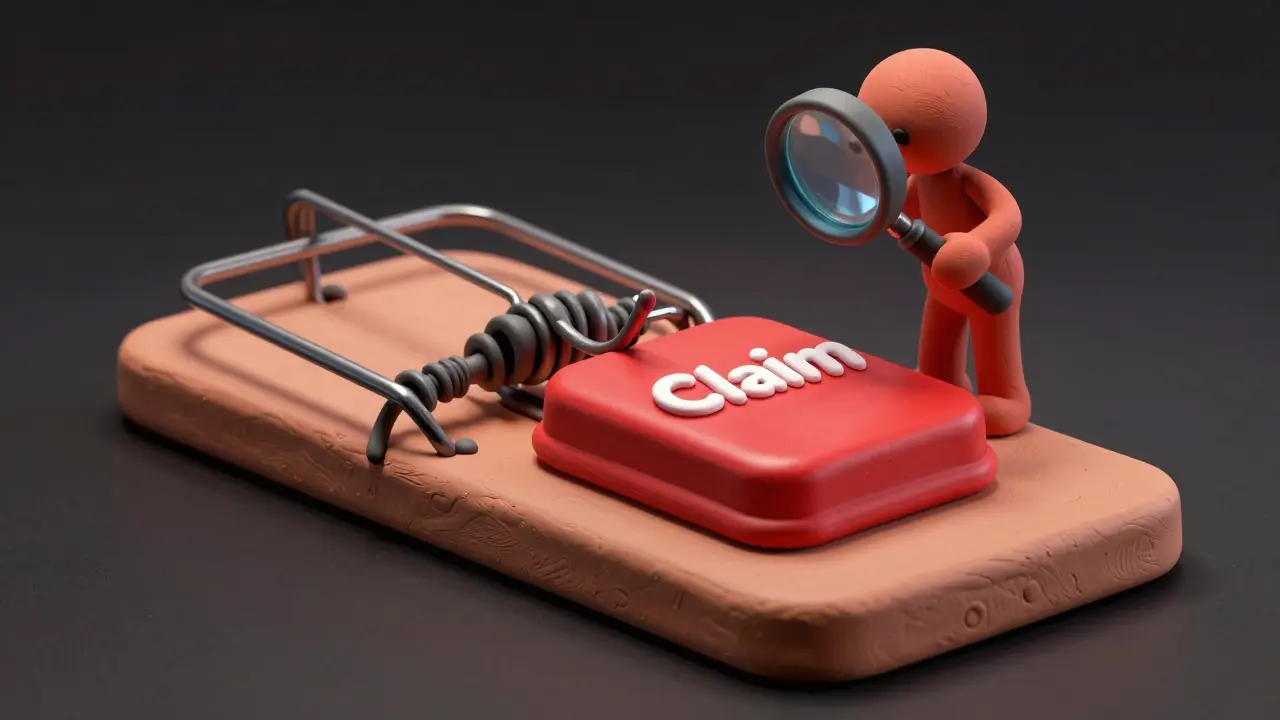
The most dangerous part of any airdrop is the interaction with the smart contract. When you click "Claim," you aren't just receiving tokens; you are often signing a transaction. Scammers use a technique called Approval Phishing. They ask you to "approve" the token for a transfer, but the fine print of that transaction actually gives the contract permission to spend all the USDT or Ethereum in your wallet.
This is why tools like Trezzor Suite have implemented features to blur or hide unknown tokens. If a token suddenly appears in your wallet that you didn't ask for, do not touch it. Do not try to swap it on a decentralized exchange, and definitely do not visit the website listed in the token's name to "unlock" it. The moment you interact with that contract, you risk losing everything.
Red Flags Checklist for Airdrop Hunters
Before you engage with any project claiming to give away tokens, run through this list. If you hit more than two red flags, walk away.
- The "Urgency" Tactic: Does the site say you only have 24 hours to claim? This is a psychological trick to make you bypass security checks.
- Asking for Seeds: No legitimate airdrop will ever ask for your recovery phrase or private key. If they do, it is a 100% scam.
- Unexpected Arrival: Did the token appear in your wallet without you ever using the project?
- Lack of Community: Does the project have a dead Telegram or a Twitter account with fake bot followers?
- Zero Liquidity: Is the token trading at $0 with no volume on reputable sites?
Verdict on the SafeLaunch Airdrop
Given the current data, there is no evidence that a legitimate, value-driven airdrop for SFEX is taking place. The combination of zero trading volume and the absence of a public distribution roadmap makes any "claim" offer highly suspicious. If you see an ad or a DM telling you to claim your SafeLaunch tokens, treat it as a security threat.
Is the SafeLaunch (SFEX) airdrop real?
There is currently no official, verified documentation supporting a legitimate airdrop. Because the SFEX token shows $0 trading volume and no active market, any claims of a free distribution should be treated with extreme caution.
What should I do if I find SFEX tokens in my wallet?
The safest move is to ignore them. Do not attempt to sell, transfer, or "unlock" them via any website. Interacting with unknown tokens often requires signing a smart contract that can drain your entire wallet balance.
How can I tell if an airdrop is a scam?
Check for three things: a detailed whitepaper with tokenomics, a history of actual protocol use (you should have used the app before the airdrop), and active trading volume on a reputable exchange. If these are missing, it's likely a scam.
Will I lose money by just having airdropped tokens in my wallet?
Simply holding a token you didn't buy doesn't cost you money. The danger happens when you try to interact with the token or the project's website, which is when you might accidentally grant a malicious contract access to your funds.
What is a "Wallet Drainer" in the context of airdrops?
A wallet drainer is a malicious smart contract that asks for "approval" to spend your tokens. Once you click confirm on your wallet (like MetaMask), the contract can move all your assets to the attacker's address without needing further permission.
Robert Smith
April 30, 2026 AT 13:50Stay safe out there 🛡️🚀
VIVEK SINGH
May 1, 2026 AT 18:22Oh wow look at us discovering that free money from strangers is actually a scam what a revolutionary concept
truly a masterclass in the obvious while the masses keep chasing ghosts in the machine because thinking for yourself is just too much effort these days isn't it
Lloyd I
May 3, 2026 AT 05:20This is such a helpful breakdown for everyone starting out in crypto
I really appreciate how you simplified the technical side of approval phishing so new users can protect their portfolios and keep growing their wealth safely
Kristi Swartz
May 4, 2026 AT 12:45People who fall for these scams are simply lazy and lack basic ethics in how they approach wealth
it is a moral failure to expect money for nothing and then act surprised when a crime occurs
one must maintain a standard of integrity and diligence in all financial dealings if they wish to be respected in a digital society
the lack of basic research is a sign of a declining intellect across the board
we should all be ashamed that such basic warnings are even necessary in this day and age
it shows a complete disregard for personal responsibility
those who gamble with their security are just waiting for the inevitable
a disciplined mind would never click a random link
greed is the root of this entire systemic problem
we must demand better of ourselves
ignorance is not an excuse
it is a choice
the evidence is right there
stop being reckless
start being honest with your own shortcomings
Harvey Alford
May 5, 2026 AT 04:12I lost everything last year
I need help
please DM me