Saudi Arabia Banking Ban on Crypto: How the 2018 Rule Works Today
 Jun, 26 2026
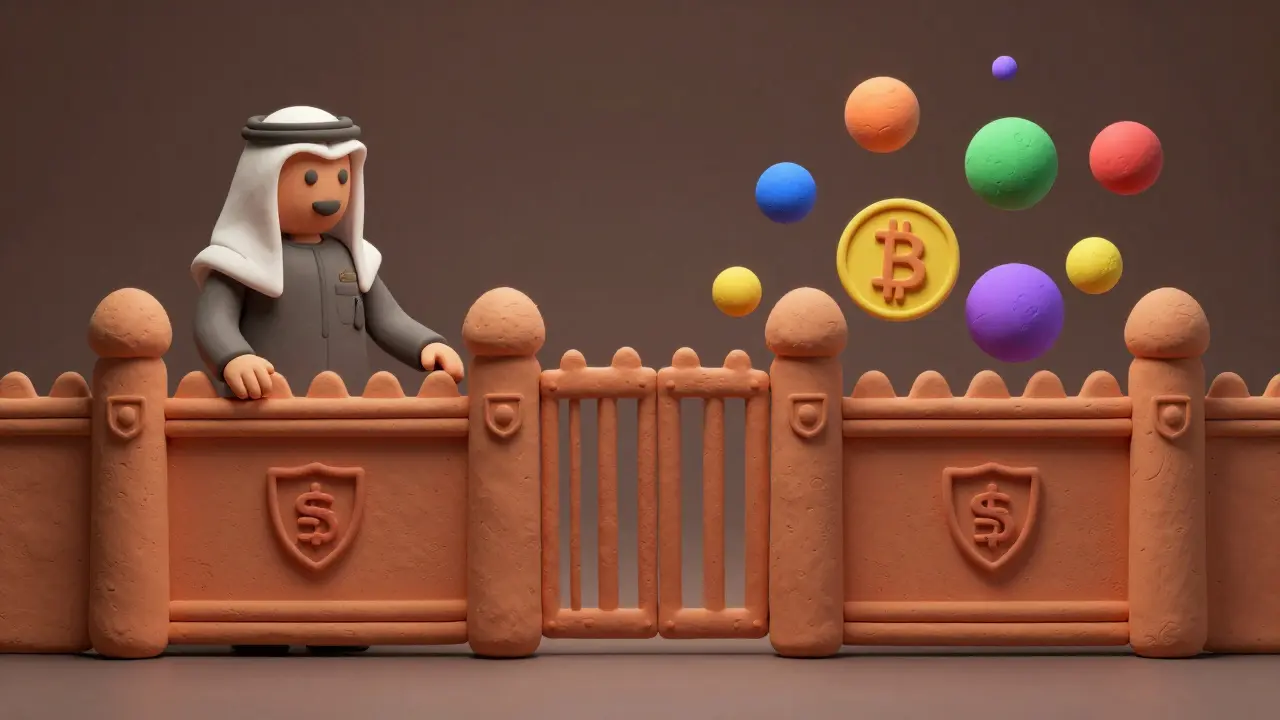
You can own Bitcoin in Saudi Arabia. You can trade Ethereum. You can even hold a wallet full of altcoins without anyone knocking on your door to confiscate them. But try to move that money into or out of a local bank account, and you hit a wall. This is the reality for millions of Saudis navigating a unique regulatory landscape where personal crypto ownership exists in a gray area, but institutional banking access is strictly prohibited.
This disconnect creates one of the most complex environments for digital asset users in the Middle East. While neighbors like the UAE have built comprehensive frameworks for crypto businesses, Saudi Arabia maintains a restrictive banking policy toward cryptocurrency transactions, implemented through warnings and prohibitions since 2018. For traders, investors, and businesses, understanding exactly what is allowed-and what will get your bank account frozen-is not just helpful; it is essential.
The Core Restriction: Banks Are Off-Limits
At the heart of the issue is a clear directive from the Saudi Arabian Monetary Authority (SAMA), now known as the Saudi Central Bank. Since 2018, SAMA has explicitly barred traditional financial institutions from engaging with cryptocurrency trades. This means no local bank will process a deposit from a crypto exchange, facilitate a withdrawal to a digital wallet, or offer custody services for digital assets.
This ban was reinforced by multiple regulatory bodies. In 2018, the Standing Committee for Awareness on Dealing in Securities Activities issued an advisory highlighting the risks of virtual currencies due to the lack of government supervision. The Ministry of Finance followed up in 2019 with a formal warning, stating clearly that cryptocurrencies are neither legally recognized nor regulated by any official entities in the Kingdom.
The result is a comprehensive barrier between the traditional banking system and the crypto economy. If you are a business operating in the crypto space, you cannot open a corporate bank account linked to your trading activities. If you are an individual trader, you cannot simply click "withdraw to bank" on a platform like Binance or Coinbase and expect the funds to land in your Al Rajhi or SNB account smoothly. The restriction applies to all Saudi financial institutions, making this one of the strictest policies in the Gulf Cooperation Council (GCC) region.
Why the Ban? Risk Aversion and Financial Stability
To understand why Saudi authorities maintain this stance, you have to look at their primary goal: protecting the national financial system. SAMA views cryptocurrencies as high-risk assets prone to volatility, fraud, and illicit activities. By cutting off the banking link, regulators aim to prevent capital flight and protect retail investors from losing life savings in unregulated markets.
There is also a strong focus on Anti-Money Laundering (AML) and Counter-Terrorism Financing (CFT). The Anti-Money Laundering Law, enacted by Royal Decree No. (M/20) in October 2017, defines "funds" broadly to include tangible and intangible assets obtained through electronic systems. This suggests that crypto assets fall under AML/CFT oversight, even if specific crypto regulations are missing. The government wants to ensure that the anonymity often associated with digital coins does not become a loophole for illegal finance.
Furthermore, there is the matter of monetary sovereignty. Cryptocurrencies challenge the central bank's control over the money supply. By banning banks from interacting with these assets, SAMA ensures that the Saudi Riyal remains the dominant medium of exchange and store of value within the formal economy. This cautious approach contrasts sharply with the more liberal stances seen in jurisdictions like Dubai or Bahrain, reflecting Saudi Arabia's preference for controlled experimentation over broad market liberalization.
The Paradox: A Booming Market Behind Closed Doors
If the banking ban is so strict, why does the crypto market in Saudi Arabia continue to grow explosively? The answer lies in the distinction between institutional prohibition and individual adoption. While banks are blocked, people are not. In fact, the data shows remarkable resilience and growth despite the hurdles.
In 2024, the crypto-asset market in Saudi Arabia was valued at $23.1 billion. Projections suggest this could reach $45.9 billion by 2033, growing at a compound annual rate of 7.9%. From July 2023 to June 2024 alone, crypto transaction values jumped by 153%, topping $31 billion. This surge was driven largely by institutional activity and sophisticated traders who found ways to circumvent traditional banking channels.
Individual adoption is equally impressive. Approximately 11.4% of Saudis, which translates to around 4 million people, owned crypto assets as of recent estimates. With 63% of the population under the age of 30, there is a demographic pressure for digital financial innovation that regulators cannot ignore. These young, tech-savvy citizens are driving demand for altcoins and decentralized finance (DeFi) products, often exceeding global averages in risk tolerance and investment diversification.
Metric
Value / Estimate
Context
Market Value (2024)
$23.1 Billion
Total value of crypto assets held
Projected Growth (by 2033)
$45.9 Billion
7.9% Compound Annual Growth Rate
User Adoption Rate
11.4%
Approx. 4 million individuals
Transaction Volume Surge (2023-2024)
153% Increase
Topped $31 billion in value
Demographic Driver
63% Under Age 30
High openness to digital finance
How Traders Navigate the Banking Blockade
So, how do you actually buy or sell crypto when your bank won't help? The ecosystem has adapted, creating alternative pathways that range from informal networks to international workarounds. Understanding these methods is crucial for anyone participating in the market.
- Peer-to-Peer (P2P) Trading: This is the most common method. Platforms like Binance P2P allow users to buy crypto directly from other individuals. Payment is often made via bank transfer between private accounts, cash deposits, or mobile wallets. While effective, this carries counterparty risk-you must trust the seller to release the crypto after payment.
- International Banking Relationships: Some wealthy individuals and businesses maintain bank accounts in more crypto-friendly jurisdictions like the UAE, Switzerland, or Singapore. They use these accounts to interface with global exchanges, effectively bypassing local restrictions. However, this requires careful compliance with both foreign and Saudi tax laws.
- Cryptocurrency Debit Cards: Certain fintech companies offer prepaid cards loaded with crypto. Users load the card with digital assets and spend them like cash. While convenient for spending, loading these cards often still requires navigating the initial fiat-to-crypto conversion hurdle.
- Over-the-Counter (OTC) Desks: For large institutional players, OTC desks provide liquidity outside of public exchanges. These transactions are negotiated privately and settled through trusted third-party arrangements, though they require significant capital and legal structuring.
These workarounds highlight the friction in the system. Every step involves extra effort, higher fees, or increased risk. For businesses, this complexity is a major operational headache. They face difficulties converting Saudi Riyals to stablecoins for payroll or payments, often requiring sophisticated accounting practices and international banking relationships to manage liquidity.

Taxation and Legal Gray Areas
While the banking ban is clear, the legal status of crypto ownership is murkier. Cryptocurrencies are not recognized as legal tender in Saudi Arabia. This means you cannot pay your electricity bill or taxes with Bitcoin. However, they are treated as assets. This distinction has significant implications for taxation.
For individuals, there is currently no capital gains tax on crypto profits. If you buy Bitcoin today and sell it next year for a profit, you keep the gain. However, this does not mean the activity is invisible. Businesses operating in the crypto space face a different reality. They may be subject to a 15% capital gains tax, a 20% corporate income tax, and a 2.5% zakat (religious tax) on their holdings. Without access to traditional banking for seamless reporting, complying with these tax obligations becomes a logistical challenge.
A surprising development came from the religious sector. A high-ranking Saudi religious leader issued a fatwa confirming that operations with Bitcoin and other cryptocurrencies correspond to Sharia law principles. This endorsement is significant because it removes a major social and cultural barrier. It suggests that while the state restricts banking access for financial stability reasons, the activity itself is not morally or religiously condemned. This shift could influence future policy decisions, potentially softening the regulatory stance over time.
The Future: CBDCs and Controlled Experimentation
Is the ban permanent? Probably not forever, but change will be slow and controlled. Saudi Arabia is not ignoring blockchain technology; it is selectively adopting it. The Kingdom joined the mBridge pilot project in 2024, a multi-central bank initiative involving the UAE, China, Thailand, and Hong Kong to test cross-border payments using Central Bank Digital Currencies (CBDCs).
SAMA is heavily involved in analyzing CBDC capabilities for integration into the domestic financial system. This indicates that authorities see value in digital currency technology when it is centralized, regulated, and controlled by the state. The interest lies in the efficiency of blockchain, not the decentralization of crypto.
The Communications and Space Technology Commission (CST) continues to monitor digital activity, aligning tech regulation with Vision 2030 goals. As the market grows and religious acceptance solidifies, the tension between regulatory caution and economic opportunity will likely lead to evolution. We may see the emergence of licensed crypto service providers or specific banking windows for vetted institutions in the late 2020s. However, until then, the current framework remains: you can play the game, but you cannot use the house's chips.
Is owning cryptocurrency illegal in Saudi Arabia?
No, owning cryptocurrency is not explicitly illegal for individuals in Saudi Arabia. However, it is not legally recognized as currency, and there are no specific laws governing its ownership. The main restriction is on banking institutions, which are banned from processing crypto-related transactions.
Can I use my Saudi bank account to buy Bitcoin?
Directly, no. Saudi banks are prohibited by SAMA from facilitating cryptocurrency trades. You cannot withdraw fiat currency from a local bank to a crypto exchange or deposit crypto proceeds directly into a standard Saudi bank account. Most users rely on Peer-to-Peer (P2P) platforms or international accounts.
Do I have to pay tax on crypto profits in Saudi Arabia?
For individuals, there is currently no capital gains tax on crypto profits. However, businesses dealing in crypto may be subject to capital gains tax (15%), corporate income tax (20%), and zakat (2.5%). Regulations are evolving, so consulting a tax professional is advisable.
Why does Saudi Arabia ban banks from handling crypto?
The ban is primarily aimed at protecting financial stability, preventing money laundering, and maintaining monetary sovereignty. Regulators view unregulated cryptocurrencies as high-risk assets that could threaten the traditional banking system and expose retail investors to significant losses.
Is crypto Halal according to Saudi religious scholars?
Yes, a high-ranking Saudi religious leader has issued a fatwa stating that Bitcoin and other cryptocurrencies comply with Sharia law. This religious endorsement contrasts with the banking restrictions but provides social and moral legitimacy to crypto ownership among Muslims in the Kingdom.
Jay Sharma
June 26, 2026 AT 22:10They say it's about financial stability but we all know the real reason is control. The government doesn't want you to have money they can't track or freeze. It is a classic move by the elite to keep the common people dependent on their broken banking system while they hoard power behind closed doors.
Maurice Flynn
June 27, 2026 AT 17:45I just sit back and watch these regulations shift every few years. It is fascinating how the narrative changes from absolute prohibition to cautious experimentation with CBDCs. The market moves regardless of what SAMA says because people want freedom in their finances.
Fiona Ellis
June 29, 2026 AT 04:42You really need to read the section on P2P trading carefully before you try anything. 🧐 I have seen so many people lose their shirts because they trusted a stranger on Binance without checking their trade history first. Please be careful out there because the risks are very real and the consequences can be severe for your bank account status. 😬
Mélanie Boulay
June 30, 2026 AT 09:12It is quite interesting to observe the dichotomy between the strict banking prohibitions and the undeniable growth in individual adoption rates among the younger demographic who are largely under thirty years of age. One must consider that the regulatory framework is not static but rather evolves in response to technological advancements and societal shifts which inevitably leads to a more nuanced understanding of digital assets over time as evidenced by the recent fatwa issued by religious leaders who have deemed certain operations permissible under Sharia law principles thereby reducing the social stigma associated with cryptocurrency ownership within the Kingdom despite the ongoing institutional restrictions imposed by central authorities who remain concerned about monetary sovereignty and potential illicit activities.
Trent Erman1
June 30, 2026 AT 16:38The philosophical implication here is profound. We are seeing a society where moral permission exists through religious endorsement yet legal permission is withheld by state institutions. This creates a unique ethical landscape where citizens must navigate between spiritual acceptance and civil disobedience. It forces us to question the role of the state in regulating personal wealth management when the underlying technology offers greater transparency than traditional banking systems ever did.
Rebecca Shoniker
July 2, 2026 AT 04:26Let me be absolutely clear about this; if you are engaging in business activities, you are walking on thin ice regarding tax compliance.;; You cannot simply ignore the 15% capital gains tax or the zakat obligations just because your bank won't process the transaction.;; The regulatory bodies are watching closely, and the lack of formal reporting channels does not equate to anonymity.;; It is crucial to maintain meticulous records and consult with qualified tax professionals who understand the nuances of Saudi fiscal law to avoid severe penalties down the line.;; Do not assume that operating in a gray area means you are invisible to the authorities.;;
Sajjad Ghorbani Moghaddam
July 3, 2026 AT 23:07Hey everyone, just wanted to share that using international accounts is a pretty common workaround for those who can manage the compliance side of things. It helps to have a backup plan since local banks are completely off the table for crypto transactions right now.
Scott Miller
July 5, 2026 AT 05:35Wake up and smell the coffee! The market is booming at $23 billion and growing fast. Stop worrying about the old rules and start adapting to the new reality. If you are not leveraging these opportunities now, you are leaving money on the table. Get out there and make it happen!