Saudi Crypto Regulation: Current Rules and Future Outlook
 Apr, 25 2026
Imagine living in a country where you can legally trade Bitcoin on a global app, yet your local bank won't touch a single satoshi without a government green light. That is the current reality in Saudi Arabia. The Kingdom is playing a high-stakes game of balance: it wants the cutting-edge efficiency of blockchain to power its economy, but it is terrified of the volatility and risk that come with public cryptocurrency trading. For anyone trying to navigate this, it feels like walking through a legal gray area where the rules change depending on whether you are a hobbyist trader or a massive corporation.
The Current State of Play: Legal or Not?
If you ask a government official, they might point to old warnings from 2018 when virtual currencies were declared illegal. But if you check the actual activity on the ground, a different story emerges. Today, Saudi crypto regulation is a dual-track system where retail crypto use exists in a gray area while institutional blockchain development is heavily funded.
Right now, there isn't a single "Crypto Law" book you can buy. Instead, the Saudi Central Bank (known as SAMA) and the Capital Market Authority (CMA) run the show. SAMA handles the money side, and the CMA looks at crypto as an investment asset. While they haven't officially recognized Bitcoin as legal tender, they aren't actively arresting people for owning it. This has created a weird vacuum where millions of people are diving into the market despite the lack of a clear "yes" from the top.
Who is Actually Using Crypto in the Kingdom?
The numbers are honestly staggering. About 4 million Saudis-roughly 11.4% of the population-now own digital assets. Why? Because 63% of the population is under 30. Young people in Riyadh and Jeddah aren't waiting for a formal law to tell them that decentralized finance is the future; they're already using it. In 2024, the crypto market in the Kingdom was valued at $23.1 billion, and it's on track to hit nearly $46 billion by 2033.
Interestingly, Saudis aren't just sticking to the "safe" bets like Bitcoin. There is a massive appetite for altcoins, showing a much higher risk tolerance than you'd see in Western markets. Most of this happens on international platforms. If you hang out on Reddit in the r/saudiarabia threads, you'll see users like 'RiyadhTrader88' mentioning how they use Coinbase or Binance for years without a hitch, though they still keep a nervous eye on SAMA's latest warnings.
The Institutional Pivot: Blockchain vs. Cryptocurrency
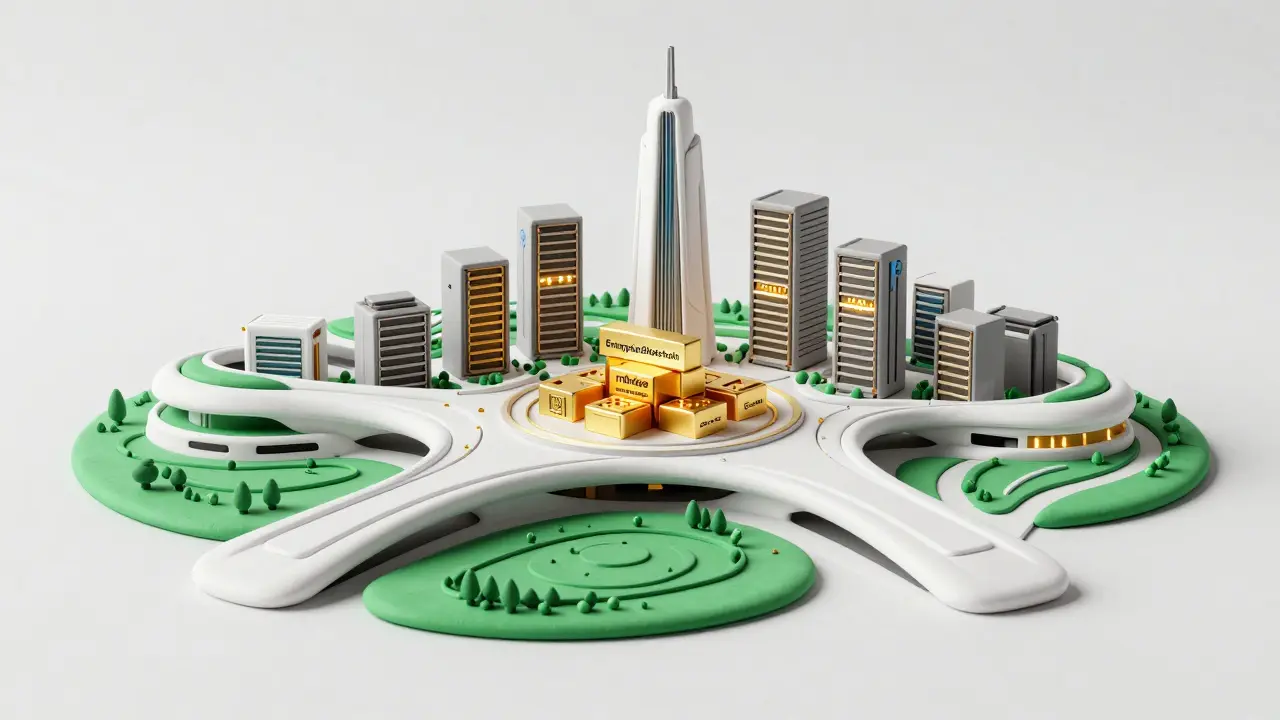
Here is where the government gets excited. While they are cautious about coins, they are obsessed with the tech. As part of Vision 2030, the government is pouring money into blockchain to diversify the economy away from oil. In the 2025 budget alone, the Ministry of Communications and Information Technology set aside SAR 1.2 billion (about $320 million) for blockchain initiatives.
They are focusing on "Enterprise Blockchain"-think logistics, government records, and cross-border payments. A great example is the mBridge project, where Saudi Arabia teams up with China, the UAE, Thailand, and Hong Kong to move money across borders without using traditional slow-motion banking systems. They've also launched Nuqtah, the first regulated NFT platform in the country. This shows that as long as the government can put a fence around the project and regulate it, they are all in.
| Feature | Retail (Individuals) | Institutional (Gov/Banks) |
|---|---|---|
| Legal Status | Gray area (not banned, not endorsed) | Active support & funding |
| Primary Tools | International Exchanges (Binance, etc.) | CBDCs, mBridge, Private Blockchains |
| Regulatory Oversight | Minimal / General AML laws | Strict SAMA/CMA approval |
| Main Goal | Speculation & Investment | Economic diversification (Vision 2030) |
Taxes and Sharia Compliance
One of the biggest hurdles for any financial product in Saudi Arabia is Sharia compliance. For years, people wondered if Bitcoin was "Halal." The deadlock broke when a high-ranking religious leader issued a fatwa confirming that cryptocurrency operations align with Islamic principles. This was a game-changer because it opened the door for Islamic finance to merge with digital assets.
The tax side of things is a bit more confusing. If you're an individual trader, you're in luck-there's no capital gains tax on your crypto winnings. But if you're running a business, the government wants its cut. Businesses face a 15% capital gains tax, a 20% corporate income tax, and the 2.5% Zakat (the Islamic wealth tax). This creates a steep climb for any startup trying to launch a crypto-related business locally.
The Mining Boom and Green Energy
You might not think of the desert as a hub for server farms, but Saudi Arabia has become a serious player in crypto mining. They now account for about 4% of global mining activity. This isn't just about plugging in machines; it's about power. By leveraging renewable energy projects-specifically within the NEOM smart city project-they've managed to cut the carbon footprint of their mining by 35% since 2020. It's a clever way to align the energy-hungry nature of mining with the Kingdom's sustainability goals.

What's Coming Next? The 2025-2026 Horizon
We are currently in a transition phase. The "wild west" era is ending, and the "regulated" era is starting. Rumors from leaked documents and internal reports suggest that the CMA is preparing specific crypto asset regulations that will finally define what a "digital asset" actually is in the eyes of the law. This will likely include licensing requirements for anyone wanting to run an exchange inside the country.
The biggest move to watch is the Central Bank Digital Currency (CBDC). SAMA has been testing a digital riyal for a while now. A domestic CBDC pilot is expected to launch in the latter half of 2025. Unlike Bitcoin, a CBDC is centrally controlled, meaning the government gets the speed of blockchain without losing control of the money supply. Once the digital riyal hits the mainstream, the way people think about "crypto" in Saudi Arabia will change from speculation to utility.
Is it legal to buy Bitcoin in Saudi Arabia?
While there is no official law stating it is legal tender, and SAMA has issued warnings in the past, it is not explicitly illegal for individuals to own or trade cryptocurrency on international platforms. However, it remains in a regulatory gray area.
Can Saudi banks help me buy crypto?
Generally, no. Banks are strictly prohibited from engaging in crypto transactions unless they have explicit, written approval from the Saudi Central Bank (SAMA), which is a long and difficult process.
Do I have to pay tax on my crypto profits in Saudi Arabia?
Individual investors typically do not pay capital gains tax on their holdings. However, businesses operating in the crypto space are subject to corporate income tax, capital gains tax, and Zakat.
What is the digital riyal?
The digital riyal is a potential Central Bank Digital Currency (CBDC) being developed by SAMA. Unlike decentralized cryptocurrencies, it would be a digital version of the national currency, fully regulated and backed by the government.
Is crypto Sharia-compliant in Saudi Arabia?
Yes, a high-ranking religious leader has issued a fatwa confirming that Bitcoin and other cryptocurrency operations are consistent with Sharia principles, which has helped increase adoption in the Islamic finance sector.
Next Steps for Businesses and Investors
If you're a business looking to enter the Saudi market, don't just launch an app and hope for the best. You need to align your pitch with Vision 2030. The government isn't looking for "disruption" in the chaotic sense; they want "innovation" that fits into their economic plan. Focus on AML (Anti-Money Laundering) and KYC (Know Your Customer) protocols, as these are the primary concerns for SAMA and the CMA.
For individual investors, the best move is to stay diversified and keep a close eye on the Q3 2025 regulatory updates from the CMA. As the Kingdom moves toward a formal licensing framework, the gap between "gray market" trading and official financial services will likely close, making the environment much safer for the average user.