Secured MoonRat Token (SMRAT): What It Is, How It Works & Risks
 Aug, 22 2026
Imagine holding a coin that pays you in BNB just for sitting in your wallet. That is the core promise of Secured MoonRat Token, or SMRAT. It is a BEP-20 cryptocurrency on the Binance Smart Chain designed to distribute BNB rewards to holders through a reflection mechanism. Launched around May 2021, this project has carved out a niche in the crowded world of DeFi by offering passive income without staking. But like many micro-cap tokens, it comes with significant volatility and liquidity risks that every potential holder needs to understand before diving in.
Key Takeaways
- SMRAT is a BEP-20 token on Binance Smart Chain that pays BNB reflections to holders.
- The token uses a 5% transaction tax: 2% for BNB rewards, 2% for liquidity, and 1% for burning.
- Market cap is under $2.5 million, making it a high-risk, low-liquidity asset.
- You need a Web3 wallet like MetaMask and access to PancakeSwap to buy or sell.
- Liquidity is thin; slippage can be high, eating into profits during large trades.
What Exactly Is Secured MoonRat Token?
At its core, SMRAT is a community-driven DeFi project operating on the Binance Smart Chain ecosystem. Unlike traditional stocks or even major cryptocurrencies like Bitcoin, SMRAT doesn't have a single identifiable founder or a massive corporate backing. Instead, it relies on a smart contract to execute its functions automatically. The primary value proposition is simple: hold the token, earn BNB.
The token was created in May 2021, hitting an all-time high of approximately $0.000000074827 shortly after launch. By late 2021, it had dropped significantly, and as of early 2026, it trades at roughly $0.000000082. This price action reflects the typical lifecycle of many micro-cap reflection tokens: a sharp initial spike followed by a long period of consolidation or decline. Despite the price drop, the mechanism remains active, continuing to distribute rewards to those who hold the bag.
How the Triple-Mechanism Works
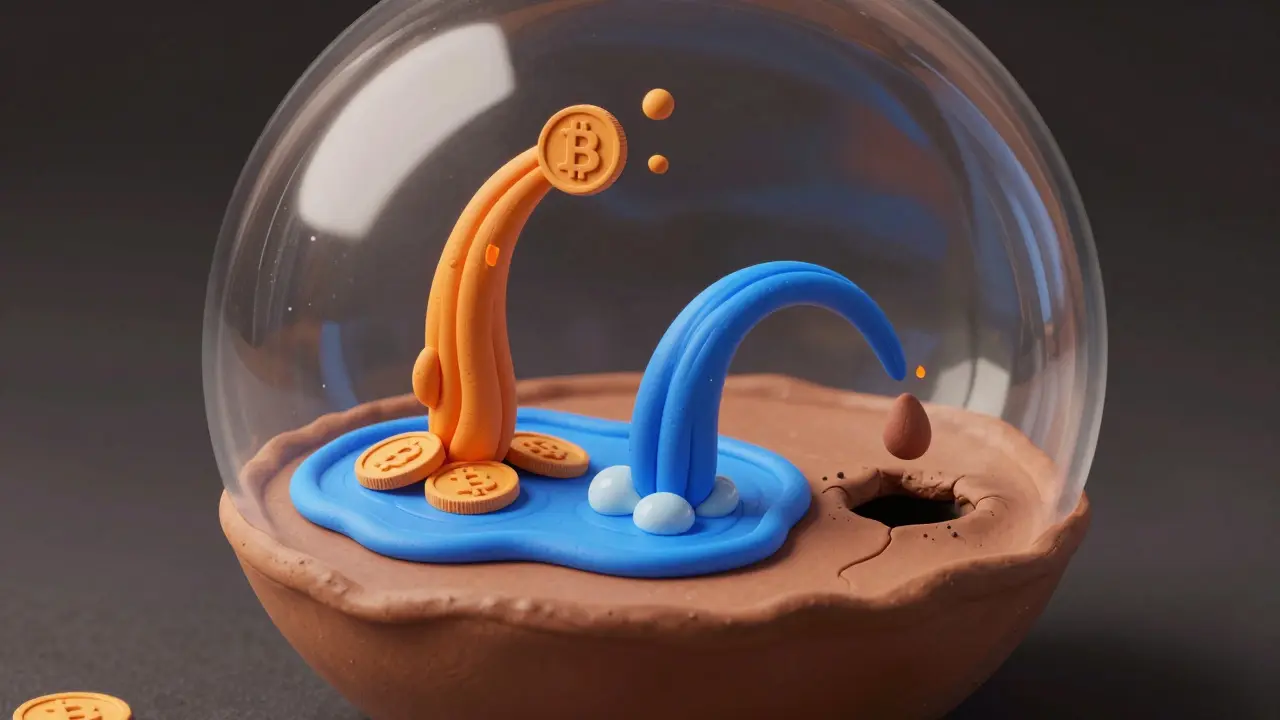
The magic behind SMRAT lies in its "triple-mechanism" system. Every time someone buys or sells SMRAT, a 5% transaction tax is applied. Here is how that money flows:
- Reflection (2%): This portion is converted into BNB and distributed pro-rata to all existing holders. If you hold 1% of the total supply, you get 1% of the BNB generated from this slice. This is your passive income stream.
- Liquidity Pool Acquisition (2%): This amount is added back into the liquidity pool on decentralized exchanges like PancakeSwap. More liquidity means tighter spreads and potentially more stable trading, though in practice, it helps maintain the token's tradability.
- Burn (1%): One percent of the tokens are sent to a dead address, permanently removing them from circulation. This creates deflationary pressure, theoretically increasing the value of remaining tokens over time if demand stays constant or grows.
This structure is similar to other popular tokens in the space, such as Baby Doge Coin or SafuMoon, but SMRAT positions itself as the "most secured version" due to its verified contract and consistent burn rate. However, "secured" in crypto often refers to contract verification rather than guaranteed returns, so keep that distinction in mind.
Market Data and Current Status
Understanding the current market position of SMRAT is crucial for setting realistic expectations. As of February 2026, the token ranks around #6,400 by market capitalization, which places it deep in the tail end of the crypto market. Here is a snapshot of the key metrics:
| Metric | CoinMarketCap | KuCoin | CoinGecko |
|---|---|---|---|
| Price | $0.00000008200157 | $0.00000008200157 | $0.00000008200157 |
| Market Cap | $2.16 Million | $1.5 Million | $1.4584 Million (FDV) |
| 24h Volume | $239.21 | N/A | $25,951 |
| Circulating Supply | 866.92 Trillion | 866.93 Trillion | 1 Quadrillion (Total) |
| Holders | 86,520 | N/A | 86,520 |
Notice the discrepancy in volume data. While some platforms report extremely low daily volumes (under $1,000), others show higher figures. This inconsistency is common in low-liquidity assets where trading activity is sporadic. The key takeaway is that liquidity is thin. Moving a large position in or out of SMRAT can cause significant price impact, meaning you might not get the exact price you see on the screen when you execute the trade.
Risks and Expert Perspectives
No investment discussion is complete without addressing risk. For SMRAT, the risks are substantial. First, there is the liquidity risk mentioned earlier. With a volume-to-market-cap ratio of just 0.01%, exiting a large position is difficult. Second, there is the development risk. The last major contract update was in November 2023, and GitHub activity has been minimal, with only 12 commits in the past year compared to an industry average of 147 for similar tokens.
DeFi security analyst Michael Johnson noted in a January 2026 interview that while the contract is technically sound, the low volume raises concerns about price manipulation. On the other hand, Elena Rodriguez from CoinTelegraph praised the predictable deflationary pressure created by the 1% burn. User sentiment is mixed too. Reddit users enjoy the small passive BNB earnings, describing them as "nice pocket change." Conversely, Trustpilot reviews cite high slippage costs, with one user reporting losing 75% of their profit to slippage on a modest sale.
Regulatory uncertainty also looms. In January 2026, legal experts warned that tokens distributing native chain assets like BNB could face scrutiny as unregistered securities. While SMRAT hasn't been targeted specifically, the broader category is under watch.

How to Buy and Hold SMRAT
If you decide to try SMRAT, here is the practical process. You cannot buy it directly on major centralized exchanges like Binance spot or Coinbase. You must use a decentralized exchange (DEX).
- Get a Wallet: Install MetaMask or another Web3 wallet compatible with Binance Smart Chain.
- Acquire BNB: Buy BNB on a central exchange and transfer it to your wallet, ensuring you select the BSC network.
- Go to PancakeSwap: This is the primary venue for SMRAT trading. Connect your wallet.
- Add the Token Contract: Paste the official contract address:
0x68590a47578e5060a29fd99654f4556dbfa05d10. Double-check this address to avoid scams. - Execute Swap: Swap your BNB for SMRAT. Be prepared to adjust slippage tolerance to 12-15% to ensure the transaction goes through, given the low liquidity.
Once held, you don't need to do anything else. The BNB reflections will start accumulating in your wallet automatically. Just remember to check gas fees on BSC, which are generally low but still present.
Frequently Asked Questions
Is SMRAT a good investment for beginners?
Probably not. SMRAT is a high-risk, micro-cap asset with low liquidity. Beginners should stick to established projects until they understand DEX mechanics, slippage, and gas fees. If you do try it, only invest what you are willing to lose entirely.
Where can I buy Secured MoonRat Token?
You can buy SMRAT on decentralized exchanges like PancakeSwap. It is not listed on major centralized exchanges like Binance or Coinbase for direct trading, though you may find guides on those platforms explaining how to access it via DEXs.
How much BNB do I actually earn from holding?
Earnings depend on trading volume and your percentage of total supply. With current low volumes, daily earnings are typically very small-often less than $1 for average holdings. It is more of a speculative play than a reliable income source.
What is the difference between SMRAT and other reflection tokens?
The mechanism is similar to tokens like Baby Doge Coin, using taxes for rewards, liquidity, and burns. SMRAT differentiates itself by claiming a "secured" status through contract verification and a specific focus on BNB distribution, though its market size and liquidity are significantly lower than larger competitors.
Is the SMRAT contract safe?
The contract is verified on BscScan and passed basic security checks without critical vulnerabilities as of late 2025. However, it has not been audited by top-tier firms like CertiK. Always do your own research and verify the contract address before buying.
Alexander Scheel
August 24, 2026 AT 19:47One must observe the sheer audacity of marketing a token with such negligible liquidity as "secured." The term implies a level of institutional stability that is, at best, optimistic and, at worst, delusional. It is a testament to the gullibility of the modern retail investor that they continue to chase these micro-cap reflections while ignoring the fundamental economic principles of supply and demand. The 5% tax is not a feature; it is a friction cost designed to bleed the holder dry while the team watches from the sidelines. We are witnessing the final gasp of the DeFi summer narrative, stretched thin over a contract that has seen no meaningful development since late 2023.
Sarah Hafner
August 25, 2026 AT 23:05He's being a bit harsh but fair point about the liquidity! I've been in crypto long enough to know that low volume = high risk. If you're thinking about buying, definitely check the pool depth on PancakeSwap first so you don't get shocked by the price impact. Also, remember that the BNB rewards are tiny right now, more like pocket change than actual income. Stay safe out there! :)
Susan Kiley
August 26, 2026 AT 02:17Oh, please. You clearly haven't read the whitepaper or understood the sophisticated deflationary mechanics at play here. Most people just see the number and run, missing the genius of the burn rate. It's tragic really, the lack of financial literacy in this space. But then again, why would you understand if you're just here for the quick buck? 😒
alex fordy
August 26, 2026 AT 09:26I think we're all just trying to find value in a noisy market 🧐. The philosophical angle is interesting though: if the token pays you in BNB, isn't it effectively a yield-bearing asset? The volatility is the price of admission for that passive stream. I've held similar tokens before and the key is patience. The burn mechanism does create a slow squeeze, even if it's barely visible on the chart yet. Just don't expect it to moon overnight. 📉➡️📈
Mohamed Shoaeb
August 26, 2026 AT 23:31actually i think its fine if you keep expectations low. i bought a small amount just to test the reflection mechanism. the bnb drops are small but steady. its better than having nothing sitting in my wallet. just make sure you set your slippage high enough or the tx will fail every time. nice write up btw
Sonia Gomez Gomez
August 28, 2026 AT 06:47You need to stop treating this like a game and start treating it like an investment! Do you have any idea how many people lose money because they don't do their due diligence? It's irresponsible to hold something this volatile without a clear exit strategy. And please, verify the contract address yourself, don't just trust random links. It's basic hygiene! :)
SHIV SHANKAR KANTA
August 29, 2026 AT 22:33The soul of the blockchain is in the reflection. We are not just holding tokens we are holding the promise of a decentralized future where value flows back to the people. The burn is the sacrifice of the ego. The liquidity is the blood of the system. Do not look at the price look at the purpose. The true wealth is in the alignment of the stars and the code. 🌑✨
Daniel Brown
August 30, 2026 AT 05:11To add to the practical side, if you are swapping on PancakeSwap, use the advanced mode settings. Set the slippage tolerance to exactly what the current volatility dictates, usually around 12-15% for this specific pair. Also, note that the gas fees on BSC are cheap, but if the network is congested, your transaction might revert. Always double-check the nonce if you are doing multiple swaps in a short period. It saves headaches later.