Serum DEX Crypto Exchange Review: Speed, Fees, and What Happened After FTX Collapsed
 Feb, 11 2026
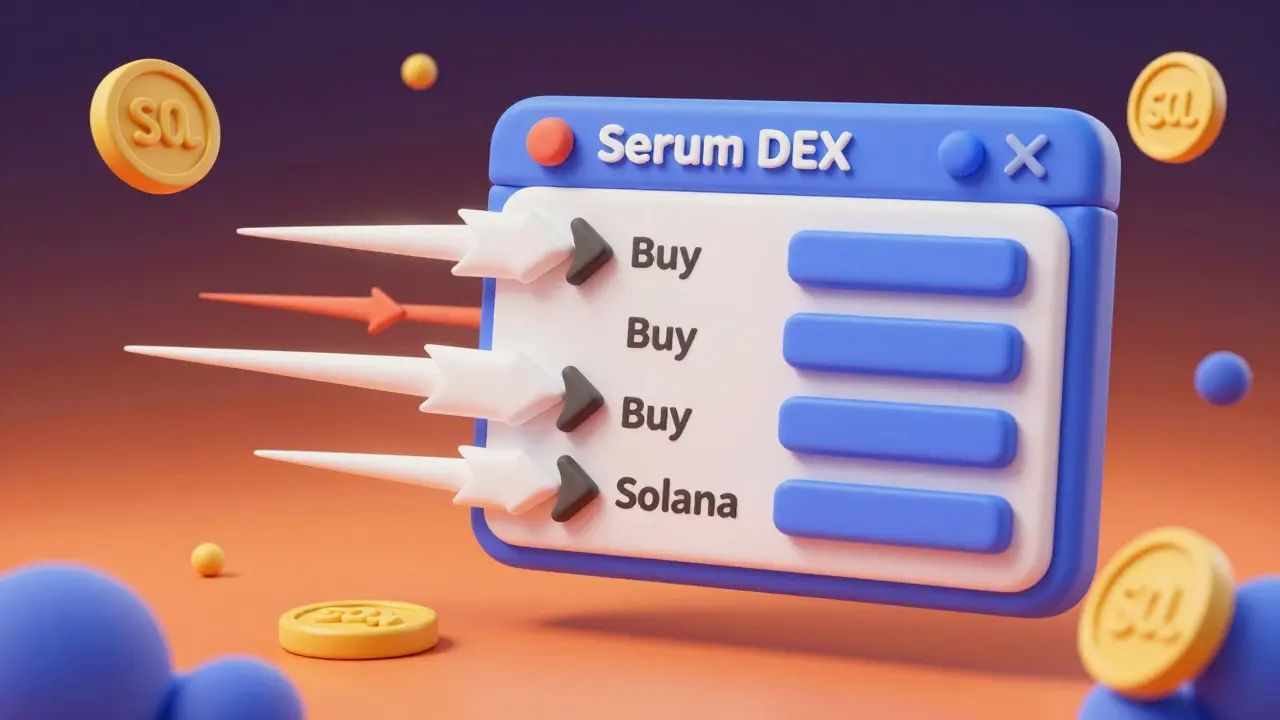
When you think of a decentralized exchange, you probably picture Uniswap - slow, expensive, and clunky during crypto surges. But Serum DEX was built to fix that. Launched in 2020 on the Solana blockchain, it promised something radical: Serum DEX offered the trading speed of Binance with the self-custody of a true DEX. No middlemen. No delays. Just instant trades, near-zero fees, and an order book that actually worked. For a while, it felt like the future of crypto trading.
How Serum DEX Actually Works
Most decentralized exchanges use something called an Automated Market Maker (AMM), like Uniswap or PancakeSwap. That means prices are set by algorithms based on pool ratios. It’s simple, but it causes slippage - especially on big trades. Serum threw that out. Instead, it used a traditional order book, just like what you’d find on Coinbase or Binance. Buy orders and sell orders lined up in real time. If you wanted to buy 100 SOL at $120, you could see exactly who was selling at that price and match instantly. This wasn’t just a gimmick. It made Serum incredibly efficient. While Ethereum-based DEXes struggled with 1-15 transactions per second, Serum ran on Solana and handled 50,000 to 65,000 per second. That’s not a little faster - it’s thousands of times faster. Trades settled in under a second. Slippage was rare. And because Solana’s network fees are tiny, each trade cost about $0.00025, even during peak usage. Serum also let you trade wrapped versions of Bitcoin, Ethereum, and Chainlink directly on its platform. You didn’t need to switch chains. You just connected your Solana wallet, deposited your wrapped assets, and started trading. It was a one-stop shop for Solana-based DeFi.The SRM Token and Fee Structure
Serum didn’t charge trading fees at all. No maker-taker fees. No withdrawal fees. No deposit fees. The only cost was the Solana network fee - basically a penny. But it did have a native token: SRM. This wasn’t just a governance token. It was built into the economics of the whole system. Here’s how it worked: 68% of all fees collected from the network (mostly from cross-chain bridging and other services) went into a buy-and-burn mechanism. That means SRM tokens were constantly being bought back and destroyed. Less supply. More scarcity. It was a clever way to create long-term value for holders. There was also MSRM, a rare token capped at 1,000 units. Only MSRM holders could run validator nodes on the network. It was meant to ensure security and decentralization. But here’s the catch - neither token gave users direct control over the platform’s code.The FTX Collapse and What Broke
Serum’s biggest flaw wasn’t technical. It was governance. The team behind Serum was closely tied to FTX. Sam Bankman-Fried’s company held the upgrade authority. That meant FTX could change the rules, freeze assets, or even shut down the protocol with a single command. It was supposed to be decentralized - but it had one centralized switch. When FTX collapsed in November 2022, Serum went dark. Users couldn’t trade. Withdrawals stopped. Wallets froze. People panicked. Many thought their tokens were gone forever. The community didn’t just sit around - they forked the protocol. A group of developers took the last working version of Serum’s code and launched a new version, free from FTX’s control. It’s still running today. But trust was broken. You can’t claim to be decentralized if one company holds the keys. That incident became a case study in DeFi: true decentralization isn’t about the blockchain - it’s about who controls the upgrades.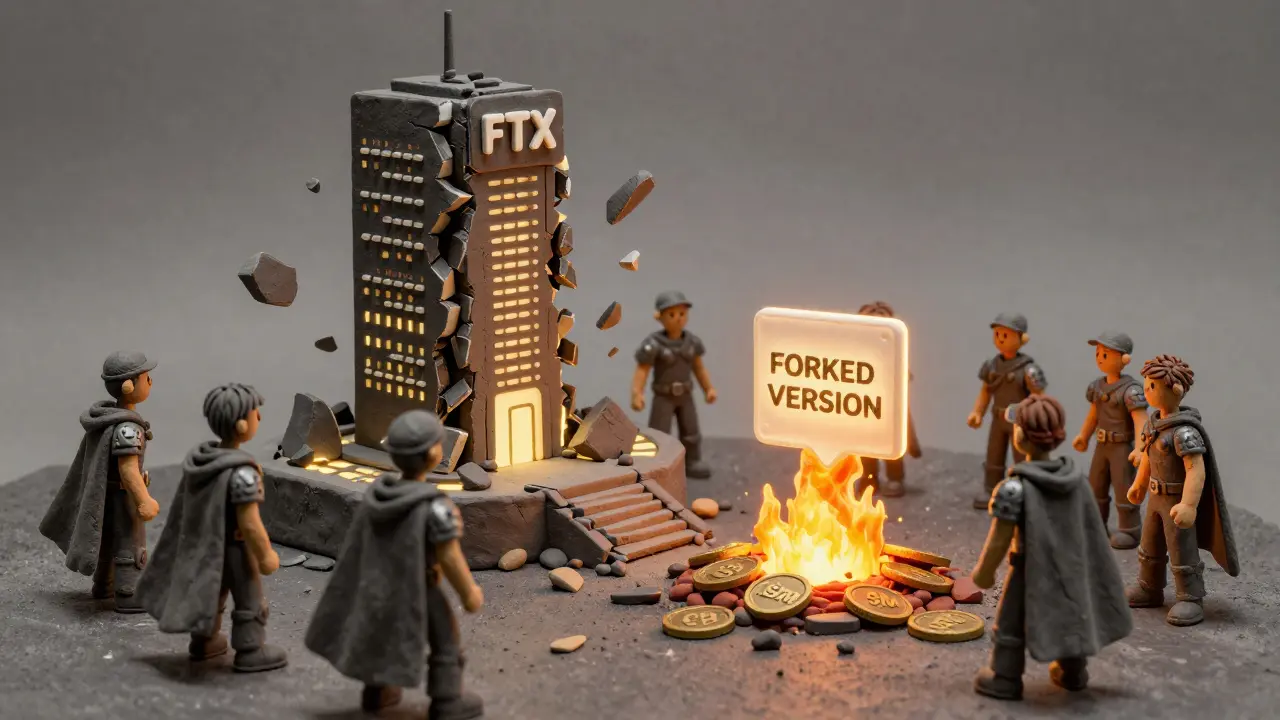
Current State: Is Serum Still Alive?
Yes, but it’s not the same. As of early 2026, the community-run version of Serum is active. Daily trading volume sits around $180 million - down from its peak of $1.2 billion in 2021. It’s now the 8th largest DEX globally. The interface is still fast. Fees are still near zero. And it’s still the only DEX that combines a real order book with Solana’s speed. In January 2025, they added a major upgrade: direct cross-chain bridging from Ethereum without needing FTX. That fixed one of the biggest post-collapse problems. Now, users can bring ETH or USDC directly into Serum using secure, permissionless bridges. The team behind the fork is also working on a decentralized governance council. If it launches, it could restore some of the lost credibility. But right now, decisions still rely on core developers - not a voting system.How Serum Compares to Other DEXes
| Feature | Serum DEX | Uniswap v3 (Ethereum) | PancakeSwap (BNB Chain) | 1inch (Aggregator) |
|---|---|---|---|---|
| Transaction Speed | 50,000-65,000 TPS | 1-15 TPS | 10,000 TPS | Varies by source |
| Trading Fees | $0 (only Solana network fee) | $1-$10+ per trade | 0.25% per trade | 0.1%-0.5% (depends on route) |
| Order Book | Yes | No (AMM) | No (AMM) | No (aggregates AMMs) |
| Supported Chains | Solana + wrapped assets | Ethereum | BNB Chain | 15+ blockchains |
| Decentralization | Post-FTX fork (improving) | High (no central authority) | High | High |
Who Should Use Serum DEX?
Serum isn’t for beginners. Setting up a Phantom wallet, understanding SOL fees, and navigating the interface takes time. One user on Trustpilot spent three hours just getting started. But if you’re already familiar with Solana - or you’re tired of paying $5 in Ethereum gas fees just to swap tokens - Serum is a game-changer. It’s ideal for:- Traders who need low slippage and fast execution
- Users who hold SOL, SRM, or Solana-based tokens (like JUP, BONK, or WSOL)
- People who want professional-grade order book trading without KYC
- Those who believe in Solana’s long-term potential
Problems and Limitations
Serum has two big risks: First, it’s tied to Solana. In September 2021, Solana went down for 17 hours. All trading on Serum stopped. No backups. No fallback. That’s a single point of failure. Second, governance is still shaky. The fork is running, but there’s no clear voting system. No DAO. No treasury. Just a small group of devs making decisions. Until that changes, Serum remains vulnerable. There’s also limited support. No live chat. No email help. You’re on your own. The community Discord has 38,500 members, and the GitHub wiki has 217 troubleshooting guides - but you’ll need to dig to find answers.What’s Next for Serum?
The roadmap for 2025-2026 includes:- Decentralized governance council (in development)
- Mobile app redesign for easier access
- Integration with Solana’s new compression tech to cut fees even further
- More cross-chain bridges beyond Ethereum
Final Verdict
Serum DEX was meant to be the king of decentralized exchanges. It had the speed, the fees, and the architecture to beat everyone. But it lost its way because it trusted a centralized company with too much power. Today, it’s a ghost of its former self - but still the fastest, cheapest DEX on the market. If you’re comfortable with Solana, understand the risks, and don’t mind doing your own research, Serum is worth using. For high-frequency traders or Solana enthusiasts, it’s still unmatched. But if you want safety, broad token support, or true decentralization - look elsewhere. Serum’s story isn’t over. But it’s no longer a promise. It’s a test. And the crypto world is watching to see if it can rise again - without a single company holding the keys.Is Serum DEX still operational after the FTX collapse?
Yes, but not as it originally existed. After FTX collapsed in November 2022, the platform froze because FTX held the upgrade authority. The community quickly forked the code and launched a new version without FTX’s control. This forked version is still live today, with active trading, updated bridges, and ongoing development. However, it no longer has the same backing or infrastructure as the original Serum.
Do I need a Solana wallet to use Serum DEX?
Yes. Serum runs entirely on the Solana blockchain, so you need a Solana-compatible wallet like Phantom, Solflare, or Backpack. You can create a wallet directly through Serum’s interface, but most users prefer Phantom because of its ease of use and mobile app. You’ll need SOL in your wallet to pay for transaction fees - typically less than a penny per trade.
Can I trade Bitcoin or Ethereum on Serum DEX?
Yes, but only as wrapped versions. Serum doesn’t natively support Bitcoin or Ethereum. Instead, it uses wrapped tokens - like wBTC or wETH - that are locked on other chains and minted on Solana. These are fully backed and can be swapped back at any time. Since early 2025, direct bridging from Ethereum to Serum is possible without relying on FTX, making it safer and more decentralized.
Why is Serum faster than Uniswap?
Serum runs on Solana, which processes up to 65,000 transactions per second. Uniswap runs on Ethereum, which maxes out at around 15 transactions per second. Even with Layer-2 solutions, Ethereum-based DEXes can’t match Solana’s raw speed. Serum’s order book model also reduces slippage and improves trade efficiency, making it far more suitable for high-volume trading than AMM-based platforms.
Are there any fees on Serum DEX?
Serum itself charges zero trading fees, withdrawal fees, or deposit fees. The only cost is the Solana network fee, which averages $0.00025 per transaction. This is roughly 1/400th the cost of a typical Ethereum transaction. Even during high traffic, fees stay under $0.001, making Serum one of the cheapest places to trade crypto.
Is Serum DEX safe to use?
It’s as safe as your wallet, but with caveats. Your funds are never held by Serum - they stay in your wallet. That’s secure. However, the platform’s history with FTX shows that even DEXes can have centralized risks. The forked version is more secure, but governance is still not fully decentralized. Always use a trusted wallet, never share your seed phrase, and only trade tokens you’ve verified on official Serum or Solana channels.
What happened to the SRM token?
The SRM token still exists and continues to be used on the forked version of Serum. The buy-and-burn mechanism remains active - 68% of network fees are still used to burn SRM, reducing supply over time. It’s no longer tied to FTX’s treasury or operations. However, its value has dropped significantly since 2021 due to reduced trading volume and the loss of FTX’s marketing and liquidity support.
Can I use Serum DEX on my phone?
Not directly. Serum is a web-based platform, but you can access it through mobile browsers using wallets like Phantom, which has a mobile app. A dedicated mobile app for Serum is under development and expected in late 2026. For now, most mobile users rely on Phantom’s browser to connect to Serum’s interface.
Ekaterina Sergeevna
February 12, 2026 AT 10:30Oh wow, another ‘Serum is the future’ manifesto. Let me guess - you’re still holding SRM because ‘the burn mechanism’ somehow magically fixes governance? 🙄
It’s 2026 and we’re still pretending that ‘community fork’ is a real solution. The fact that the devs still hold admin keys while calling it ‘decentralized’ is peak crypto theater. You can’t just slap ‘DAO’ on a GitHub repo and call it a day.
And let’s not forget: Solana’s 17-hour outage in 2021? Yeah, that’s still the elephant in the room. You want speed? Great. But when your entire DeFi stack is built on a single chain that crashes like a Windows 98 laptop, you’re not innovating - you’re just gambling with your portfolio.
Meanwhile, Uniswap V4 is rolling out concentrated liquidity + modular hooks while Serum’s devs are still arguing over whether to add a dark mode. Priorities, people.
Also - ‘$0.00025 fees’? Cute. That’s not a feature, it’s a bug. Zero fees means zero revenue, which means zero incentive to maintain infrastructure. This isn’t DeFi - it’s a free ride on Solana’s infrastructure until the next chain collapse. And trust me, there will be one.
Stop romanticizing a ghost protocol. Serum’s corpse is still warm. Let it rest.
Desiree Foo
February 12, 2026 AT 14:17I understand the technical merits of Serum’s order book model - truly impressive engineering. But let’s be honest: you can’t build a decentralized system on the back of a centralized entity like FTX and then shrug when it implodes.
It’s not just about code. It’s about ethics. When you allow one company to hold the upgrade key - even if it’s ‘for convenience’ - you’re not building trust. You’re building a house on sand. And when the tide comes in, you don’t get to say ‘oops’ and fork it.
True decentralization isn’t a feature you add after the fact. It’s the foundation. And Serum? It never had one.
I’m not saying we should abandon it. I’m saying we should demand better. If we keep accepting half-decentralized systems because they’re ‘fast’ or ‘cheap,’ we’re just recreating the same centralized failures - just with more blockchain buzzwords.
Let’s hold ourselves accountable. If we want real freedom, we need real governance. Not a dev team with a Discord channel and a GitHub repo. Real, on-chain, transparent, community-controlled governance. Or we’re just fooling ourselves.
Kaz Selbie
February 12, 2026 AT 21:36Bro, Serum’s 2026 volume is $180M? That’s cute. Binance DEX alone does $2B daily. You think your ‘order book on Solana’ is revolutionary? Nah.
You’re all just nostalgic for 2021. Remember when SRM was $2? Now it’s $0.03. The burn mechanism? LOL. 68% of fees going to burn? Who’s collecting the fees? The same devs who still control the upgrade key? That’s not a token economy - that’s a Ponzi with a whitepaper.
And don’t get me started on ‘wrapped assets.’ You’re not trading BTC or ETH - you’re trading a Solana-pegged IOU. That’s not DeFi. That’s a sidechain with extra steps.
Real talk? Serum’s only alive because Solana’s still pumping. If SOL drops 40%, Serum dies. No community, no governance, no liquidity. Just a bunch of guys holding Phantom wallets and hoping for a moon.
Stop pretending this is innovation. It’s a graveyard with a UI.
Robbi Hess
February 14, 2026 AT 19:21Let me just say this: Serum’s collapse wasn’t a failure of technology - it was a failure of human judgment.
Here’s a system that promised to disrupt centralized exchanges - and then handed its entire governance to a single, unregulated, now-defunct crypto exchange. That’s not a bug. That’s a crime against decentralization.
And now? The ‘fork’ is running. But who’s paying for the servers? Who’s auditing the code? Who’s on call at 3 AM when a liquidity pool goes haywire?
There’s no treasury. No DAO. No accountability. Just a Slack channel with 12 devs and a Discord with 38k members who don’t know how to use the platform.
This isn’t resilience. This is a zombie protocol. It’s still moving because the code hasn’t crashed - not because it’s alive.
And yet… people still trade on it. Why? Because they’re addicted to speed. Because they don’t want to pay $5 in gas. Because they’re too lazy to learn about Ethereum L2s.
It’s not a revolution. It’s a compromise. And compromise in crypto? That’s how you lose everything.
Keturah Hudson
February 16, 2026 AT 19:18As someone who’s traded on both Serum and Uniswap across multiple markets - from Asia to North America - I can say this: Serum’s speed is unmatched, but its story is deeply human.
It’s not just about code. It’s about trust. And trust, once broken, doesn’t get fixed by a fork. It gets rebuilt slowly - through transparency, through time, through consistent action.
What’s impressive isn’t that Serum still runs. It’s that people are still trying. Developers are still coding. Users are still learning. Communities are still debating governance.
In many ways, Serum’s post-FTX journey mirrors the broader crypto ethos: we build, we break, we learn, we rebuild.
Yes, it’s not perfect. Yes, governance is still centralized. But look at what’s happening: the community is pushing for a council. They’re adding bridges. They’re improving the interface.
Maybe Serum won’t be the king again. But maybe, just maybe, it’s becoming something more valuable - a lesson in humility. And in crypto, that’s rarer than any order book.
Gaurav Mathur
February 17, 2026 AT 00:06Jeremy Lim
February 17, 2026 AT 12:52It says ‘Processing’… then ‘Retry’… then ‘Connection failed’…
My wallet says ‘Transaction pending’ for 45 mins…
…and now I’m crying in the shower.
Is this what decentralization feels like? 😭😭😭