Spectrum Finance Review: Is This Cross-Chain DEX Safe for Native Swaps?
 Jun, 12 2026
Have you ever tried to move money from one blockchain to another and felt like you were playing a game of telephone? You wrap your assets, trust a bridge, wait for confirmations, and hope nothing gets stuck in the middle. It’s frustrating, expensive, and risky. That is exactly the problem Spectrum Finance is trying to solve.
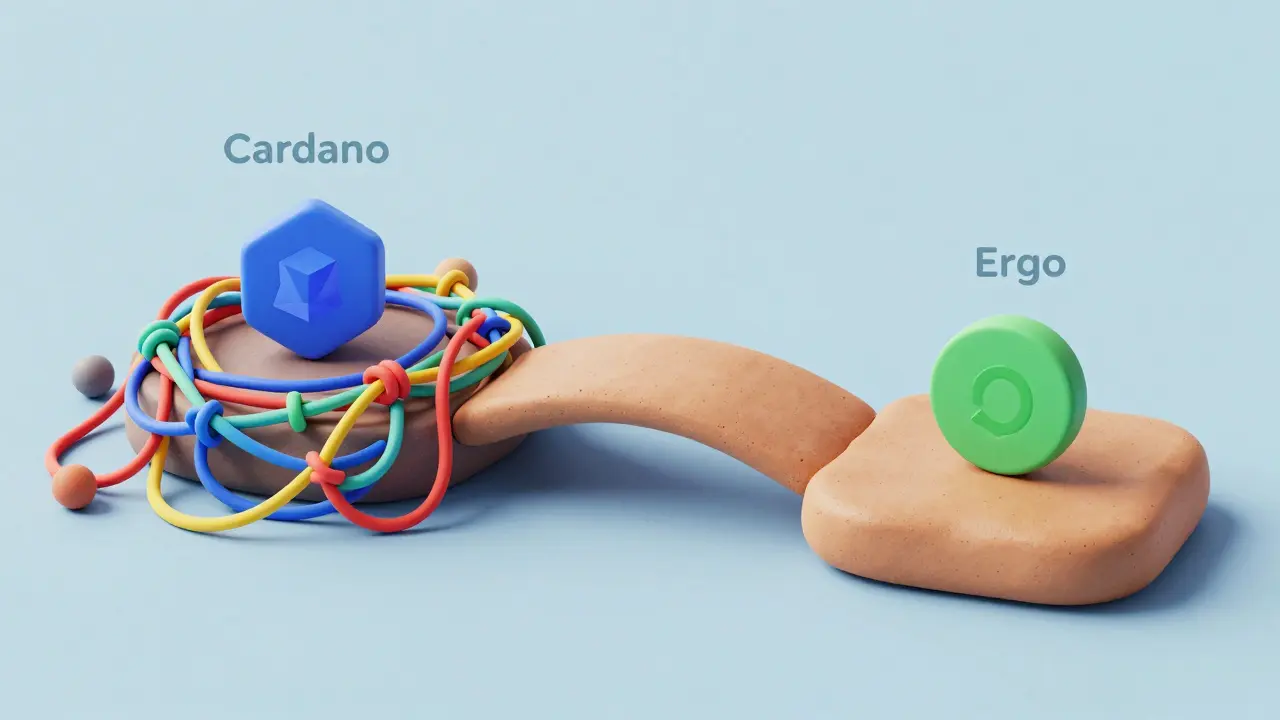
If you are looking for a place to swap Bitcoin for Ethereum instantly with zero friction, this isn’t it. Spectrum Finance is a niche player. It is an open-source, cross-chain decentralized exchange (DEX) built specifically to let you trade native assets between different blockchains without wrapping them first. Its main focus right now is connecting the Ergo and Cardano ecosystems.
But does it actually work? Is it safe? And should you use it for your DeFi portfolio? Let’s break down how Spectrum Finance operates, where it shines, and where it falls short, so you can decide if it fits your trading strategy.
What Exactly Is Spectrum Finance?
To understand Spectrum Finance, you have to look at what makes it different from the dozens of other DEXs out there. Most cross-chain solutions rely on "wrapped" tokens. If you want to spend Cardano (ADA) on Ethereum, you lock your ADA in a vault and get a synthetic version called wADA. This introduces counterparty risk-if the vault gets hacked or the operator disappears, your money is gone.
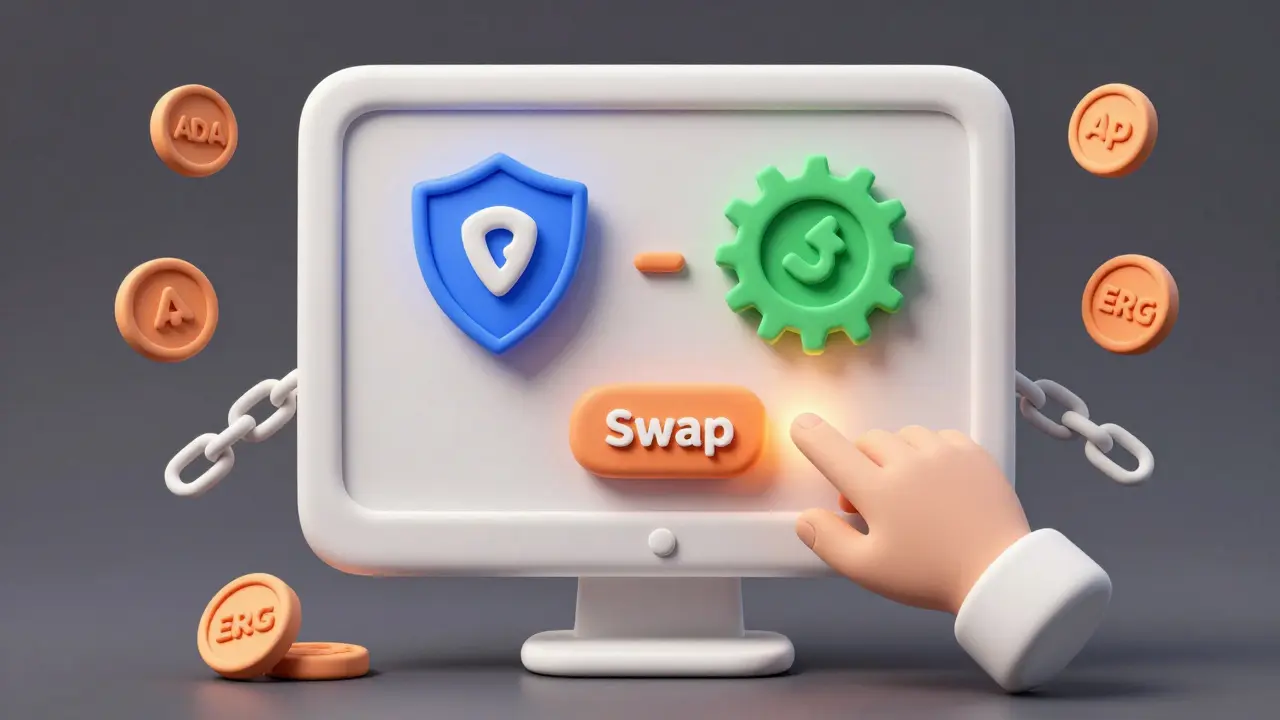
Spectrum Finance eliminates that step. It uses a protocol called Spectrum Network, which is a decentralized cross-chain messaging protocol. Instead of wrapping, it allows direct, trustless swaps of native assets. You send real ADA from the Cardano chain, and you receive real ERG (Ergo token) on the Ergo chain. No intermediaries hold your funds. No wrapped tokens clutter your wallet.
The project launched in 2022 after being established in 2021. It operates as a Layer 1 DEX, meaning it sits directly on top of the blockchains it supports rather than sitting on top of a single smart contract platform like Ethereum. This architecture is technically sophisticated but comes with a trade-off: complexity. You aren’t just clicking a button; you are interacting with smart contracts across two different networks simultaneously.
How Does the Trading Experience Work?
Using Spectrum Finance requires a bit more technical know-how than using a centralized exchange like Binance or Coinbase. Here is what the process looks like:
- Connect Your Wallets: You need compatible wallets for both chains involved in the swap. For Cardano, you’ll likely use Nami or Eternl. For Ergo, Yoroi or Nautilus are standard choices. There is no mobile app yet, so you are doing this on a desktop browser.
- Select Your Pair: Currently, the selection is narrow. According to CoinGecko data, Spectrum Finance supports only 7 coins and 7 trading pairs. The primary pair is ADA/ERG. If you are holding obscure altcoins on these chains, you might not find a direct pool.
- Execute the Swap: When you initiate a trade, the Spectrum Network handles the communication between the chains. Recent updates have reduced the latency for these swaps from around 30 minutes to under 15 minutes for certain pairs. It’s faster than many bridges, but it’s not instant.
- Pay Fees: You pay network fees for both the source and destination chains, plus a small protocol fee. In community reports, users have noted transaction fees hovering around 0.8% during normal conditions. However, slippage can be an issue. During low liquidity periods, some users reported slippage exceeding 5%, which eats into your profits.
The learning curve is moderate to steep. If you are new to crypto, expect to spend 2-3 hours just getting comfortable with the interface and understanding how to manage your private keys securely across two different ecosystems.
Liquidity and Tokenomics: The SPF Factor
In any DEX, liquidity is king. Without enough money in the pools, your trades will suffer from high slippage. Spectrum Finance relies on permissionless liquidity provision. Anyone can create a pool and start earning fees. This democratizes the system but also means liquidity can be fragmented.
The ecosystem is driven by its native governance token, SPF. Holding SPF serves three main purposes:
- Governance: Token holders vote on protocol upgrades and parameter changes.
- Fee Discounts: Using SPF can reduce the fees you pay when swapping.
- Consensus Validation: It plays a role in securing the cross-chain messaging layer.
However, the market depth for SPF itself is relatively shallow compared to major DeFi tokens. Price data from aggregators shows significant volatility, and trading volume is modest. This means that while the technology is innovative, the financial incentives for providing deep liquidity are still maturing.
| Feature | Spectrum Finance | Wrapped Asset Bridges (e.g., Wrapped BTC) |
|---|---|---|
| Asset Type | Native Assets (Real ADA, Real ERG) | Wrapped/Synthetic Tokens (wBTC, wETH) |
| Custody | Non-Custodial (Trustless) | Often Custodial or Multi-Sig Vaults |
| Supported Chains | Niche (Primarily Ergo & Cardano) | Broad (Ethereum, BSC, Polygon, etc.) |
| Speed | ~15 Minutes (Improving) | Varies (Minutes to Hours) |
| User Complexity | High (Requires specific wallets) | Medium (Standard Web3 wallets) |
Security Risks and What to Watch Out For
Security is the biggest concern in cross-chain DeFi. Because Spectrum Finance is non-custodial, your funds never leave your control until the moment of the swap. This is a huge advantage over centralized exchanges that have been hacked repeatedly.
However, "trustless" doesn’t mean "risk-free." Here are the specific risks you need to manage:
- Smart Contract Risk: Like all DEXs, Spectrum Finance relies on code. While the project is open-source, bugs can exist. Always check if audits have been performed by reputable firms. The project’s GitHub repository shows active development, but infrequent formal updates to user documentation can be a red flag for beginners.
- Liquidity Risk: As mentioned, limited pairs mean lower liquidity. If you try to move a large amount of ADA to ERG in one go, you could crash the price of the pool temporarily. Break large trades into smaller chunks.
- Regulatory Uncertainty: The SEC and other global regulators are scrutinizing DeFi protocols. While Spectrum Finance’s non-custodial nature offers some protection, its governance token (SPF) could face classification challenges as a security in certain jurisdictions. Keep an eye on regulatory news affecting Cardano and Ergo specifically.
- Phishing Scams: Because Spectrum Finance is less mainstream, scammers often create fake websites mimicking the official domain (spectrum.fi). Always double-check the URL. Bookmark the official site and never click links from random Discord messages or emails.
Who Should Use Spectrum Finance?
This tool is not for everyone. If you are a casual investor who wants to buy Bitcoin and forget about it, Spectrum Finance adds unnecessary complexity.
It is designed for:
- Cardano and Ergo Enthusiasts: If you are deeply invested in these two ecosystems and want to move value between them without relying on third-party custodians, this is one of the few viable options.
- DeFi Power Users: Traders who understand impermanent loss, slippage, and gas fees, and who prefer native assets over wrapped ones for ideological or security reasons.
- Liquidity Providers: Those willing to take on higher risk for potentially higher yields by creating pools for emerging trading pairs.
If you are looking for broad market access-swapping Solana for Polkadot, for example-you will be disappointed. Spectrum Finance’s current roadmap indicates plans to expand beyond Ergo and Cardano, but as of mid-2026, its reach remains specialized.
Final Verdict: Is It Worth It?
Spectrum Finance represents a clever solution to a painful problem in crypto: the fragmentation of liquidity across chains. By enabling true native asset swaps, it removes the trust assumption required by wrapped tokens. For users within the Cardano and Ergo communities, it provides a critical piece of infrastructure that keeps their assets secure and usable across borders.
However, it is not a polished consumer product. The interface is functional but not intuitive. The liquidity is thin outside of major pairs. The speed is acceptable but not instantaneous. You are trading convenience for sovereignty.
If you value keeping your assets native and hate the idea of wrapped tokens, Spectrum Finance is worth exploring. Start with small amounts. Test the waters. Understand the fees. But don’t expect the seamless experience of a centralized exchange. You are operating on the edge of decentralized finance, where power comes with responsibility.
Is Spectrum Finance a centralized or decentralized exchange?
Spectrum Finance is a fully decentralized exchange (DEX). It is non-custodial, meaning you retain control of your private keys and funds throughout the transaction. The protocol runs on open-source smart contracts and the Spectrum Network messaging layer, with no central entity holding your assets.
Which blockchains does Spectrum Finance support?
Currently, Spectrum Finance primarily focuses on bridging the Ergo and Cardano blockchains. While its architecture is designed to be extensible to other chains, its live trading pairs are concentrated on these two ecosystems. Support for additional networks is part of their future roadmap but not yet widely available.
Do I need wrapped tokens to trade on Spectrum Finance?
No. One of Spectrum Finance's core value propositions is eliminating the need for wrapped assets. You can swap native ADA for native ERG directly. This reduces counterparty risk associated with wrapped token wrappers and bridges.
How long do transactions take on Spectrum Finance?
Cross-chain swaps on Spectrum Finance typically take under 15 minutes following recent protocol optimizations. Previously, transactions could take up to 30 minutes. The exact time depends on network congestion on both the source and destination blockchains.
Is Spectrum Finance safe to use?
Like any DeFi protocol, it carries risks. It is non-custodial, which protects you from exchange hacks, but you are exposed to smart contract vulnerabilities, phishing scams, and liquidity risks. Always verify URLs, start with small test transactions, and ensure you understand the fee structure and slippage settings before executing large trades.
Nick Rice
June 13, 2026 AT 02:44Look, I get the hype around native swaps, but let's be real about the UX here. Connecting two different wallets just to swap ADA for ERG is a nightmare for anyone who isn't a dev. You spend more time troubleshooting extension conflicts than actually trading. The tech might be sound, but the friction is killing adoption for casual users.
Eric Scheinberg
June 14, 2026 AT 00:57The architectural distinction between wrapped and native assets is not merely semantic; it is foundational to security. By eliminating the counterparty risk inherent in wrapped tokens, Spectrum Finance addresses a critical vulnerability in cross-chain interoperability. However, the liquidity fragmentation remains a significant impediment to widespread utility.
Andrea Burd
June 15, 2026 AT 04:51another niche dex that nobody uses lol. why would i trade on this when uniswap exists? the whole ergo thing is so pretentious and useless for actual finance.
Charles Pawlikowski
June 16, 2026 AT 02:33typical crypto bro nonsense trying to sell us on some obscure token swap protocol :/ we need regulation not more scams hiding behind 'decentralized' buzzwords. keep your money safe folks dont touch this trash
John Doe
June 16, 2026 AT 07:28I feel like everyone is sleeping on the safety aspect of non-custodial swaps! It’s terrifying how many people trust centralized bridges with their life savings. Sure, the interface is clunky, but knowing my funds aren’t sitting in a multi-sig vault waiting to be drained gives me so much peace of mind. It’s a small price to pay for sovereignty!
Amit Thakur
June 18, 2026 AT 01:20Listen up, you need to understand the alpha here. The slippage on these pools is massive if you don't know what you're doing. Most retail traders are getting rekt because they treat this like Binance. You gotta chunk your orders or eat that 5% slippage. The tech stack using the Spectrum Network messaging layer is solid, but the liquidity depth is shallow AF right now. Don't front-run yourself.
Manish Prajapat
June 19, 2026 AT 19:19One must consider the philosophical implications of wrapping assets. When we wrap Bitcoin, we are essentially creating a derivative of value, detached from its source of truth. Spectrum Finance attempts to restore the ontological integrity of the asset by keeping it native. This aligns with the original ethos of decentralization, even if the current implementation lacks polish.
pankaj chawla
June 20, 2026 AT 02:53I tried setting up the wallet connection yesterday and it was quite frustrating honestly. But once I got it working, the swap itself felt secure. I appreciate that there are no middlemen holding my coins. Maybe it needs better documentation for newbies, but the core idea is strong. Let's hope they expand to more chains soon.
Jessica Lane
June 20, 2026 AT 13:19This is an incredibly detailed breakdown of a very specific tool. While I agree that the user experience is steep, the emphasis on security over convenience is refreshing in an era of constant exchange hacks. For those deeply entrenched in the Cardano ecosystem, this seems like a necessary evolution rather than just another speculative DEX.